
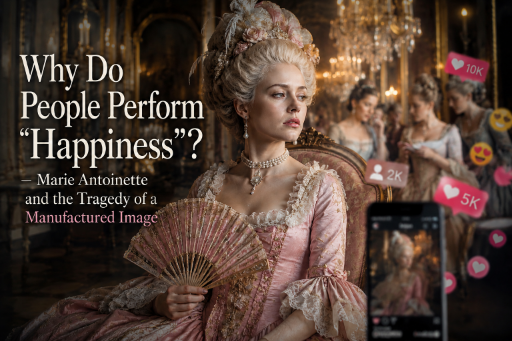
Marie Antoinette and the Tragedy of a Manufactured Image

Why do people feel the need to show others,
“I am happy.”?
If they were truly happy, there should be no need to constantly prove it.

But on modern social media,
people constantly post:
- luxurious vacations
- expensive restaurants
- designer brands
- happy-looking relationships
- successful lifestyles
for others to see.
And people look at those posts and think:
“Everyone else looks so happy.”
But history tells us something important.
In reality—
people have been performing
“a life that looks happy”
for centuries.
One of the greatest symbols of this was
“The Palace of Versailles.”
18th-century France.
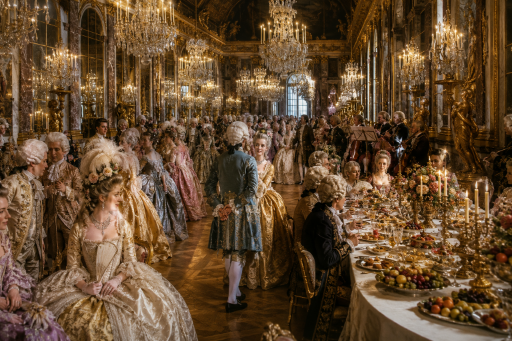
Versailles was one of the most luxurious places in the world.
It overflowed with:
- extravagant dresses
- enormous chandeliers
- luxurious food
- glamorous balls
- jewels
- music.
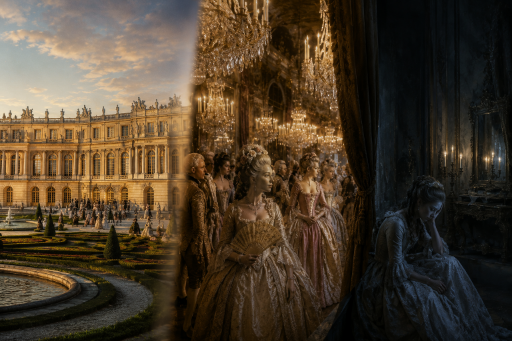
From the outside, it looked like
“a perfectly happy world.”
But the true nature of that palace was not
“happiness.”
It was
“the performance of happiness.”
Showing “Happiness” Was What Gave People Value
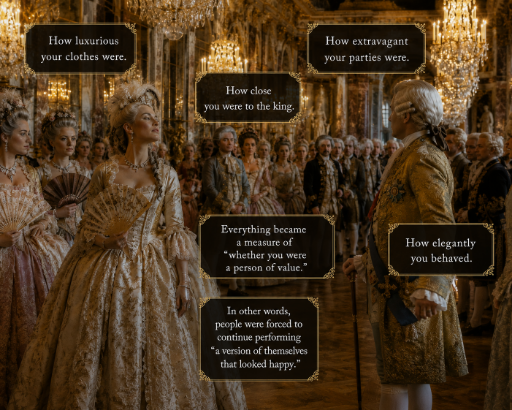
At Versailles,
“actually being happy”
was less important than
“appearing happy.”
・How luxurious your clothes were.
・How extravagant your parties were.
・How close you were to the king.
・How elegantly you behaved.
Everything became a measure of
“whether you were a person of value.”
In other words, people were forced to continue performing
“a version of themselves that looked happy.”
Marie Antoinette Was No Different
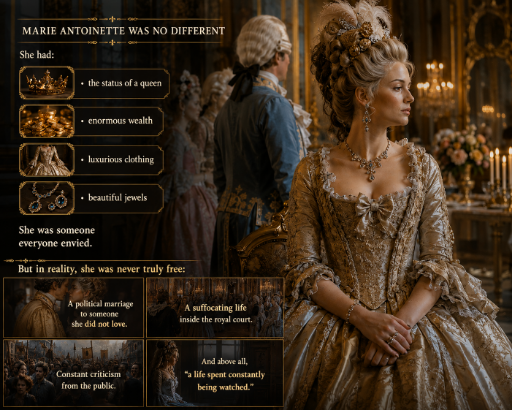
She had:
- the status of a queen
- enormous wealth
- luxurious clothing
- beautiful jewels
She was someone everyone envied.
But in reality, she was never truly free.
・A political marriage to someone she did not love.
・A suffocating life inside the royal court.
・Constant criticism from the public.
And above all,
“a life spent constantly being watched.”
Even So, She Had to Pretend to Be “happy.”
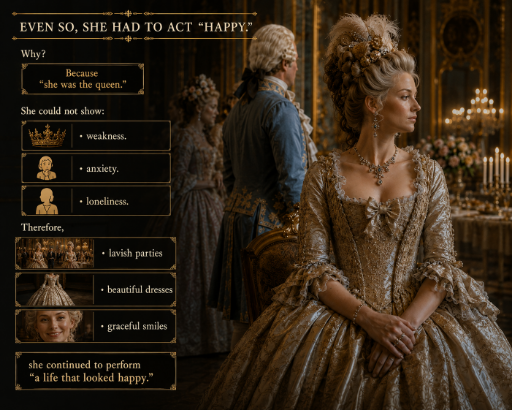
Why?
“Because she was the queen.”
She could not show:
- weakness
- anxiety
- loneliness
So instead, through:
- lavish parties
- beautiful dresses
- graceful smiles
She continued to perform
“a life that looked happy.”
Modern Social Media Is Exactly the Same
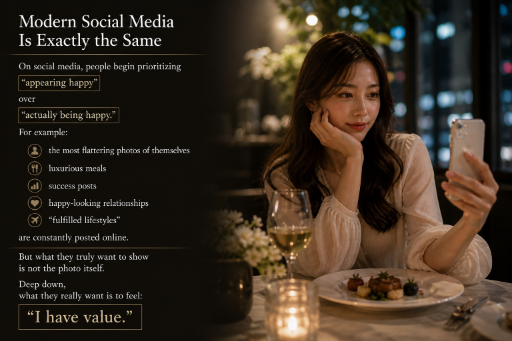
On social media, people begin prioritizing
“appearing happy”
over
“actually being happy.”
For example:
- the most flattering photos of themselves
- luxurious meals
- success posts
- happy-looking relationships
- “fulfilled lifestyles”
are constantly posted online.
But what they truly want to show is not the photo itself.
Deep down, what they really want is to feel:
“I have value.”
Why Do People Try to “Appear Happy”?
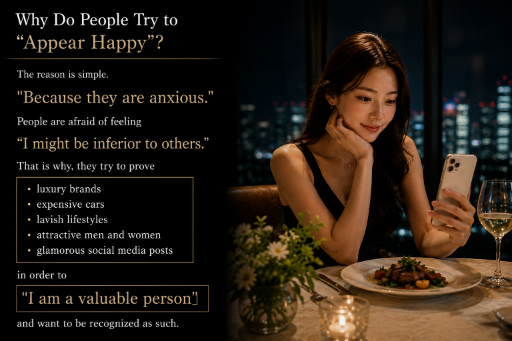
The reason is simple.
“Because they are anxious.”
People are afraid of feeling:
“Maybe I am inferior to others.”
That is why they try to prove
“I am a valuable person.”
through:
- luxury brands
- expensive cars
- lavish lifestyles
- attractive men and women
- glamorous social media posts.
However, That Validation Never Lasts
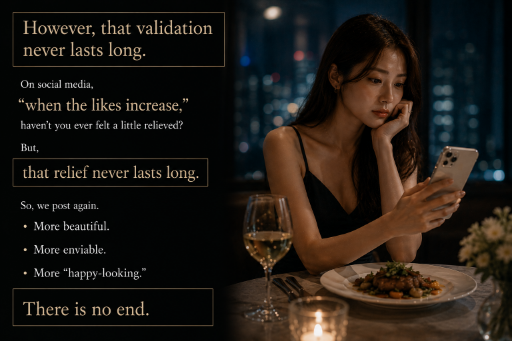
On social media,
when the number of “likes” increases,
Have you ever felt a small sense of relief?
But that feeling never lasts long.
So people post again.
- More beautiful.
- More enviable.
- More “happy-looking.”
There is no end to it.
“The Performance of Happiness” Destroyed Marie Antoinette
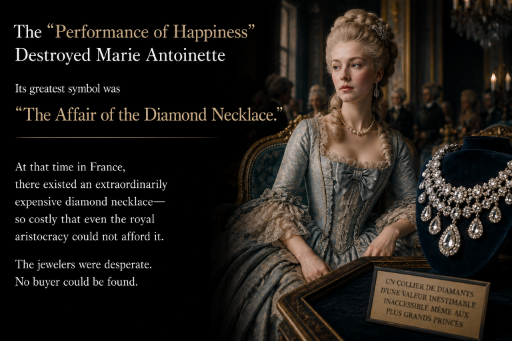
Its greatest symbol was
“The Affair of the Diamond Necklace.”
At that time in France, there existed an extraordinarily expensive diamond necklace — so costly that even the royal aristocracy could not afford it.
The jewelers were desperate.
No buyer could be found.
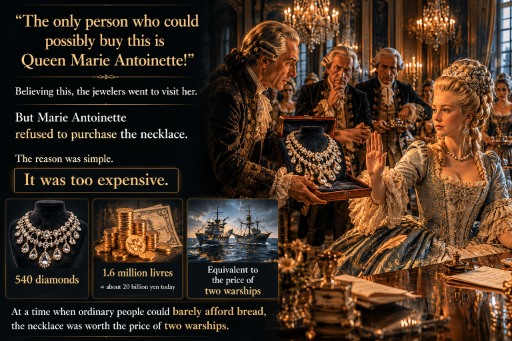
“The only person who could possibly buy this is Queen Marie Antoinette!”
Believing this, the jewelers went to visit her.
But Marie Antoinette refused to purchase the necklace.
The reason was simple.
It was too expensive.
The necklace, made with 540 diamonds, cost 1.6 million livres — equivalent to roughly 20 billion yen today.
At a time when ordinary people could barely afford bread, the necklace was said to be worth the price of two warships.
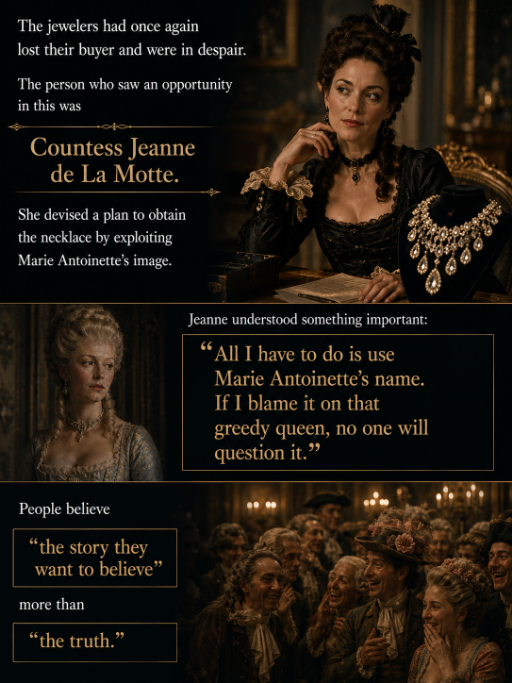
The jewelers had once again lost their buyer and were in despair.
The person who saw an opportunity in this was
Countess Jeanne de La Motte.
She devised a plan to obtain the necklace by exploiting Marie Antoinette’s image.
Jeanne understood something important:
“All I have to do is use Marie Antoinette’s name. If I blame it on that greedy queen, no one will question it.”
People believe
“the story they want to believe”
more than
“The truth.”
A Scam That Exploited the “Queen Brand”
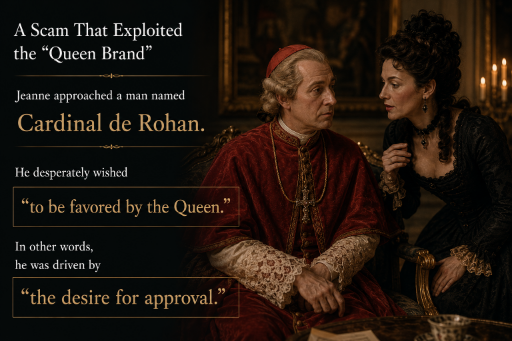
Jeanne approached a man named Cardinal de Rohan.
He desperately wished
“to be favored by the Queen.”
In other words, he was driven by
“the desire for approval.”
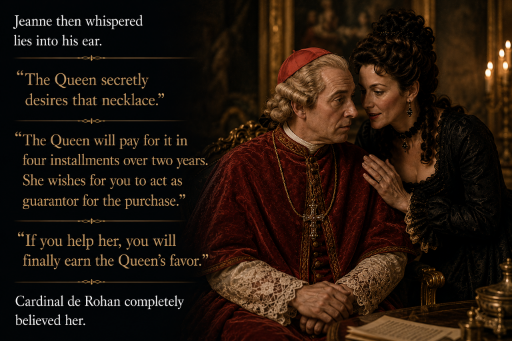
Jeanne then whispered lies into his ear.
“The Queen secretly desires that necklace.”
“The Queen will pay for it in four installments over two years. She wishes for you to act as guarantor for the purchase.”
“If you help her, you will finally earn the Queen’s favor.”
Cardinal de Rohan completely believed her.
Why?
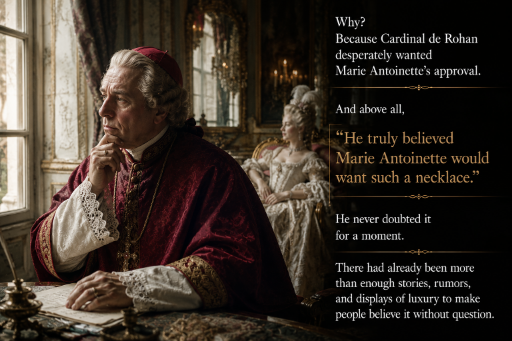
Because Cardinal de Rohan desperately wanted Marie Antoinette’s approval.
And above all,
“He truly believed Marie Antoinette would want such a necklace.”
He never doubted it for a moment.
There had already been more than enough stories, rumors, and displays of luxury to make people believe it without question.
The Necklace Disappeared
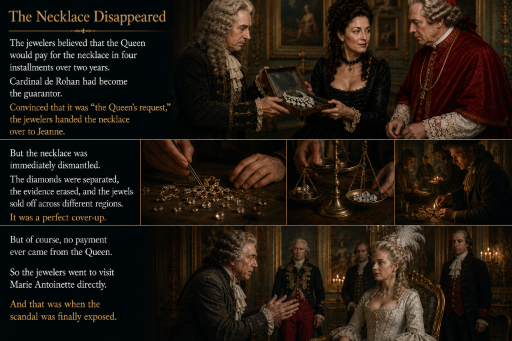
The jewelers believed that the Queen would pay for the necklace in four installments over two years.
Cardinal de Rohan had become the guarantor.
Convinced that it was “the Queen’s request,” the jewelers handed the necklace over to Jeanne.
But the necklace was immediately dismantled.
The diamonds were separated, the evidence erased, and the jewels sold off across different regions.
It was a perfect cover-up.
But of course, no payment ever came from the Queen.
So the jewelers went to visit Marie Antoinette directly.
And that was when the scandal was finally exposed.
After an investigation,
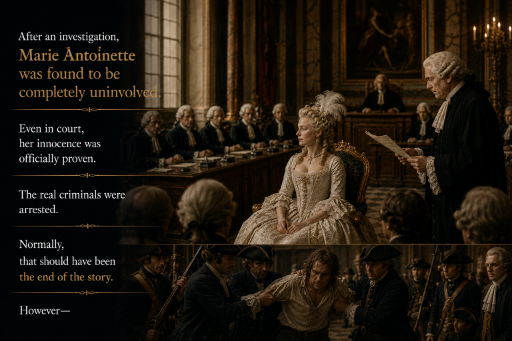
Marie Antoinette was found to be completely uninvolved.
Even in court, her innocence was officially proven.
The real criminals were arrested.
Normally,
That should have been the end of the story.
However—
No One Believed in Her Innocence
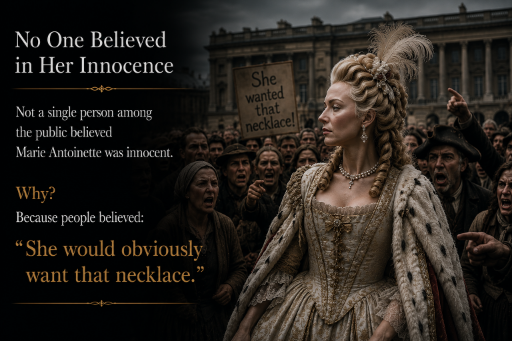
Not a single person among the public believed Marie Antoinette was innocent.
Why?
Because people believed:
“She would obviously want that necklace.”
She Had Spent Years Performing the Role of a “Luxurious Queen”
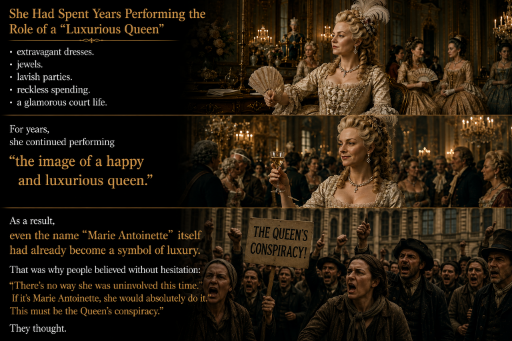
- extravagant dresses
- jewels
- lavish parties
- reckless spending
- a glamorous court life
For years, She continued performing
“the image of a happy and luxurious queen.”
As a result,
Even the name “Marie Antoinette” itself had already become a symbol of luxury.
That was why people believed without hesitation:
“There’s no way she was uninvolved this time.
If it’s Marie Antoinette, she would absolutely do it.
This must be the Queen’s conspiracy.”
“The Image She Performed” Ultimately Destroyed Her
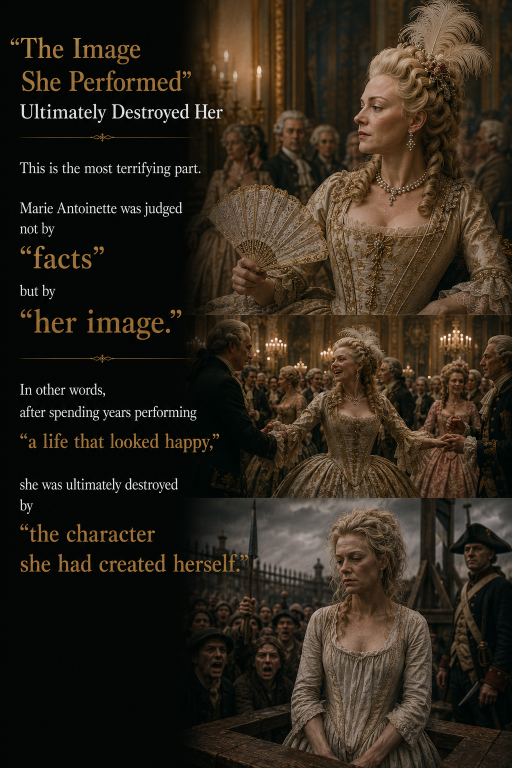
This is the most terrifying part.
Marie Antoinette was judged
not by
“facts”
but by
“her image.”
In other words, after spending years performing
“a life that looked happy,”
She was ultimately destroyed by
“The character she had created herself.”
And This Is Strikingly Similar to Modern Social Media
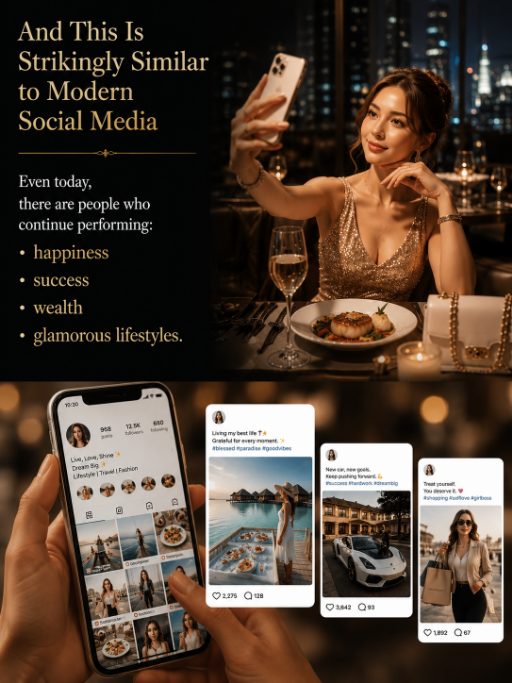
Even today,
there are people who continue performing:
- happiness
- success
- wealth
- glamorous lifestyles.
Then,
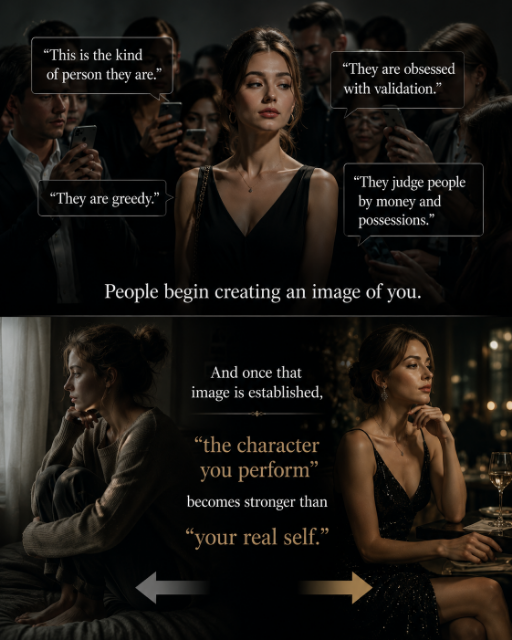
People begin creating an image of you:
“This is the kind of person they are.”
“They are greedy.”
“They are obsessed with validation.”
“They judge people by money and possessions.”
And once that image is established,
“the character you perform”
becomes stronger than
“your real self.”
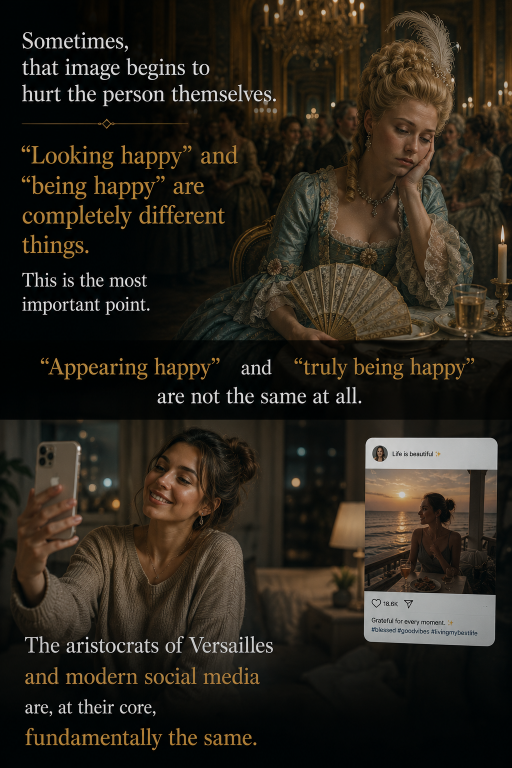
Sometimes, that image begins to hurt the person themselves.
“Looking happy” and “being happy” are completely different things.
This is the most important point.
“Appearing happy”
and
“truly being happy.”
are not the same at all.
The aristocrats of Versailles and modern social media are, at their core, fundamentally the same.
What History Teaches Us
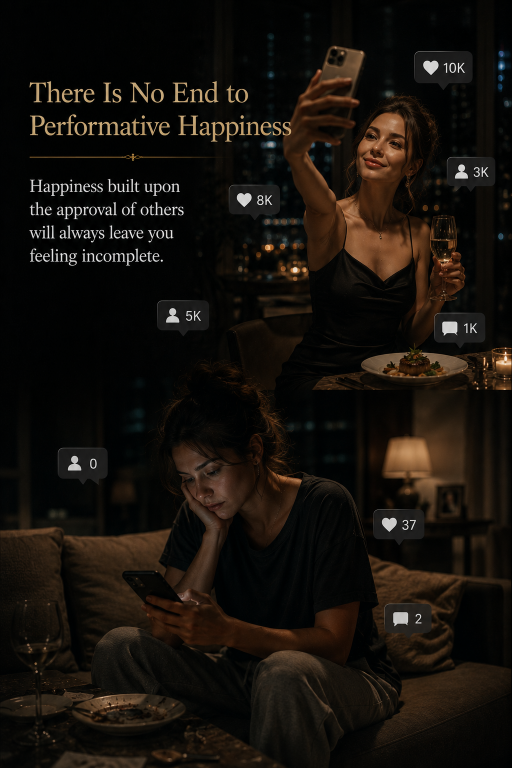
“There Is No End to Performative Happiness”
Happiness built upon the approval of others
will always leave you feeling incomplete.
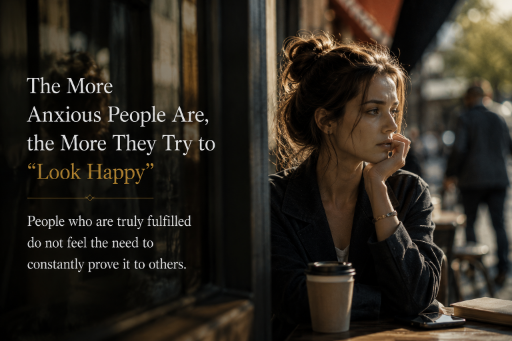
The More Anxious People Are, the More They Try to “Look Happy”
People who are truly fulfilled do not feel the need to constantly prove it to others.
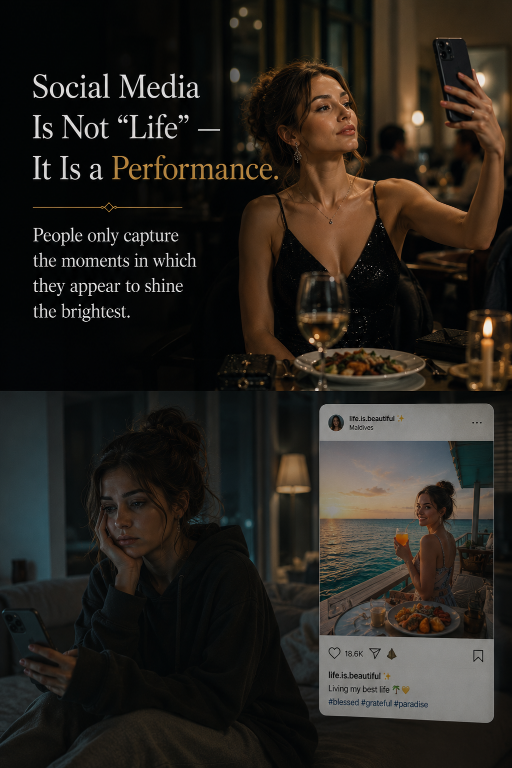
Social Media Is Not “Life” — It Is a Performance
People only capture
the moments in which they appear to shine the brightest.

The Desire for Validation Is Only Satisfied Temporarily
That is why people begin seeking
even stronger stimulation.
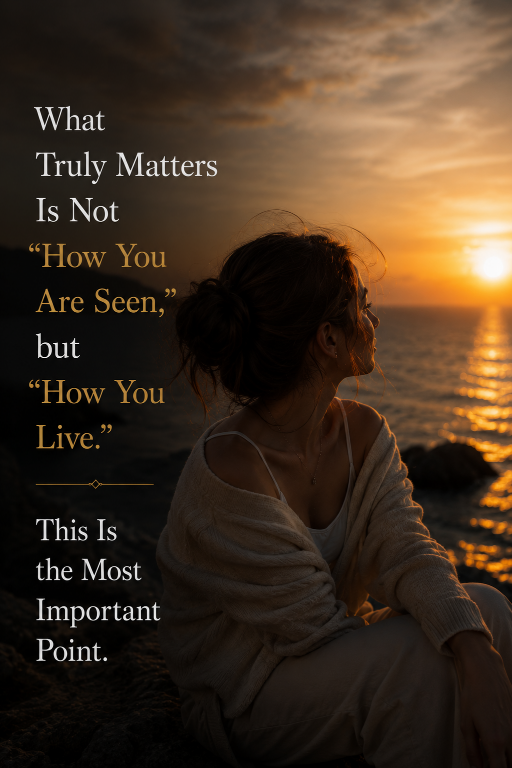
What Truly Matters Is Not “How You Are Seen,” but “How You Live.”
This is the most important point.
Final Thoughts
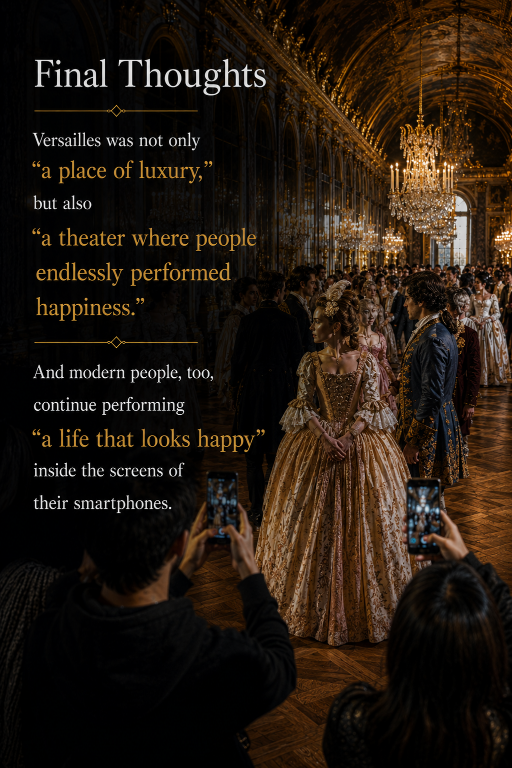
Versailles was not only
“a place of luxury,”
but also
“a theater where people endlessly performed happiness.”
And modern people, too, continue performing
“a life that looks happy”
inside the screens of their smartphones.
However, history teaches us something important.
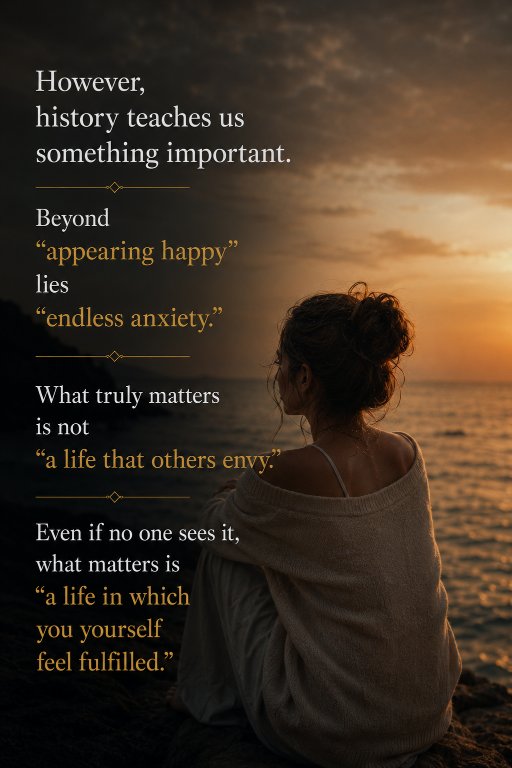
Beyond
“appearing happy”
lies
“endless anxiety.”
What truly matters is not
“a life that others envy.”
Even if no one sees it, what matters is
“a life in which you yourself feel fulfilled.”
The Final Question
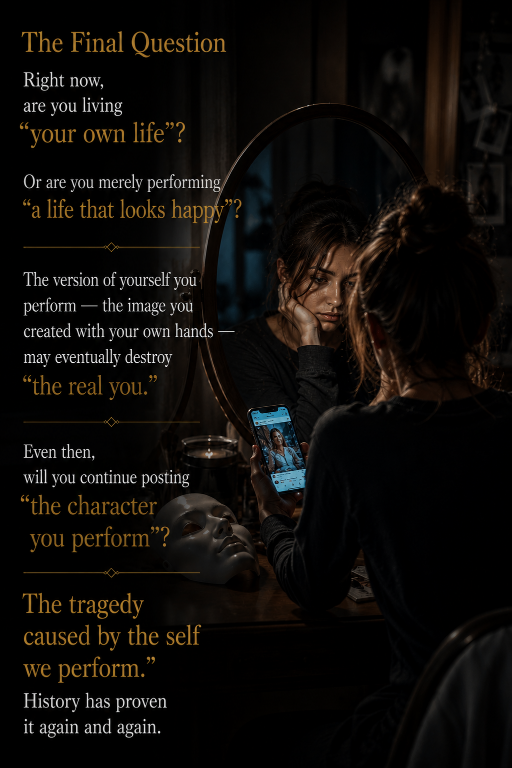
Right now, are you living
“your own life”?
Or are you merely performing
“a life that looks happy”?
The version of yourself you perform —
the image you created with your own hands —
may eventually destroy
“the real you.”
Even then, will you continue posting
“the character you perform”?
“The Tragedy of a Manufactured Image.”
History has proven it again and again.
For Those Who Want to Learn More About the Life of Marie Antoinette
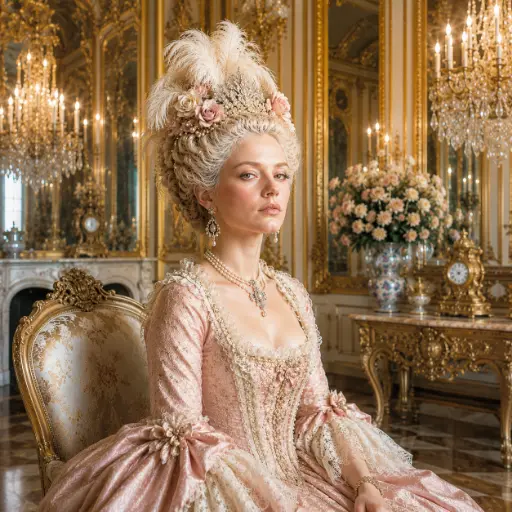
She was not simply “a wasteful queen.”
Why was she hated so intensely?
Was she truly a “villain”?
And why did she ultimately become a symbol of the Revolution and face execution?
If you want to explore her life in greater depth through a story-driven article, read here:
👉 「Marie Antoinette: The Queen Behind the Mask」
https://thechroniclesofhumanity.com/marie-antoinette-the-greedy-queen/
Author Fuji

The Tragedy of a Manufactured Image
History has proven this again and again.
The problems we struggle with today are not unique. They are patterns humanity has repeated throughout history.
And many of those problems have already been experienced, understood, and solved by those who came before us.
“When you understand history, you understand the present.”
Become Part of the Chronicle
If this article inspired you, consider supporting the project.
Become a character in the Chronicle.
Receive your own custom card and stand alongside queens, warriors, inventors, rebels, and legends from history.
Your support helps keep these stories alive and allows me to create more articles, illustrations, and historical cards.
Join the Chronicle and leave your mark on history.
Comment