
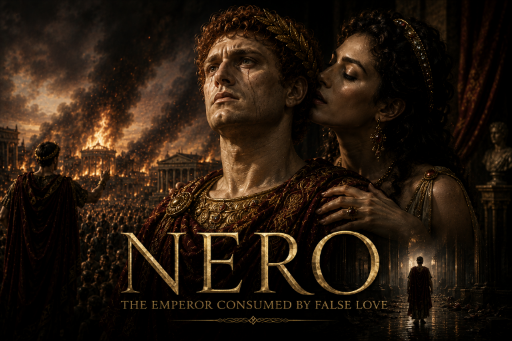
Who Was Nero?
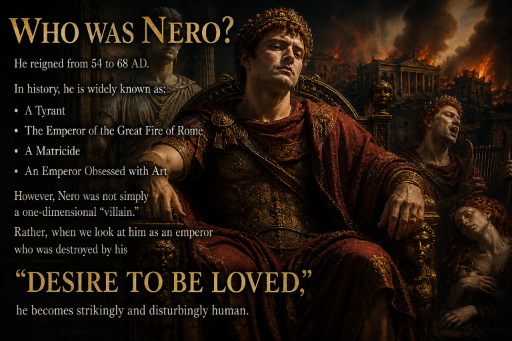
Nero was the fifth emperor of the ancient Roman Empire.
He reigned from 54 AD to 68 AD.
Historically, he is widely known as:
- “A Tyrant”
- “The Emperor of the Great Fire of Rome”
- “A Matricide”
- “An Emperor Obsessed with Art”
However, Nero is not simply a one-dimensional villain. Rather, when viewed as an emperor who was destroyed by
“the desire to be loved,”
He becomes disturbingly and painfully human.
Nero’s Life, Simply Explained
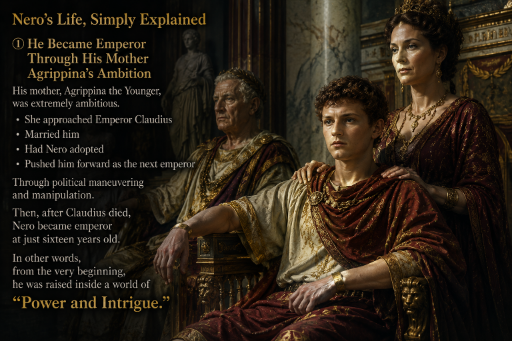
① He Became Emperor Through His Mother Agrippina’s Ambition
His mother, Agrippina the Younger, was extremely ambitious.
- She approached Emperor Claudius
- Married him
- Had Nero adopted
- Pushed him forward as the next emperor
Through political maneuvering and manipulation.
Then, after Claudius died, Nero became emperor at just sixteen years old.
In other words, from the very beginning, he was raised inside a world of
“Power and Intrigue.”
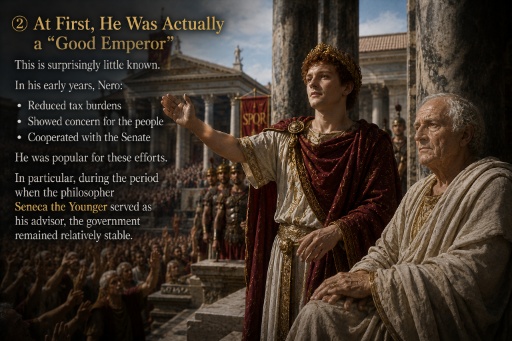
② At First, He Was Actually a “Good Emperor”
This is surprisingly little known.
In his early years, Nero:
- Reduced tax burdens
- Showed concern for the people
- Cooperated with the Senate
Because of this, he was genuinely popular.
Especially during the period when the philosopher Seneca the Younger served as his advisor, the government remained relatively stable. 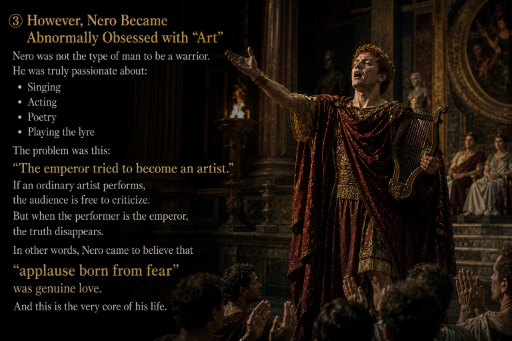
③ However, Nero Became Abnormally Obsessed with “Art”
Nero was not the type of man to be a warrior. He genuinely loved:
- Singing
- Theater
- Poetry
- The lyre
The problem was this:
“The emperor tried to become an artist.”
An ordinary artist can be freely criticized by the audience.
But when the performer is the emperor,
“The truth disappears.”
In other words, Nero gradually came to believe that
“Applause created by fear”
was genuine love.
And that was the very core of his tragedy. 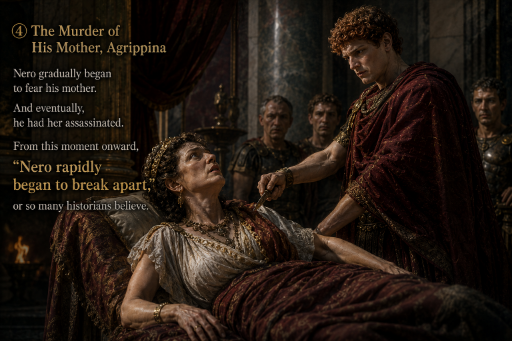
④ The Murder of His Mother, Agrippina
Nero gradually began to fear his mother. And eventually, he had her assassinated.
From this moment onward,
“Nero rapidly began to break apart,”
or so many historians believe. 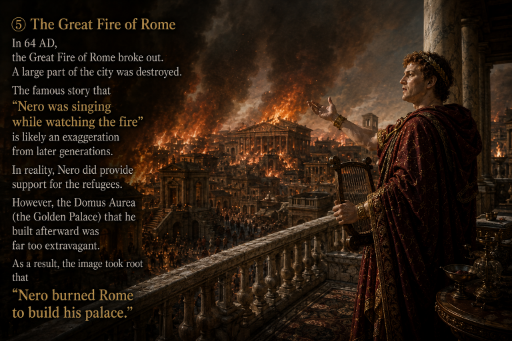
⑤ The Great Fire of Rome
In 64 AD, the Great Fire of Rome broke out.
A large part of Rome was destroyed.
There is a famous story that
“Nero was singing while watching the fire,”
but this was likely exaggerated by later generations.
In reality, Nero also provided support for refugees.
However, the Domus Aurea (Golden Palace) that Nero built afterward was far too extravagant.
As a result,
“Nero burned Rome to build his palace”
became the image permanently associated with him. 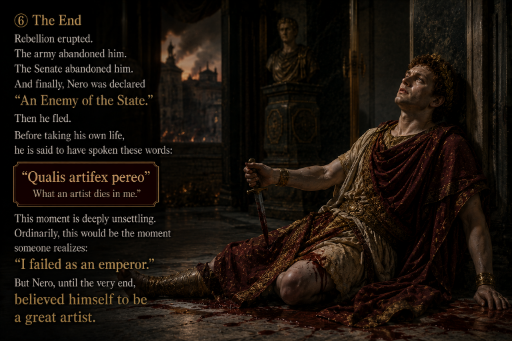
⑥ The End
Rebellion erupted. The army abandoned him.
The Senate abandoned him. And finally, Nero was declared
“An Enemy of the State.”
Then he fled.
Before taking his own life, he is said to have spoken these words:
“Qualis artifex pereo.”
“What an artist dies in me.”
This moment is deeply unsettling.
Ordinarily, this would be the moment someone realizes:
“I failed as an emperor.”
But Nero, until the very end,
believed himself to be a great artist.
Why Nero Is Still Fascinating Today
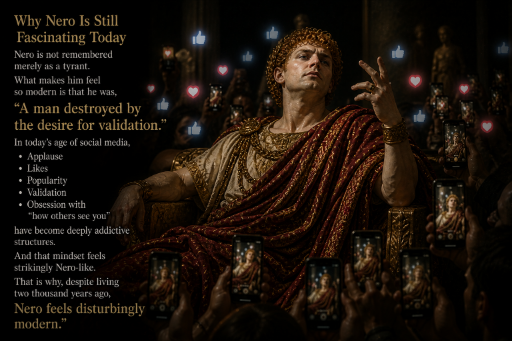 Nero is not remembered merely as a tyrant.
What makes him feel so modern is that he was,
“A man destroyed by the desire for validation.”
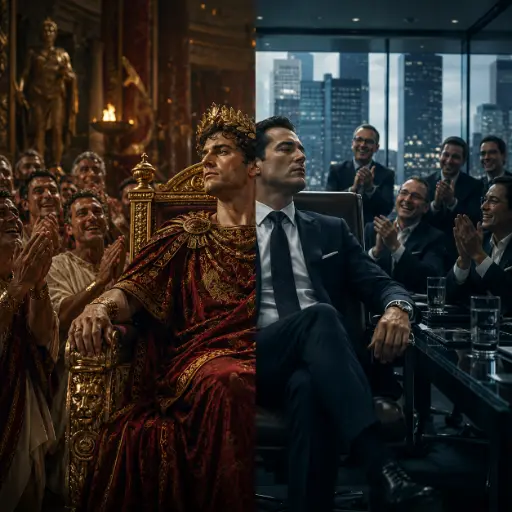
In today’s age of social media,
- Applause
- Likes
- Popularity
- Validation
- Obsession with “how others see you”
have become deeply addictive structures.
And that mindset feels strikingly Nero-like.
That is why, despite living two thousand years ago, Nero feels disturbingly modern.
Historical Evaluation
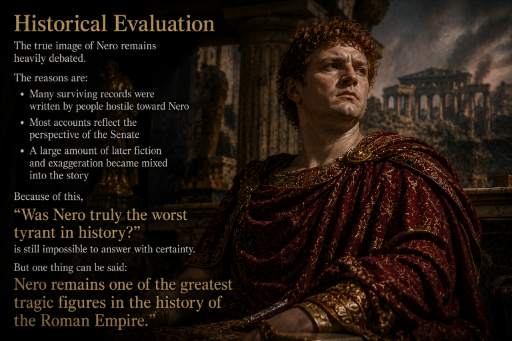 The true image of Nero remains heavily debated.
The reasons are:
- Many surviving records were written by people hostile toward Nero
- Most accounts reflect the perspective of the Senate
- A large amount of later fiction and exaggeration became mixed into the story
Because of this,
“Was Nero truly the worst tyrant in history?”
It is still impossible to answer with certainty.
But one thing can be said:
Nero remains one of the greatest tragic figures in the history of the Roman Empire.
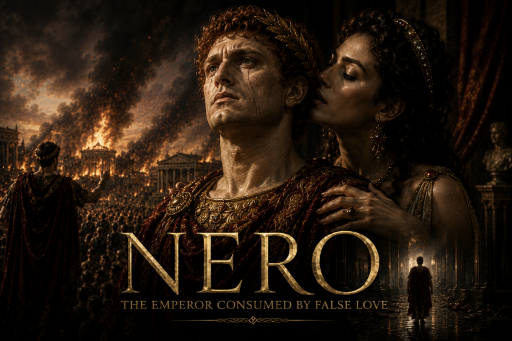
Prologue
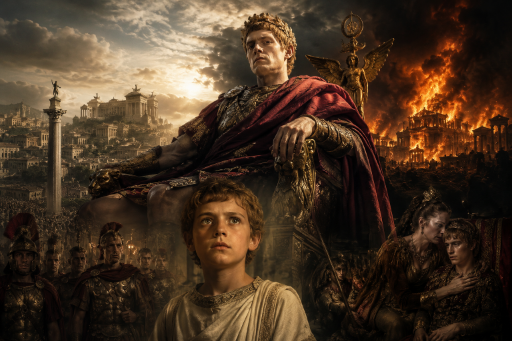 The Roman Empire.
One of the greatest civilizations in human history.
At its peak stood an emperor who would later become known as “Nero the Tyrant.”
The man who killed his own mother. Who ruled people through fear.
Who was said to have burned Rome itself.
But— Was he truly a monster from the very beginning?
Or was he simply “a boy who wanted to be loved,” slowly falling apart over time?
Chapter I: The Boy Born from His Mother’s Ambition
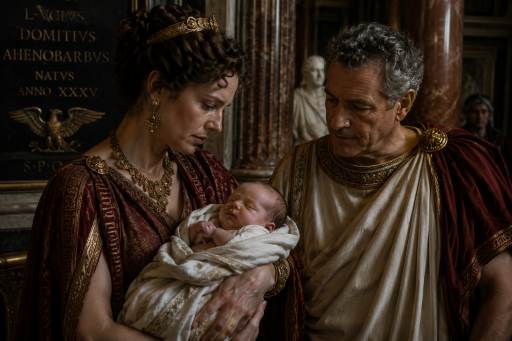 In 37 AD, A boy was born who would one day shake the Roman Empire itself.
His name was Lucius Domitius Ahenobarbus.
The man who would later become—Nero.
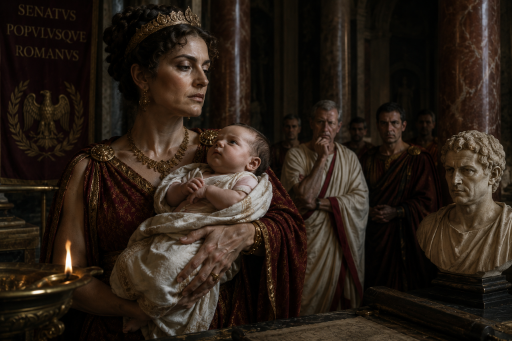 But from the very moment he was born, he was never an ordinary child.
Because his life began with “his mother’s ambition.”
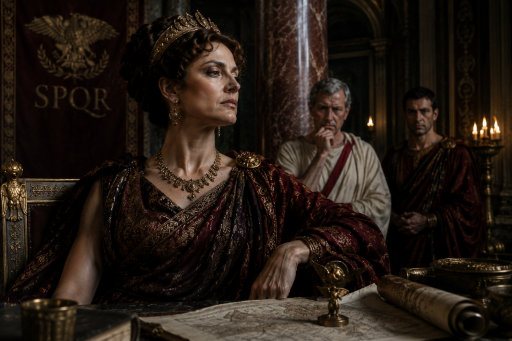 Nero’s mother, Agrippina, was an extraordinarily dangerous woman.
She was beautiful, intelligent, and frighteningly ambitious.
She understood something fundamental:
In the Roman Empire, “power” mattered far more than “love.”
 What she truly desired was simple:
“To make her son emperor.”
And so Nero was raised as “a tool for his mother’s ambition.”
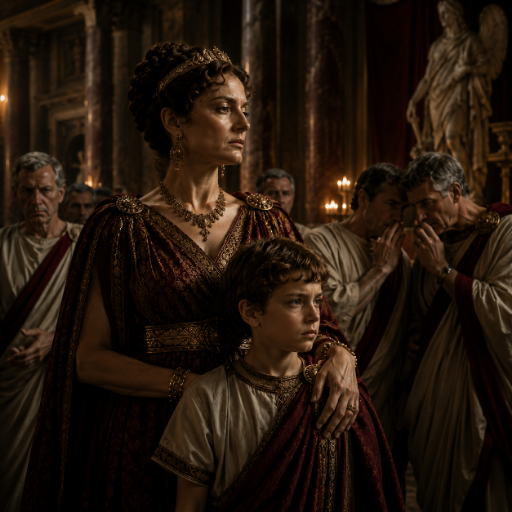 Nero grew up under a mother like that.
From an early age, he was surrounded not by the warmth of a family, but by palace conspiracies, power struggles, and fear.
In the imperial court of Rome, it was not unusual for someone smiling yesterday to vanish the next day.
Trust was a weakness.
And carelessness could mean death. 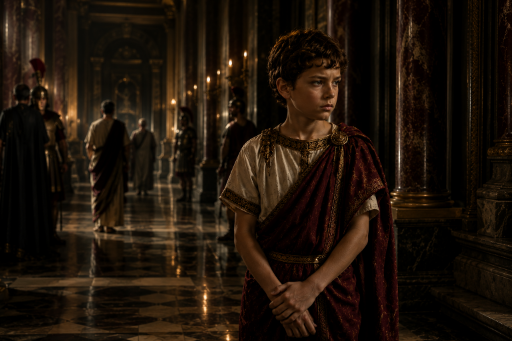 And Nero’s life became unstable at a very early age.
His father died while Nero was still a child.
Then his mother, Agrippina, was drawn into political conflict and temporarily fell from power.
As a young boy, Nero grew up witnessing the harsh reality that “power can disappear in an instant.”
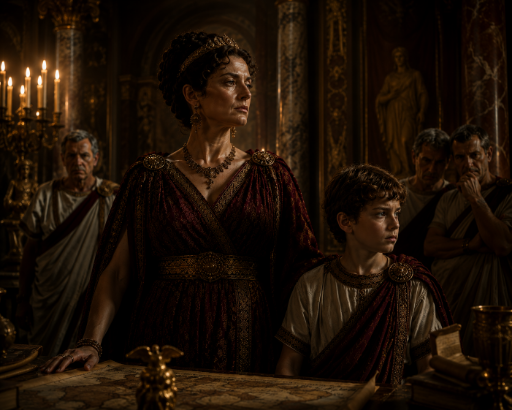 But Agrippina had not given up.
If anything, her ambition only grew stronger.
She understood something clearly:
In the Roman Empire, “good people” did not win.
The only ones who survived were “those who seized power.”
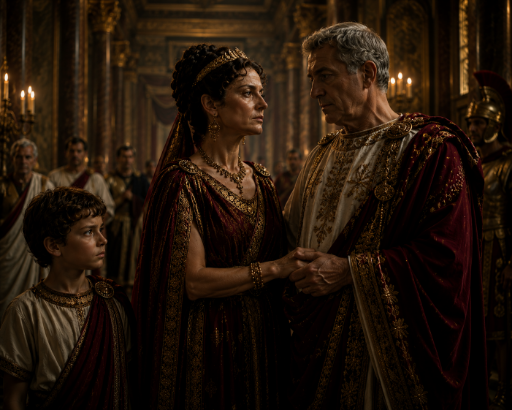 Eventually, she made a shocking move.
She approached the Roman emperor, Claudius.
And in time, she married him.
It was not a marriage of love.
It was entirely “a marriage for power.”
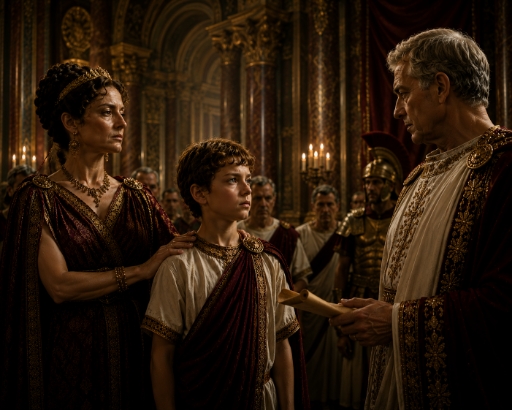 And Agrippina went even further.
She arranged for Nero to be adopted by the emperor.
Which meant that Nero had now become “a candidate for the imperial throne.”
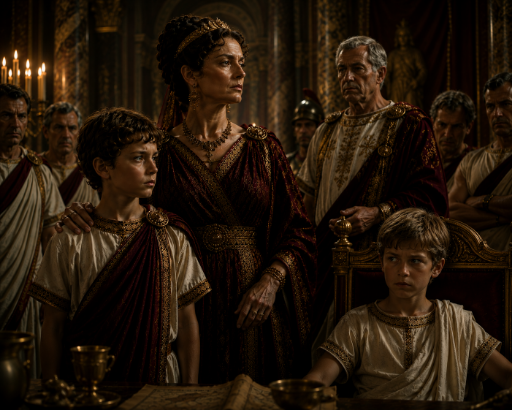 But there was a problem.
Claudius already had a biological son.
His name was Britannicus.
By all rights, he should have been the next emperor.
But Agrippina pushed her own son, Nero, to the front instead.
And as a result, the atmosphere within the imperial court slowly began to darken with tension and suspicion. 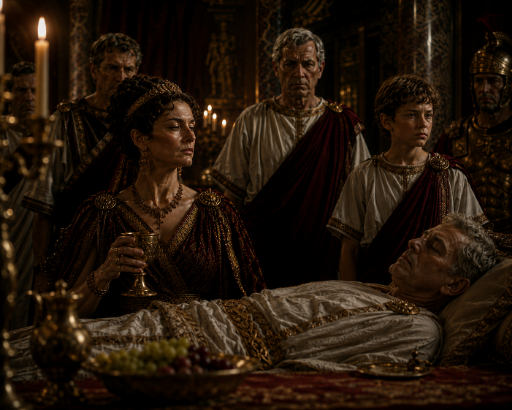 And then, in 54 AD, Emperor Claudius suddenly died.
With his death, “the fate of the Roman Empire began to shift dramatically.”
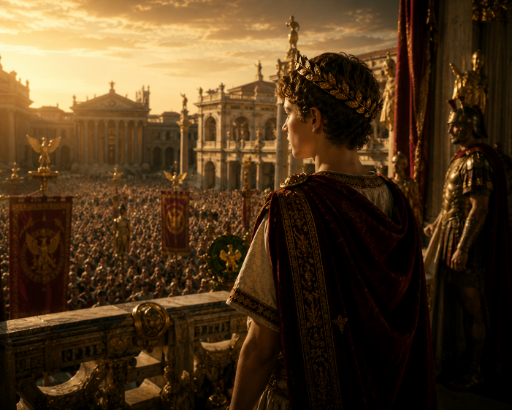 And a young boy began to ascend toward the throne of one of the greatest empires in the world.
His name was — Nero.
Chapter II: The Sixteen-Year-Old Emperor
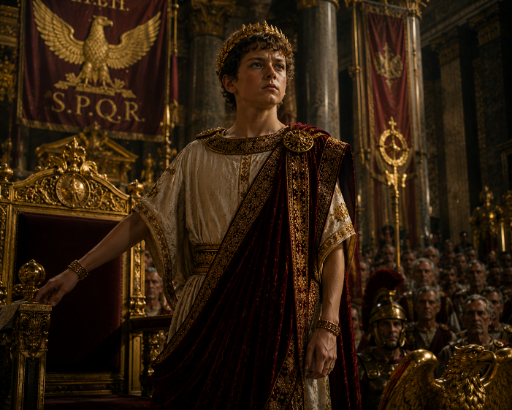 Nero was only sixteen years old.
By modern standards, he was barely the age of a high school student. 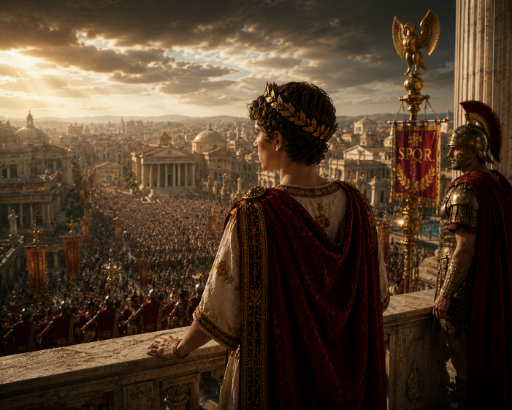 But what he inherited was not a small kingdom.
At the time, the Roman Empire was one of the greatest superpowers in the world.
Vast territories. Massive armies.
Enormous wealth.
And the fate of tens of millions of people.
All of it was placed into the hands of a sixteen-year-old boy. 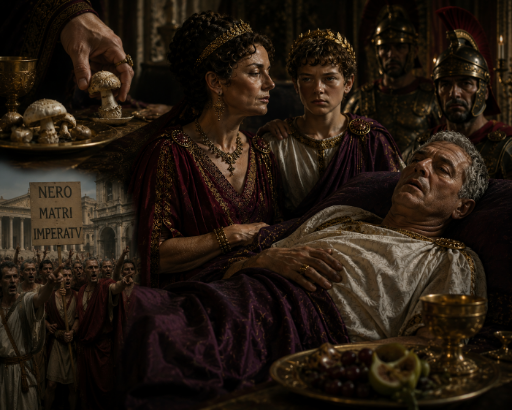 And dark rumors surrounded his rise to power.
The death of the former emperor, Claudius.
According to ancient accounts, “poisoned mushrooms” became the most famous explanation for his sudden death.
And the person most strongly suspected of orchestrating it was his mother, Agrippina.
The truth remains unknown even today.
But at the very least, many Romans of that era believed that “Nero became emperor because of his mother.”
And in reality, the shadow of Agrippina was always present around him. 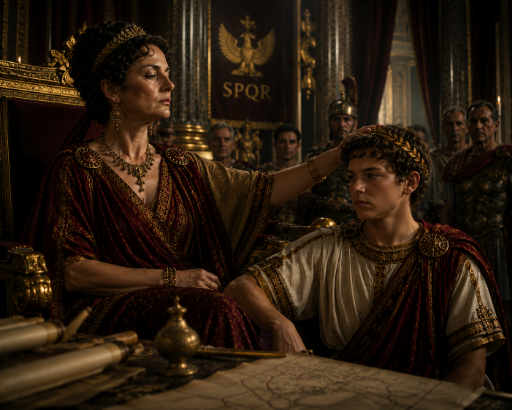 In other words, although Nero had become “The Emperor of Rome,” he was, in reality, still living under “his mother’s control.”
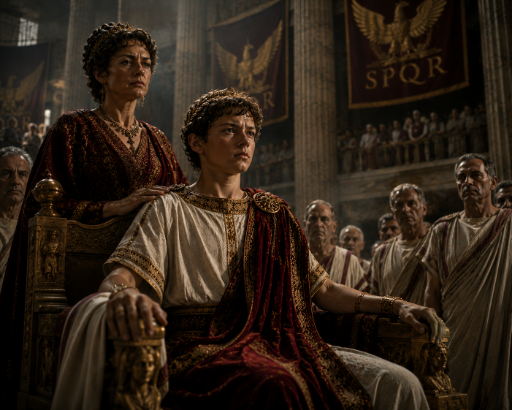 Sixteen years old.
An age when most people have not even fully discovered who they are yet.
And yet Nero was expected to become “The perfect emperor.”
Failure was not allowed. Weakness was not allowed.
He was constantly being watched.
That was the life he was forced to live. 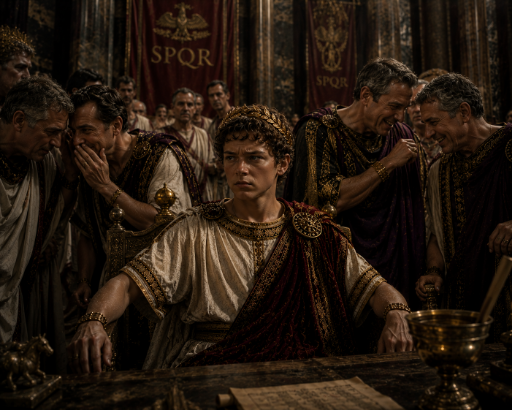 And there was another fear within the Roman court.
It was this:
“Never knowing who was truly on your side.”
The people smiling beside you one day could betray you the next.
In the world of power, trust could shatter in an instant.
And Nero was suddenly thrown into the very center of that enormous empire. 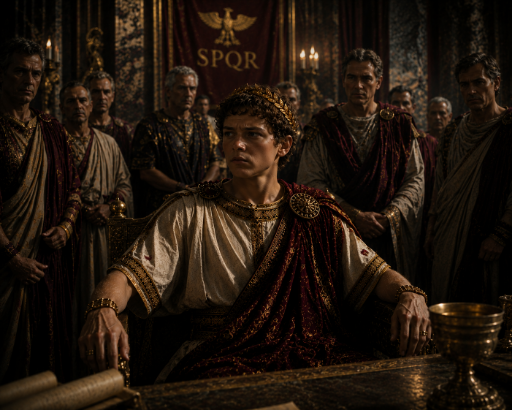 But at that time, Nero still did not understand something.
The most dangerous thing in the Roman Empire was not “enemies,” but “The moment people around you stop speaking honestly.”
Chapter III: The Ideal Young Emperor
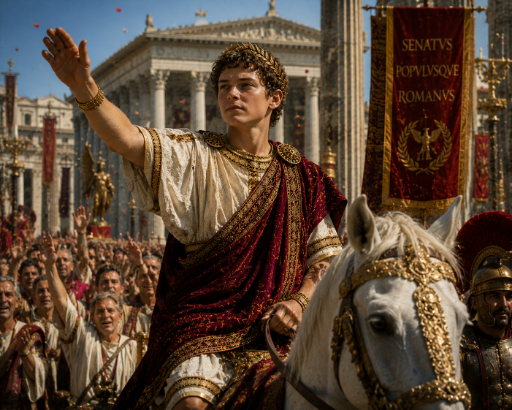 Nero was not a tyrant from the very beginning.
In fact, during his early years, He was welcomed as “the ideal young emperor.”
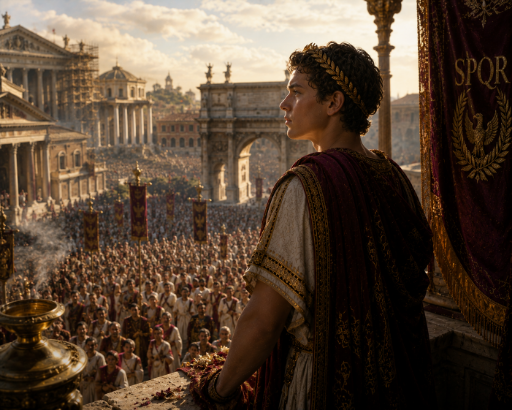 At the time, Rome was still weighed down by the oppressive atmosphere of Emperor Claudius’s reign.
Political tension.
Court conspiracies. People longed for something new.
And then appeared the young emperor, Nero.
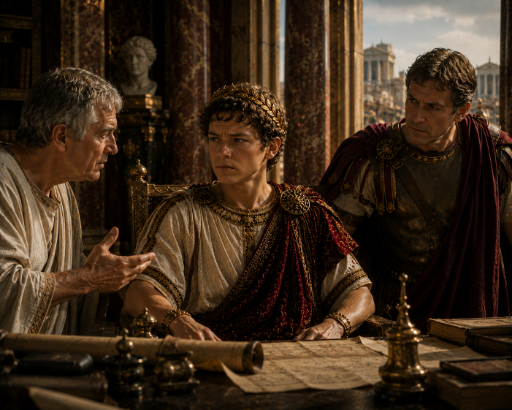 And Nero also had two exceptionally capable advisors:
Seneca and Burrus.
Seneca was a philosopher.
He tried to teach Nero:
- Self-control
- Compassion
- Reason
Meanwhile, Burrus was a skilled military commander who helped maintain the stability of the empire. 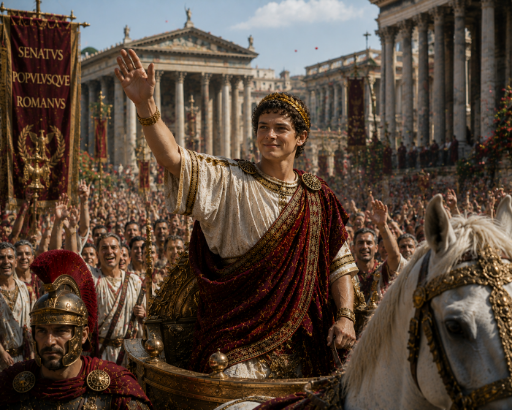 And in reality, Nero’s early reign was relatively stable.
He reduced tax burdens and showed concern for the common people.
His relationship with the Senate was not especially hostile either.
Because of this, throughout Rome, people began to believe that “The young Nero might become a good emperor.”
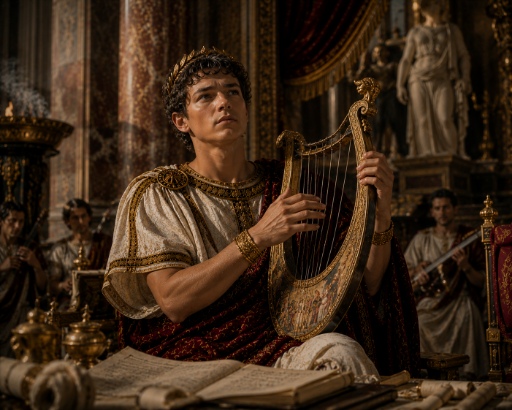 There was also something about Nero that made him different from previous emperors.
He loved art.
Singing.
Poetry.
Theater.
Music.
Rather than a warrior, he was “a deeply sensitive young man.”
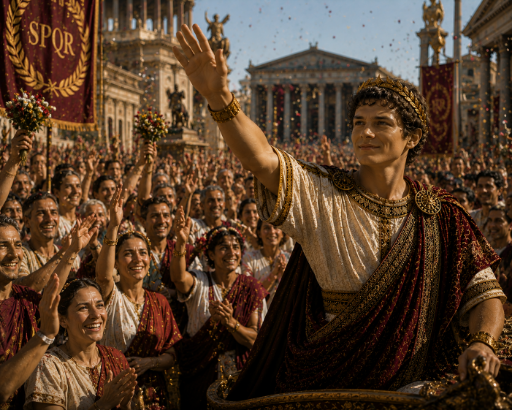 And the people of Rome were drawn to that young emperor.
Compared to cold and distant rulers, Nero felt more human.
That was who Nero was. 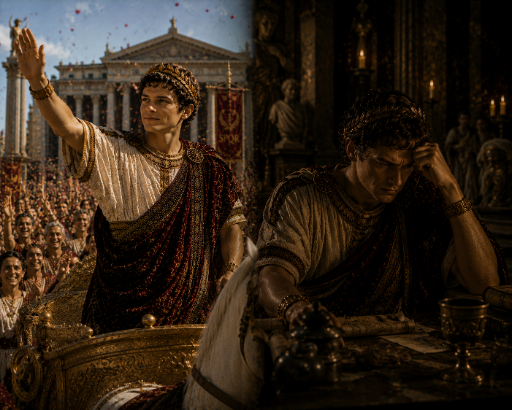 But—
But—
The Roman Empire was not a world that allowed people to remain human.
At the top of the empire, it became increasingly difficult to remain “your true self.”
And little by little, Nero began to change.
Chapter IV: The Shadow of His Mother
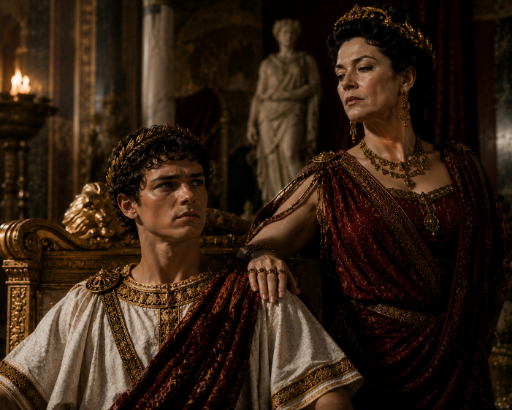 Nero had become emperor.
But at the center of the empire, there was still another ruler.
His mother, Agrippina.
She had placed her son on the throne.
And naturally, she believed that “She was the one truly controlling the empire.”
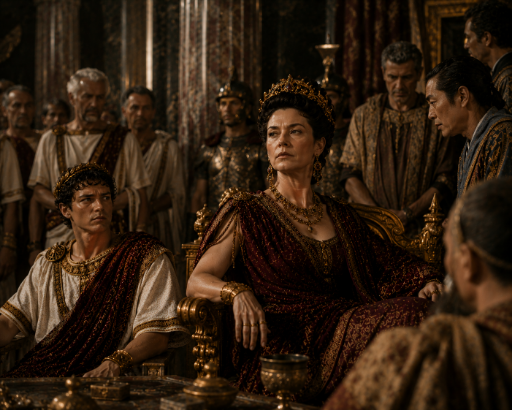 Even within the imperial court, her presence was overwhelming.
She intervened in politics.
Her influence was immense.
She even involved herself in meetings with foreign envoys.
And gradually, people around the palace began to feel that “The true ruler was Agrippina.”
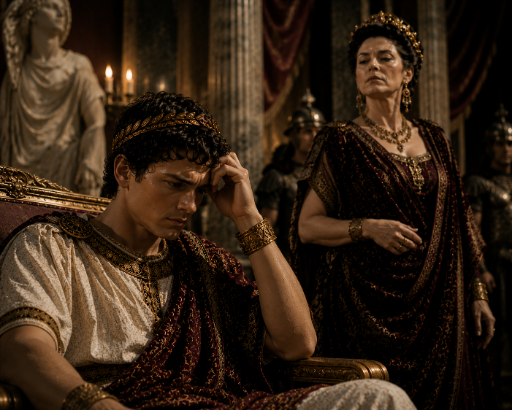 But Nero gradually began to feel suffocated.
He was the emperor.
And yet at the same time, He was still “a boy who could not escape his mother.”
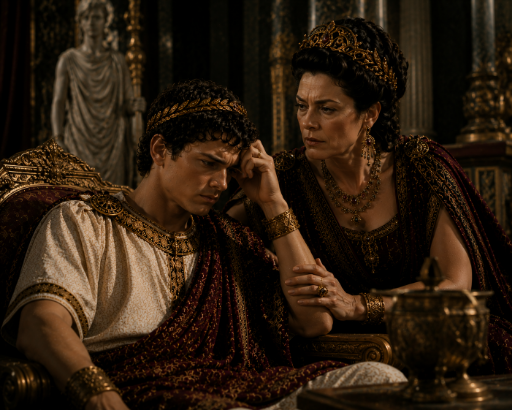 Perhaps Agrippina truly believed she was protecting Nero.
But at the same time, she was also trying to “control” him.
Who he should meet.
Who he should trust.
What he should say.
What he should do.
She was not only the emperor’s mother— She was trying to control “Nero’s entire life.”
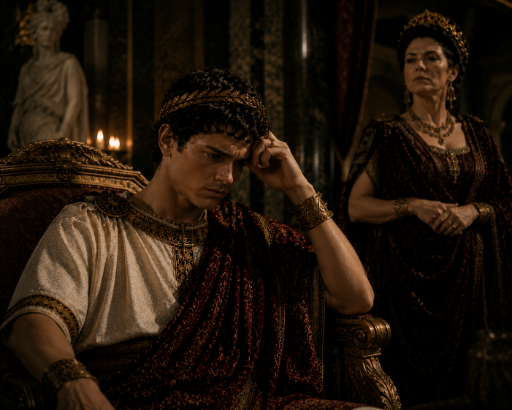 And little by little, Nero began to grow exhausted.
Since childhood, he had lived under “his mother’s expectations.”
He had been raised as a future emperor, forbidden to fail, constantly watched by those around him.
And now, just as his mother had planned, he had become the emperor of Rome.
He possessed one of the greatest powers in the world.
And yet, he still felt as though “he was not truly living his own life.”
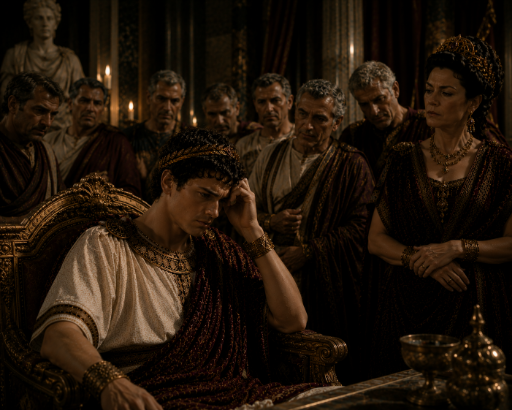 What was even more frightening, however, were the people around him.
They obeyed Nero.
But many of them obeyed him only because “he was the emperor.”
And gradually, Nero began to realize something.
Within the imperial court, “performance” mattered more than “honesty.”
And around this time, a longing slowly began to grow inside him—
“the desire to truly be loved.”
But Nero still did not understand that this very longing would eventually destroy him.
Chapter V: The Emperor Who Sought Applause
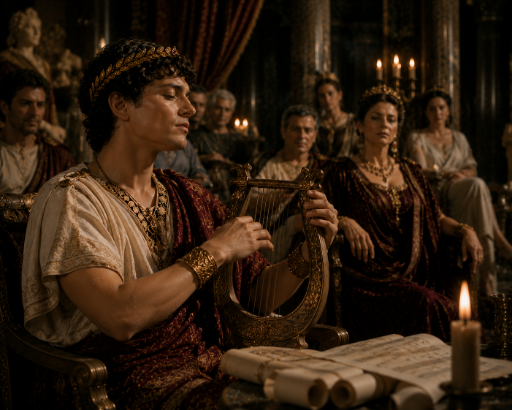 Little by little, Nero drifted away from politics.
And in its place, something else began to consume him.
That thing was “art.”
Singing.
Poetry.
Theater.
The lyre.
Nero truly loved them all.
He was not a warrior.
Nor was he a cold-hearted military ruler.
More than anything, he was “a man who wanted to express himself.”
And gradually, Nero began to think:
“I want to be loved not as an emperor, but as an artist.”
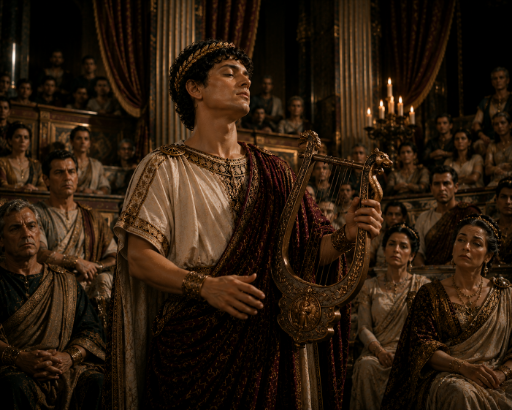 But there was one enormous problem.
Nero was the emperor.
If an ordinary artist performed, the audience could judge freely.
If the performance was boring, they could leave.
If it was ridiculous, they could laugh.
But in Nero’s case, none of that was possible.
Because he was the ruler of the Roman Empire.
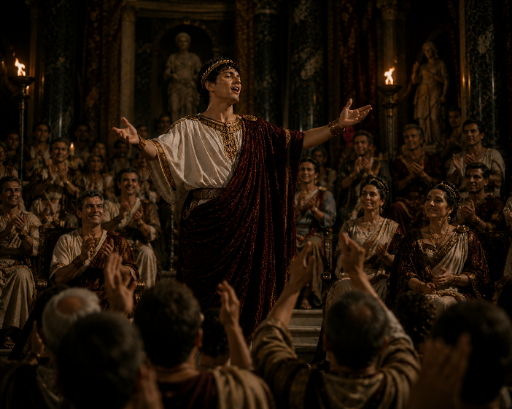 But Nero never realized that.
He looked at the applause of the crowd and began to believe that “he was loved.”
And so he immersed himself more and more deeply in art.
He sang before audiences.
He stood upon the stage.
He recited poetry.
He performed in theatrical productions.
Eventually, Nero became dependent on “the reactions of the audience”
themselves.
At first, perhaps he simply loved art.
But human beings change when they are constantly showered with “applause.”
They want to be seen more. Praised more.
Admired more.
And that desire grows without limit. 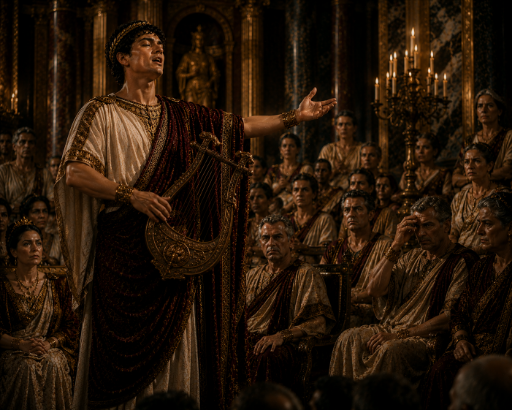 And little by little, Nero began to change.
Gradually, he started to desire “being praised” more than “being a good emperor.”
But in the process, he lost the most dangerous thing of all.
That was “honest judgment.”
No one could speak honestly in front of Nero.
No one could say, “This is boring.”
Because the man standing before them was the emperor.
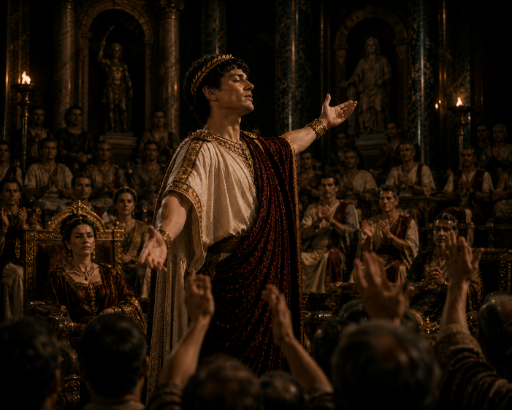 But Nero never realized it.
He saw only “The applause.”
And that applause slowly pulled him farther and farther away from reality.
Eventually, even as emperor, Nero became “a man who constantly sought an audience.”
But— the Roman court had become a place where “honest feelings” no longer existed.
And Nero still did not understand how dangerous applause could become in a world where honesty had disappeared.
Chapter VI: The Palace Where No One Could Speak Honestly
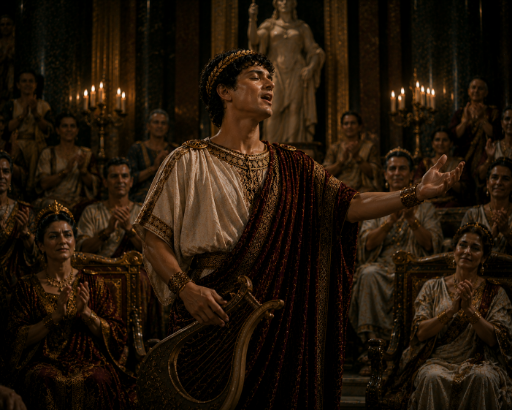 Nero became more and more consumed by art.
He began singing, acting, and performing before crowds.
But by that time, the atmosphere within the Roman court had already changed dramatically.
No one any longer spoke “The truth.”
Whenever Nero sang, people applauded.
Whenever he recited poetry, they praised him.
Whenever he stepped onto the stage, the audience cheered.
But the problem was this:
“None of it was sincere.”
The man before them was the emperor.
If they displeased him, their lives could be ruined.
And in some cases, even their lives themselves could be at risk.
So the people laughed.
Praised him.
Admired him.
Pretended to be moved.
But it was not because of joy.
It was because of fear.
And Nero looked at that applause and gradually convinced himself that “he was loved.”
But in reality, the emotion people within the palace truly felt was “fear.”
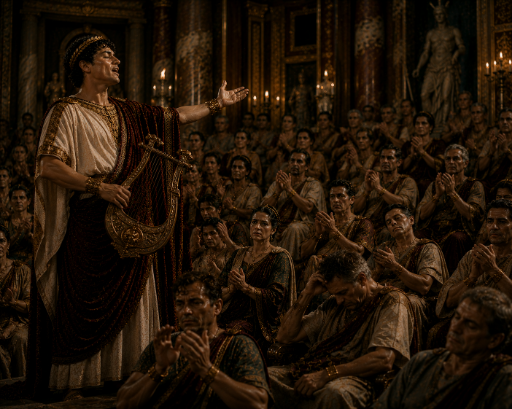 According to historical accounts, during Nero’s performances,
“People were not allowed to leave before the show ended.”
Some were forced to remain for hours.
Some became completely exhausted.
Some even collapsed.
And yet the applause continued.
Because the people had no choice but to
“Praise Nero.”
“If they wanted to survive, there was no other option.”
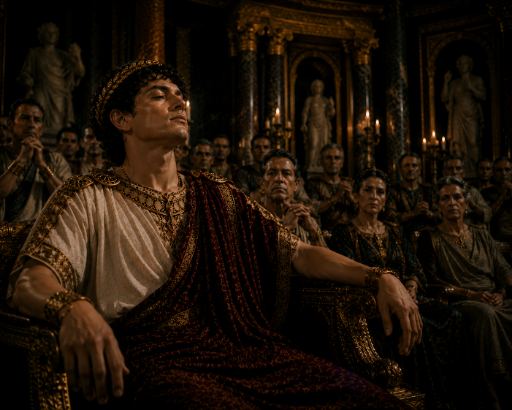 And the most terrifying part was this:
Nero himself never realized how abnormal it had become.
When people live too long in an environment where honesty disappears, they gradually lose sight of “reality.”
And little by little, Nero became trapped inside the illusion of “being truly loved.”
But in reality, no one truly loved him.
It was simply that no one could speak honestly to him.
No one could say, “You are wrong.”
No one could say, “You are not loved.”
Because within the Roman court, “survival” mattered far more than “the truth.”
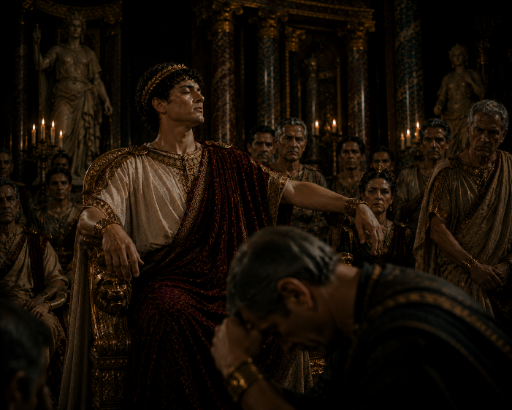 And from around this time, Nero gradually began to fear “those who opposed him.”
Because he was no longer accustomed to “honest feelings.”
Around him, there was nothing but applause.
But— A world filled only with applause destroys people.
Once genuine judgment disappears, people slowly lose sight of who they truly are.
And little by little, Nero became obsessed not with being “an emperor,” but with becoming “someone loved by an audience.”
But that applause was not love.
It was nothing more than “a sound created by fear.”
Chapter VII: The Murder of His Mother
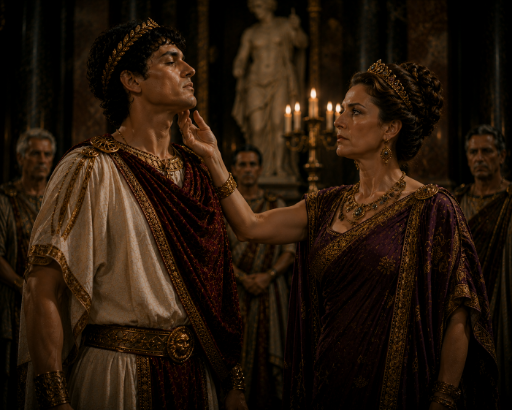 The relationship between Nero and Agrippina had completely collapsed.
Once, Agrippina had used everything she possessed “to make her son emperor.”
Conspiracies.
Marriage.
Power.
And perhaps even poison.
She had pushed her son all the way to the top of the Roman Empire. 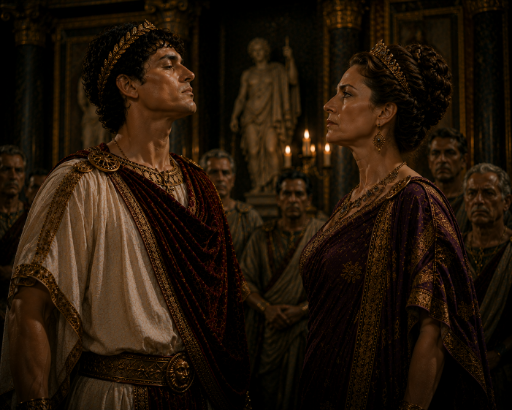 But ironically, “the son who had become emperor.”
slowly became a threat to her.
Nero wanted freedom from his mother.
Meanwhile, Agrippina wanted to continue controlling her son.
Their relationship was no longer that of parent and child. It had become “a struggle for power.”
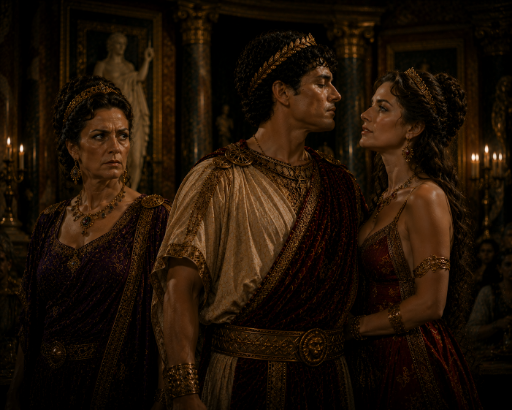 And changes were taking place around Nero as well.
He had become deeply attracted to a woman named Poppaea Sabina.
She was beautiful, charismatic, and ambitious.
But Agrippina despised the relationship.
Because she understood something clearly:
If Nero chose another woman over his mother, “her control over him” would begin to weaken. 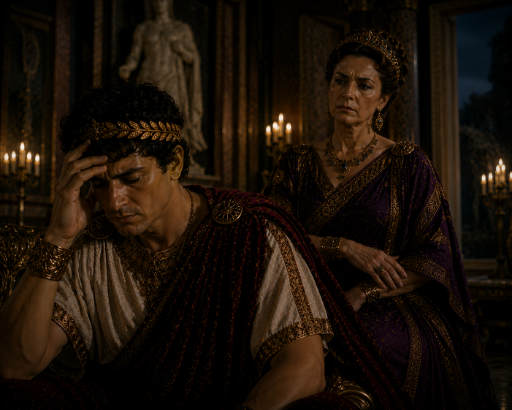 And Nero gradually began to fear his mother more and more.
Agrippina still possessed enormous influence.
If she truly wished to, she could even attempt to place “another emperor” on the throne.
Eventually, Nero reached a conclusion.
“As long as my mother lives, I will never be free.”
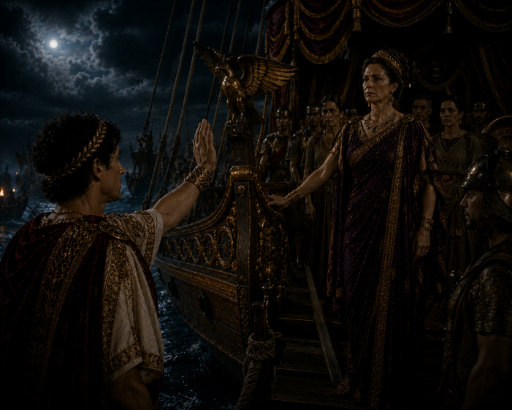 And so he devised a horrifying plan.
The first plan was meant to look like “an accident.”
Nero placed Agrippina aboard a ship.
But the vessel had been secretly sabotaged.
It was designed to break apart and sink while out at sea.  But— Agrippina survived.
Even after being thrown into the sea, she managed to reach the shore alive.
And in that moment, Nero understood something.
There was no turning back anymore. 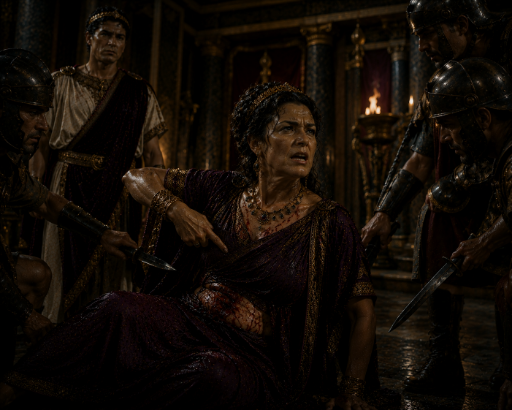 He sent soldiers to finish the task.
And at last, Agrippina was killed.
According to ancient accounts, her final words were:
“Strike here.”
“This is the womb that gave birth to Nero.”
As she pointed to her own stomach.
Whether the story is true remains unknown.
But the words themselves became deeply symbolic. 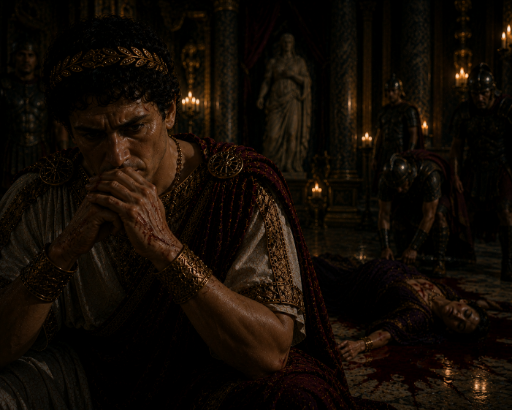 Nero had finally killed his mother.
But did that make him free?
No. If anything, from that moment onward, Nero began to fall apart rapidly.
Once a person crosses a certain line, they change.
And Nero had now lost “the one person capable of stopping him.”
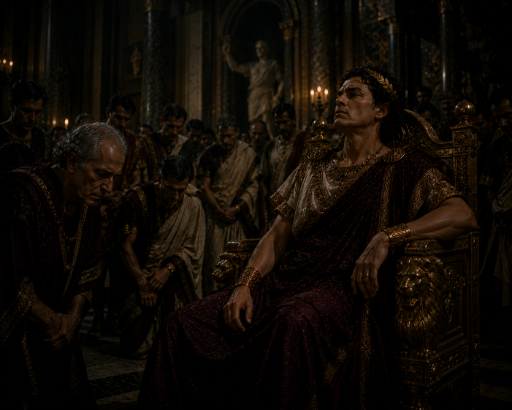 What was even more terrifying was the reaction of those around him.
No one tried to stop Nero.
No one spoke honestly.
The people remained silent.
Because within the Roman court, “survival” mattered more than anything else. 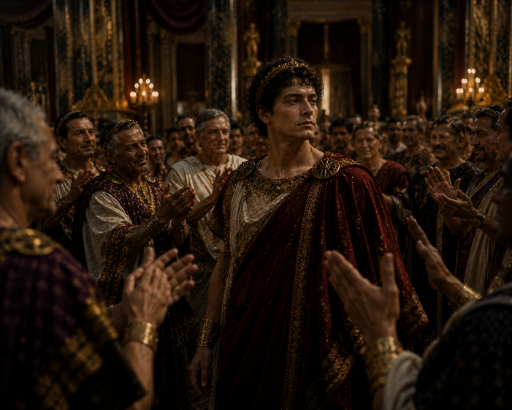 And Nero became even more isolated.
There was still applause.
There was still praise.
But among all those voices, There was not a single person “he truly trusted.”
From this point onward, Nero drifted farther and farther away from reality.
And eventually, he moved toward “a tragedy that would shake Rome itself.”
Chapter VIII: Rome in Flames and the Golden Palace
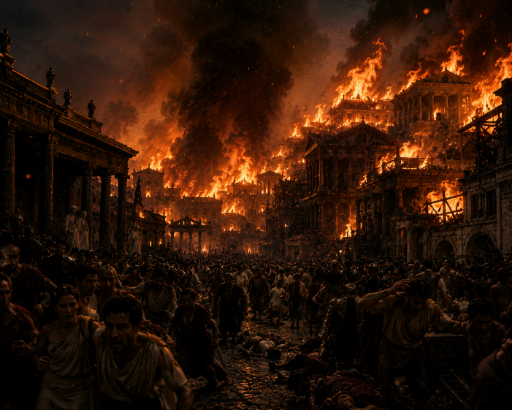 In 64 AD, a catastrophe struck the Roman Empire.
The Great Fire of Rome.
It is said to have begun as only a small fire.
But Rome at that time was a massive city packed tightly with wooden buildings.
Driven by the wind, the flames spread with terrifying speed. 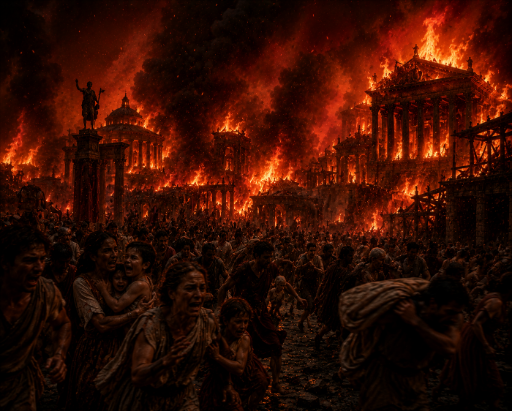 The night sky turned red, and thick black smoke swallowed the city.
People fled screaming in terror.
Buildings collapsed.
Temples burst into flames.
Children cried.
Crowds shoved and trampled over one another.
Rome had become something close to hell itself. 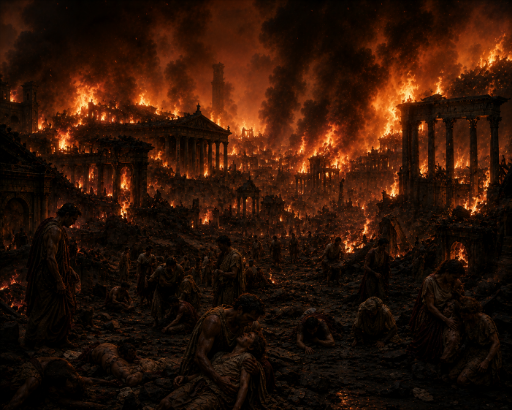 The fire continued burning for days.
Most of the great city of Rome was destroyed.
Some lost their homes.
Some lost their families.
Some lost everything.
And the city that had once stood at the center of the world was transformed into “smoldering ruins.”
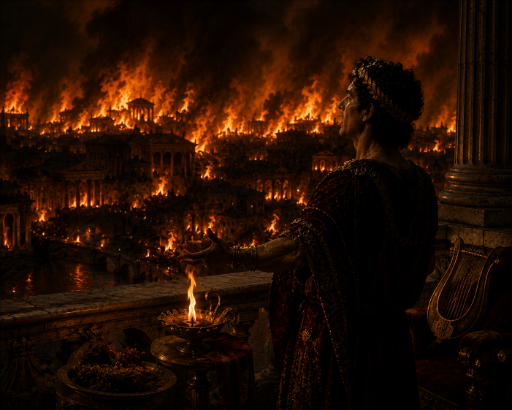 And as the flames consumed the city, a rumor began spreading throughout Rome.
“Nero was singing while watching Rome burn.”
That was the story people whispered.
The truth is still unknown.
In reality, many historians believe the tale was likely exaggerated—or even invented—by later generations.
But what truly mattered was this:
“People believed it.”
By that point, Nero had already begun to lose “the trust of the people.”
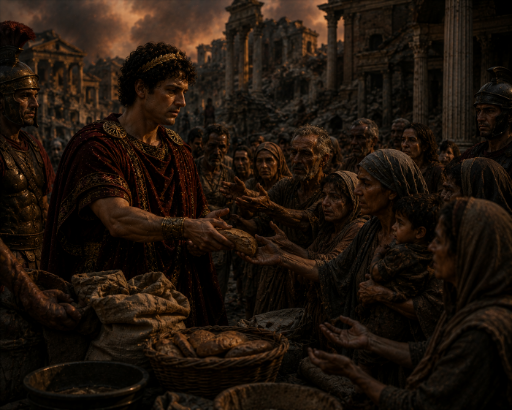 Nero himself did provide aid to refugees after the fire.
But the people’s anger did not fade.
Because after that, an even stranger sight began to emerge.
Across the burned ruins of Rome, within that enormous emptiness, Nero began constructing something new. 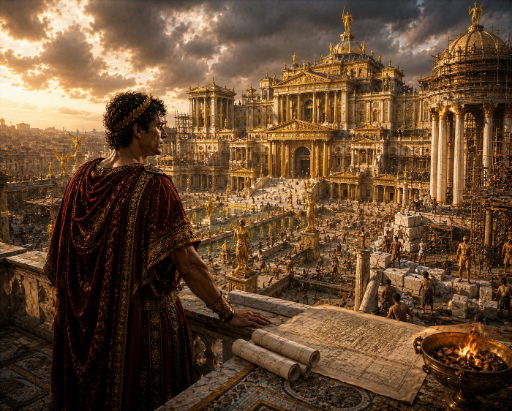 Domus Aurea “The Golden Palace.”
 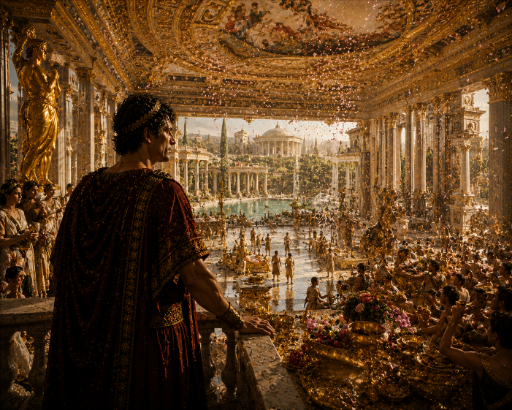 It was a palace beyond all common sense.
Ceilings covered in gold.
Massive corridors.
Endless gardens.
Artificial lakes.
Luxurious sculptures.
And it was even said that perfume rained down from the ceilings of the banquet halls.
It was no longer merely a palace.
It was “the emperor’s dream itself.”
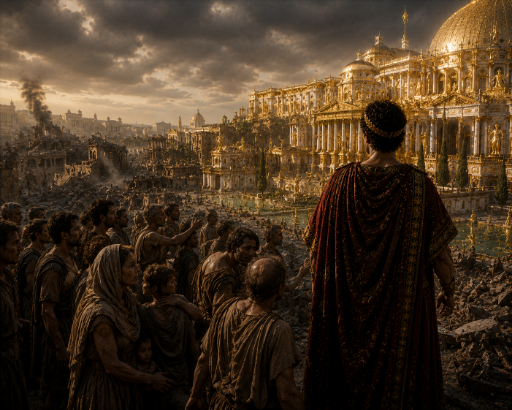 But to the people of Rome, the sight felt deeply disturbing.
The city was still covered in ruins.
The smell of smoke still lingered in the air.
Many had lost their homes.
And yet, instead of rebuilding the city, the emperor was constructing “a golden palace.”
And little by little, Nero began to lose “the trust of the people.”
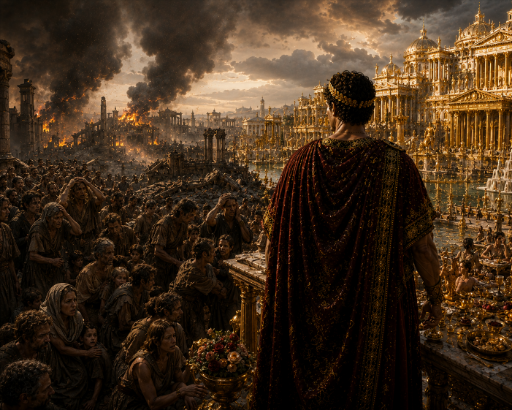 And gradually, people began to wonder:
“Did Nero burn Rome in order to build his own paradise?”
The truth remains unknown even today.
But what truly mattered was “the image of Nero himself.”
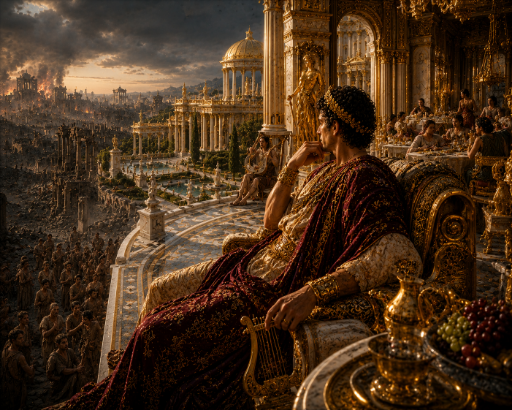 He loved art. He loved luxury.
He loved beauty. And little by little, He began living not in “reality,” but within “his own ideal world.”
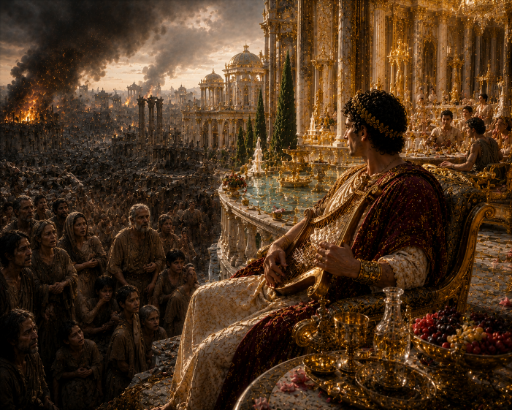 What the people of Rome saw was suffering.
But what Nero saw was “the beautiful world he wanted to create.”
And here, a decisive divide emerged between Nero and the people.
Nero believed that he was “an artist loved and admired throughout all of Rome.”
But to the people, he had become “an emperor who could no longer see reality.”
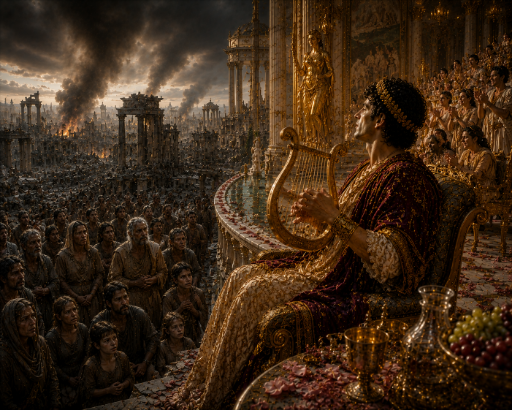 And Nero retreated deeper and deeper into art and fantasy.
But by that time, even though there was still “applause,” almost all “trust” had already begun to disappear.
Chapter IX: Applause Without Loyalty
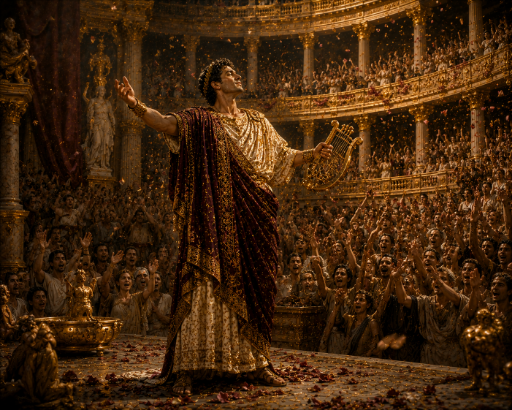 Nero continued to stand before the people.
He sang.
He performed.
He recited poetry.
And he bathed himself in the applause of the audience.
Perhaps, in those moments alone, he truly felt happy.
The people cheered.
Praised him.
Admired him.
And little by little, Nero became more and more convinced that “he was loved.”
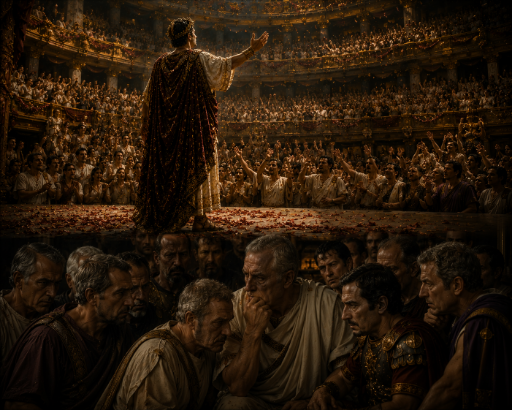 But— That applause was not “loyalty.”
Across the Roman Empire, dissatisfaction with Nero was slowly spreading.
The Senate.
The army.
Provincial governors.
The aristocracy.
Little by little, people began to think:
“This emperor is dangerous.”
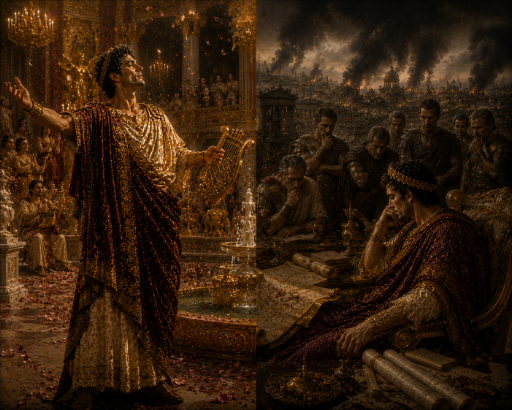 Nero immersed himself in art.
He built magnificent palaces.
He stepped onto the stage to perform.
But at the same time, his interest in “protecting and governing the empire” slowly began to fade. 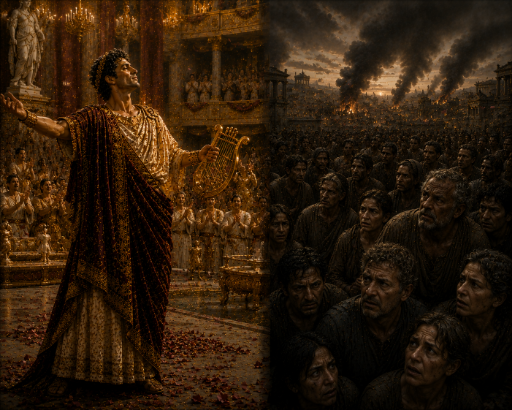 And gradually, the people began to realize something.
What Nero truly desired was not “The future of Rome,” but “applause for himself.”
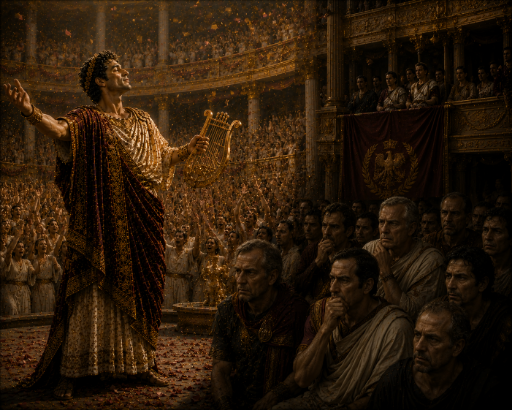 But Nero himself still did not realize it.
Because even now, applause still surrounded him.
And that is the terrifying part.
Human beings eventually begin to confuse “being praised” with “being truly supported.”
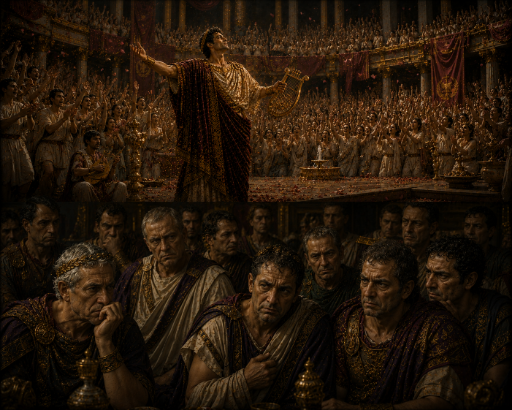 But in reality, those two things are completely different.
People applauded.
They smiled.
They praised him.
Yet deep inside, many were already thinking:
“I no longer want to support this man.”
That was what had begun happening within the Roman court. 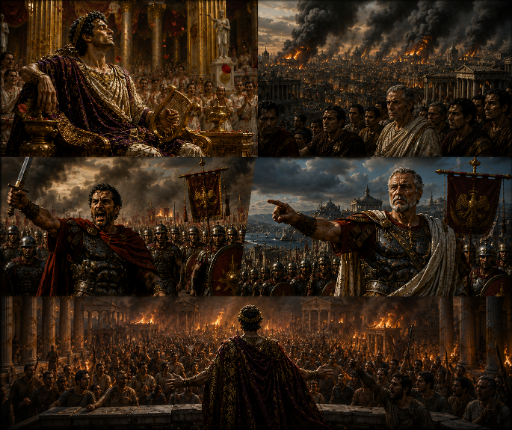 And finally, rebellion erupted within the empire.
The governor of Gaul, Vindex rose in revolt.
And in Spain, Galba also began to move. 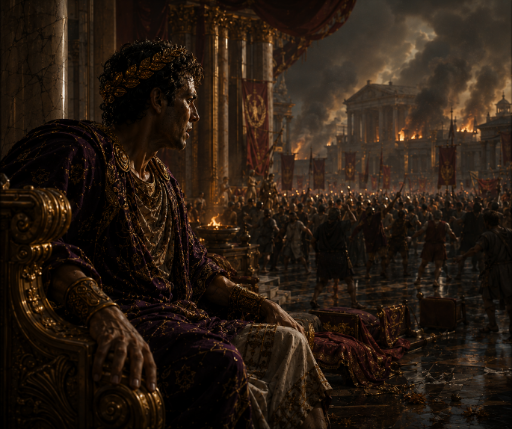 And for the first time, Nero began to see reality.
He had applause. But there was no one “willing to risk their life to protect him.”
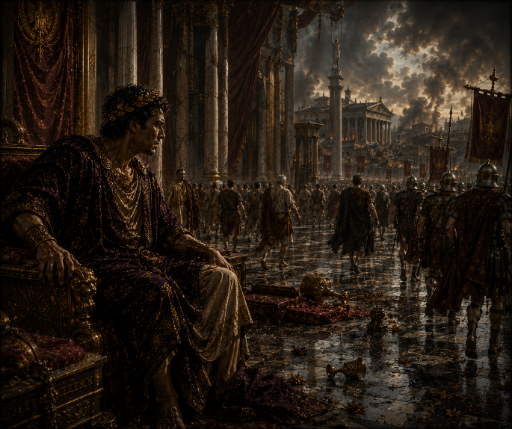 The army abandoned him.
The Senate abandoned him.
Even his closest attendants began to flee.
And the people who had once filled the palace slowly began to disappear. 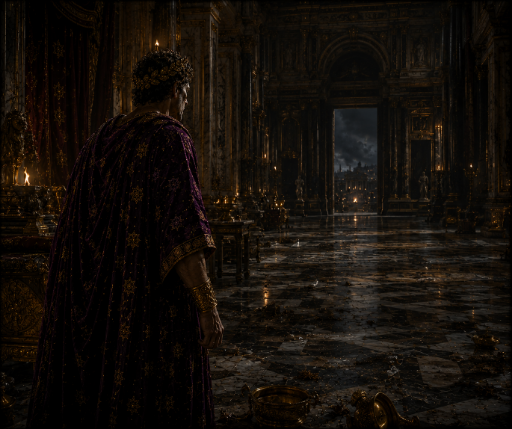 And then, one night, Nero noticed something strange inside the palace.
In the past, there had always been sound somewhere.
Laughter.
Music.
Footsteps.
Applause.
But on that night, the palace was disturbingly silent. 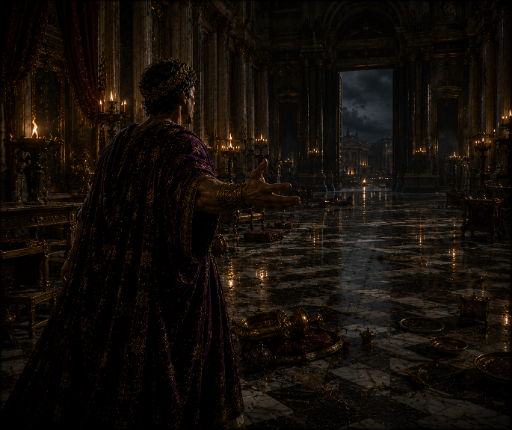 Nero called out for someone.
But no one came.
He called again.
Still, no one answered.
Even the servants had begun to flee.
And in that moment, Nero finally began to understand something.
What he had been surrounded by all this time was not “love.”
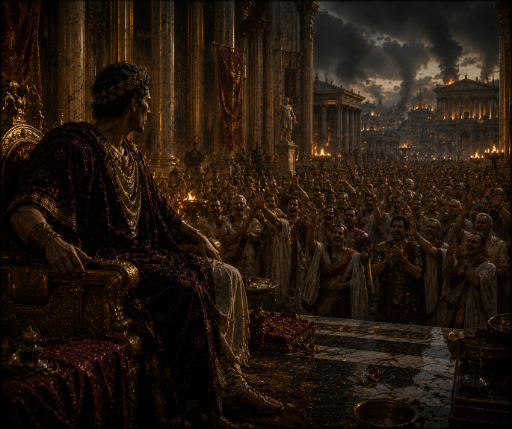 People had applauded Emperor Nero.
But no one had ever truly loved “Nero as a human being.”
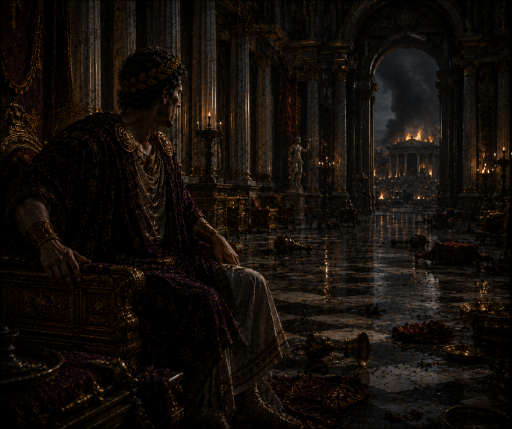 This was Nero’s greatest tragedy.
Throughout his entire life, he longed “to be loved.”
But in the end, what he gained was “a world where honesty had disappeared.”
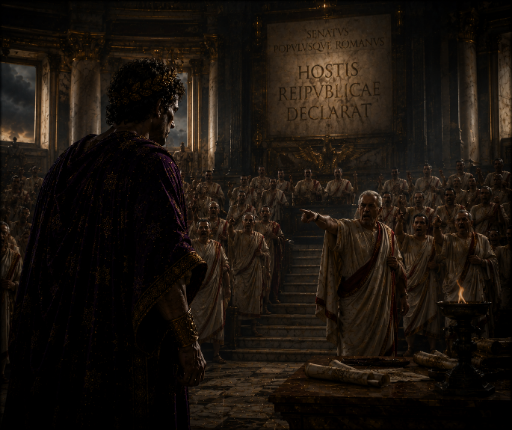 And at last, the Senate declared Nero “an enemy of the state.”
The man who had once stood at the top of the world had now become a fugitive.
And finally, Nero fled.
The emperor who had once been surrounded by thunderous applause vanished in the end into “a darkness where no one remained.”
Chapter X: What an Artist Dies in Me
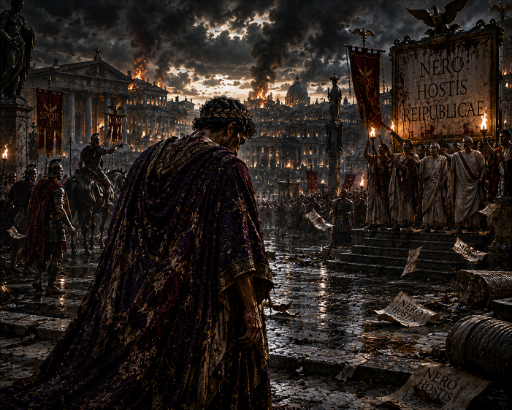 In 68 AD, the emperor who had once ruled one of the greatest empires in the world had become a fugitive.
The Senate declared Nero “an enemy of the state.”
The army abandoned him.
The aristocrats abandoned him.
And the people who had once praised him no longer tried to protect him. 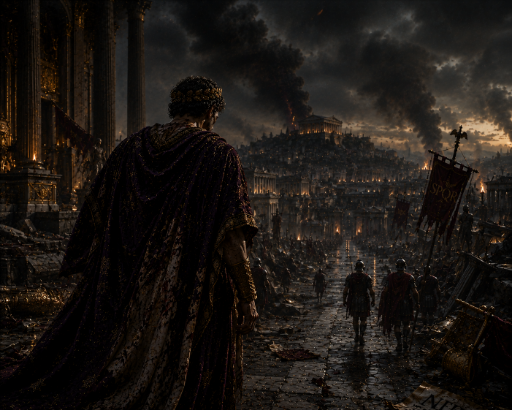 Nero fled from Rome.
The Golden Palace.
The stage.
The cheers of the crowd.
None of them remained anymore. 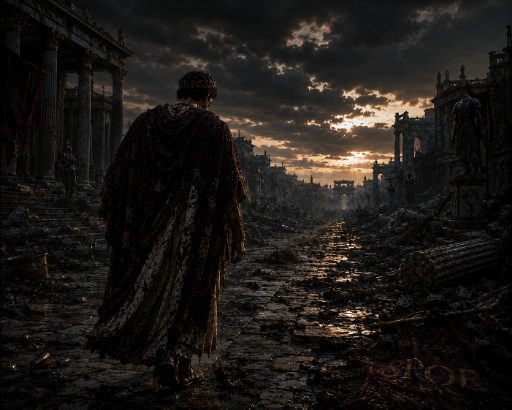 All that remained was “loneliness.”
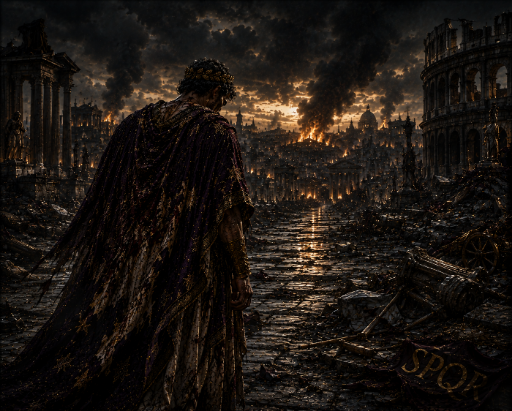 And yet, even until the very end, Nero could not let go of “how he was seen by others.”
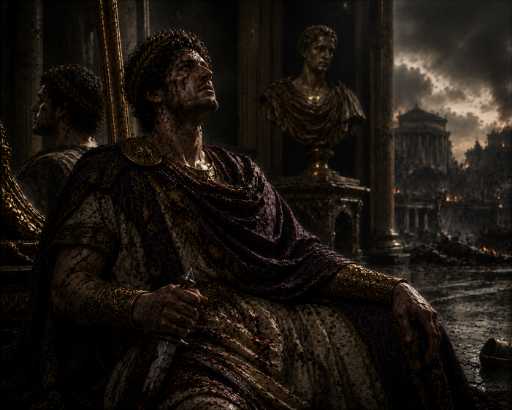 It is said that when Nero finally decided to take his own life, he spoke these words:
“What an artist dies in me.”
In Latin:
Qualis artifex pereo.
Even at the very end, He still believed not that he was “an emperor,” but that he was “a great artist.”
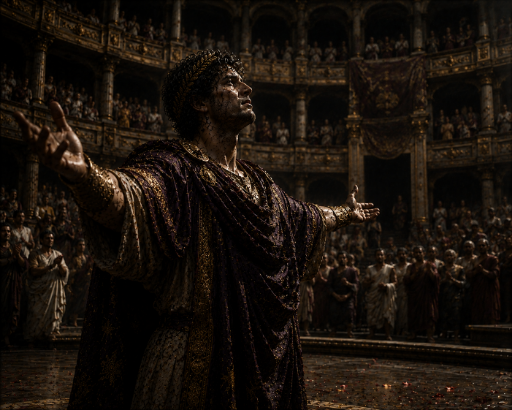 Nero spent his entire life chasing applause.
But that applause was never sincere.
And yet, until the very end, he wanted to believe that it was. 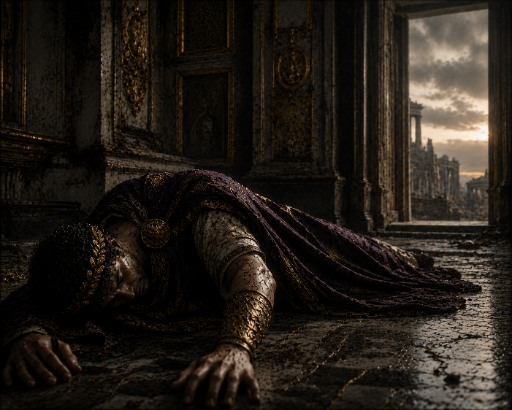 And so Nero, Emperor of Rome, died quietly, with no one left to mourn him.
The man who had once stood at the top of the world died in the end without a single person who truly “loved him for who he was.”
Epilogue
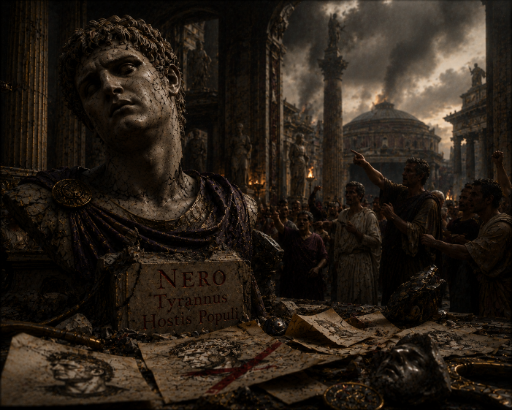 After Nero’s death, the Roman Empire recorded his name as that of a tyrant.
And in the centuries that followed, people mocked him.
But was Nero truly some uniquely monstrous being? 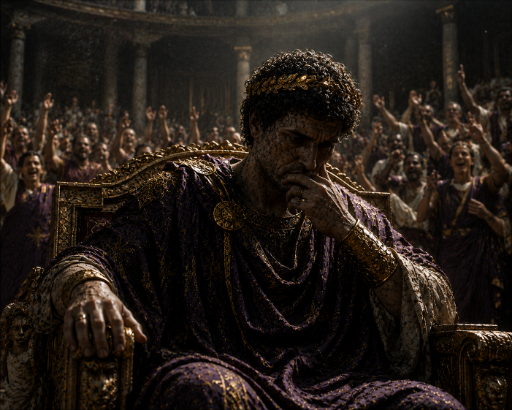 At times, people become consumed by “how they are seen by others.”
Applause.
Praise.
Popularity.
The desire to be loved. 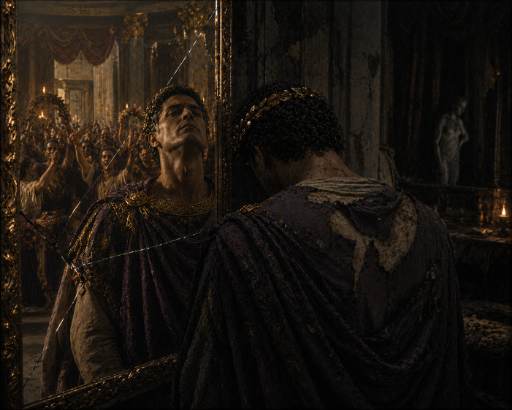 And before they even realize it, they begin to believe that “the person they wish to be” is more real than “who they actually are.”
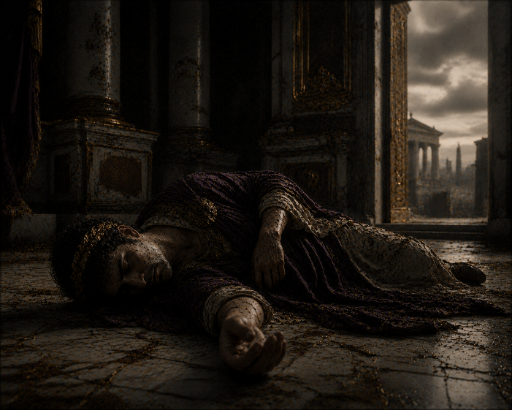 Nero was a man who reached the very end of that path.
Though he once stood at the pinnacle of the Roman Empire, he ultimately died within “the loneliness of never being truly loved by anyone.”
Author’s Afterword
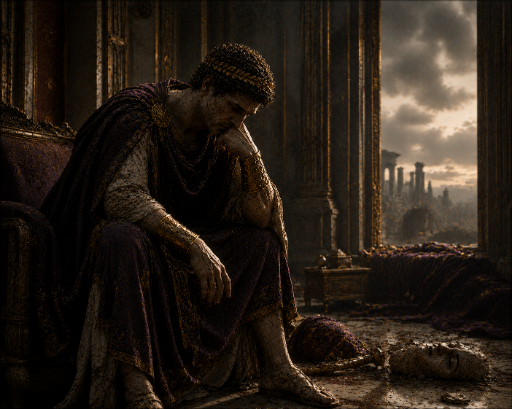 For a long time, Nero has been remembered as “a mad tyrant.”
And certainly, he committed many cruel acts.
But while writing this story, I found myself asking the same question again and again:
Was Nero truly a monster from the very beginning? 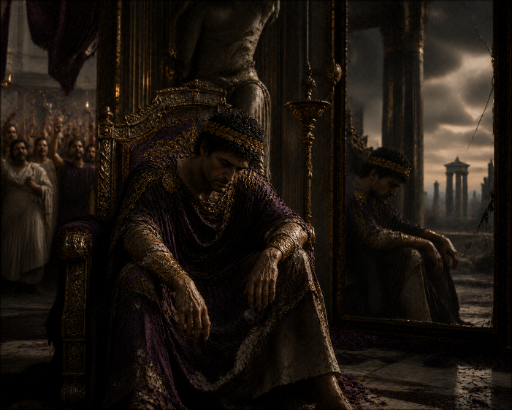 He wanted to be loved. He wanted to be acknowledged.
He longed for applause.
But as a result, little by little, He began to lose “his true self.”
He tried to fill the absence of the love he never received from his mother with the love of the people.
And he believed that applause was “love.”
No— He wanted to believe it.
But in reality, it was nothing more than false admiration created by fear.
It was never real love.
Yet Nero was the emperor.
There was no one who could stand beside him as an equal and tell him “The truth.”
And so Nero was never able to see reality until the very end.
And by the time he finally understood, everything was already too late. 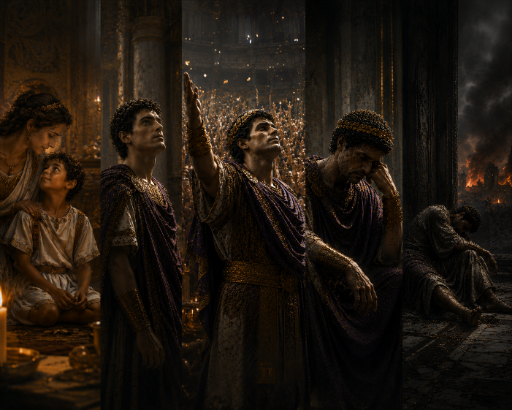 What is truly terrifying about history, I think, is not “The moment a monster is born,” but “The moment an ordinary human being slowly falls apart.”
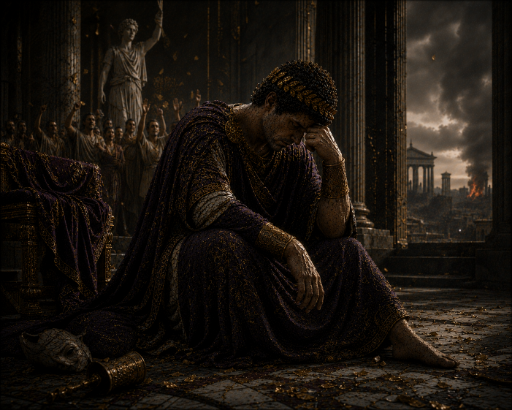 And somehow, Nero’s story never felt like something that belonged only to Rome two thousand years ago.
Fuji: The Chronicles of Humanity
Related Story
 The Roman Empire swallowed the fates of countless people.
And there was also a queen who risked her life to rise in rebellion against Nero, emperor of that vast empire.
→ Boudica: The Celtic Warrior Queen Who Defied the Roman Empire
https://thechroniclesofhumanity.com/boudica-the-celtic-warrior-queen-who-defied-the-roman-empire/
Author: Fuji
 Human history is truly complex, isn’t it?
There are countless websites introducing historical figures and events, but many of them are just plain explanations—not exactly exciting to read.
On the other hand, reading books takes a lot of time and effort.
That’s where I come in.
Through “stories that are more engaging than explanations and shorter than books,” I aim to bring the world’s history and humanity’s records to you in a more accessible and interesting way.
If my stories inspire you to love history a little more, I’d be absolutely thrilled!

Become Part of the Chronicle
If this article inspired you, consider supporting the project.
Become a character in the Chronicle.
Receive your own custom card and stand alongside queens, warriors, inventors, rebels, and legends from history.
Your support helps keep these stories alive and allows me to create more articles, illustrations, and historical cards.
Join the Chronicle and leave your mark on history.

Comment