

What If Every Compliment You Receive Was a Lie?
― What Emperor Nero Never Realized Until the Very End  Around you, is there anyone “Who is willing to tell you that you are wrong?”
Whenever you say something, everyone nods.
They praise you.
They smile.
They say, “That’s brilliant.”
But is that truly how they feel?
 Perhaps they are simply “afraid to disagree with you.
” They may fear being scolded.
Fear upsetting you.
Fear ruining the atmosphere.
Fear being disliked.
Fear damaging their career.
Fear losing their place altogether.
And little by little, people begin to hide their true feelings.
 They offer false praise instead.
And the person at the top gradually begins to mistake that praise for “genuine support.”
Even Nero, the Roman emperor from two thousand years ago, lived in exactly the same world.
 Nero sang before crowds.
He performed.
He recited poetry.
And he was showered with applause so thunderous that it shook the entire hall. 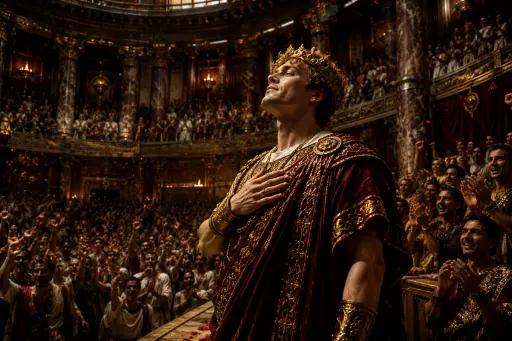 The audience erupted into cheers.
They praised him.
And little by little, Nero began to believe:
“I am loved.”
But the problem was this: “The man standing before them was the emperor.”
 If Nero had been an ordinary artist, the audience would have been free to judge him.
If they were bored, they could leave.
If the performance was ridiculous, they could laugh.
They could even criticize him.
But in Nero’s case, none of that was possible. 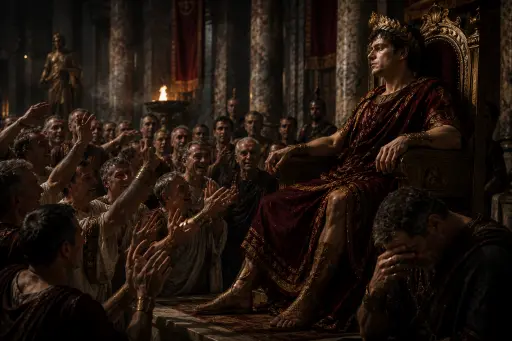 The man before them was the Emperor of Rome.
If they displeased him, their lives could be ruined.
In some cases, even their lives themselves could be in danger.
So the people laughed.
Praised him.
Admired him.
Applauded him.
But it was not “joy.”
It was “fear.”
But Nero himself never realized it.
 He believed that “false praise” was “genuine admiration.”
And as he looked upon that endless applause, he became more and more convinced that “he was truly loved.”
And this is the terrifying part.
 Human beings tend to believe only what they want to believe.
Everyone wants to believe that “They are admired.”
No one wants to believe that “They are being rejected.”
And so, people choose to believe the version they want to believe.
This is not just a story about Rome two thousand years ago.
 No one in the meeting disagrees with you.
No matter what you say, everyone agrees.
They say, “You’re absolutely right.”  But in reality, there may be people thinking, “This is dangerous.”
There may also be people thinking, “That decision is wrong.”
But they cannot say it.
 Because
“It is terrifying for someone in a lower position to contradict someone above them.”
They may fear being scolded.
Fear being disliked.
Fear ruining the atmosphere.
Fear damaging their career.
Fear losing their position altogether.  So even if they did not truly think “This is wonderful,” they still said, “This is wonderful.”
Just like the people standing before Emperor Nero.
The tragedy that eventually befell Nero was
 Rebellion erupted within the empire.
The army abandoned him. The Senate abandoned him.
Even his closest advisors began to flee.
Nero cried out for help. But no one came.
He called again.
Still, no one answered.
Even the servants who had once stood beside him, approving everything he said, had already run away.
And only then did he finally begin to understand.
 He finally began to realize that the praise he had received all his life had been “nothing but false admiration.”
That, in truth, no one had ever truly supported him.
But by then, it was already too late.
Nero had believed that the praise surrounding him was “real.”
No—
He wanted to believe it was real.
But in reality, it was nothing more than “false admiration created by fear.”
Nero’s Greatest Mistake Was
 There was no one left around him who could speak “The truth.”
And the one person who could speak honestly to him without fear—his mother— was the very person he killed with his own hands. 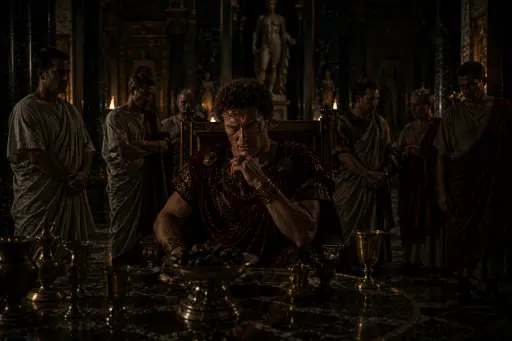 The higher a person rises in status, the less likely they are to hear honest opinions.
The more popular they become, the more people around them begin to read the room.
The more power they gain, the less they are ever contradicted—even when they are truly wrong. And little by little, they begin to believe that “the person they wish to be” is “their true self.”
Nero had reached the end of that path.
 Though he once stood at the very top of the Roman Empire, in the end, he died within “the loneliness of never being truly loved by anyone.”
Who Are the People Truly Important to You?
 Around you, is there anyone “Who is willing to tell you that you are wrong?”
Someone who, deep down, never wanted to be disliked by you—and yet still found the courage to speak honestly.
Those are the people who truly matter.
You must never push them away.
Just as Nero destroyed the one person who could still speak honestly to him—his mother.
To Your Subordinates, You and Nero Are Not So Different.

Nero’s subordinates were afraid of Nero.
In the same way, your subordinates may also be afraid of you.
The only difference was that Nero had the power to execute his subordinates.
That was all.
And because of that, no one could say, “You are wrong.”
The Lesson We Can Learn from Nero’s Life
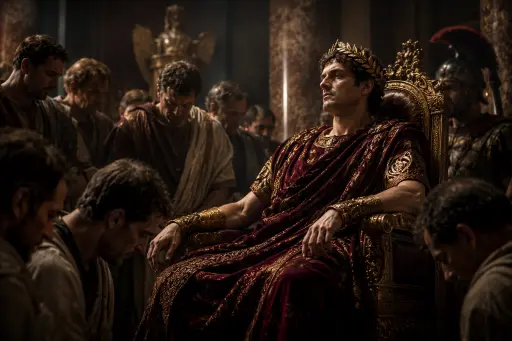
The lesson is not “Do not seek power.”
What truly matters is this.
“Do not listen only to those who praise you.”
“Listen also to those willing to tell you uncomfortable truths.”
 No one likes being criticized.
And that is perfectly natural.
Being denied or criticized is painful for everyone.
But in the same way, perhaps your subordinates never truly wanted to criticize you either.
And when one of your subordinates finally gathers the courage to tell you that you are wrong, that is the moment you should say, “Thank you.”
Show gratitude for their courage—and praise them for having the bravery to speak the truth.
Conclusion
 If the people around you have become nothing but
- yes-men,
- praise,
- and applause—
Then perhaps that is not a sign of success, but a sign that “you are beginning to lose sight of reality.”
Applause is not the same as love.
And praise is not the same as trust.  And sometimes, the person who tells you “That’s wrong” may actually be the very person you should never let go of.
  Tomorrow, when one of your subordinates tells you a truth you do not want to hear, what will you do?
Will you become Nero?
Or will you change history?
The End of a Life Spent Believing Only What One Wanted to Believe.
History has proven this again and again.
The problems we struggle with today are not unique.
They are patterns humanity has repeated throughout history.
And many of those problems have already been experienced, understood, and solved by those who came before us.
“When you understand history, you understand the present.”
Why Did Nero Fall Apart?
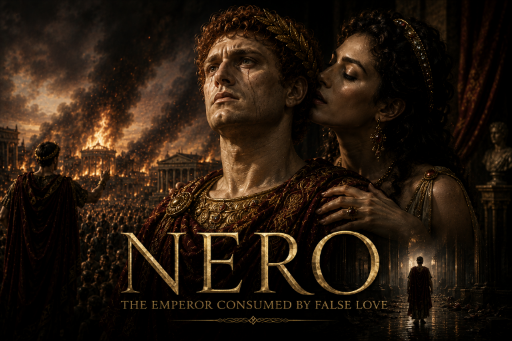
History did not remember Nero as a lonely man.
It remembered him as a monster.
But perhaps the terrifying part is that he was not born one.
Read the full story here:
Nero: The Emperor Consumed by False Love https://thechroniclesofhumanity.com/nero-the-emperor-consumed-by-false-love/

Become Part of the Chronicle
If this article inspired you, consider supporting the project.
Become a character in the Chronicle.
Receive your own custom card and stand alongside queens, warriors, inventors, rebels, and legends from history.
Your support helps keep these stories alive and allows me to create more articles, illustrations, and historical cards.
Join the Chronicle and leave your mark on history.

Comment