Chapter 1: The Young Aristocrat
52 BCE
Alesia.
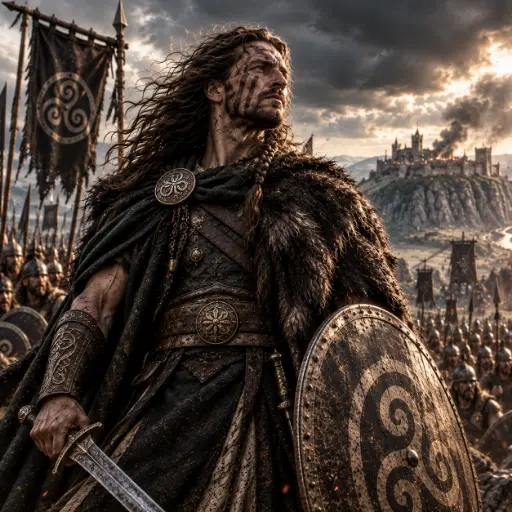
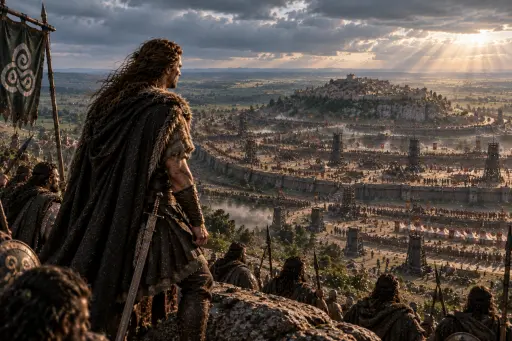
From the top of the hill, Vercingetorix looked down upon the Roman army.
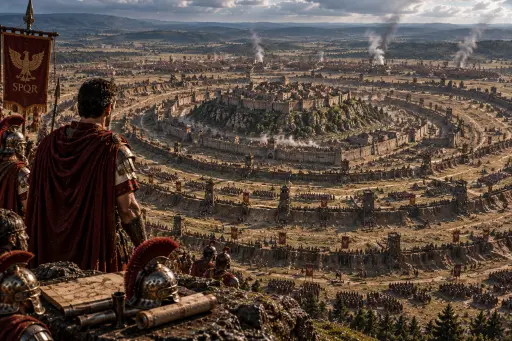
Below him stretched the Roman fortifications, layer upon layer, surrounding the hill.
Beyond them stood tens of thousands of soldiers.
And farther still lay the land of Gaul he had fought so hard to protect.
Vercingetorix did not yet know.
This hill would become the place where his life would come to an end.
Nor did he know that the man he had spent years fighting, Julius Caesar, had already completed a massive trap designed to ensure that he could not escape.
Around him stood the soldiers who had fought because they believed in him.
They waited for Vercingetorix’s orders.
If he told them to fight, they would fight.
If he told them to retreat, they would retreat.
A few years earlier, he could hardly have imagined that he would one day carry the fate of so many people on his shoulders.
But at that time, this young man was still nothing more than an aristocrat.
The Name of His Father
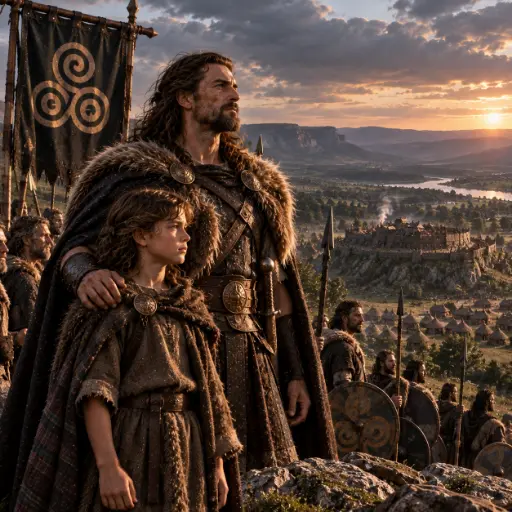
Vercingetorix was born in the region that is now central and southern France.
The vast land was home to various tribes whom the Romans collectively called the Gauls.
At the time, there was no country called France.
Among these tribes, the Arverni, the people into whom Vercingetorix was born, were one of the most powerful tribes in central Gaul.
His father’s name was Celtillus.
He was a prominent leader among the Arverni.
Celtillus had a great ambition.
He sought to become king of the Arverni.
But that ambition was dangerous to the other powerful leaders.
They feared that they would lose their own power.
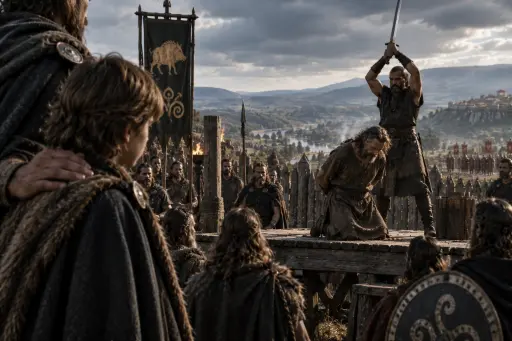
Eventually, Celtillus was executed.
The father disappeared from the life of the young Vercingetorix.
There are no detailed records of how he understood or reacted to his father’s death.
We also know very little about his life as a boy.
For that reason, we cannot say with certainty that his father’s death directly shaped the ideas or actions that defined him later in life.
But there was one important difference between father and son.
Celtillus had faced a struggle over who would hold power within the Arverni.
By the time his son came of age, however, the world surrounding Gaul was beginning to change.
It was no longer enough to look only within the Arverni.
From beyond its borders, Rome was drawing closer.
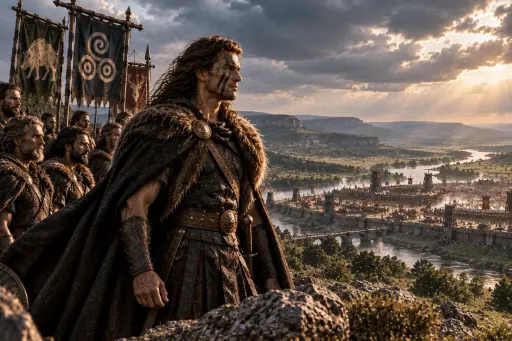
A Path Different from His Father’s
The path Vercingetorix would eventually choose was different from his father’s.
His concern was no longer simply how much power he could gain within the Arverni.
Gaul itself was being transformed by a vast and growing power: Rome.
Amid these changes, Vercingetorix gradually emerged from the ranks of the young aristocracy as a leader.
The time had not yet come for him to join forces with other tribes and resist Rome.
At this point, we cannot know in detail what thoughts were taking shape in his mind.
But the history that followed would reveal one thing.
He would not remain a man who looked only to the interests of his own tribe.
The young Arverni aristocrat would eventually find himself carrying the fate of Gaul on his shoulders.
And at the end of that path stood a Roman.
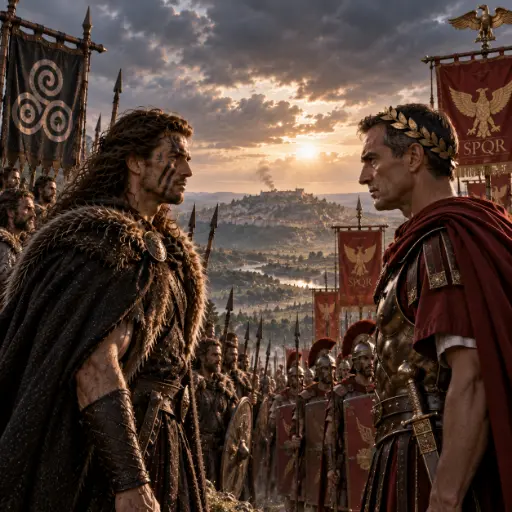
Chapter 2: The Rise of Caesar
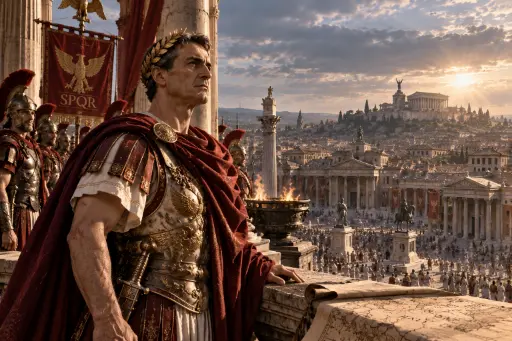
As Vercingetorix was growing up in Gaul, a Roman across the Mediterranean was rapidly rising to power.
His name was Gaius Julius Caesar.
Caesar built his power in Rome as a politician and eventually secured a position from which he could command armies.
Then, his attention turned beyond the borders of Rome.
And there, before him, lay Gaul.
The Roman Army Arrives
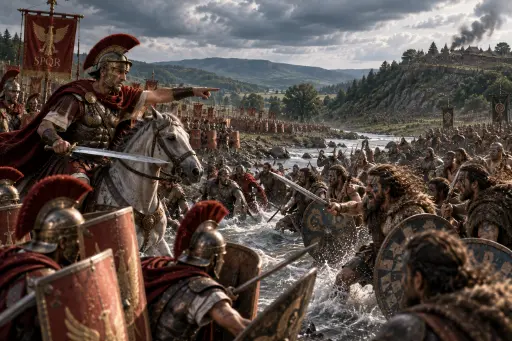
In 58 BCE, Caesar led his army into Gaul.
Whether he had a single, clearly defined plan to conquer all of Gaul from the beginning, or whether one war simply led to another and gradually expanded the conflict, remains a matter of historical debate.
Either way, the moment Caesar entered Gaul at the head of his army, the world in which Vercingetorix was growing up began to change.
His first major opponent was the Helvetii, who were attempting to migrate through Gaul.
Caesar blocked their movement and, after a series of battles, forced them to retreat.
But it did not end there.
Caesar then confronted Ariovistus, the Germanic leader, and defeated him.
Rome’s influence in Gaul continued to grow.
One war ended.
But the Roman army did not stop.
It moved on to the next land.
Rome Draws Closer to Gaul
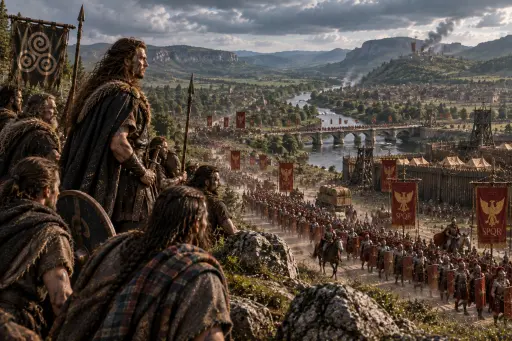
As Caesar’s military campaigns expanded, the presence of Rome was no longer something distant to the peoples of Gaul.
One neighboring tribe was fighting Rome.
Another had formed an alliance with the Romans.
Beyond them, Roman armies were advancing into new territories.
At first, some may have believed that these were wars that had nothing to do with them.
But the Roman army kept moving forward.
In 57 BCE, Caesar fought against the Belgic tribes, and his military campaigns continued to spread across Gaul.
Caesar crossed the Rhine and launched military operations against the Germanic peoples. He even led expeditions to Britannia.
The areas where Roman armies appeared grew wider and wider.
And eventually, the people of Gaul began to realize something.
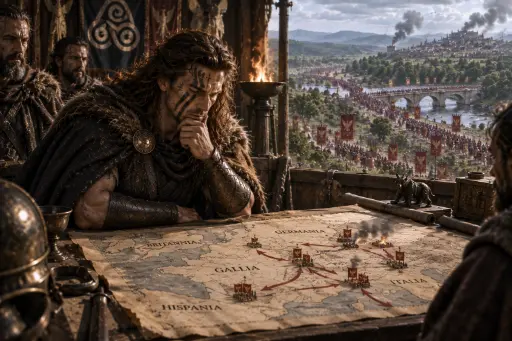
“This is not a problem for just one tribe.”
“The Roman army is advancing.”
“And the man leading that army is called Caesar.”
“Caesar does not stop after defeating a single tribe.”
“Once he brings one territory under Roman control, he moves on to the next.”
“And there, too, he expands Rome’s influence.”
For Vercingetorix, Rome was becoming less and less a distant power.
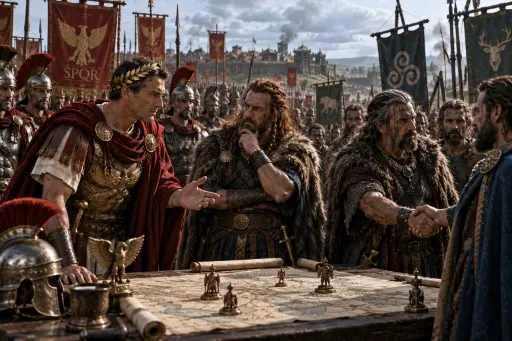
Even more troubling was the fact that the Gauls themselves were cooperating with Rome.
Some tribes formed alliances with Rome.
Others used those alliances to weaken their own enemies.
For Caesar, this was an advantage.
“I do not need to fight all of Gaul.”
“I will make allies, divide my enemies, and defeat those who stand against Rome—one by one.”
Using this strategy, Caesar steadily expanded Rome’s power across Gaul.
And somewhere along the path of his advance was a young Arverni aristocrat whose name Caesar did not yet know.
Vercingetorix.
The two men had not yet faced each other.
But the farther Caesar advanced into Gaul, the closer they came to one another.
Chapter 3: The Gallic Revolt
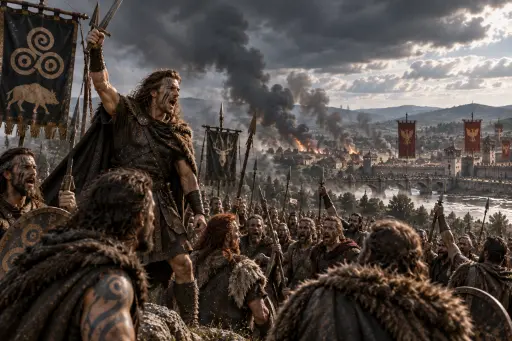
“We can wait no longer.”
52 BCE.
Several years had passed since Caesar first marched into Gaul.
The Roman army had continued to expand its power through successive campaigns, while resentment toward Rome had been steadily growing throughout Gaul.
But anger alone would not be enough to make a rebellion succeed.
What was needed was a single decisive act.
And then, a man emerged who was ready to make that decision.
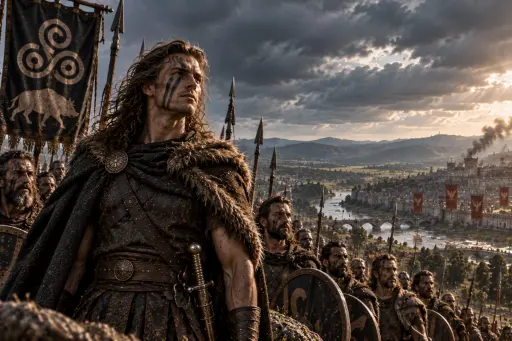
Vercingetorix.
He was a young aristocrat born into a powerful family of the Arverni.
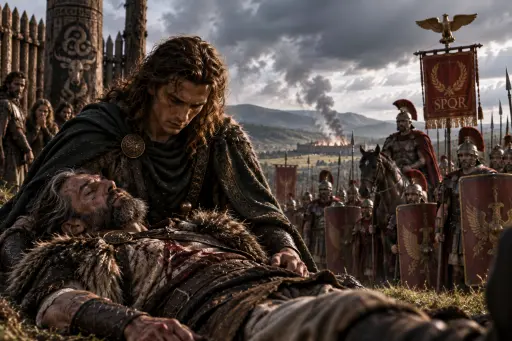
His father, Celtillus, had sought power among the Arverni—and lost his life for it.
But the problem his son would face was far greater than anything his father had known.
Rome.
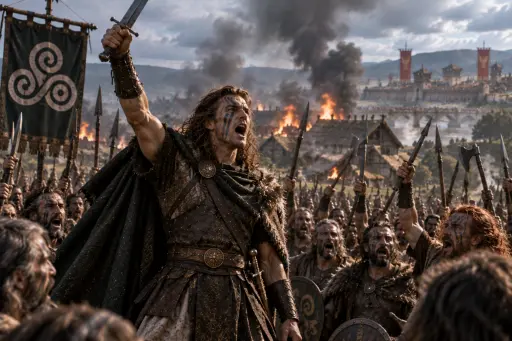
Rising Up
In 52 BCE, growing opposition to Rome erupted into a major revolt.
The killing of people associated with Rome at Cenabum became a catalyst for resistance across Gaul.
Vercingetorix rose up as well.
He was young.
He did not have the long military experience that Caesar possessed.
Even so, people who wanted to resist Rome began to gather around him.
But he soon faced a crucial problem.
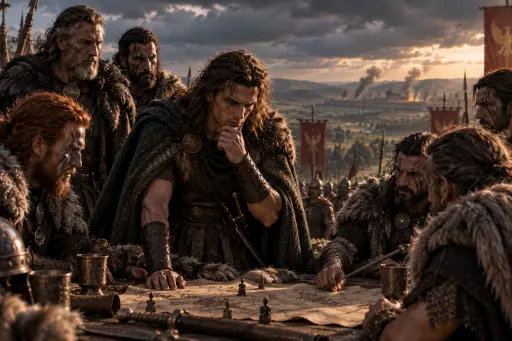
“Gathering soldiers alone will not be enough to defeat Rome.”
“If we fight as separate tribes, Caesar can isolate us and defeat us one by one.”
“Then what are we to do?”
Vercingetorix’s answer was simple.
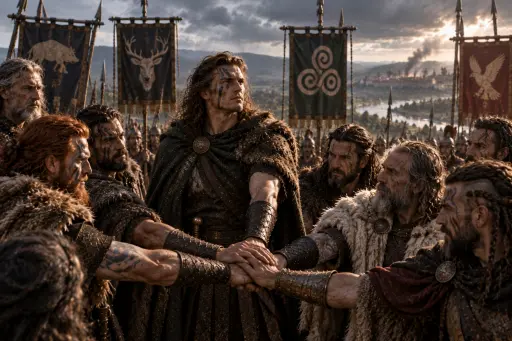
“Unite the Gauls.”
“Join forces even with the tribes we have fought against for generations.”
“Make those allied with Rome understand that we face a common threat.”
“We must fight not to protect a single tribe, but to protect all of Gaul.”
“If we cannot do that, we cannot defeat Caesar.”
But there was another problem.
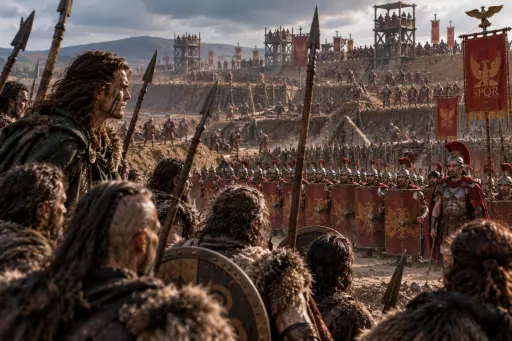
“If we unite the Gauls, we still cannot defeat the Roman army by fighting on its terms.”
“The Roman army has discipline.”
“On the battlefield, its soldiers move in formation, build fortified camps, dig ditches, and construct defensive walls.”
“They possess the organization and resources to endure a long war.”
“But Vercingetorix realized that he did not need to defeat the Roman army by confronting its strength head-on.”
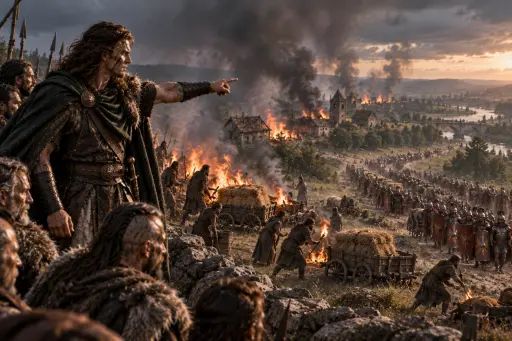
“If that is the case, then we must deny Rome the chance to use its strengths.”
“Deny the Roman army the supplies it needs.”
“Do not let them secure food.”
“Make it difficult for them to maintain their supply lines.”
“Do not fight where the Roman army wants us to fight.”
“If necessary, abandon the towns themselves.”
“We will not wait for the enemy and try to decide the war in a single battle.”
“We will create conditions in which the enemy can no longer continue fighting.”
That was the kind of war Vercingetorix chose to fight.
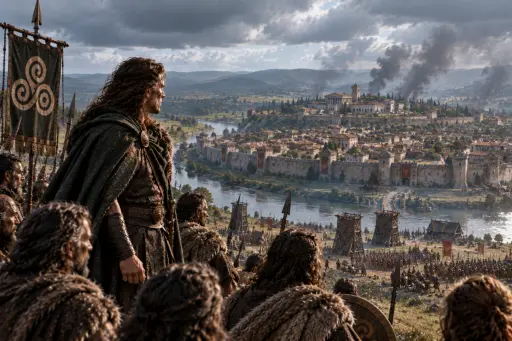
The First Test
The first major test of this strategy would come at Avaricum.
Avaricum was a prosperous city.
It had food supplies and defensive fortifications.
For the Gauls, it was not a place that could easily be abandoned.
Vercingetorix wanted to abandon the city before the Romans could make use of it.
But for the people who lived there, that meant abandoning their own home.
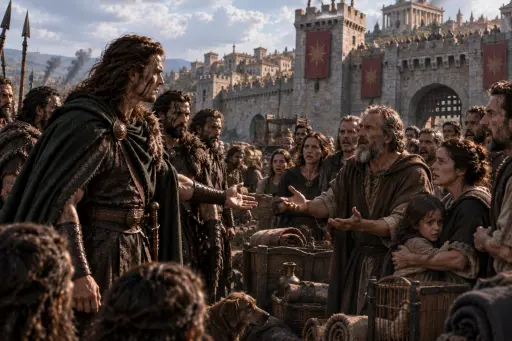
Abandon the home.
Abandon their possessions.
Abandon the land they had lived on for generations.
Vercingetorix called for the city to be abandoned, but the inhabitants did not want to leave their homeland.
What was necessary to win a war was not always the same as what people were willing to accept.
In the end, Avaricum remained.
And Caesar did not let the opportunity slip away.
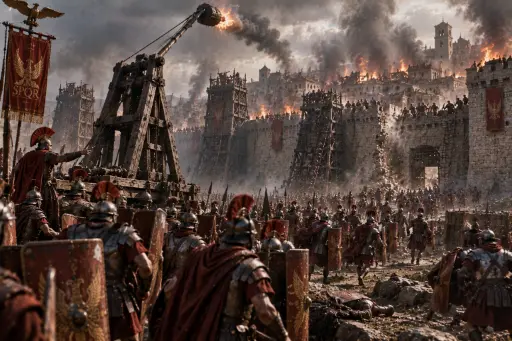
The Fall of Avaricum
The Roman army built massive siege works around the city.
They broke through its defenses and gradually advanced toward the city walls.
Vercingetorix watched the Roman army from outside, but he could not stop the siege.
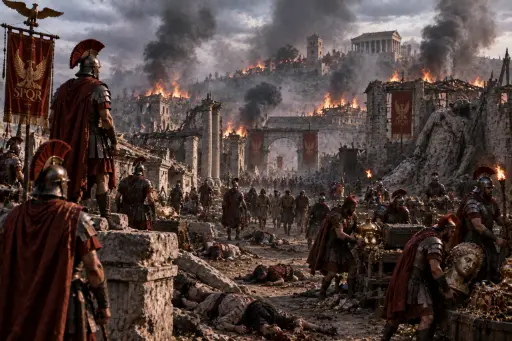
Eventually, the defenses were breached.
Roman soldiers entered the city.
Avaricum had fallen.
Many of its inhabitants were killed, and the prosperous city fell into Roman hands.
For Vercingetorix, this was a major defeat.
But at the same time, one thing had become clear.
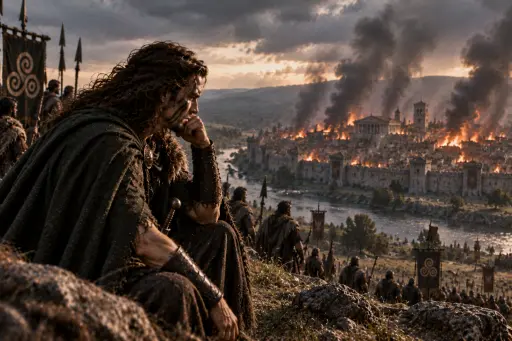
“If we only defend our cities, we cannot defeat Rome.”
“If we allow the Romans to take a city, its food and resources will only strengthen the enemy.”
“Then we must not make the same mistake again.”
The Price of Strategy
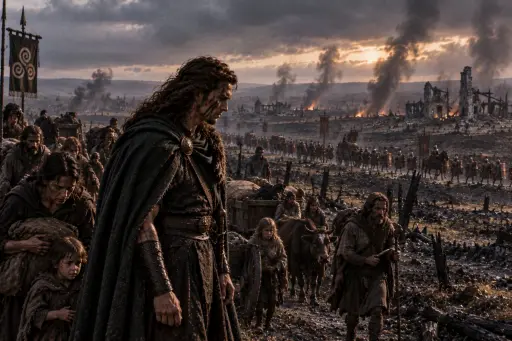
The fall of Avaricum forced Vercingetorix to confront the cost of his strategy.
To cut off the Roman army’s supplies, the Gauls themselves had to give up their land and resources.
This was not a war fought for glorious victories.
It was a war in which they had to endure, while gradually weakening Rome’s ability to keep fighting.
But the more they carried out this strategy, the more the Gauls themselves suffered.
Chapter 4: Burning Gaul
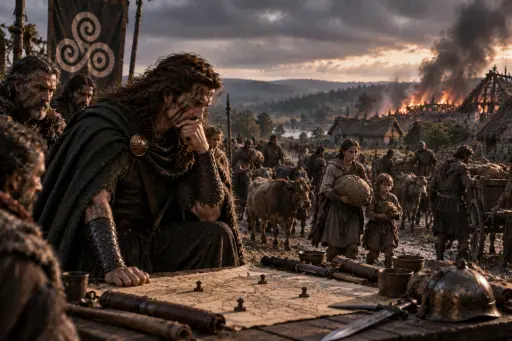
To stop the Roman army, Vercingetorix was forced to make one of the most difficult decisions of the war.
“To Protect, We Must Abandon”
“Leave nothing behind that the Roman army can use.”
“Take the food with us.”
“Move the livestock.”
“Abandon any place the Roman army could use as a base.”
“And destroy anything that cannot be taken before it falls into enemy hands.”
“Militarily, it makes sense.”
“But people live there.”
“There are homes.”
“Fields.”
“Food.”
“Families.”
“Land that has been protected for generations.”
“All of it must be sacrificed to keep it out of the hands of the Roman army.”
Setting Fire
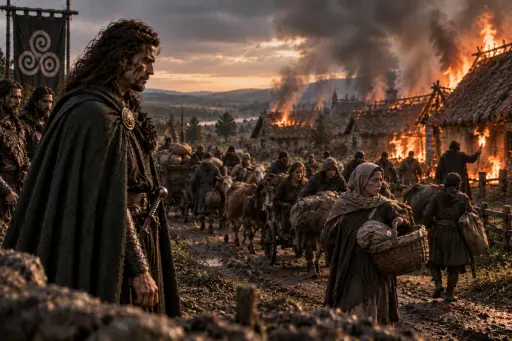
Preparations to leave the town began.
People carried out whatever they could take with them.
They moved their livestock, gathered food, and took as many necessities as possible.
And then, one thing remained until the very end.
Their homes.
“We cannot allow the Roman army to use them.”
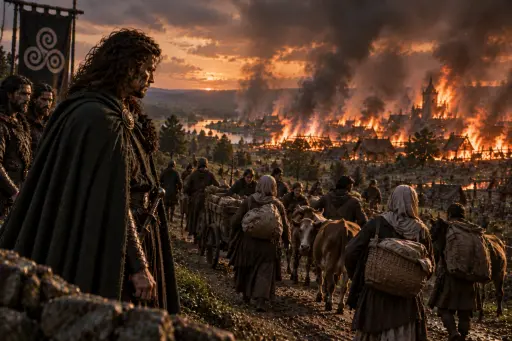
Someone set the town ablaze.
At first, the flames were small.
Soon, they spread to the rooftops, engulfing the timber and consuming whatever had been left behind.
Smoke began rising from other parts of the town.
Before long, it covered the entire settlement.
The enemy had not set it on fire.
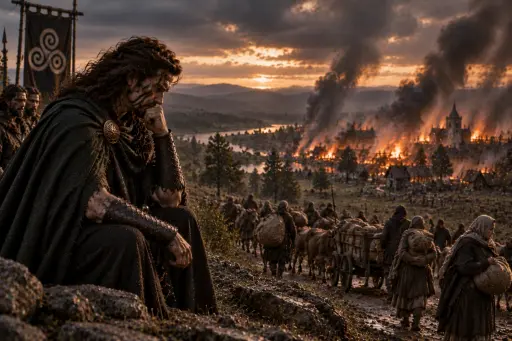
They were burning their own town.
“Better to abandon it ourselves than let Rome take it from us.”
That was the kind of war Vercingetorix had chosen to fight.
The Sacrifice for Victory
But this strategy contained a terrible contradiction.
“To deprive the Roman army of food, we must also give up our own food.”
“To keep the Romans from using our towns, we must give up our own towns.”
“To make the Roman advance more difficult, we must destroy our own way of life.”
In other words, this was not a strategy that caused suffering only to the enemy.
The Gauls themselves had to pay the price.
We cannot know from the surviving sources exactly how Vercingetorix felt when he made these decisions.
But in practice, the Gallic forces under his leadership continued to hinder the Roman advance, sacrificing their own land and resources in the process.
That was the cruelty of this strategy.
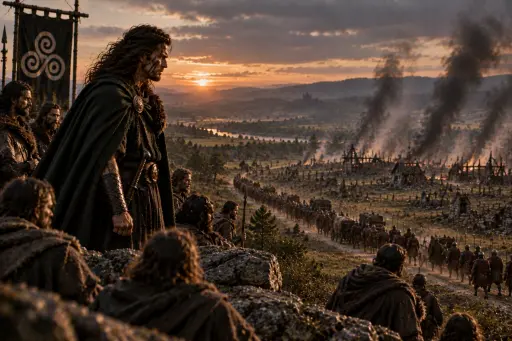
“Even so, we fight.”
“Even if we lose our towns, the rebellion will not end.”
“Rome is strong.”
“But we do not need to challenge that strength head-on.”
“We only need to create conditions in which the Roman army cannot make full use of its strength.”
Vercingetorix’s aim was not to destroy the Roman army in a single battle, but to make it increasingly difficult for the Romans to maintain their supplies the farther they advanced.
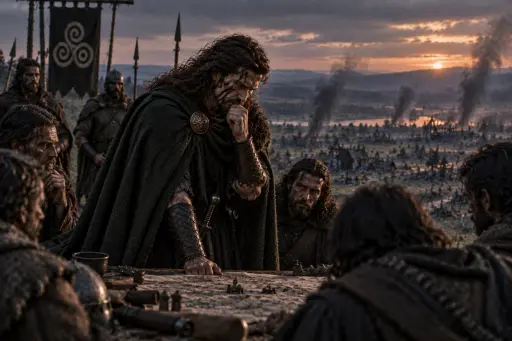
But time was not on the Gauls’ side either.
If they abandoned their towns, they would have nowhere to return to. If they abandoned their fields, they could not wait for the next harvest.
The scorched-earth strategy weakened the enemy, but it also eroded their own future.
Vercingetorix had to consider not only the limits of the Roman army, but also the limits of his own people.
“We cannot continue this war forever.”
“At some point, we must face the Roman army and defeat it.”
“The question is where to fight.”
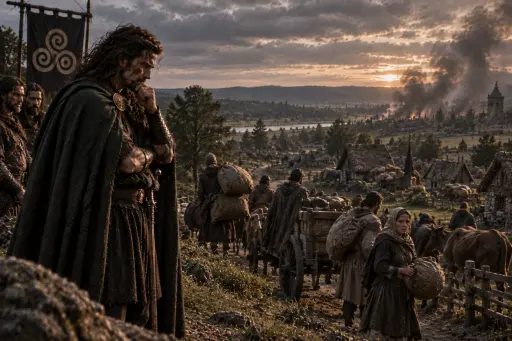
Choosing the Battlefield
At Avaricum, the Roman army had taken the city from them.
Vercingetorix had learned from that experience.
“We must not fight where the Roman army is strongest.”
“We must fight where we have the advantage.”
To do that, he needed to choose the next battlefield.
And his eyes turned toward the lands of the Arverni.
There stood an important fortified city built high in the hills.
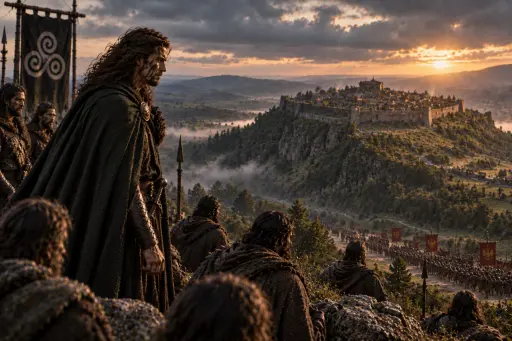
Gergovia.
“If we fight here, we may be able to stop the Roman advance.”
“Here, we can fight on ground of our own choosing.”
“And more than anything, we may be able to show the Gauls, who have suffered so much, that their struggle has a purpose.”
Vercingetorix marched toward Gergovia.
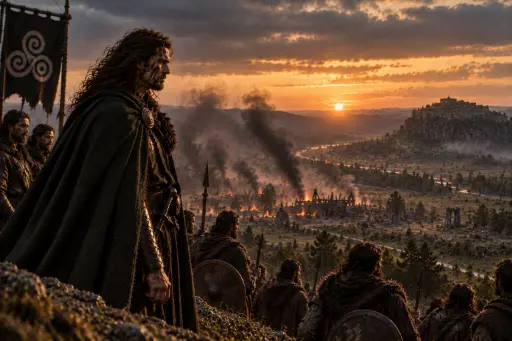
Beyond the Flames
Behind them lay the towns they had burned.
They had sacrificed their own land in order to protect it.
Whether that was the right decision was not an easy question to answer.
Nor can we know from the surviving sources exactly how Vercingetorix felt when he made that decision.
But the war was still going on.
What they needed next was not to retreat.
They needed to fight on ground of their own choosing.
That place was Gergovia.
Chapter 5: The Victory at Gergovia
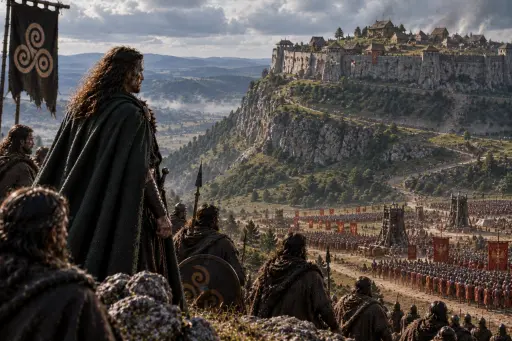
The Place Where Everything Was at Stake
52 BCE.
Vercingetorix was waiting for Caesar at Gergovia.
By this point, he had lost Avaricum and sacrificed his own land and resources in the struggle against Rome.
That was precisely why he wanted to choose the next battlefield himself.
Gergovia was an important hilltop stronghold of the Arverni.
The Roman army would have to advance up the slopes, while the Gallic defenders could use the terrain to their advantage.
But Caesar understood this as well.
Continue the Battle of Gergovia
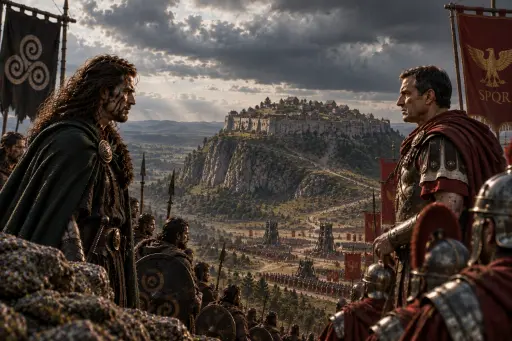
The two commanders looked upon the same battlefield, yet searched for different answers.
Vercingetorix sought to draw the Roman army onto ground that favored the Gauls.
Caesar sought to find a way through—even where the terrain seemed to favor his enemy.
For the first time, their war was becoming more than a simple struggle between attack and defense.
Caesar’s Attack
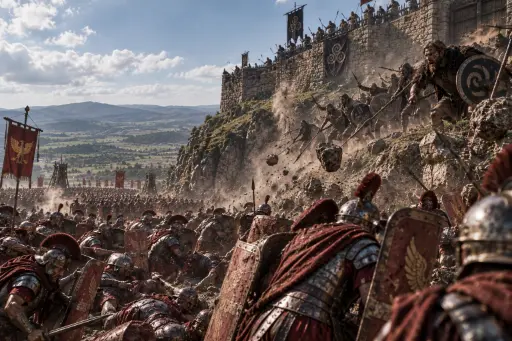
Caesar established fortified positions around Gergovia and searched for points from which the Roman army could launch an attack.
As the Romans advanced, the Gallic forces moved as well.
The soldiers defending the heights watched the movements of the Roman army, waiting for an opportunity to strike back.
Eventually, a gap appeared in the Roman formation.
Vercingetorix seized the moment.
The Gallic forces surged down from the heights, putting pressure on the Roman army.
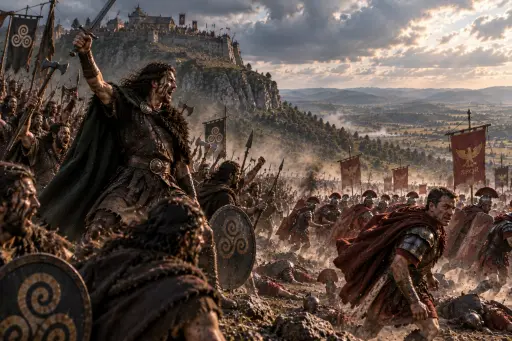
The battlefield gradually descended into chaos, and the Roman army began to retreat.
Caesar ordered his forces to withdraw.
The Gauls who witnessed it erupted in celebration.
The Roman army they had feared for so long was retreating before their eyes.
“The Roman army is falling.”
“The Roman soldiers are retreating.”
And at the head of that retreat was Caesar himself—the man who had spent years bringing Gaul under Rome’s control.
For the Gauls, it was an almost unbelievable sight.
“Rome can be defeated.”
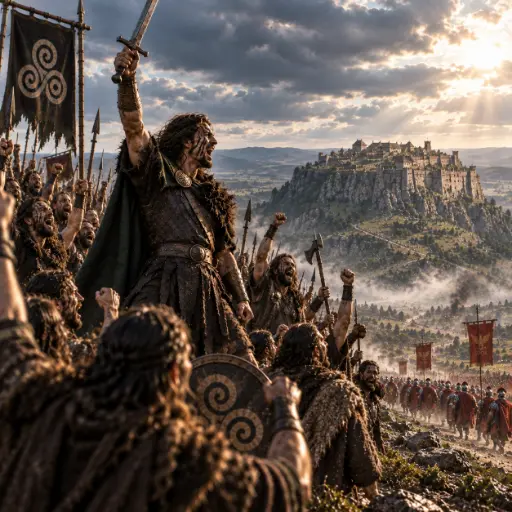
At last, Vercingetorix had defeated Caesar’s army on the battlefield.
Vercingetorix’s Victory
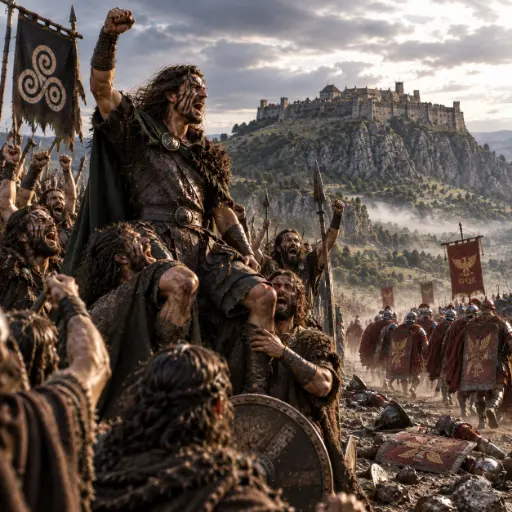
The Gauls erupted in celebration.
“We can defeat the Romans!”
Until then, Rome’s military power had seemed almost impossible for the Gauls to stop.
But now, the Roman army had been defeated.
At Gergovia, the terrain Vercingetorix had chosen and the defenses he had established had overcome Rome’s military strength.
The significance of this victory was enormous.
For Vercingetorix, it was a victory that seemed to prove that all the sacrifices they had made were not in vain.
“The war is not over yet.”
“But even so, we may be able to win.”
That hope spread throughout Gaul.
For the Gauls, it was a moment when their fear of Rome began to weaken.
And for Caesar, it was a defeat that showed him how dangerous it would be to fight the same way again.
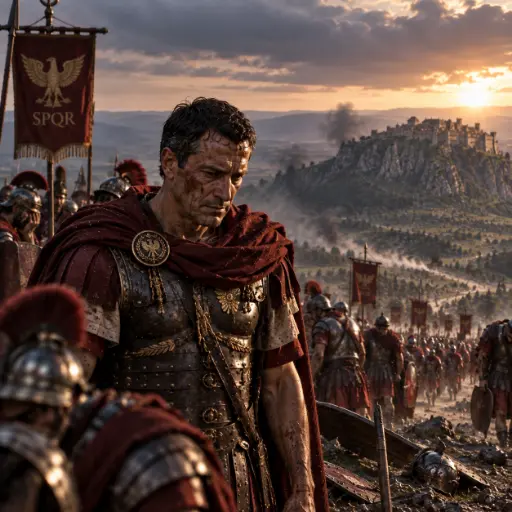
He had lost.
But he was not the kind of man to give up.
“For the next battle, we must change the way we fight.”
Chapter 6: The Trap at Alesia
The Defeat at Gergovia
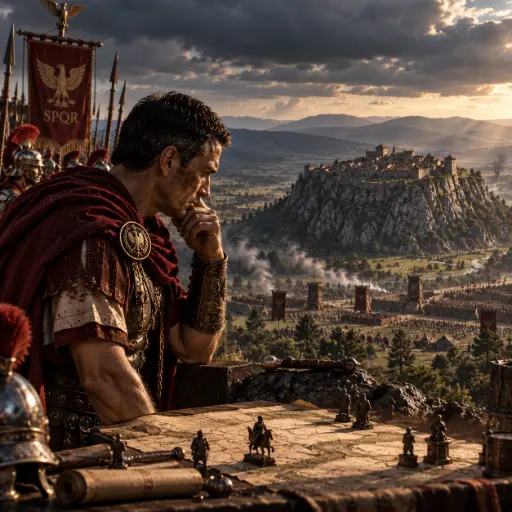
Caesar had been defeated at Gergovia, but he did not repeat the same mistake.
“If we attack head-on, we will suffer losses again on the high ground chosen by Vercingetorix.”
“Then we must not let him choose the battlefield.”
Caesar did not rush to pursue him. Instead, he waited to see where Vercingetorix would go next.
Vercingetorix, meanwhile, had a plan of his own.
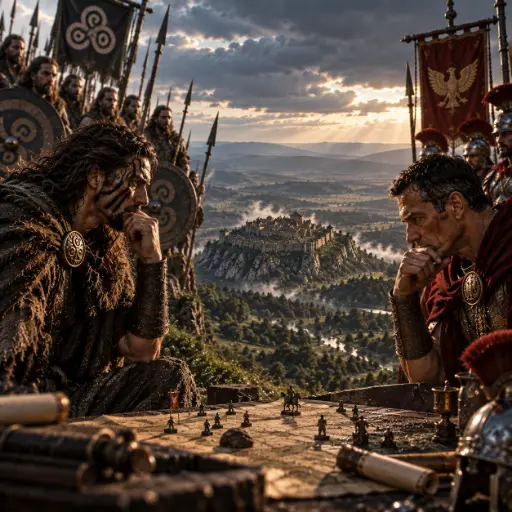
The victory at Gergovia strengthened Vercingetorix’s belief that Rome could be defeated by using the terrain to his advantage.
The two men had drawn completely opposite conclusions from the same experience.
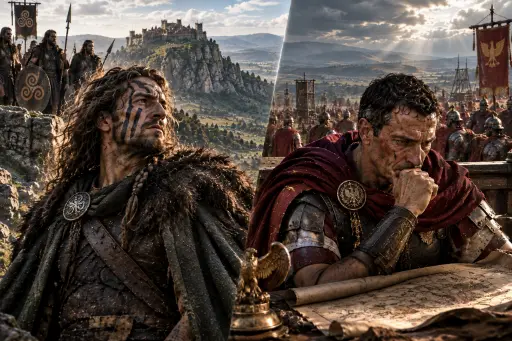
Vercingetorix: “I will wait on ground that favors us.”
Caesar: “And I will make sure you cannot escape it.”
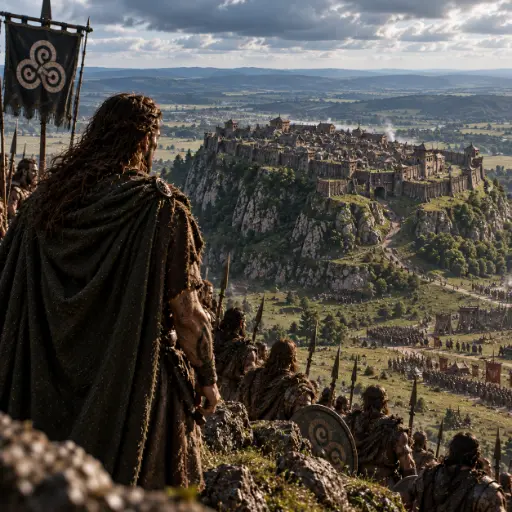
Alesia
Alesia, where Vercingetorix had gone, was also a fortified hilltop settlement.
“If we fight here, we can once again force the Roman army to attack us on ground that favors us.”
But Caesar chose a different answer.
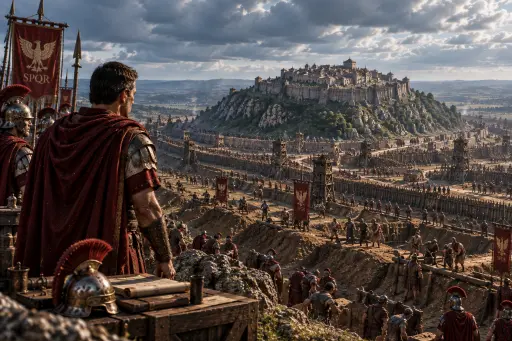
“Do not fight.”
“Do not attack.”
“Just surround them.”
“If Vercingetorix is on high ground, we will turn that advantage against him.”
“If he stays on the hill, he cannot escape.”
“If he leaves, he will have to face the Roman army.”
“If he stays, eventually his food will run out.”
The Roman army surrounded Alesia. Caesar ordered his soldiers to dig ditches, build earthworks, and erect lines of wooden stakes.
Caesar was trying to defeat his enemy not with the sword, but with time.
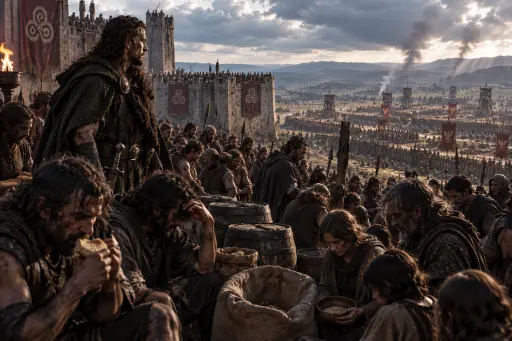
Food Supplies Begin to Run Out
The Gallic forces gathered at Alesia included a large number of soldiers.
“They can fight.”
“But to fight, they need food.”
“Once the siege begins, their supplies will slowly run out.”
“At first, there is still enough.”
“They can endure for a few days.”
“But after several weeks, the situation becomes very different.”
“Not only the soldiers, but also the people inside the city need food.”
Unable to attack the Roman army, Vercingetorix was forced into a battle against time.
And the longer the siege continued, the worse his situation became.
Food Supplies Begin to Run Out
The Gallic forces gathered at Alesia included a large number of soldiers.
“They can fight.”
“But to fight, they need food.”
“Once the siege begins, their supplies will slowly run out.”
“At first, there is still enough.”
“They can endure for a few days.”
“But after several weeks, the situation becomes very different.”
“Not only the soldiers, but also the people inside the city need food.”
Unable to attack the Roman army, Vercingetorix was forced into a battle against time.
And the longer the siege continued, the worse his situation became.
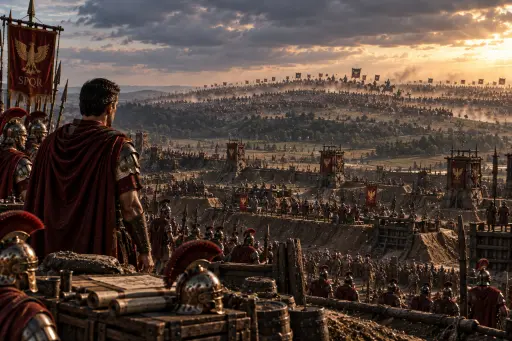
Beyond the distant hills, flags began to appear.
Flags.
Cavalry.
Infantry.
And countless soldiers.
It was the Gallic relief army.
Chapter 7: The Last Hope
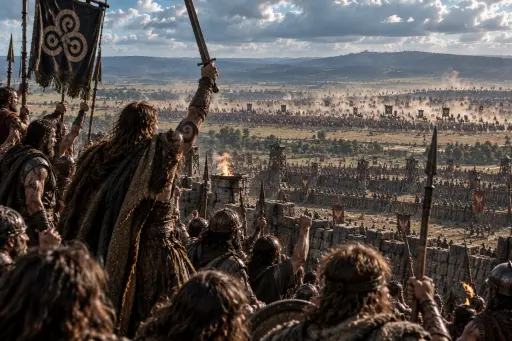
The Gallic Banners
From the hilltop at Alesia, the Gallic soldiers looked out across the plain.
“There are soldiers beyond the dust.”
“We can see the banners.”
“The relief army has arrived.”
The soldiers inside Alesia erupted in celebration at the sight.
Vercingetorix, too, saw hope returning.
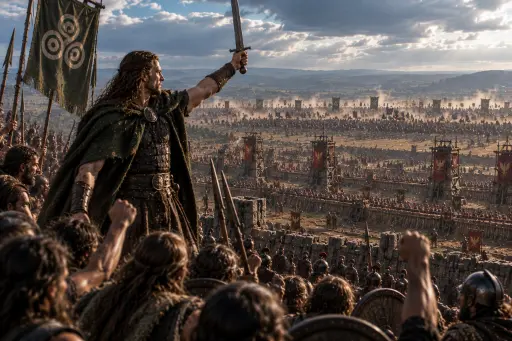
“It’s not over yet.”
“The Roman army has us surrounded.”
“But now, we may be able to surround them.”
The hope born at Gergovia burned once again.
For one more time, Vercingetorix saw a chance for victory.
“The relief army will attack from outside, while we attack from within Alesia.”
“Two armies will strike at the Roman defenses and break through their lines.”
This was their final chance.
The Final Attack
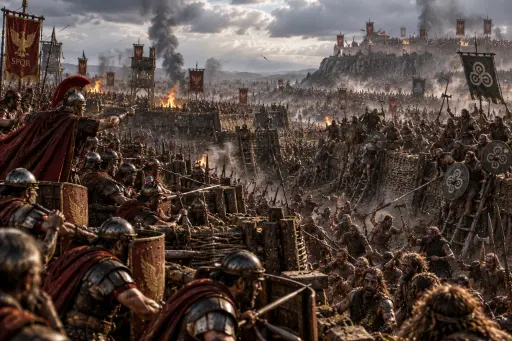
The Gallic relief army surged forward from outside.
At the same time, soldiers inside Alesia moved into position.
The Roman defensive lines came under attack from both sides.
Caesar concentrated his forces wherever the danger was greatest.
When a section seemed close to breaking, he sent soldiers there.
But every force committed to one position left another more vulnerable.
Even so, the Roman defensive lines held.
The Gauls had the advantage in numbers.
But the Romans had the organization and discipline they had developed through years of warfare.
To the Gauls, victory seemed within reach.
Yet Caesar did not break.
They attacked, but the Roman lines did not collapse.
For Vercingetorix, that was the most terrifying sight of all.
Hope Fades
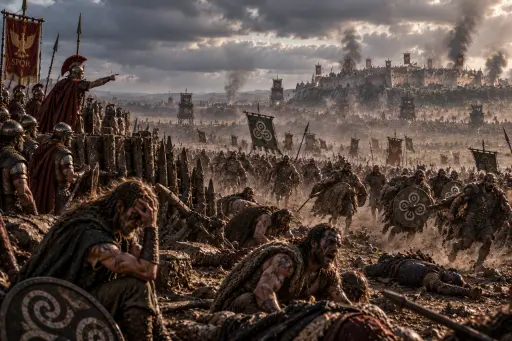
Tension filled the air as the ranks of the Gallic relief army from outside began to break apart.
The forces that had launched an attack from inside Alesia were unable to create a breakthrough either.
One failure led to another, and the Gallic relief army began to retreat.
Then, little by little, the relief army disappeared from the battlefield.
Vercingetorix understood.
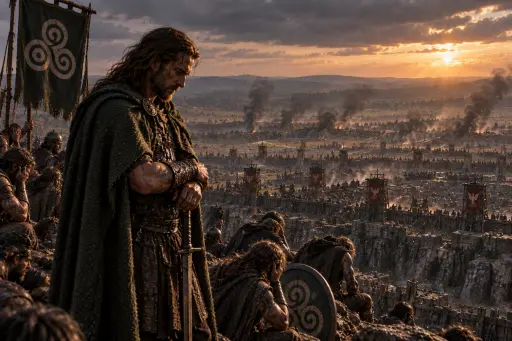
“The last hope was gone.”
“What remains are soldiers who can still fight, and the walls of Alesia.”
“But we have almost no time or food left to continue the war.”
“Caesar’s army is still there.”
“The defensive lines Caesar built still surround Alesia.”
“But beyond those lines, there is no longer a relief army coming to save us.”
The man who had once forced Caesar to retreat at Gergovia could no longer save his own army.
The Night Before
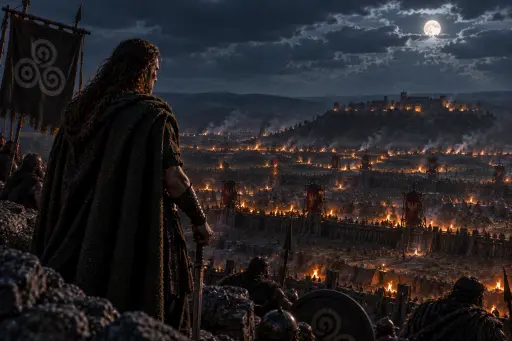
The night at Alesia was quiet.
The cries that had filled the city only moments before gradually faded into the distance.
Vercingetorix stood on the hill, looking out into the darkness.
The Roman camps were still there.
When he had defeated Caesar at Gergovia, he had believed:
“We can defeat Rome.”
“We can protect Gaul.”
“We can decide our own future.”
But now, that future was slipping away before his eyes.
The final question was no longer how to win.
It was how to bring the war to an end.
Chapter 8: The Surrender
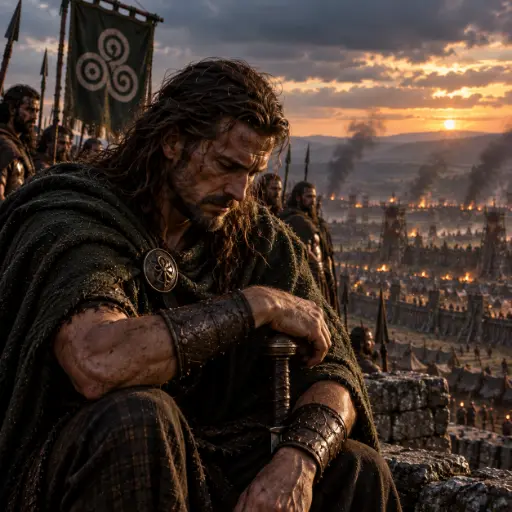
The Final Choice
The Battle of Alesia was drawing to an end.
“The relief army has been defeated.”
“The siege lines have not been broken.”
“And our food is running out.”
“Even so, we still have weapons, and we can still fight.”
“But to continue fighting would mean sending thousands of exhausted soldiers into battle once again.”
“He would not be risking his own life alone.”
“If he surrendered, he would become a prisoner.”
“And with that, he would lose the honor he had fought so hard to preserve.”
Vercingetorix had to weigh those two choices against each other.
Laying Down His Sword
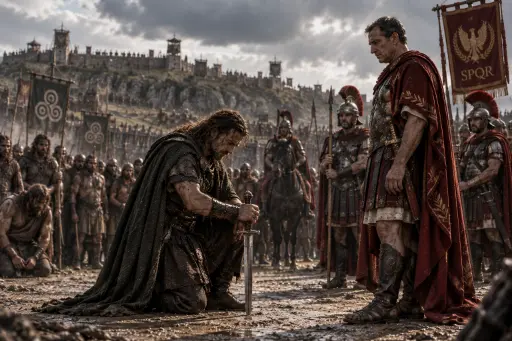
Vercingetorix chose to surrender rather than continue fighting.
According to the surviving sources, he stated that he had fought for “the common freedom” and accepted the decision to hand himself over to the Romans.
However, we cannot reduce his motives to a single explanation based on modern values.
We cannot know everything he felt or what was happening within him, because the surviving sources cannot fully reveal his inner thoughts.
What we can establish is this:
Vercingetorix gave himself up and accepted the end of the war.
The Hill at Alesia
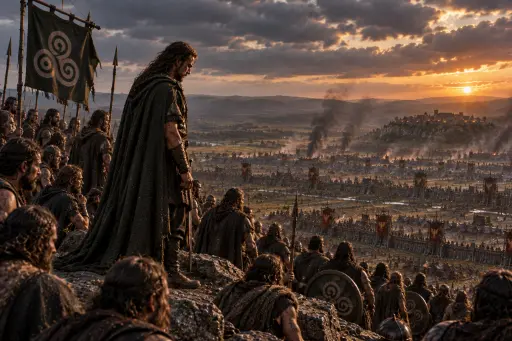
On the hill stood the soldiers who had followed him this far.
Some had left their homes to fight against Rome.
Some had witnessed the victory at Gergovia.
And now, exhausted and starving, they waited for the final decision.
Vercingetorix could have ordered them to fight once more.
But it was difficult to believe that victory still lay ahead.
That is why we cannot simply conclude that he chose “the lives of his soldiers over his own honor.”
What the surviving sources leave us with is the image of a man who stated that he had fought for “the common freedom” and, in the end, gave himself up to the Romans.
The War Was Over
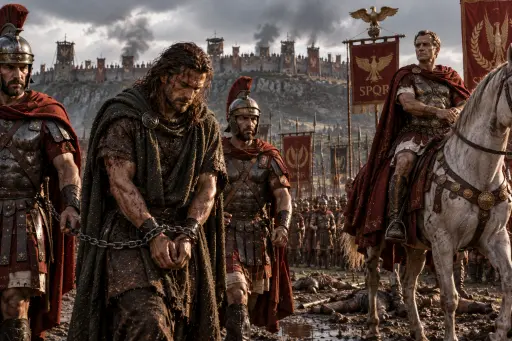
Vercingetorix surrendered to Caesar.
The man who had once forced the Roman army to retreat at Gergovia now stood before the Roman army.
He had lost his freedom, his army, his political power, and his dream of an independent Gaul.
But he still had one final decision to make: to accept the end of the war.
At Alesia, the great Gallic resistance came to an end.
Caesar had won.
Vercingetorix was captured.
And he was sent to Rome.
There, a prison cell and Caesar’s triumph awaited him.
But from this point on, the story would begin to take a different shape.
Chapter 9: The Prisoner of Rome
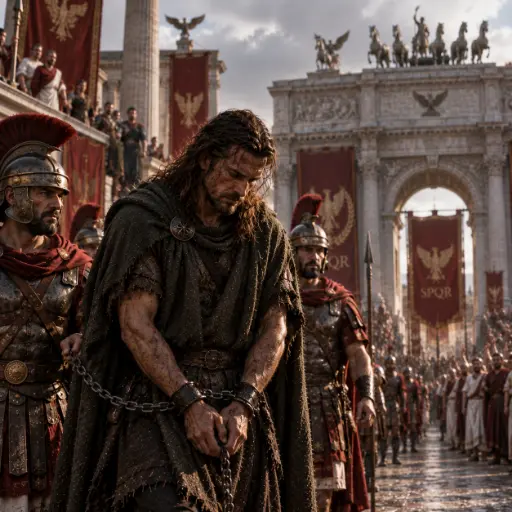
The Man Who Once Commanded Thousands
Vercingetorix, who had surrendered at Alesia, became a prisoner of the Roman army.
Only a short time earlier, tens of thousands of soldiers had stood before him.
When he gave an order, they moved.
But now, he was no longer the one who decided where he would go.
He could not decide when to walk, where to stop, or whom he would meet.
Once, tens of thousands of men had waited for his orders.
Now, there was no one left to obey him.
Prison
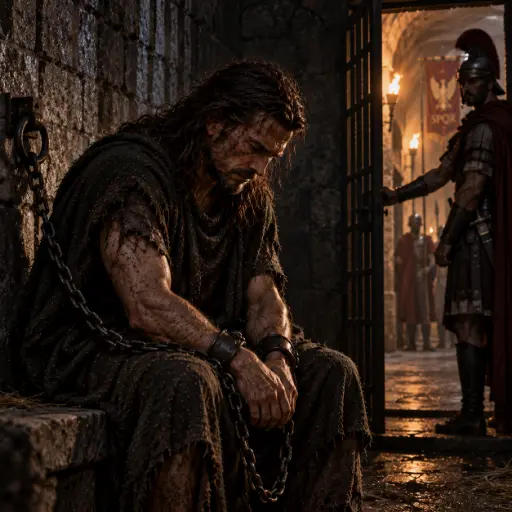
In a Roman prison, there was no land of Gaul, no banners, and no soldiers waiting for him.
There were only stone walls, an iron door, and guards.
Starting a rebellion.
Gathering the tribes.
Choosing the battlefield.
These were all decisions Vercingetorix had once made himself.
But now, he had to wait for the guards to open the door.
When they closed it, he could not leave.
The man who had once decided the fate of thousands could no longer decide even his own.
Caesar’s Victory
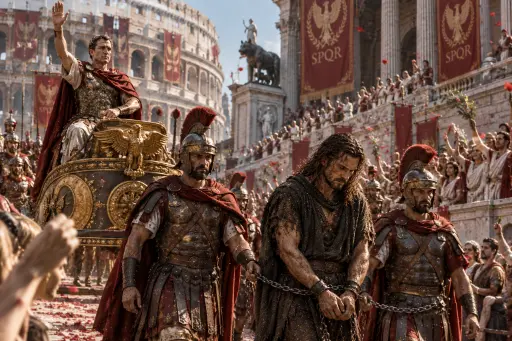
Meanwhile, in Rome, Caesar’s victory was celebrated.
He had crushed a major rebellion in Gaul and captured its central figure.
For Caesar, this was a major achievement, both militarily and politically.
And to display his victory, a triumph was held.
Vercingetorix was part of the procession.
The man who had once stood on the hills of Gaul was now being paraded before the people of Rome.
But he was not walking there by his own will.
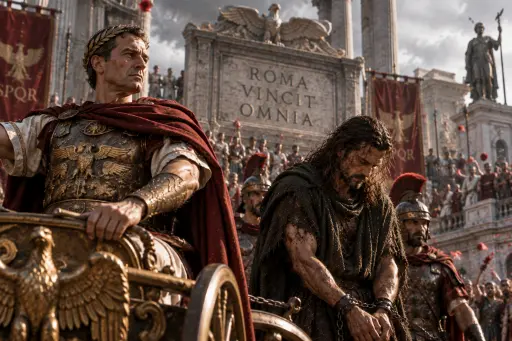
To Rome, Vercingetorix was not only a human being. He was also living proof of just how great an enemy Caesar had defeated.
The Defeated Man Created by the Victor
There is a strange relationship between these two men.
Caesar won the war by capturing Vercingetorix.
Yet it was precisely because an enemy like Vercingetorix existed that Caesar’s victory carried such significance.
The stronger the enemy, the greater the glory of the victor.
Caesar defeated him.
But at the same time, he etched the image of Vercingetorix into the memory of Rome.
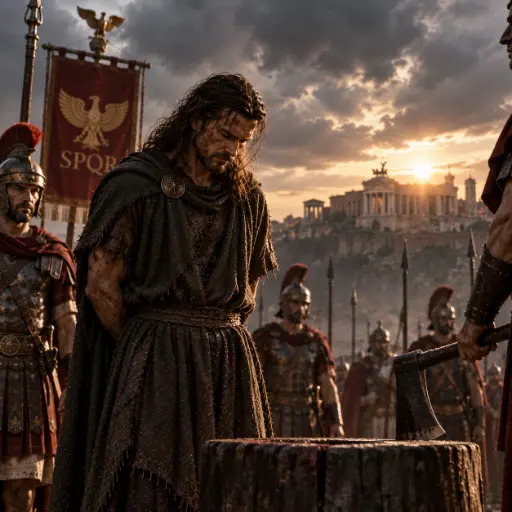
The Final Day
Vercingetorix was held captive for several years. He appeared in Caesar’s Gallic triumph in 46 BCE and was later executed.
He did not die on the battlefield.
Nor did he die with a sword in his hand.
The man who had once led tens of thousands of soldiers lost his life after the triumph.
By the measure of history alone, he was the defeated man.
Caesar had won.
Gaul had fallen under Roman rule.
But what ended here was his life—not his name.
After his death, that name would pass into another age.
Chapter 10: How a Defeated Man Became a Hero
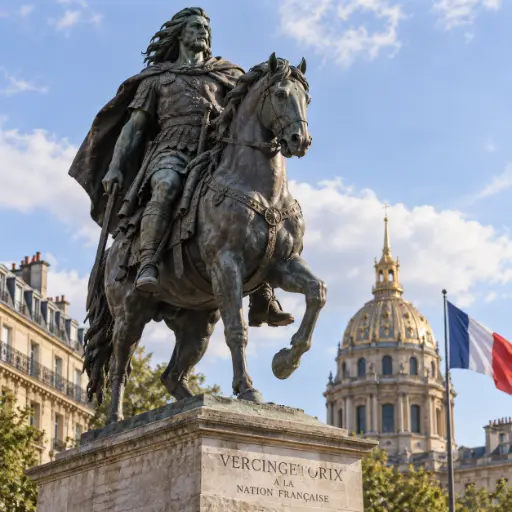
2,000 Years Later
Walking through the streets of France, you may come across statues of Vercingetorix.
Long hair.
Armor.
Mounted on horseback.
A heroic figure gazing proudly into the distance.
But this raises a question.
Why does a statue of a defeated man stand here?
He did not win.
He could not save Gaul from Rome.
He surrendered at Alesia, was taken to Rome, and was eventually executed.
And yet, his name survived.
What begins here is no longer a continuation of the war.
It is the story of how later generations gave a different meaning to one man.
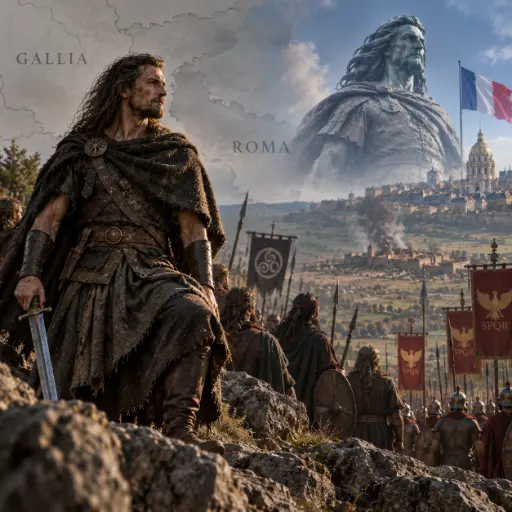
The Man Who Was Defeated
During Vercingetorix’s lifetime, he was not a “French hero.”
He did not lead a French army.
The nation we now call France did not yet exist.
He led the Gallic tribes that resisted Rome.
And if we judge him only by the outcome of the war, he was the defeated man.
He won at Gergovia.
But he lost at Alesia.
In the end, he surrendered, and Gaul never achieved independence from Rome.
Even so, later generations came to remember him not as a victor, but as a man who resisted.
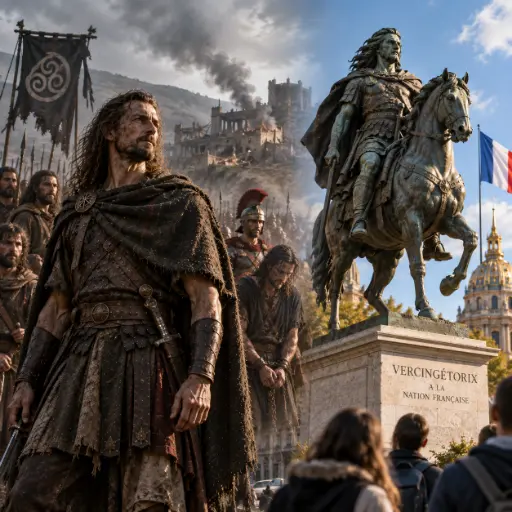
Fact and the Story Created by Later Generations
There is an important distinction to make here.
The Vercingetorix we can confirm through historical sources and the “heroic Vercingetorix” remembered by later generations are not exactly the same.
What the surviving sources tell us is that he emerged as a powerful figure among the Arverni, united various Gallic tribes, fought against the Roman army, won at Gergovia, and surrendered at Alesia.
He was then sent to Rome as a prisoner and, according to the surviving accounts, appeared in Caesar’s triumph before being executed.
On the other hand,
“A hero of the French homeland.”
“A figure representing the ancestors of the French people.”
“A symbol of a man who fought for freedom even in defeat.”
These meanings were not fully formed during his lifetime.
They were created by later generations as they looked back on his life through the values of their own time.
Once we understand this distinction, the story of Vercingetorix becomes even more fascinating.
He did not live through history only once.
Even after his death, he would go on to live another life.
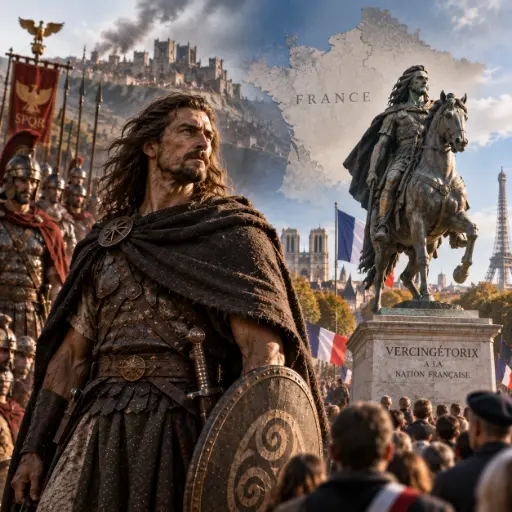
Why Did He Become a “French” Hero?
During Vercingetorix’s lifetime, the country we now call France did not exist.
Yet in later centuries, ancient Gaul came to be remembered by the people of France as part of their distant history.
Within that narrative, the image of the Gauls resisting a vast external power like Rome became an important symbol.
And one of the figures chosen to embody that symbol was Vercingetorix.
He had everything a compelling story needed.
A young aristocrat.
A powerful enemy.
A leader who united the tribes.
A victory in which he defeated his enemy.
A defeat that came in the end.
And a name that survived long after his death.
He was not a perfect victor.
And perhaps that was precisely why later generations could place their own meaning onto his story.
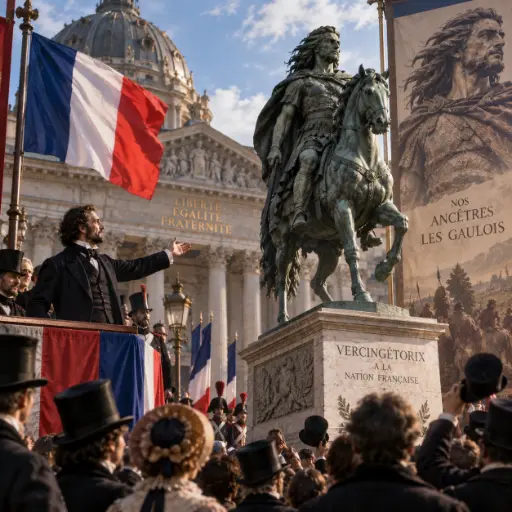
The 19th Century: France Needed a Hero
A major turning point came in the 19th century.
From the 1830s onward, interest in the Gauls grew, and Vercingetorix came to be portrayed as a figure who symbolized French national history.
During this period, how to tell the history of a nation and its people had become an important question.
And this gave ancient Gaul a new meaning.
The French could look to the Gauls as their distant ancestors.
They could tell the story of those Gauls resisting Rome as part of their own history.
At the center of that story stood Vercingetorix.
He gradually transformed from a leader of an ancient tribe into something much larger:
an ancestor who had resisted a vast power from outside.
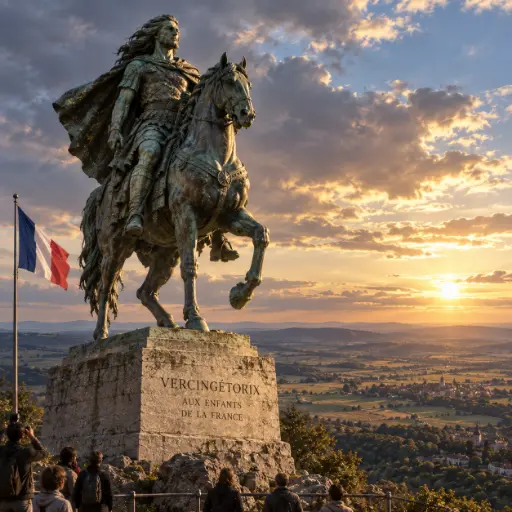
The Hero Who Became a Statue
One symbolic example is the monumental statue by Aimé Millet, erected on Mont Auxois in 1865.
There, Vercingetorix sits on horseback, gazing proudly into the distance.
There is no trace of the defeated man who suffered from hunger at Alesia.
No prisoner in a Roman cell.
No captive being paraded through the streets of Rome as a symbol of Caesar’s victory.
What stands there is Vercingetorix as a hero remembered by later generations.
But there is a distance between the statue and the historical figure.
And that distance is precisely where we can see history transforming a person.
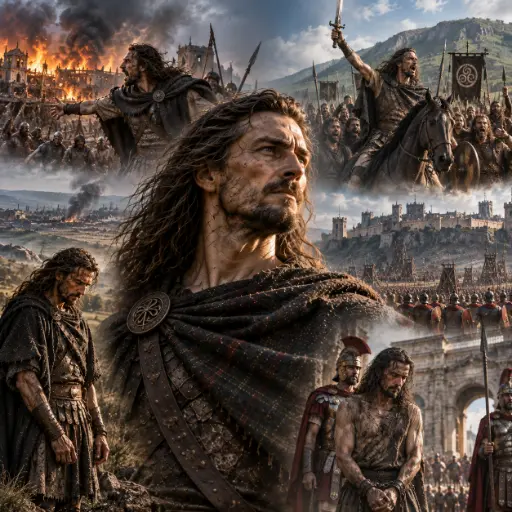
Not a Perfect Hero
Vercingetorix was not a perfect hero.
He faced a difficult outcome at Avaricum.
With his scorched-earth strategy, he chose to sacrifice even his own land and way of life.
He won at Gergovia.
But he was defeated at Alesia.
And in the end, he gave himself up to the Romans.
His life was marked not only by success, but also by failure, sacrifice, and defeat.
That is why we cannot treat the “heroic image” created by later generations as identical to the historical figure.
Sometimes, heroes are created after they are gone.
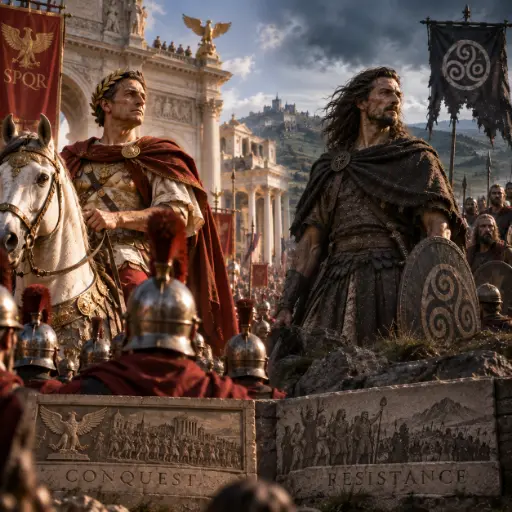
Not a Victor, but a Symbol
Caesar won the war.
Vercingetorix lost the war.
Those two facts do not change.
But victory and defeat alone do not determine what a person comes to mean in history.
Caesar left behind the immense legacy of a conqueror.
Vercingetorix left behind the story of a man who resisted an overwhelming power despite the odds.
And that story was given new meaning each time the age changed.
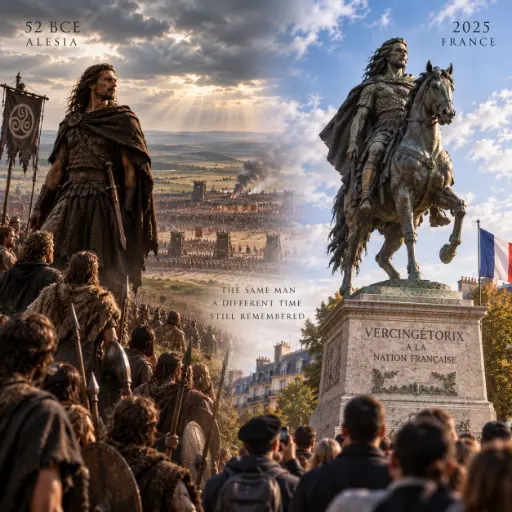
2,000 Years Before and 2,000 Years After
Think back to the beginning of the story.
52 BCE.
Vercingetorix stood on the hill at Alesia.
Below him was the Roman army.
Around him stood the soldiers who had followed him.
He did not yet know.
He did not know that this would be the place where his life would come to an end.
And now, nearly 2,000 years later.
A statue of the same man stands in a French city.
Back then, the man he looked down upon was the Roman army.
Now, the people looking up at him are those who came after him.
He could not win the war.
He could not save his country.
He could not defeat Rome.
And yet, his story survived.
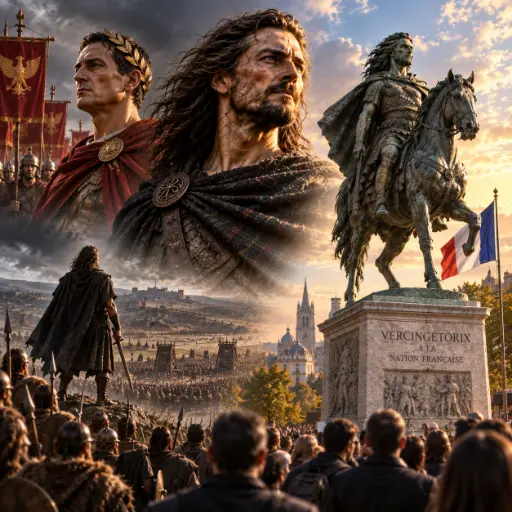
Why a Defeated Man Became a Hero
What Vercingetorix left behind was not territory.
Not a kingdom.
Not an empire.
What he left behind was a story:
“Defeat does not mean that a life was meaningless.”
How later generations interpreted his life.
Why he became a symbol of French national history in the 19th century, and why statues of him still stand today.
The answer is not that he won.
It is that he did not disappear even after he was defeated.
Caesar won the war.
But Vercingetorix’s name also survived in history.
And as that name passed through the centuries, the memory of one man—
“the Gaul who was defeated by Rome”
—gradually became the story of
“a hero who resisted an overwhelming power.”
That is why his statues still stand today.
Not because he won the war.
Not because he died a hero.
But because his story did not end with his defeat.
That is the reason Vercingetorix, the man who lost, still stands as a hero 2,000 years later.
Read the Story
Experience Julius Caesar’s life through a cinematic historical narrative.
👉 Julius Caesar — The Hero Who Changed the World
Author:Fuji

Human history is truly complex, isn’t it?
There are countless websites introducing historical figures and events, but many of them are just plain explanations—not exactly exciting to read.
On the other hand, reading books takes a lot of time and effort.
That’s where I come in.
Through “stories that are more engaging than explanations and shorter than books,” I aim to bring the world’s history and humanity’s records to you in a more accessible and interesting way.
If my stories inspire you to love history a little more, I’d be absolutely thrilled!

Become Part of the Chronicle
If this article inspired you, consider supporting the project.
Become a character in the Chronicle.
Receive your own custom card and stand alongside queens, warriors, inventors, rebels, and legends from history.
Your support helps keep these stories alive and allows me to create more articles, illustrations, and historical cards.
Join the Chronicle and leave your mark on history.
Comment