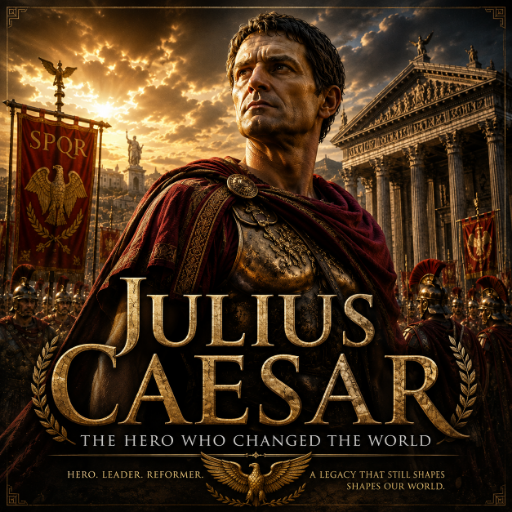
Julius Caesar — The Hero Who Changed the World
Chapter 1 — A World on the Brink
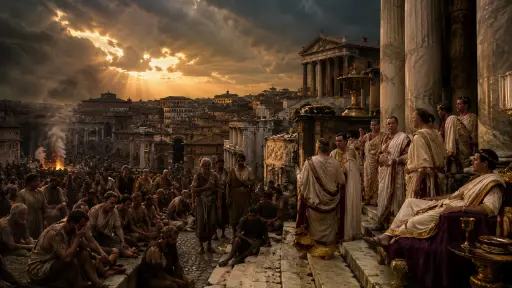
When a nation falls,
it is not always because it was conquered by an enemy.
More often, nations crumble slowly from within.
Corruption.
Inequality.
Bribery.
Endless struggles for power.
People lose faith in their government and begin to lose hope for the future.
And when that happens, they always begin to wish for the same thing:
“Isn’t there someone who can change this nation?”
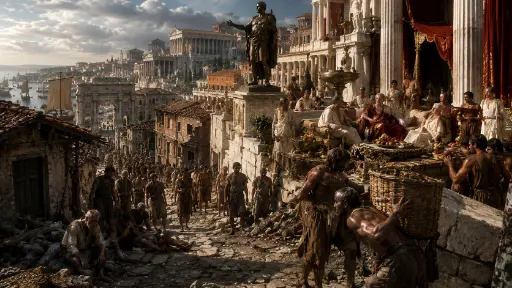
In the 1st century BC, the Roman Republic had become exactly that kind of nation.
Rome defeated Carthage, conquered Greece and Asia Minor, and rose to become the greatest power in the Mediterranean world.
Wealth poured in from every corner of the known world, ushering Rome into an age of unprecedented prosperity.
But that prosperity was not shared equally.
A small group of victorious aristocrats amassed enormous fortunes, acquiring vast estates and countless slaves.
Meanwhile, many ordinary citizens returned home from war to find their land gone, their livelihoods lost, and nothing left but debt.
The rich grew richer.
The poor grew poorer.
And with every passing year, the Republic began to crack apart from within.
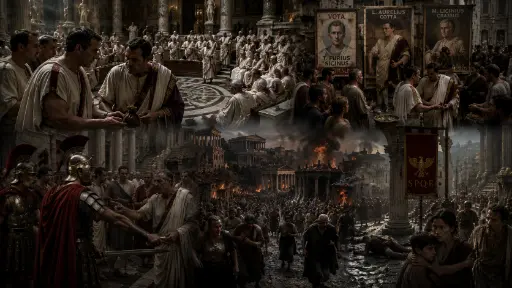
Politics, too, had drifted far from its ideals.
In the Senate, rival factions fought relentlessly.
Elections were plagued by bribery, and public office became a tool for personal enrichment.
Those who called for reform made powerful enemies, while those determined to preserve their power were willing to use force.
Before long, Rome’s politicians no longer settled their conflicts through debate, but with armies.
The civil war between Marius and Sulla sent shockwaves throughout the Republic.
“Can the Republic truly survive like this?”
That question—and that fear—had begun to spread across all of Rome.
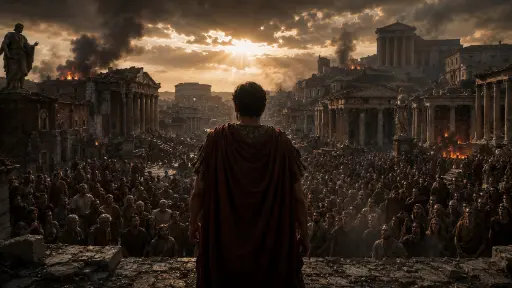
History shows that whenever people begin to long for a strong leader, certain patterns always emerge.
Society falls into turmoil.
The government stops functioning.
Hope for the future begins to fade.
In times like these, people start to value order over freedom, and stability over ideals.
And sometimes, that longing gives rise to a single hero.
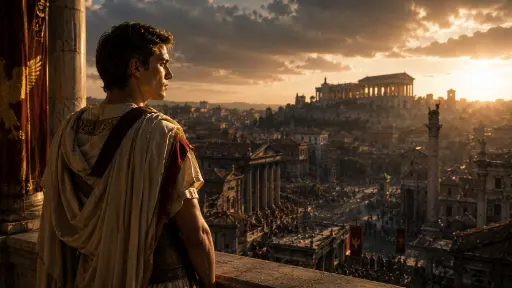
In this age, there was also a young man living in Rome.
Born into a noble family, he possessed neither great power nor high office.
Yet he was bolder than anyone, more ambitious than anyone, and believed more deeply than anyone else that Rome could be changed.
His name was—
Julius Caesar.
And here begins the story of one man who would change the course of world history.
Chapter 2 — A Young Man
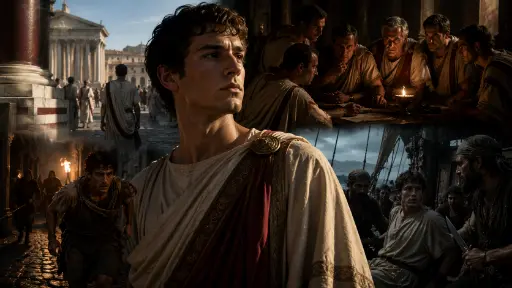
Are heroes born heroes?
Even those whose names echo through history began as ordinary human beings, just like us.
They dreamed.
They failed.
They feared.
And sometimes, their lives were hunted.
Julius Caesar was no exception.
The man who would one day stand at the pinnacle of the Roman world did not enjoy an easy path in his youth.
Around 100 BC, a boy was born into the noble House of Julius in Rome.
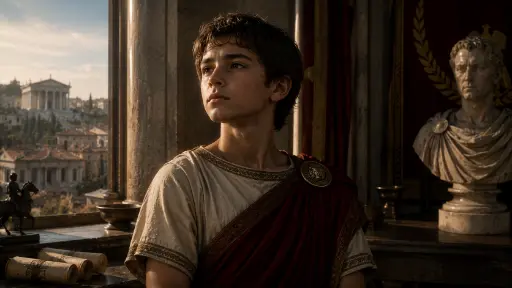
His name was Gaius Julius Caesar.
The House of Julius was one of Rome’s ancient noble families, but by this time it no longer held great political influence.
It was a distinguished name—but not one powerful enough to shape the fate of Rome.
Even so, the young Caesar possessed one thing that never wavered.
The unshakable belief that he was destined for greatness.
Alongside that belief burned an extraordinary ambition.
But that ambition would soon place his very life in danger.
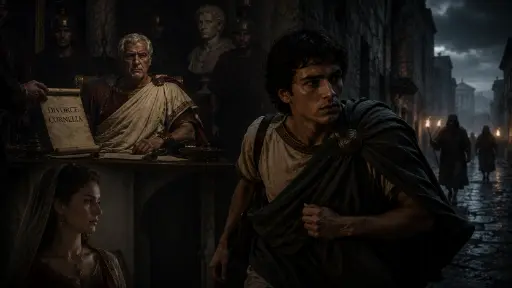
At the time, Rome was ruled by the dictator Sulla, the victor of the civil war, who was systematically purging his political enemies.
Caesar was born into a family closely connected to Sulla’s rivals, and he had married Cornelia, the daughter of one of those enemies.
Sulla ordered him to divorce her.
Caesar refused.
As a result, his property was confiscated, and his life was marked for death.
Not yet twenty years old, he had no choice but to flee his homeland and live as a fugitive.
The man who would one day shape the fate of the world was, at that moment, struggling simply to stay alive.
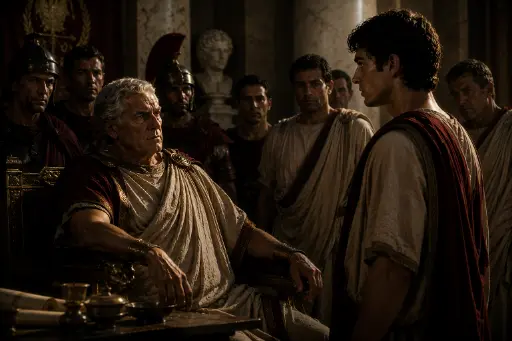
His family and friends pleaded with Sulla again and again to spare his life.
In the end, Sulla relented and granted Caesar a pardon.
But before doing so, he is said to have warned those around him:
“You do not understand. There are many Mariuses in that young man.”
Marius had been Sulla’s greatest political rival—the brilliant general who led the Populares, the faction that championed the common people.
In other words, Sulla recognized that the young Caesar possessed the talent, ambition, and potential to one day shake Rome itself.
Centuries later, those words would be remembered as one of history’s most remarkable prophecies about the future of Julius Caesar.
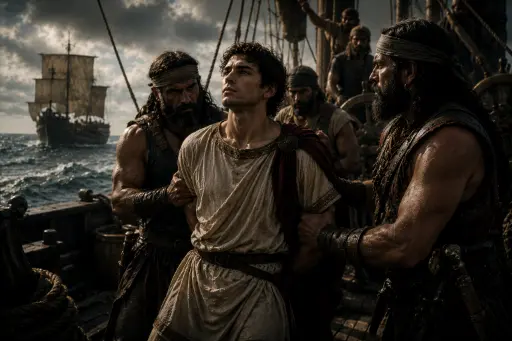
After receiving his pardon, Caesar set out for Asia Minor to gain experience as a soldier.
But during the journey, something completely unexpected happened.
He was captured by pirates who terrorized the Mediterranean.
For most people, it would have been a moment of utter despair.
But Caesar was not like most people.
When the pirates demanded a ransom of twenty talents, he simply laughed and said…
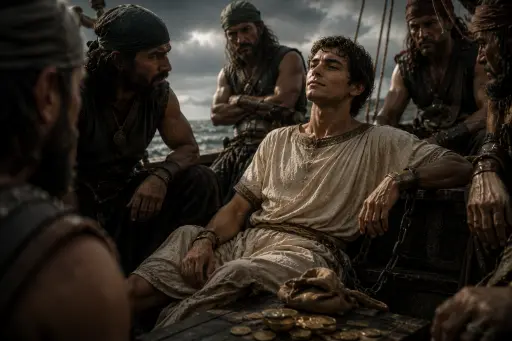
“I’m worth far more than that. Make it fifty talents.”
Though he was their prisoner, Caesar spoke as if he were the one giving the orders.
It is said that even the pirates were astonished by his confidence.
And throughout his captivity, he kept telling them the same thing over and over:
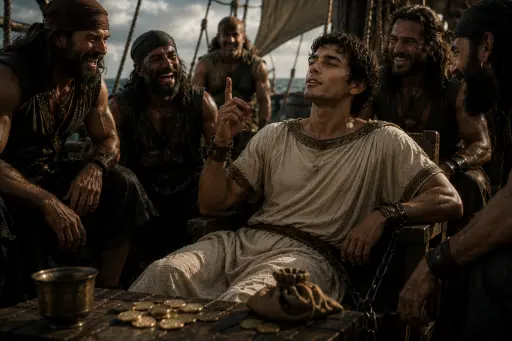
“When I’m free, I’m going to have every one of you crucified.”
The pirates burst into laughter.
They thought it was nothing more than a joke—a prisoner trying to sound brave.
But Caesar wasn’t joking.
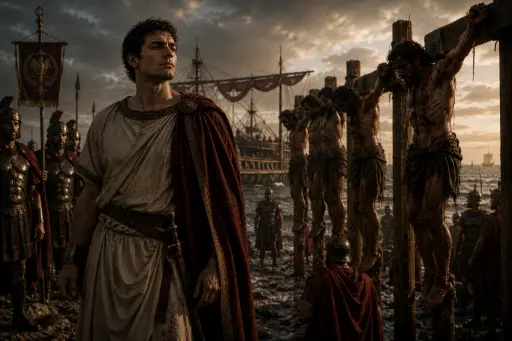
When he was finally released, Caesar did exactly what he had promised.
He raised a fleet, hunted down the pirates, captured them, and carried out the punishment he had foretold.
Caesar was a man who always followed through on his word.
Even at this early stage of his life, the qualities that would one day define Julius Caesar were already beginning to emerge.
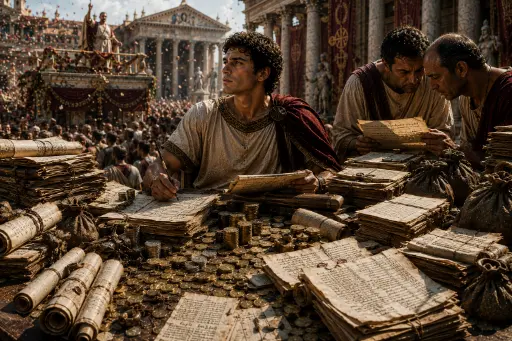
After returning to Rome, Caesar began his career as a politician.
But politics was not a world driven by ideals alone.
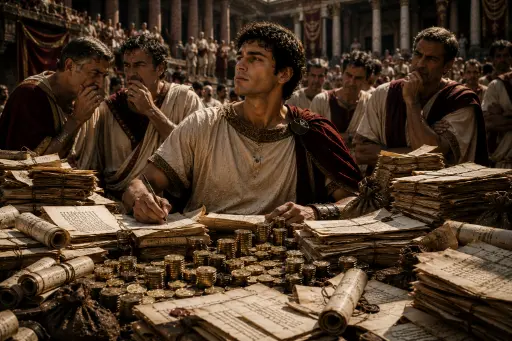
Winning elections required enormous amounts of money.
To earn the support of the people, politicians had to sponsor lavish festivals, organize public games, and finance costly public works.
Caesar never hesitated to invest in his future.
He borrowed again and again, believing that every debt would one day become an opportunity.
The sums he accumulated were astonishing—even by the standards of his own time.
People around him whispered,
“One day, he’ll go bankrupt.”
But Caesar never stopped moving forward.
Hunted for his life.
Driven from his homeland.
Kidnapped by pirates.
Burdened by staggering debts.
Yet through it all, he kept pressing onward.
At the time, no one imagined that this young man would one day transform Rome.
But history teaches us that the greatest heroes are not those who live lives untouched by hardship.
They are those who rise, again and again, after every setback.
And this little-known young man would soon carve his name into history on the battlefields of Gaul.
Chapter 3 — The Making of a Hero
Heroes who change the world are not born overnight.
They build their strength little by little.
They gather allies one by one.
And then, through a single victory that no one can ignore, their names are etched into history.
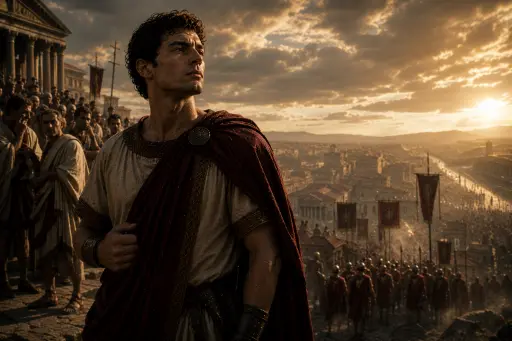
In his younger years, Caesar was not yet a man capable of shaping the fate of Rome.
His life had been hunted.
He had been kidnapped by pirates.
He was burdened with staggering debts.
Yet he never stopped moving forward.
There was one weapon he possessed that no one could match.
An unshakable belief in himself.
“I can do this.”
In time, Caesar began to rise as a politician.
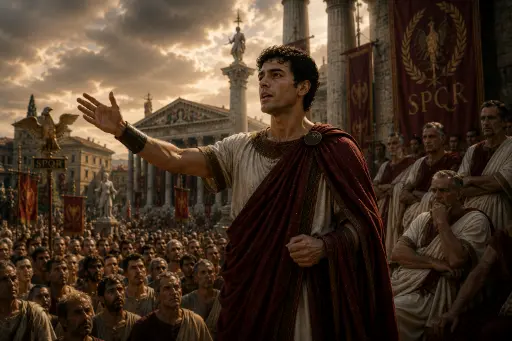
No one could match Caesar’s ability to move the hearts of the people.
His speeches inspired.
His decisions were bold.
And he possessed a rare charisma that drew people to him wherever he went.
Little by little, the citizens of Rome began to rally behind him.
But popularity alone was not enough to change Rome.
In the Roman Republic, politics was never driven by ideals alone.
So Caesar made a move of breathtaking audacity— one that would secure his place in history.
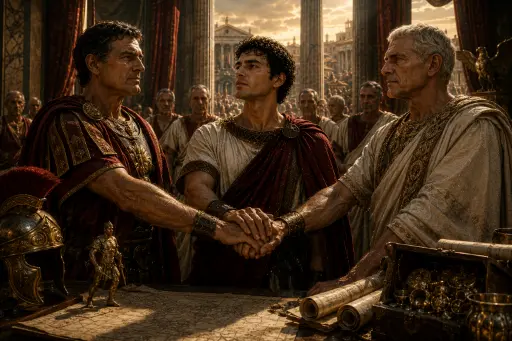
He forged an alliance with the two most powerful men in Rome.
Pompey—Rome’s greatest general.
Crassus—the wealthiest man in the Republic.
Together, they formed what history would remember as the First Triumvirate.
Military power.
Immense wealth.
Political ambition.
The three greatest forces in Rome had come together behind a single rising statesman.
And in return, Caesar was entrusted with a mission that would change the course of his life forever.
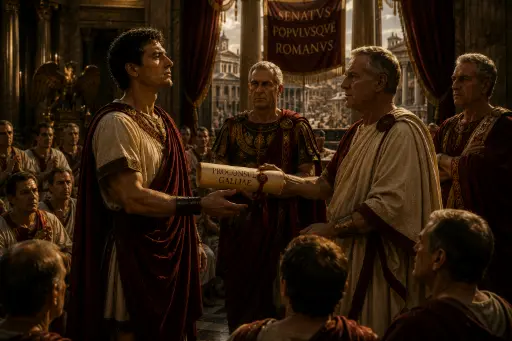
Governor of Gaul.
At the time, it seemed like nothing more than another political appointment.
No one could have imagined that this decision would change the course of history forever.
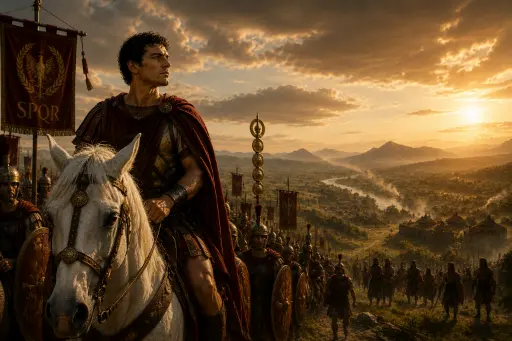
In 58 BC, Caesar marched into Gaul at the head of his legions.
It was a vast land, stretching across what is now France and Belgium.
Hundreds of tribes lived there, and their fierce warriors had long resisted the expansion of Rome.
Most people believed it would become a long and difficult war.
Instead, those eight years would become the years that transformed one man into a legend.
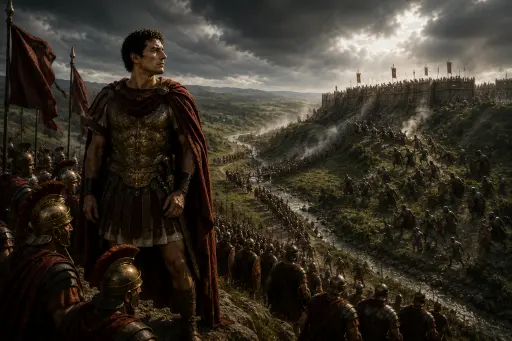
Caesar kept winning.
Even when he was outnumbered.
Even when supplies ran dangerously low.
Even when defeat seemed inevitable.
He never lost his composure.
While others saw chaos, Caesar saw opportunity.
And time and again, he turned impossible odds into extraordinary victories.
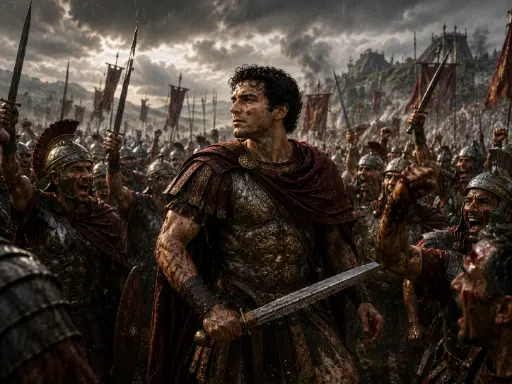
He studied the terrain.
He understood the minds of his enemies.
And again and again, he executed strategies no one else would have imagined.
But Caesar led by more than brilliance alone.
He fought on the front lines, sharing the same dangers as his soldiers.
That was why they did not follow him simply because he gave the orders.
They followed him because they believed in him.
They believed he was a man worth risking their lives for.
Heroes are never created alone.
They are made by the people who choose to believe in them.
Yet in Gaul, there was a hero of another kind waiting to face him.
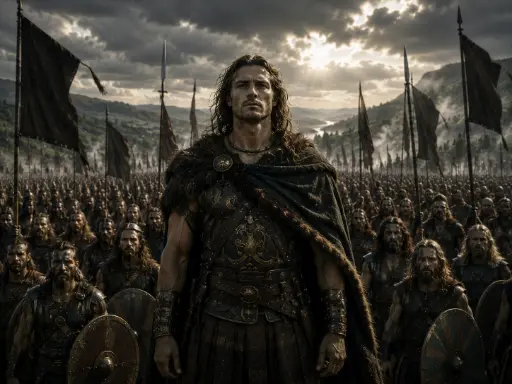
Then, a new leader emerged.
His name was Vercingetorix.
Young, charismatic, and fiercely determined, he accomplished what had once seemed impossible.
He united the tribes that had spent generations fighting one another.
His message was simple.
“Drive the Romans from our land.”
For the first time, nearly all of Gaul rose as one.
And for the first time in his campaign, Caesar faced the real possibility of defeat.
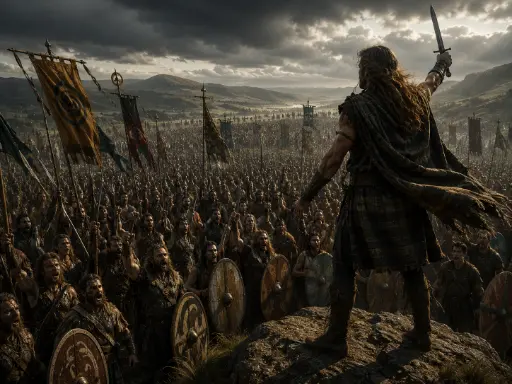
Soon, all of Gaul was in revolt.
Vercingetorix succeeded where no one before him had.
He united the tribes that had spent generations at war with one another.
With a single call—
“Drive the Romans out.”
For the first time in their history, hundreds of tribes stood together as one.
It was the greatest challenge Caesar had ever faced.
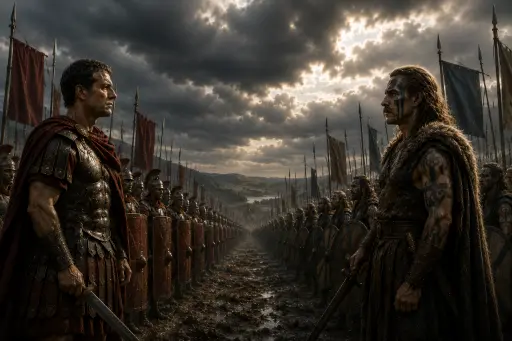
To the people of Gaul, Caesar was no hero.
He was an invader.
A man who seized their homeland, killed their people, and threatened their freedom.
They, too, had taken up their swords for the sake of their future.
That is why this was never a battle between good and evil.
It was a clash between people who each believed they were fighting to defend their own homeland.
History is often remembered through the eyes of the victors.
But on that battlefield, every man believed he was fighting for what mattered most.
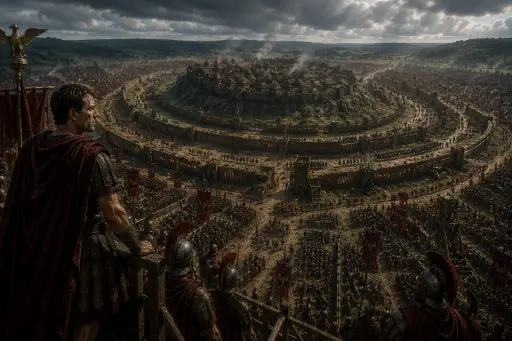
The decisive battle would be fought at Alesia.
Vercingetorix withdrew into a massive natural fortress.
Outside its walls, a relief army—said to number in the hundreds of thousands—was closing in.
Any other commander would have lifted the siege and retreated.
But Caesar was not like any other commander.
Instead, he gave an order that would astonish the world.
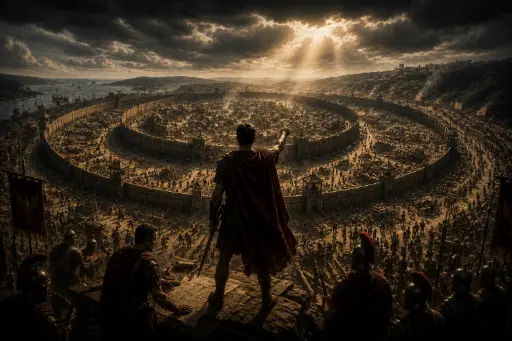
“Build two walls.”
One to keep the enemy trapped inside.
The other to hold back the army advancing from outside.
It was an unprecedented strategy.
A double ring of fortifications— one facing inward, the other facing outward.
Caesar had chosen to fight an enemy on both sides at once.
It was a gamble unlike anything the ancient world had ever seen.
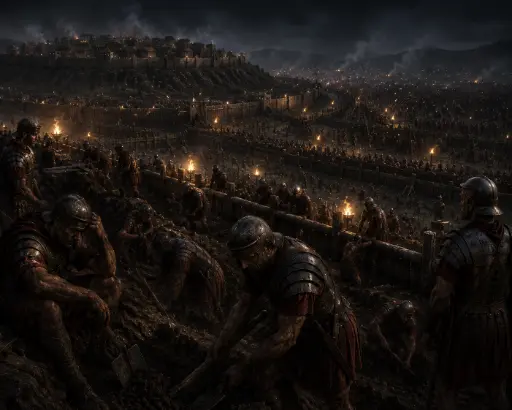
Even among the Roman soldiers, doubt began to creep in.
Inside the walls waited tens of thousands of enemy warriors.
Beyond them, an even larger relief force was drawing near.
They were trapped between two armies.
By night, they dug trenches and raised fortifications.
By day, they fought.
There was barely any time to sleep.
Though no one dared to say it aloud, every soldier was thinking the same thing.
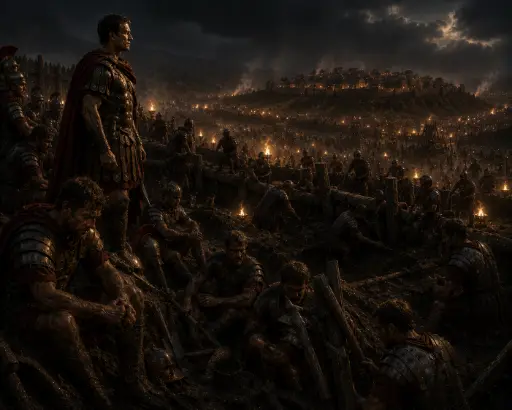
“This may be the battle we never return from.”
The thought crossed every soldier’s mind.
Yet not one of them fled.
They were not placing their faith in victory itself.
They were placing their faith in one man.
Caesar.
The undefeated commander who had led them through battle after battle.
If anyone could find a way through this impossible situation, they believed it was him.
Driven by that conviction, the legionaries worked without rest.
Day and night, they dug trenches.
They raised walls.
They drove sharpened stakes into the earth.
They concealed deadly traps beneath the ground.
And then… the day of the final battle arrived.
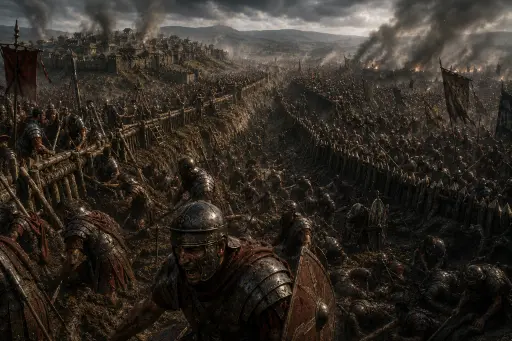
The enemy inside the fortress attacked.
The enemy outside attacked as well.
The Roman army was being crushed from both sides.
For a moment, it seemed there was no escape.
Everyone thought the same thing.
“It’s over.”
And then…
Caesar made his move.
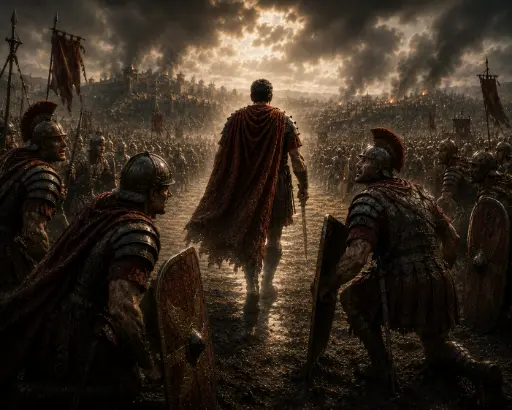
Then, through the dust and chaos of the battlefield, Caesar appeared.
Clad in the scarlet cloak of a Roman general, he rode to the very front of the line.
The commander himself was leading the charge.
The moment the legionaries saw him, their strength returned.
They surged forward once again.
Watching from within the fortress, Vercingetorix understood exactly what was happening.
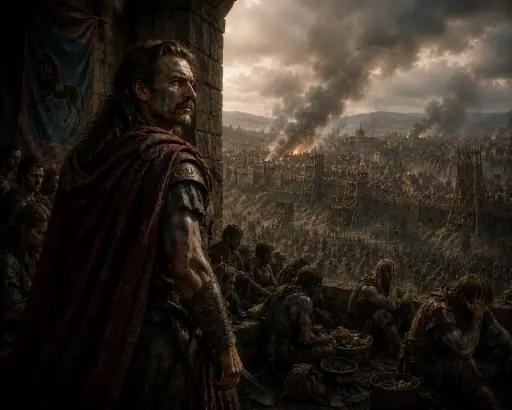
The relief force was beginning to fall back.
Inside the fortress, food was running out.
Hope slowly faded from the faces of the defenders.
And yet, Vercingetorix refused to surrender.
He fought until the very end.
Because he was fighting for more than his own life.
He carried the hopes of all Gaul upon his shoulders.
And when it was finally over…
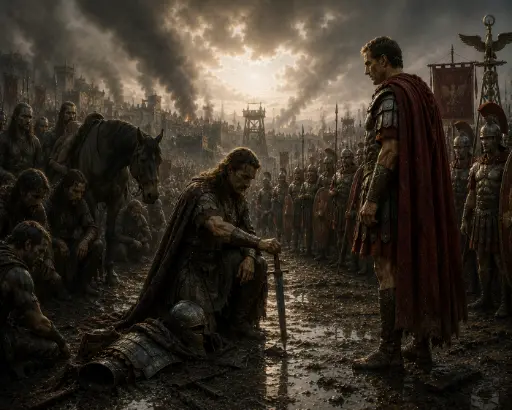
Vercingetorix quietly dismounted his horse.
He laid down his sword.
He removed his armor.
And he walked alone toward the victor.
Standing before Caesar, he surrendered.
He did so not to save himself— but to save the lives of his people.
To prevent any more blood from being spilled.
After one of the fiercest battles of the ancient world, the relief army was broken, and Alesia fell.
At that moment, it was not merely one man who had been defeated.
It was an entire age of Gaul that came to an end.
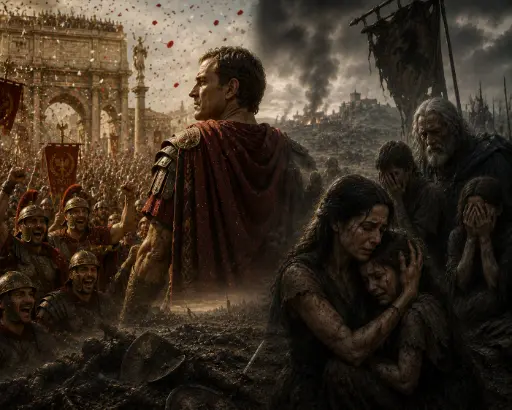
This victory was more than a military triumph.
In Rome, the people celebrated.
The legionaries took pride in the general who had led them to glory.
But in Gaul, countless families lost their homes.
They mourned the world they had known.
Heroes are defined by where you stand.
To some, Caesar was a savior.
To others, he was an invader.
Perhaps that is why, even after more than two thousand years, the question remains unanswered:
What does it truly mean to be a hero?
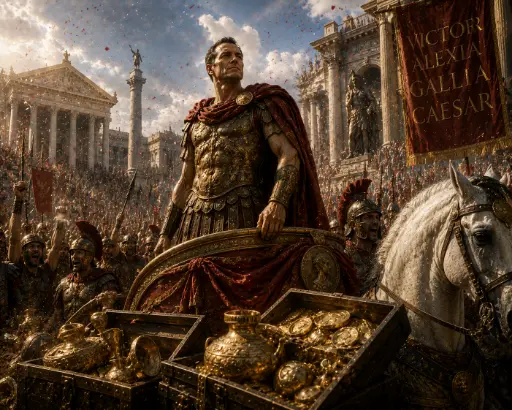
With this victory, Caesar gained immense wealth.
He commanded a battle-hardened army.
And above all… his name became known throughout Rome.
He was no longer merely a politician.
Nor was he simply a general.
He had become… a hero.
A man whose greatness no one could deny.
But history teaches us one timeless lesson.
The higher a hero rises… the longer the shadow he casts.
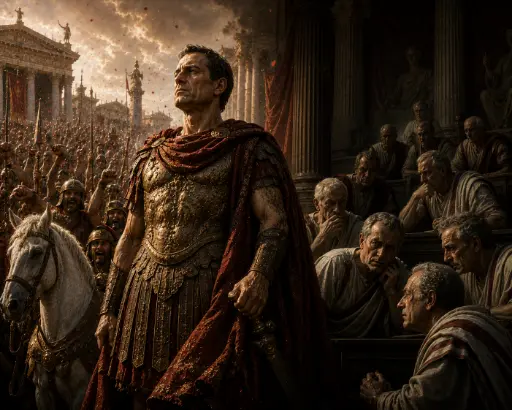
A hero is not at his most dangerous when he is defeated.
A hero is at his most dangerous… when he becomes too powerful.
From that moment on, the Roman Senate no longer celebrated Caesar.
They began to fear him.
Chapter 4 — When Heroes Become Feared
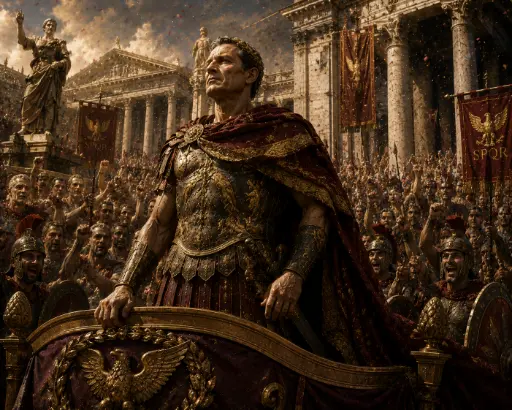
Heroes are not loved forever.
The greater their power becomes, the more admiration gives way to fear.
By the end of the Gallic Wars, Julius Caesar had become exactly that kind of man.
Over eight years of campaigning, he had brought vast new territories under Roman rule.
He had amassed immense wealth.
His battle-hardened legions were bound to him by absolute loyalty.
The people praised him.
His soldiers were willing to lay down their lives for him.
His name echoed throughout Rome.
To the people, he was a hero.
But the men of the Senate saw him very differently.
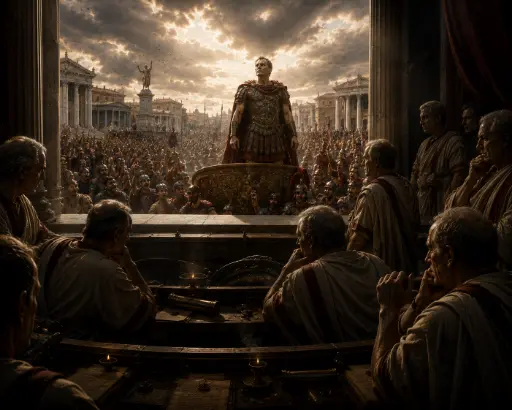
To the Senate, he was no hero.
He was the man who could bring an end to the Republic.
The Roman Republic had been founded on one guiding principle:
No single man should ever hold absolute power.
Having overthrown its kings centuries earlier, Rome had come to despise the very idea of monarchy.
And now, a man was returning from Gaul with the unwavering support of both the people and the army.
His influence rivaled— perhaps even surpassed— that of the Senate itself.
If he entered Rome at the head of his legions, there would be no one left to stop him.
The hero had become the greatest threat to the Republic.
At last, the Senate made its decision.
A message was sent to Caesar.
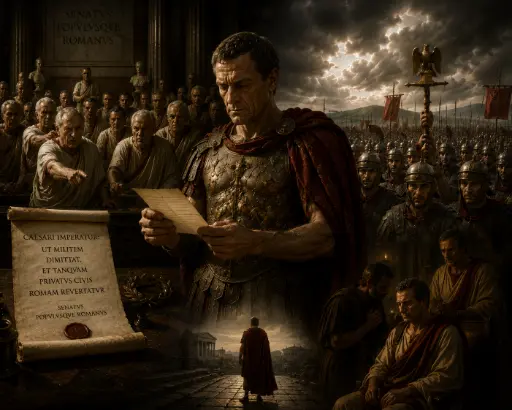
The Senate’s order was simple.
“Disband your army and return to Rome as an ordinary citizen.”
Legally, it was a reasonable command.
Under Roman law, no general was permitted to enter Italy at the head of an army.
The law existed for one reason: to ensure that no man could seize the Republic by force.
But for Caesar, obeying that order was impossible.
If he gave up his legions, glory would not be waiting for him.
His political enemies would put him on trial.
He would lose everything he had built.
And most likely… he would lose his life.
There was no longer a place for the hero to return to.
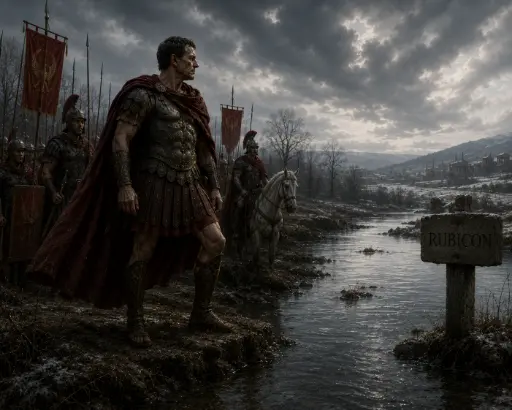
January, 49 BC.
In the bitter cold of winter, Caesar led his legions to the banks of a small river.
Its name was… the Rubicon.
It was not a mighty river.
In fact, it was so small that it could easily be overlooked on a map.
But this unremarkable stream marked a line that no Roman general was permitted to cross.
Beyond it lay Rome.
To cross the Rubicon at the head of an army was an act of rebellion against the Republic.
One step forward… and there would be no turning back.
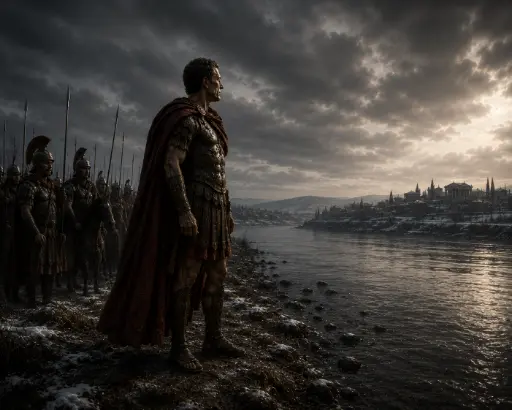
Caesar stopped at the river’s edge.
Before him lay his homeland.
Behind him stood the soldiers who had followed him through every battle.
Only two paths remained.
Obey the Republic… or march against it.
History tells us that, in those few silent moments, the fate of the world hung in the balance.
One step forward… and there would be no turning back.
Then…
Caesar broke the silence.
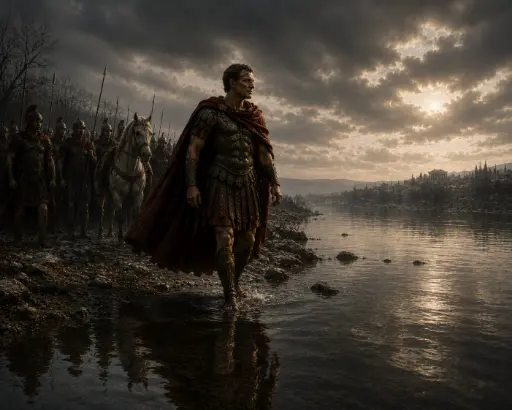
“The die is cast.”
With those words,
Caesar stepped forward.
His soldiers followed.
It was only a single step across a narrow river.
Yet it was far more than a crossing.
It was the moment a hero became a rebel.
On that day, the Roman Republic sealed its own fate.
It chose to wage war against the greatest hero it had ever created.
The news spread across Rome with astonishing speed.
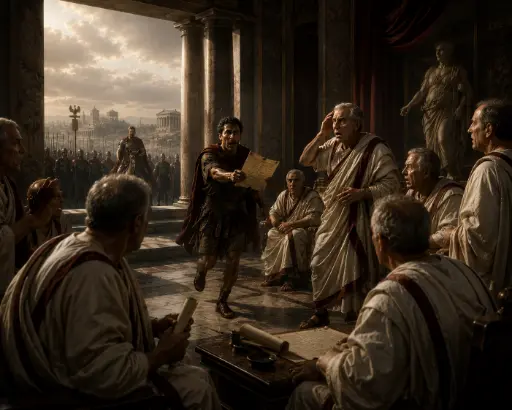
“Caesar has crossed the Rubicon.”
The words echoed through Rome.
The Senate was terrified.
The hero they had once celebrated…was now marching toward them.
At the head of Rome’s most battle-hardened legions.
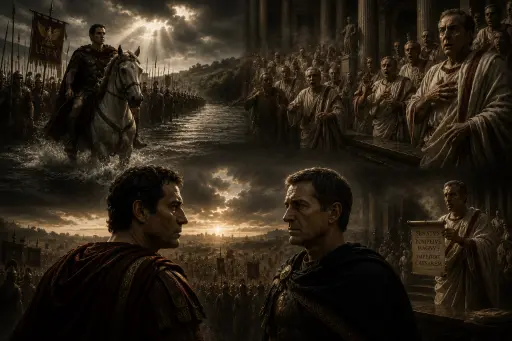
The man chosen to stop him was Pompey—
the very ally who had once stood beside Caesar in the First Triumvirate,
dreaming of Rome’s future together.
What followed was not a war against a foreign enemy.
It was a civil war.
Romans fighting Romans.
A nation turning its sword against itself.
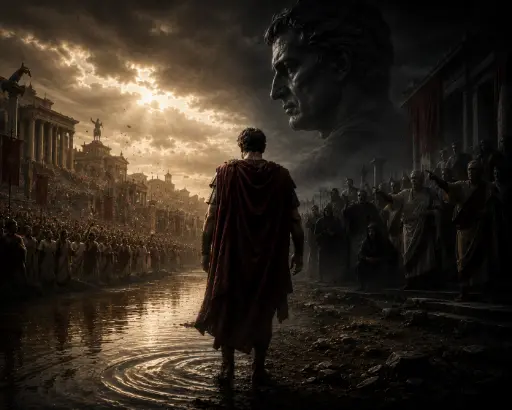
History is often filled with cruel irony.
In times of chaos, people pray for a hero.
But when that hero finally arrives, they begin to fear him.
Power can save a nation.
Yet when one man holds too much of it, freedom itself begins to feel fragile.
That is why every victory drives a hero further into solitude.
And Caesar was no exception.
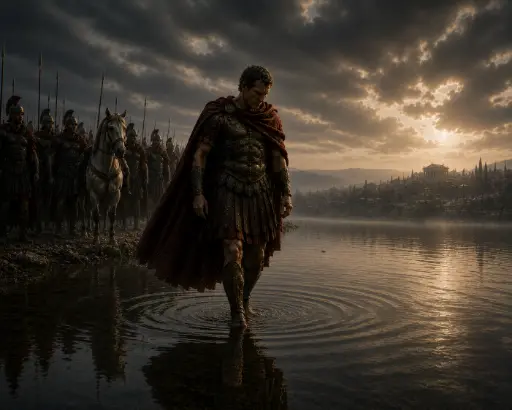
On the day Caesar crossed the Rubicon, he crossed far more than a border.
He crossed the line that separates a hero… from a rebel.
And once that line is crossed, there is no turning back.
Chapter 5 — Changing the World
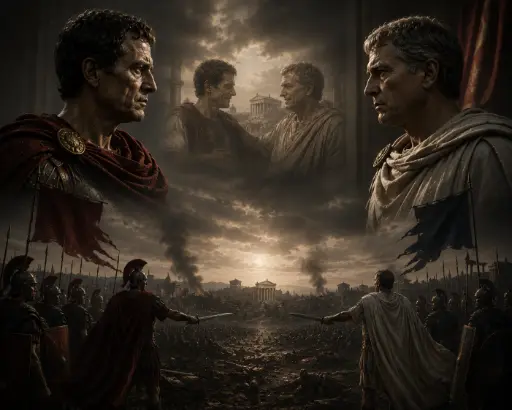
From the day Caesar crossed the Rubicon, Rome was plunged into civil war.
Men who had once dreamed of the same future now stood on opposite sides of the battlefield.
The Roman Republic found itself at war with its own greatest hero.
The man who stood against Caesar was Pompey— his former ally, and the man with whom he had once forged the First Triumvirate.
Both men were heroes, each believing he was fighting for Rome’s future.
That is why this war could have no true victor.
Whoever won…
Rome itself would bear the scars.
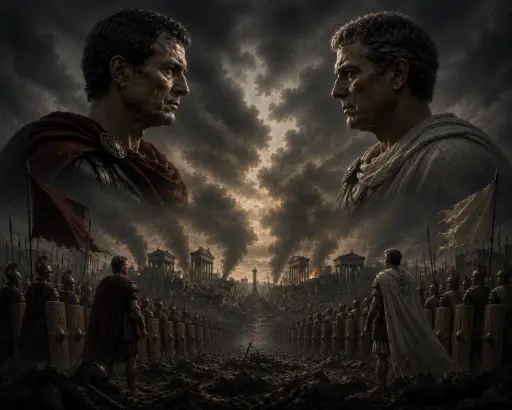
The decisive battle would be fought on the plains of Pharsalus, in Greece.
On paper, Pompey’s army held the advantage.
He commanded more men.
To almost everyone, the victory of the seasoned general seemed inevitable.
But Caesar possessed something no army could count.
Men who had marched beside him… fought beside him… and survived eight brutal years in Gaul.
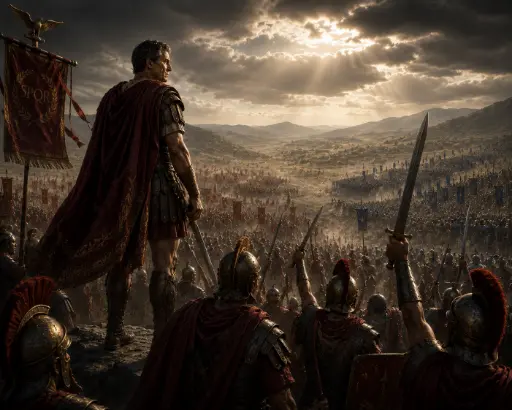
They did not fight out of duty.
They fought out of loyalty.
They wanted only one thing— to stand beside Caesar.
That was reason enough to draw their swords.
After a brutal battle, Caesar emerged victorious.
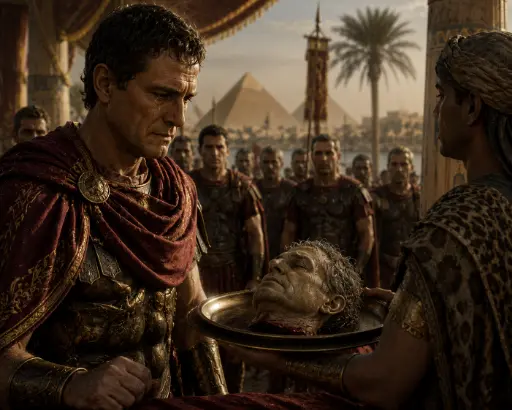
Pompey fled to Egypt.
But shortly after his arrival, he was murdered.
His severed head was presented to Caesar.
Those around him expected him to celebrate.
Instead, Caesar is said to have wept.
Pompey was his enemy.
But before that… he had been his ally.
The man who had once stood beside him, dreaming of Rome’s future.
In Egypt,
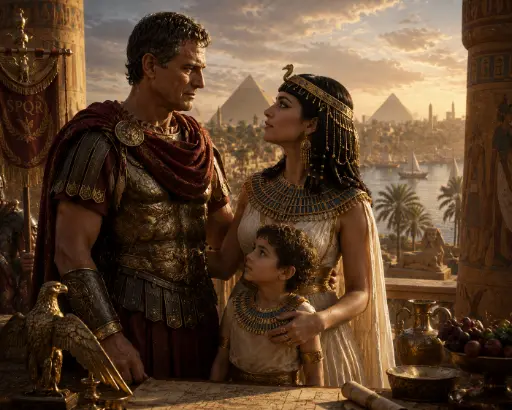
Caesar encountered another turning point in his life.
A young queen— Cleopatra VII.
Caught in a struggle for the Egyptian throne, she astonished Caesar with her intelligence and her boldness.
Together, they restored order to a kingdom torn by conflict.
In time, their son, Caesarion, was born.
This was more than a love story.
It was the moment when two great civilizations — Rome and Egypt — became forever intertwined.
When Caesar returned to Rome, he assumed a position no one had ever held before.
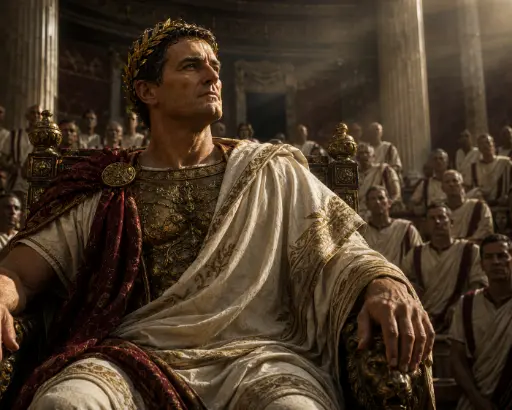
Dictator for Life.
At first glance, many people hear that title and think:
“So he wanted to become a dictator after all.”
But the first thing Caesar did was not to build a lavish palace.
Nor did he demand to be worshipped as a god.
Instead, he turned his attention to repairing a Republic that was on the verge of collapse.
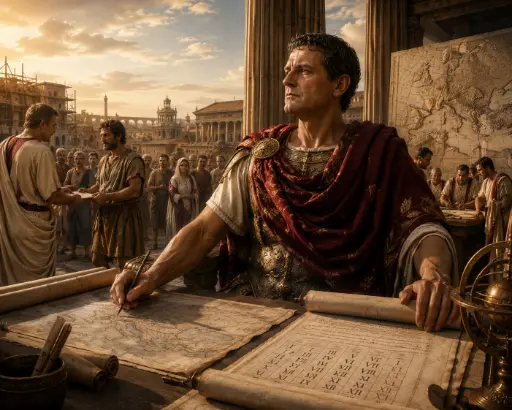
To those who had lost their land, he gave new opportunities to begin again.
He extended Roman citizenship to people across the provinces, seeking to transform Rome from a nation ruled by a privileged fewinto into an empire united under one vision.
He reformed the debt system.
He streamlined the administration.
He fought to curb political corruption.
And he introduced the Julian calendar, correcting the growing gap between the calendar and the seasons.
More than two thousand years later, many of his reforms still shape the world we live in.
Caesar did not change history through war alone.
He sought to change the future through reform.
But of course… not everything went as he had hoped.
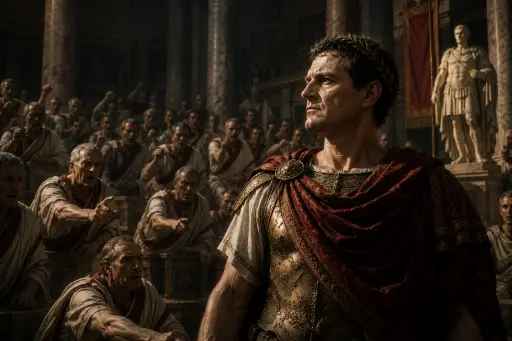
But sweeping reforms came at a cost.
Many of them threatened the privileges of Rome’s ruling elite.
Within the Senate, more and more men feared that their power was slipping away.
Then there was another reason for concern.
Caesar had become Dictator for Life.
It was a title unlike any Rome had ever known.
And it awakened an old fear.
“Is a king returning to Rome?”
To the Romans, there was no title more hated than king.
In the end, they did not fear the reforms themselves.
They feared the man behind them.
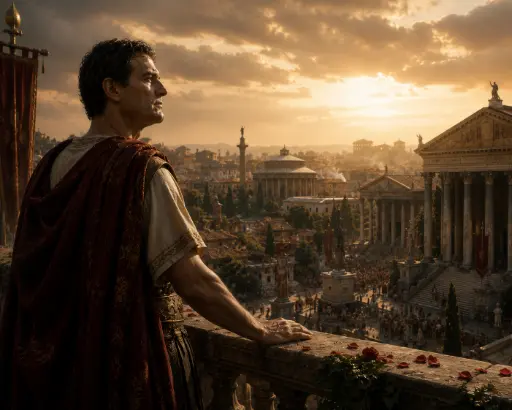
History often remembers only the victors.
But the people who truly change the world are not simply those who win wars.
They are the ones who reshape old systems for a new age.
Caesar was one of them.
What he sought was neither endless civil war nor eternal dictatorship.
He wanted to bring an end to a Republic trapped in chaos, and build a new Rome— one where stability could finally replace conflict.
Whether that vision was right remains a subject of debate among historians to this day.
But one thing is beyond dispute.
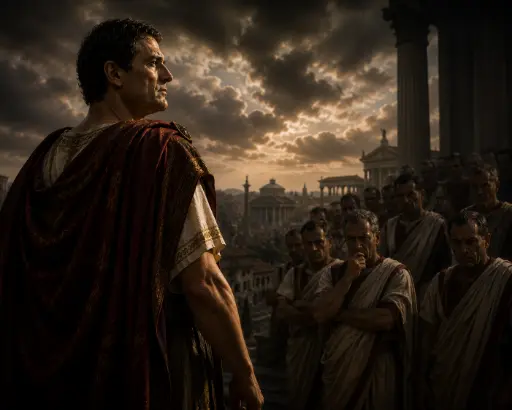
Power itself was never Caesar’s ultimate goal.
He saw it as a means to transform Rome.
Yet, in a cruel twist of fate, it was that very determination to reform that would ultimately seal his destiny.
The hero sought to save his homeland.
But his homeland had begun to fear its own hero.
Chapter 6 — Tragedy
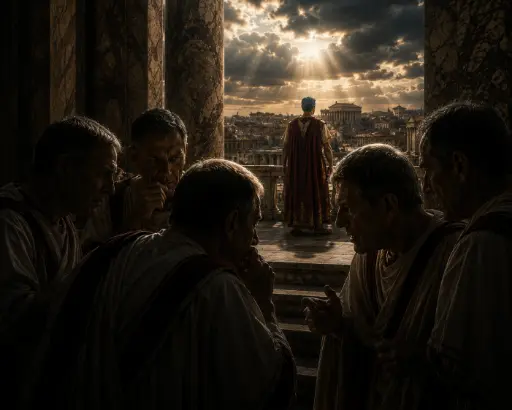
Many senators believed that if Caesar were gone, the Republic could be saved.
To them, Caesar himself was the problem.
Remove the man, and dictatorship would end.
Freedom would return.
The Republic would rise again.
That was their hope.
But history rarely follows the hopes of men.
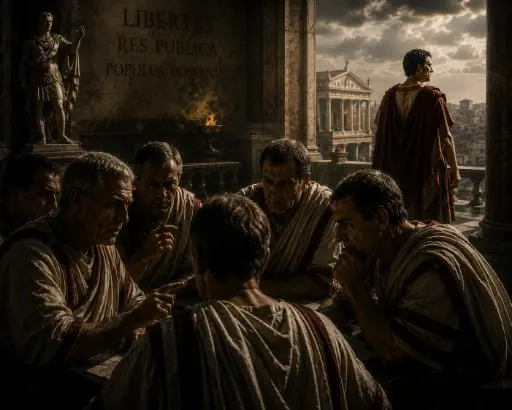
Caesar was trying
to transform Rome.
Some welcomed that change.
Others feared it.
Within the Senate, a rumor began to spread.
“He intends to become king.”
To the Romans, there was no title more despised than king.
And so, many senators reached a single conclusion.
“If the Republic is to survive… Caesar must die.”
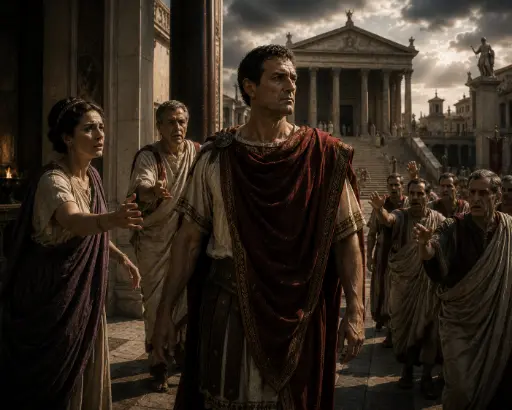
March 15, 44 BC.
A day that history would remember as the Ides of March.
Caesar made his way to the Senate.
There had been warnings.
Dark omens.
His wife, Calpurnia, begged him not to go.
Friends, too, warned him that danger awaited.
Yet Caesar went anyway.
Perhaps he believed that to turn back would be to admit that he was afraid.
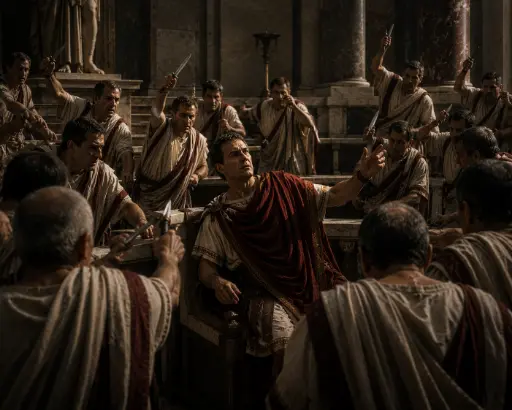
The Senate chamber.
One senator stepped forward.
That was the signal.
One by one, daggers were drawn.
One man.
Then another.
And another.
History tells us that nearly sixty senators took part in the conspiracy.
They believed they were saving Rome.
They believed they were defending the Republic.
And so… they turned their blades against the hero.
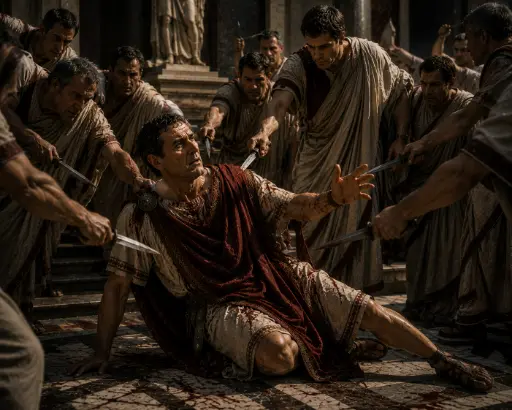
Caesar fought back.
But there were simply too many.
Then… he looked up.
Among the men surrounding him, he saw a familiar face.
A young man.
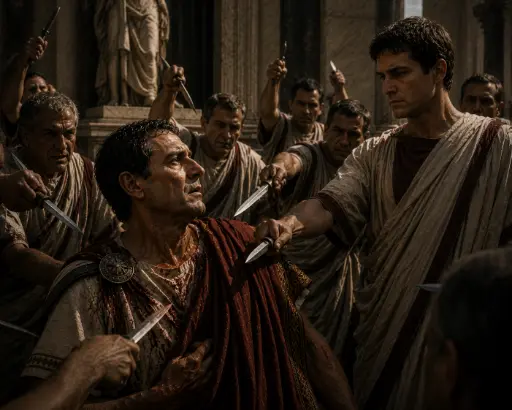
Marcus Junius Brutus.
One of the men Caesar trusted most.
Some believed he regarded him almost as a son.
Caesar had rewarded him with honor, authority, and the highest offices.
Yet Brutus, too, stood among the assassins.
When Caesar saw him, he is said to have stopped resisting.
What he actually said will never be known.
But history remembers this moment with words that have echoed for more than two thousand years.
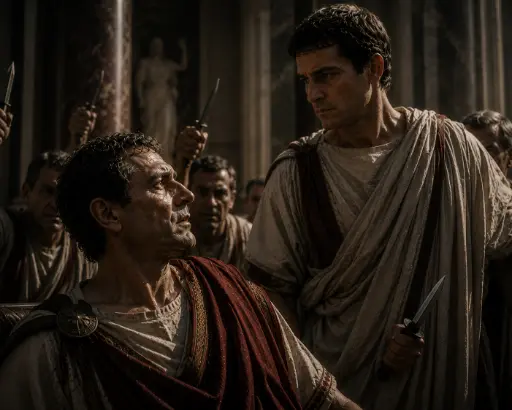
“You too, Brutus?”
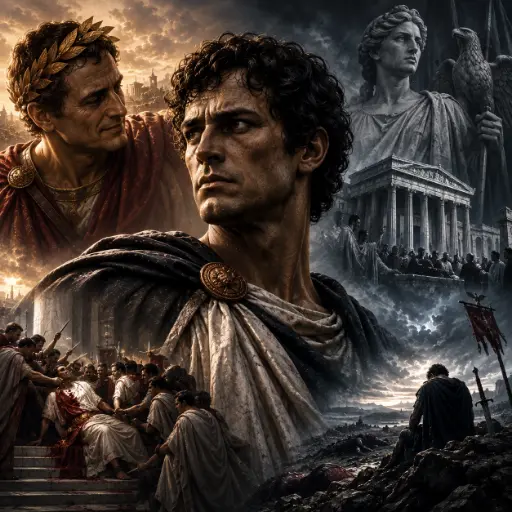
The hero collapsed to the floor, his body pierced by twenty-three wounds.
He was fifty-five years old.
Silence filled the Senate chamber.
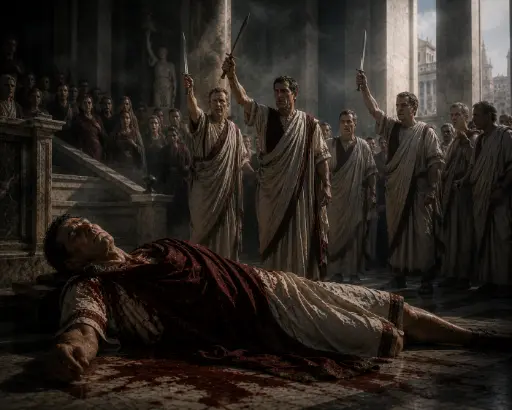
It was over.
The Republic had been saved.
At least… that was what the assassins believed.
They raised their bloodstained swords and cried out, “Liberty has been restored!”
But no one answered.
There were no cheers.
The people were afraid.
The streets fell silent.
The hero was dead.
But the problems he had tried to solve remained.
Nothing had truly changed.
Did Rome finally find peace?
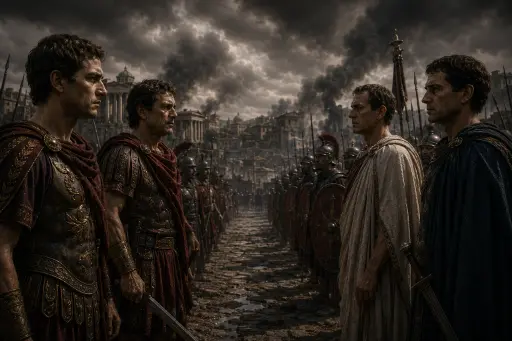
No.
Caesar’s death did not save the Republic.
Instead, it marked the beginning of another civil war.
Mark Antony.
Octavian.
Brutus.
Cassius.
The very men who had sworn to defend the Republic once again turned their swords against one another.
Rome was wounded more deeply than ever before.
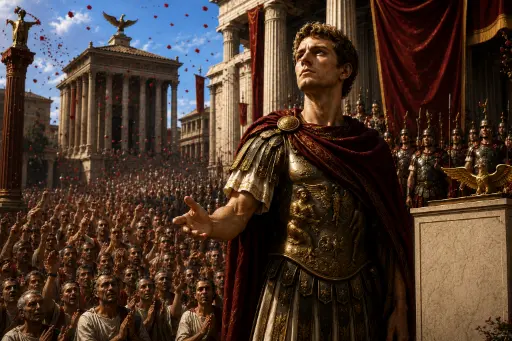
In the end, the man who emerged victorious was Caesar’s young heir, Octavian.
Years later, he would take the name Augustus and become Rome’s first emperor.
And so, the Roman Republic, which had endured for nearly five centuries, came to an end.
A new age had begun.
The age of the Roman Empire.
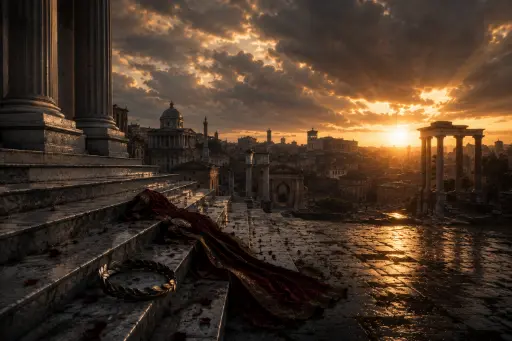
History is often filled with cruel irony.
The Senate killed its greatest hero to save the Republic.
Yet it was that very act that dealt the Republic its final blow.
Had Caesar lived, would the Republic have survived?
Or was there another path?
No one can answer that question any longer.
But one thing is certain.
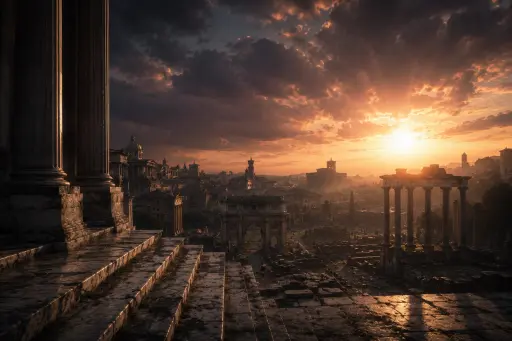
The hero did not die trying to destroy his homeland.
He died trying to save it.
And in one of history’s greatest ironies, the Roman Republic did not fall because of Caesar.
It fell because of those who killed him.
History rarely unfolds as people intend.
Final Chapter — A Hero Never Truly Dies
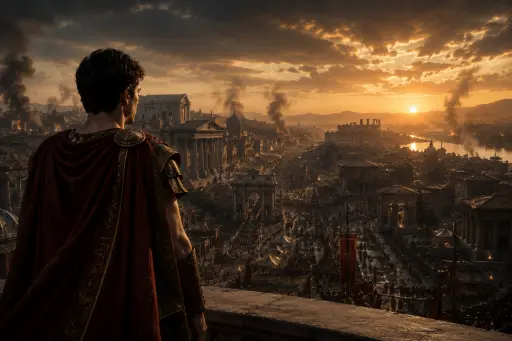
The hero was dead.
The Roman Republic was gone.
It seemed that the story had come to an end.
But in truth…
History was only just beginning.
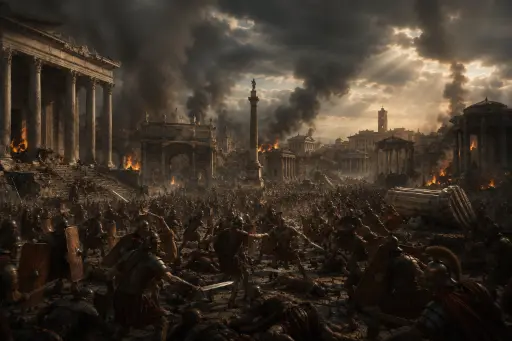
After Caesar’s death, Rome was once again plunged into civil war.
The men who had drawn their swords to save the Republic now turned them against one another.
The man who finally brought an end to the chaos was a young heir.
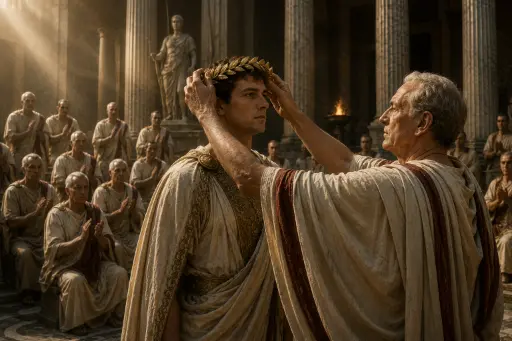
Octavian.
The young man whom Caesar had named as his adopted heir.
After years of war, he emerged victorious.
In 27 BC, he received the title of Augustus.
With that, the Roman Republic came to an end.
A new age had begun— the age of the Roman Empire.
In one of history’s greatest ironies, the assassination carried out to save the Republic only hastened its end.
But Caesar’s greatest legacy was not the Empire alone.
Even his name began to change history.
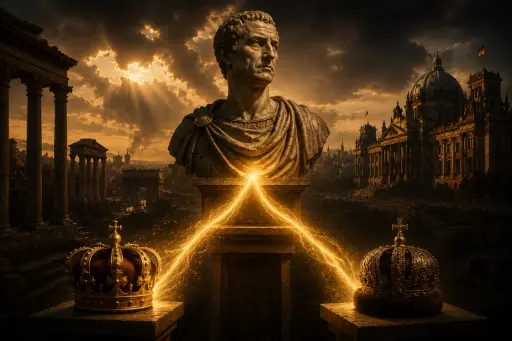
Caesar’s name became the title of the Roman emperors.
Its echo carried across the centuries.
In Germany, it became Kaiser.
In Russia, it became Tsar.
Both words trace their origin to one name— Caesar.
In all of history, there are very few people whose name became the very title of an emperor.
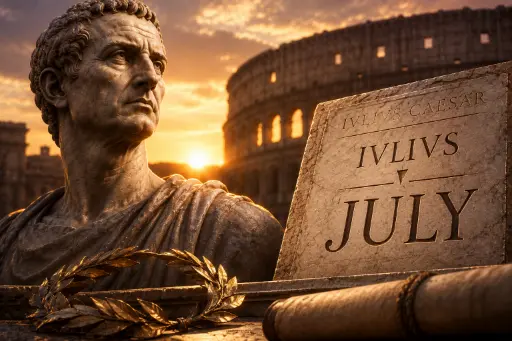
More than two thousand years have passed.
Yet even today, we still call the seventh month July.
A name derived from Julius Caesar.
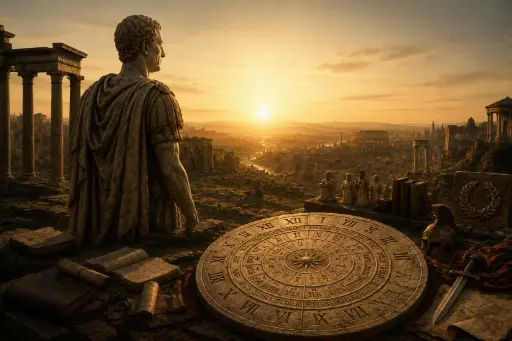
The calendar he introduced— the Julian calendar— evolved over time into the calendar we use today.
His legacy lives on in the history we study.
In films.
In novels.
In politics.
In military strategy.
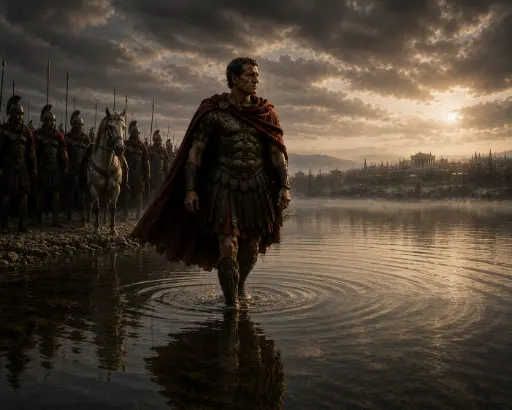
Even today, people still speak of “crossing the Rubicon.”
They still say, “The die is cast.”
His words have outlived his own lifetime.
The hero died.
But his influence never did.
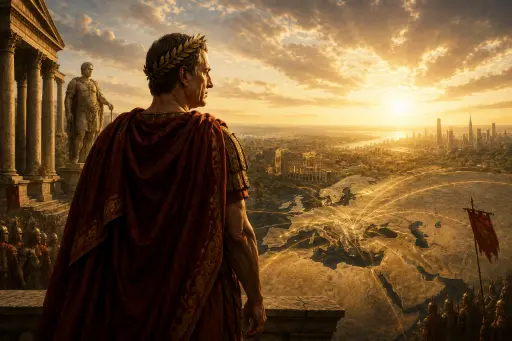
Caesar changed Rome.
He brought the Roman Republic to an end and opened the way for the Empire.
But Rome was not the only thing he changed.
He forever changed the very idea of an emperor.
His influence spread across Europe.
Then across the world.
And even today— more than two thousand years later— it still reaches us.
History remembers countless heroes who changed their nations.
But only a few have brought an entire age to its end… and become the beginning of another.
Caesar was one of them.
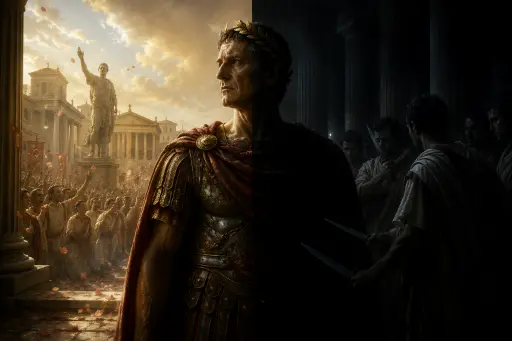
Was he a hero?
Or a dictator?
More than two thousand years later, that question still has no final answer.
Those who sought to defend freedom killed a hero.
The hero who sought to reform Rome placed limits on freedom.
Which side was right?
The answer changes with the times.
That is why Caesar’s story is not merely a tale from the distant past.
It is the story of humanity itself.
A story that repeats in every age.
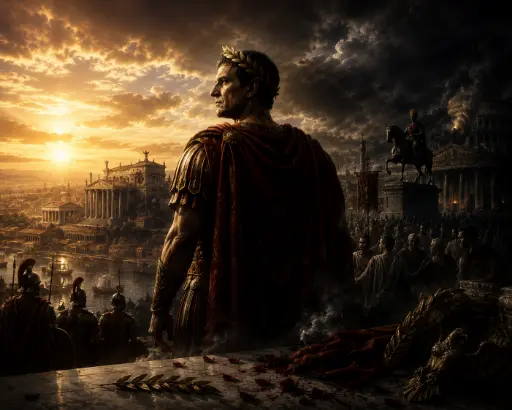
What is power?
What is freedom?
What makes a hero?
And can one person truly change history?
There is no single answer to these questions.
That is why, more than two thousand years later, we still speak the name of one Roman.
Julius Caesar.
He changed Rome.
But Rome was not the only thing he changed.
He changed the course of human history.
Julius Caesar.
He changed Rome.
But Rome was only the beginning.
He changed the course of human history.
Afterword
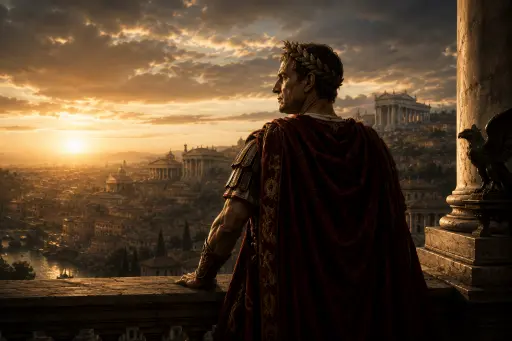
History is not written by victors alone.
Nor does it belong only to the defeated.
It is shaped by the countless choices made by countless people.
Caesar was one of them.
His choices changed Rome.
And more than two thousand years later, their consequences still shape our world.
That is why his story never truly ends.
It is not merely a story of the past.
It is a question for all of us who live today.
What makes a true leader?
What does it mean to reform a nation?
Is power meant to protect the people?
Or does it inevitably threaten their freedom?
History does not give us the answers.
Each generation must answer those questions for itself.
And perhaps… they always will.
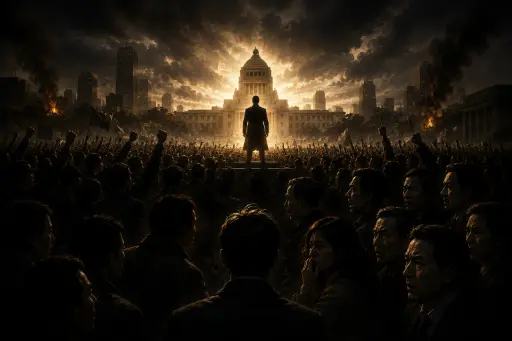
When people lose faith in politics…
When hope for the future begins to fade…
One wish inevitably returns.
“Someone…
change this nation.”
That is when people begin to look for a hero.
Yet history teaches us another truth.
The same people who create their heroes… can also come to fear them.
And that is why history repeats itself.
Want to Learn More?
Enjoyed the story?
Explore the real Julius Caesar—his campaigns, reforms, political genius, and lasting legacy.
👉Julius Caesar ― The Man Who Changed History
Author: Fuji

Human history is truly complex, isn’t it?
There are countless websites introducing historical figures and events, but many of them are just plain explanations—not exactly exciting to read.
On the other hand, reading books takes a lot of time and effort.
That’s where I come in.
Through “stories that are more engaging than explanations and shorter than books,” I aim to bring the world’s history and humanity’s records to you in a more accessible and interesting way.
If my stories inspire you to love history a little more, I’d be absolutely thrilled!

Become Part of the Chronicle
If this article inspired you, consider supporting the project.
Become a character in the Chronicle.
Receive your own custom card and stand alongside queens, warriors, inventors, rebels, and legends from history.
Your support helps keep these stories alive and allows me to create more articles, illustrations, and historical cards.
Join the Chronicle and leave your mark on history.
Comment