
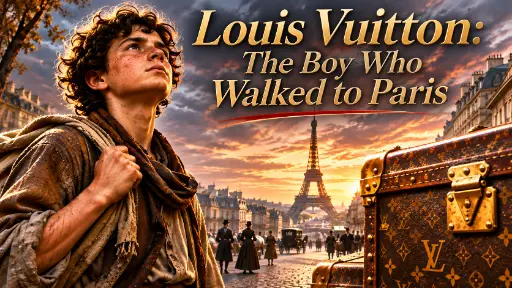

In 1821, a boy named Louis Vuitton was born in the small village of Anchay in the Jura region of France.
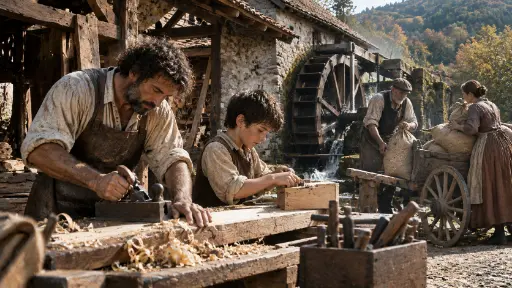
His family was not wealthy.
They were craftsmen who had worked with wood and operated a mill for generations.
Louis grew up in an environment where working with one’s hands was simply a part of life.

But Louis did not want to spend his entire life in the village.
At the age of fourteen, he made a decision that would change everything.
He left home.
With little money and no established career waiting for him, Louis began walking toward Paris.
Paris was hundreds of kilometers away.
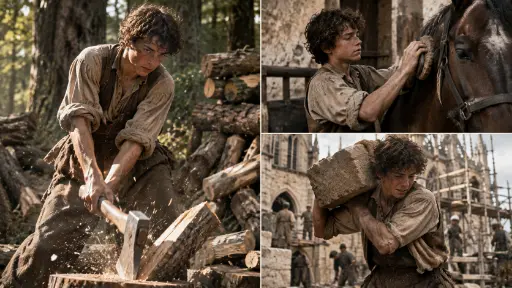
Along the way, he survived by taking whatever work he could find. He worked as a day laborer, a stable hand, and a woodcutter.

He was still a teenager.
But instead of returning home when life became difficult, he kept moving.
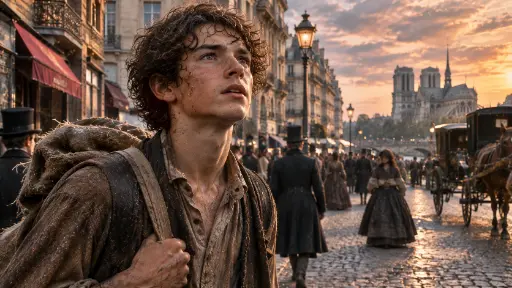
After more than two years, Louis finally reached Paris in 1837.
He was sixteen years old.
And he had arrived in one of the most exciting cities in Europe.
The Apprentice

Paris gave Louis an opportunity, but it did not give him success.
He needed a skill.
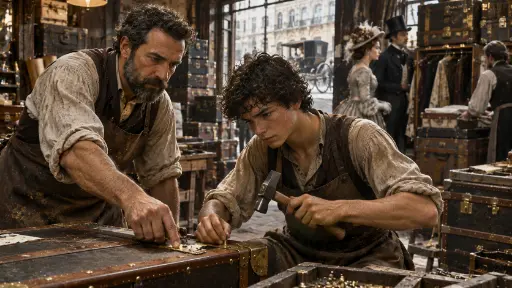
He found work with Romain Maréchal, a craftsman who specialized in making wooden boxes and packing the belongings of wealthy travelers.
This was not simply a job making boxes.
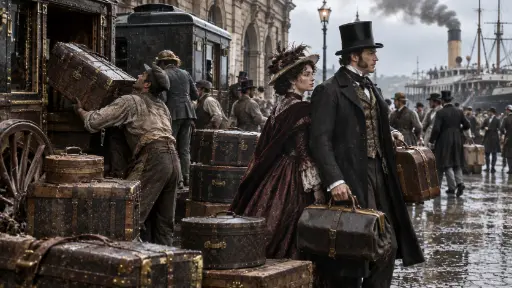
In nineteenth-century Europe, traveling was very different from today.
Wealthy people traveled with clothes, hats, shoes, documents, personal belongings, and valuable possessions.
Their luggage had to survive horses, ships, trains, weather, and rough handling.
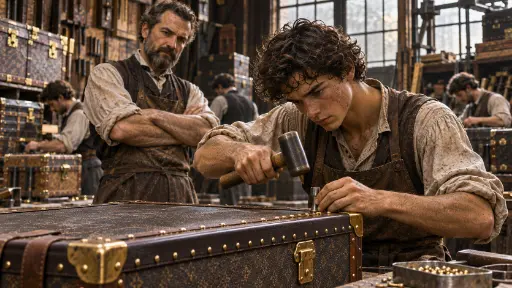
Someone had to know how to protect all of it.
That was the job Louis began to learn.
For the next seventeen years, he worked as a craftsman.
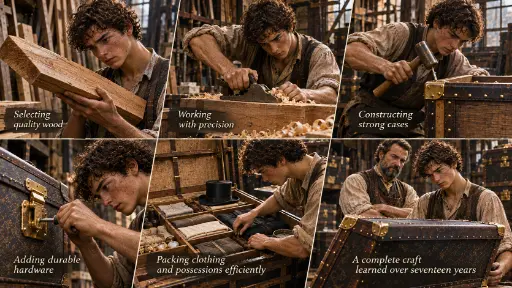
Seventeen years.
He learned how to select and work with wood.
He learned how to construct strong cases.
He learned how to pack clothing and possessions efficiently.
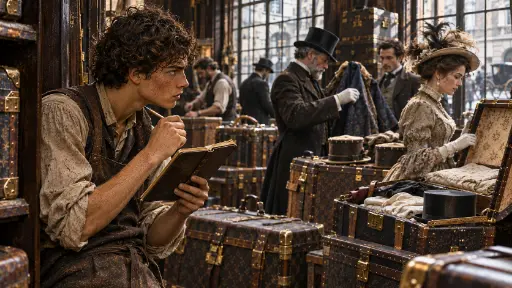
But perhaps more importantly, he learned something that could never be taught simply by working with tools.
He learned to watch his customers.
What did wealthy travelers carry?
What damaged their belongings?
What made traveling inconvenient?
What did they wish their luggage could do?
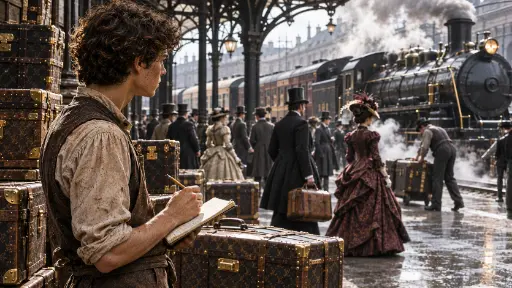
Louis was not merely learning how to make boxes.
He was learning how people traveled.
And while he was learning his craft, the world around him was changing.
Railways were expanding.
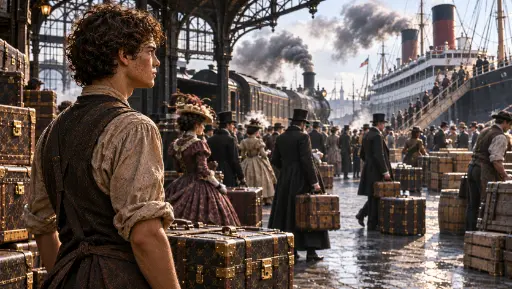
Steamships were transforming long-distance travel.
People were traveling farther and more frequently than before.
Travel itself was becoming a new industry.
Louis was standing directly in the middle of that transformation.
The Craftsman Becomes an Entrepreneur
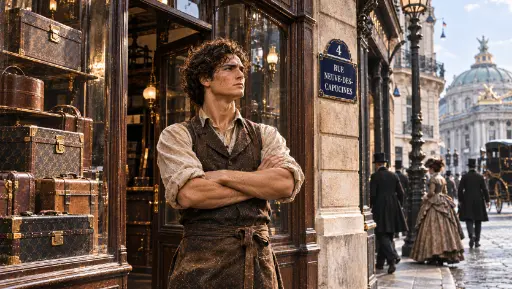
In 1854, after seventeen years of training, Louis was thirty-three years old.
He was no longer an apprentice.
He opened his own shop at 4 Rue Neuve-des-Capucines in Paris.
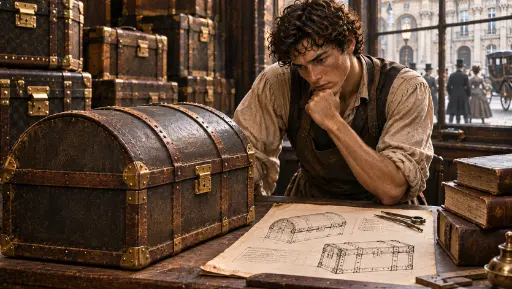
Louis could have continued making traditional luggage.
Instead, he began asking a different question:
What should luggage become in a changing world?
Traditional trunks often had rounded tops.
The curved shape helped rain run off the surface.
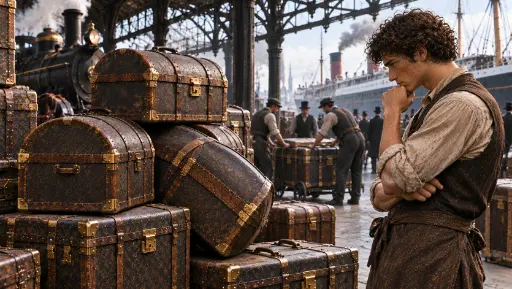
But it created another problem.
They were difficult to stack.
As railway and steamship travel expanded, travelers needed to transport more luggage efficiently.
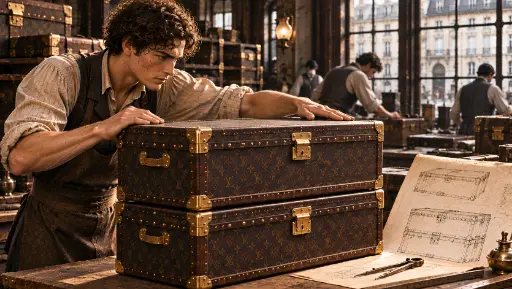
Louis saw an opportunity.
Around 1860, he introduced trunks with flat tops.
Now one trunk could be placed securely on top of another.
It was a simple idea.
But it solved a real problem.
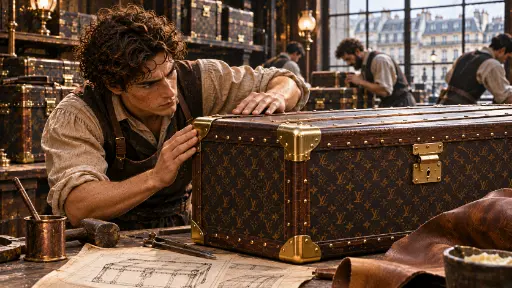
Louis also worked on making his trunks lighter, stronger, and more resistant to water.
He was no longer simply making containers.
He was designing products around the experience of travel.
That difference mattered.
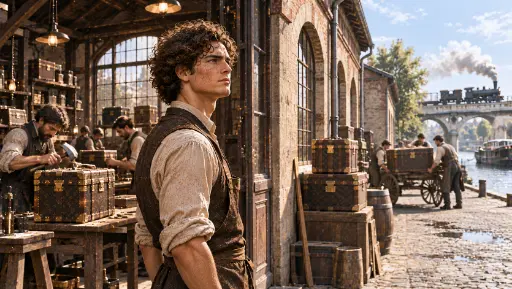
In 1859, his growing business moved its workshop to Asnières, near both the Seine and the railway.
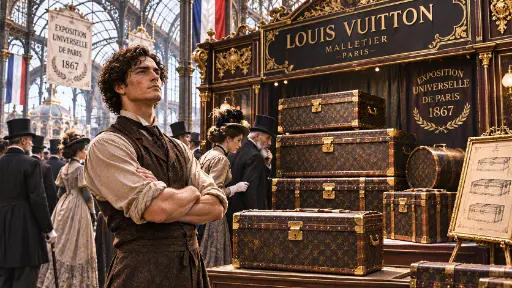
Then, in 1867, Louis exhibited his products at the Paris World’s Fair.
The small workshop of a young craftsman had become a serious business.
Success Creates a New Problem
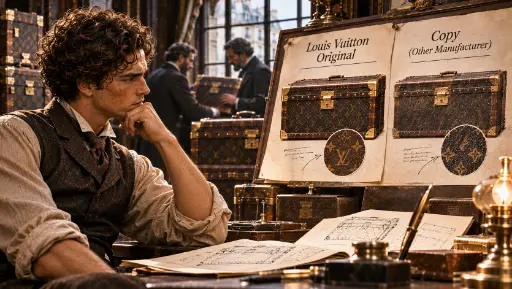
But success brought a problem Louis could not ignore.
Other manufacturers began copying his products.
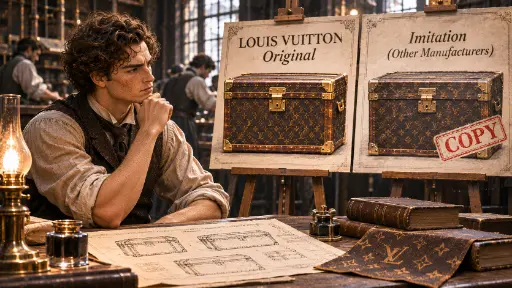
This was a sign that his ideas had value.
But it also meant that customers needed a way to recognize the real thing.
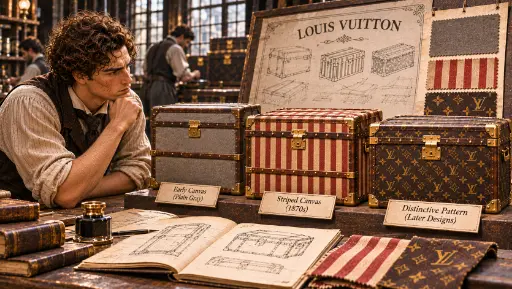
Louis responded by making his designs increasingly distinctive.
The plain gray canvas that had once been associated with his trunks was replaced by more recognizable patterns, including the red-and-beige striped canvas introduced in the 1870s.
His goal was no longer simply to make a useful trunk.
His products needed to be recognizable.
And Louis continued to innovate.
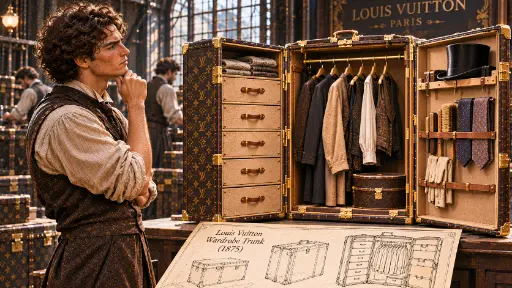
In 1875, he introduced the Wardrobe Trunk.
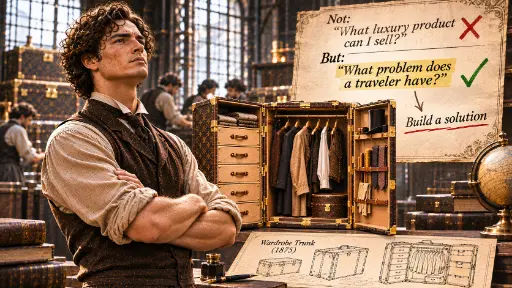
Instead of forcing travelers to unpack everything when they arrived at their destination, the trunk could function almost like a portable wardrobe.
Once again, Louis was solving a problem created by travel.
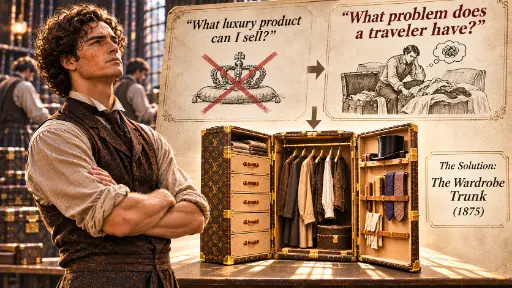
He was not asking:
“What luxury product can I sell?”
He was asking:
“What problem does a traveler have?”
Then he built something to solve it.
From Father to Son
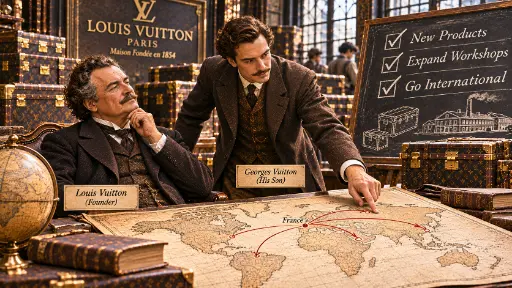
By the time Louis entered his later years, the business had grown far beyond the small shop he had opened in 1854.
His son, Georges Vuitton, joined the business and began helping expand it.
The company developed new products, expanded its workshops, and eventually began looking beyond France.
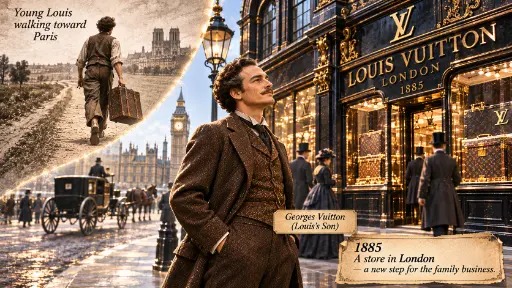
In 1885, Georges opened a store in London.
Louis had spent his youth walking toward Paris.
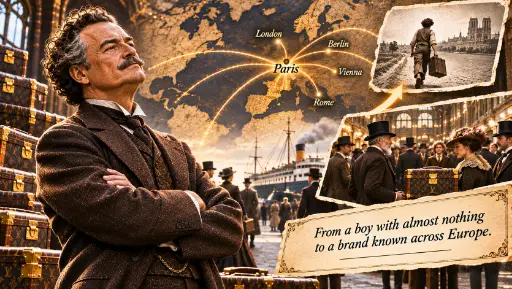
Now the business he had created was traveling in the opposite direction—across national borders and into the wider world.
The young boy who had once arrived in Paris with almost nothing had created a company that wealthy travelers across Europe wanted to know.
The End of Louis Vuitton’s Journey
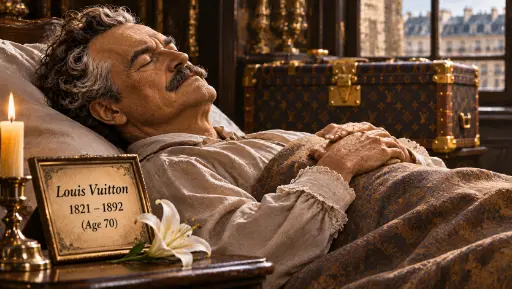
Louis Vuitton died in 1892 at the age of seventy.
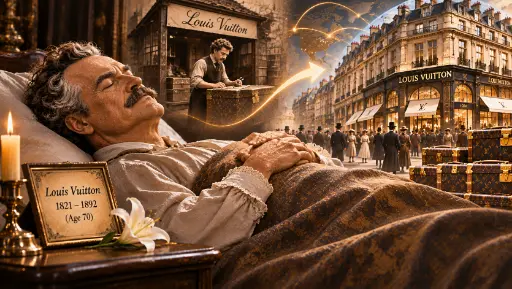
He did not live to see the full scale of the empire his name would eventually become.
But by the time of his death, his life’s work had already transformed from a small craftsman’s workshop into an internationally recognized business.
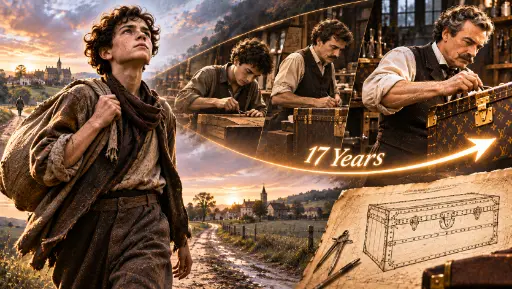
His journey had begun with a fourteen-year-old boy walking away from his home.
He had no famous family name.
He had no fortune.
He had no luxury brand.
He had only his willingness to work and, eventually, a skill that he spent seventeen years mastering.
Those seventeen years taught him more than how to build a box.
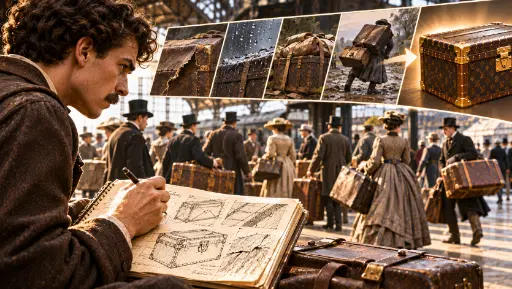
They taught him how to understand people.
He learned what travelers carried.
He learned what damaged their possessions.
He learned what made travel difficult.
And when the world of travel changed, he changed his products with it.
That was the foundation of his success.
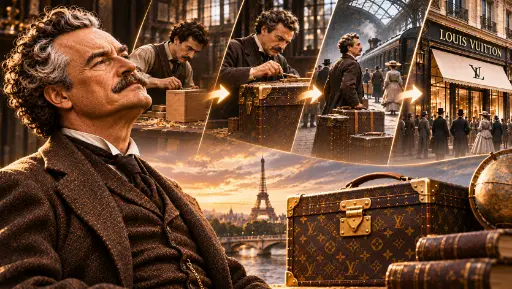
Louis Vuitton did not begin by trying to create a luxury empire.
He began by learning how to make a better box.
Then he learned how to make a better trunk.
Then he learned how to make travel easier.
And eventually, the name of the craftsman became the name of the brand.
Author:Fuji

Human history is truly complex, isn’t it?
There are countless websites introducing historical figures and events, but many of them are just plain explanations—not exactly exciting to read.
On the other hand, reading books takes a lot of time and effort.
That’s where I come in.
Through “stories that are more engaging than explanations and shorter than books,” I aim to bring the world’s history and humanity’s records to you in a more accessible and interesting way.
If my stories inspire you to love history a little more, I’d be absolutely thrilled!

Become Part of the Chronicle
If this article inspired you, consider supporting the project.
Become a character in the Chronicle.
Receive your own custom card and stand alongside queens, warriors, inventors, rebels, and legends from history.
Your support helps keep these stories alive and allows me to create more articles, illustrations, and historical cards.
Join the Chronicle and leave your mark on history.

Comment