
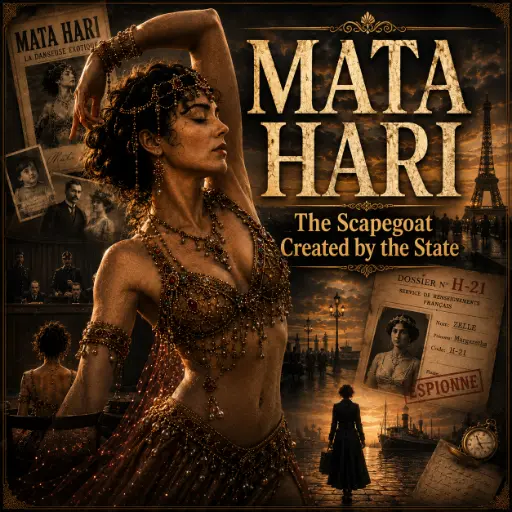
Mata Hari — The Scapegoat Created by the State

Prologue
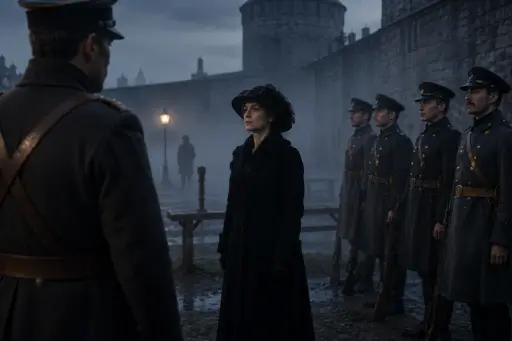
“Would you like a blindfold?”
The soldier asked quietly.
October 15, 1917.
Before dawn at the Château de Vincennes in France.
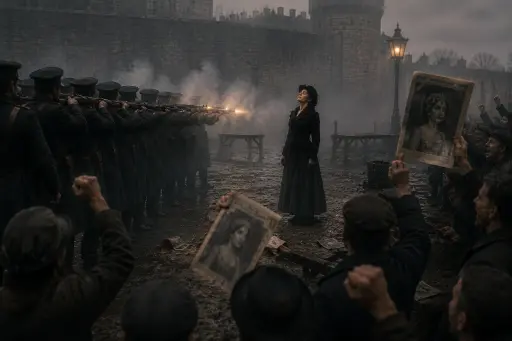
A cold morning mist drifted across the execution ground, where a lone woman stood waiting.
She was forty-one years old.
Wrapped in a long black coat and wearing a hat pulled low over her face, she appeared remarkably calm.
Most people would have been trembling, weeping, or begging for their lives.
But she was different.
She looked at the black cloth the soldier offered her and smiled faintly.
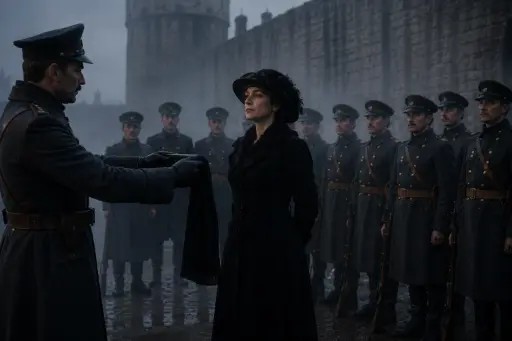
“No, thank you.”
She refused the blindfold.
It is also said that she refused to have her hands tied.
Standing tall, she faced forward and looked directly at the twelve soldiers.
The soldiers themselves seemed uncertain.
The woman standing before them was not a cold-blooded murderer.
She was the beautiful dancer who, only a few years earlier, had been greeted with thunderous applause in theaters across Europe.
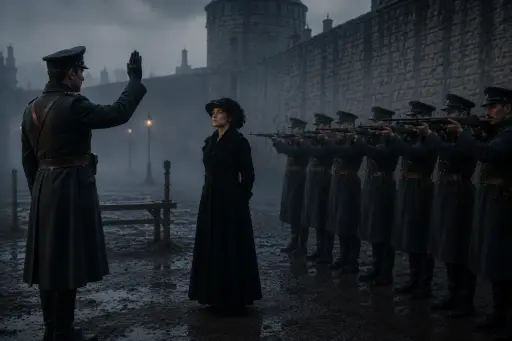
The commanding officer slowly raised his right hand.
The execution ground fell completely silent.
No one spoke.
Then, a single command shattered the silence.
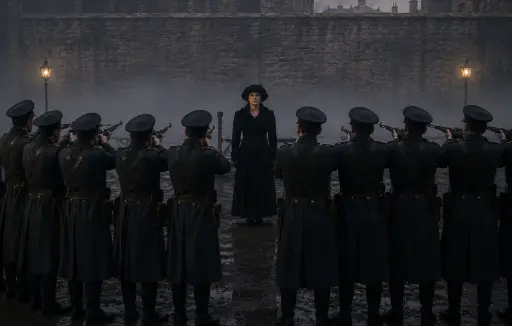
“Ready!”
Twelve rifles were raised in perfect unison.
Even then, she never looked away.
She did not run.
She did not lower her head.
She did not pray.
Mata Hari — The Scapegoat Created by the State
Prologue
“Would you like a blindfold?”
The soldier asked quietly.
October 15, 1917.
Before dawn at the Château de Vincennes in France.
A cold morning mist drifted across the execution ground, where a lone woman stood waiting.
She was forty-one years old.
Wrapped in a long black coat and wearing a hat pulled low over her face, she appeared remarkably calm.
Most people would have been trembling, weeping, or begging for their lives.
But she was different.
She looked at the black cloth the soldier offered her and smiled faintly.
“No, thank you.”
She refused the blindfold.
It is also said that she refused to have her hands tied.
Standing tall, she faced forward and looked directly at the twelve soldiers.
The soldiers themselves seemed uncertain.
The woman standing before them was not a cold-blooded murderer.
She was the beautiful dancer who, only a few years earlier, had been greeted with thunderous applause in theaters across Europe.
The commanding officer slowly raised his right hand.
The execution ground fell completely silent.
No one spoke.
Then, a single command shattered the silence.
“Ready!”
Twelve rifles were raised in perfect unison.
Even then, she never looked away.
She did not run.
She did not lower her head.
She did not pray.
She simply stood there, quietly meeting the soldiers’ eyes.
And then—
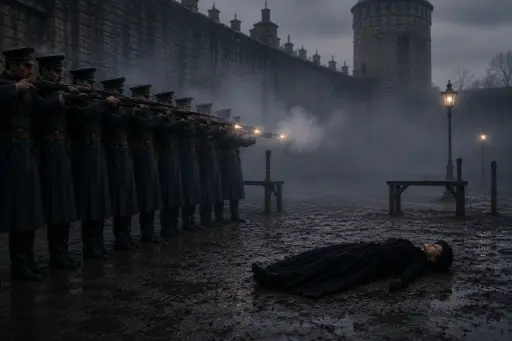
“Fire!”
A volley of gunshots cracked through the morning air.
A woman collapsed to the ground.
Her name was Mata Hari.
The newspapers described her like this.
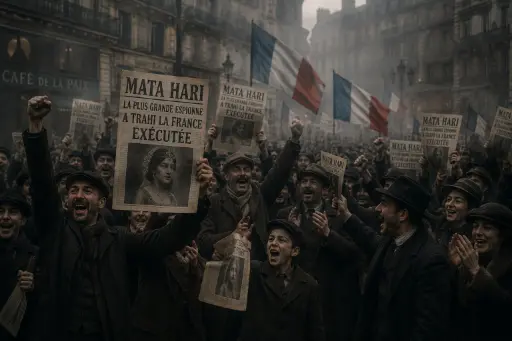
“France Executes the Greatest Female Spy in History.”
The public erupted in celebration.
“They did the right thing!”
“That’s exactly what a traitor deserves!”
Almost everyone believed that, at last, the war would begin to turn in France’s favor.
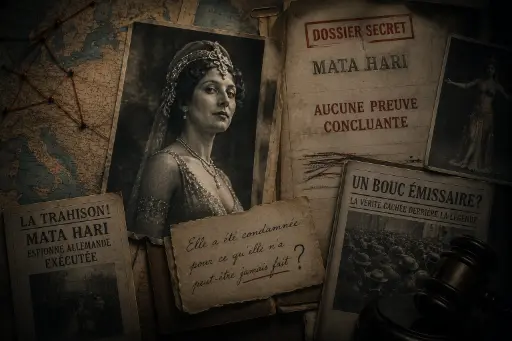
But—
More than a century later, historians are arriving at a very different conclusion.
“Was she really the legendary female spy history remembers?”
Today, there is little evidence that Mata Hari ever passed along military secrets significant enough to influence the course of the war.
Instead, some historians argue that she was something else entirely—
a scapegoat, offered up by a government struggling to hold together a nation exhausted by war.
If that is true, then the story of the world’s most famous female spy becomes the story of one of history’s most famous miscarriages of justice.
So how did an ordinary Dutch woman become Mata Hari?
And why did her name become etched into history?
Our story begins forty-one years earlier, in a small town in the Netherlands.
Chapter 1: Margaretha
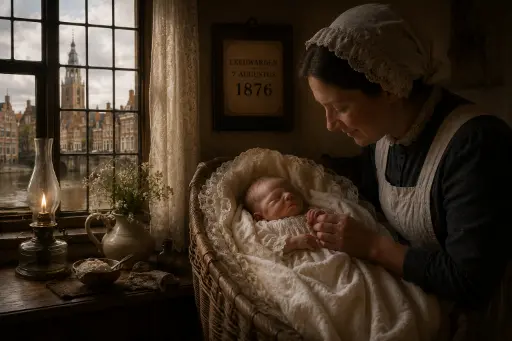
August 7, 1876.
In the northern Dutch town of Leeuwarden, a baby girl was born.
Her name was Margaretha Geertruida Zelle.
The woman who would one day become known around the world as Mata Hari.
But at that moment, no one could have imagined the future that awaited her.
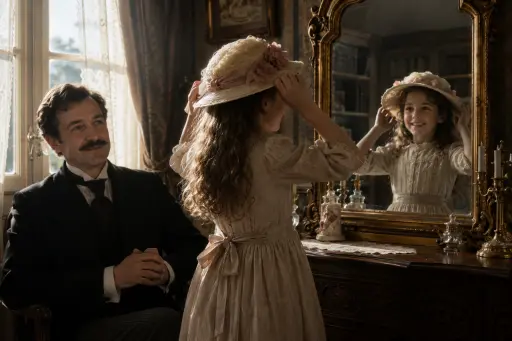
“Dad, look!”
Still a little girl, Margaretha twirled in front of the mirror, wearing her brand-new hat.
Her father smiled and applauded.
“It looks wonderful on you.”
Her mother smiled as well, gently brushing her daughter’s hair into place.
It was an ordinary family scene.
But to the young Margaretha, it was a life filled with happiness, where she wanted for nothing.
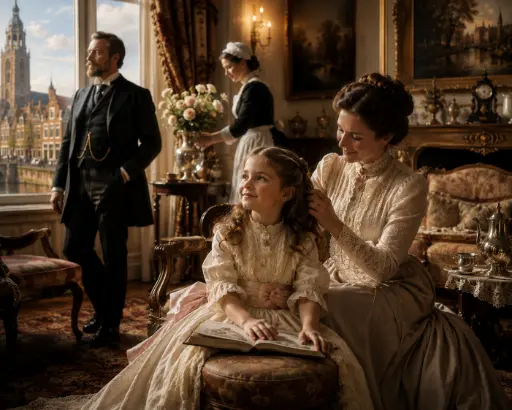
Her father, Adam Zelle, was a businessman who owned a hat shop and had also found success as an investor.
The family was wealthy.
They lived in a beautiful home.
They even had servants.
Unusual for the time, Margaretha grew up wearing expensive clothes and receiving an excellent education.
The people of the town knew the Zelle family as one of prosperity.
And young Margaretha believed with all her heart that this happiness would last forever.
But life has a way of changing—
without the slightest warning.
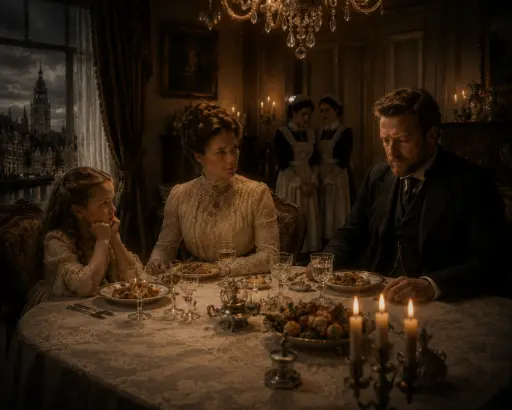
One day, her father came home wearing an unusually troubled expression.
He barely spoke during dinner.
Finally, her mother asked quietly,
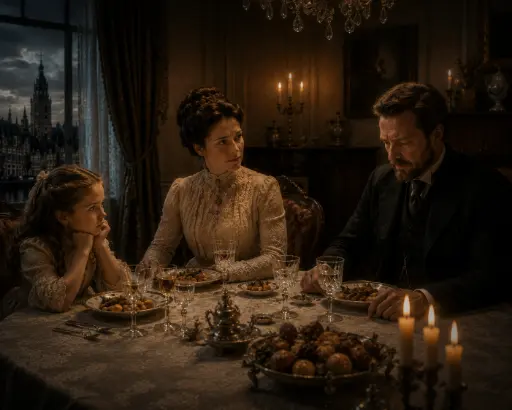
“…Did something happen?”
Her father remained silent for a long moment.
Then, in a quiet voice, he answered,
“The business didn’t go well.”
Those few words marked the beginning of everything.
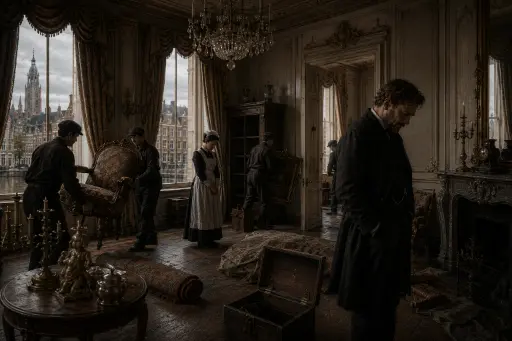
The investments failed.
The business collapsed, and before long, the family went bankrupt.
The luxurious life they had known vanished almost overnight.
The servants who had once filled the house were gone.
The furniture was sold.
In an instant, their entire way of life was turned upside down.
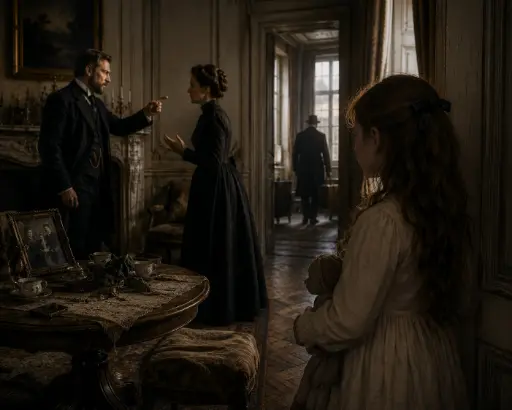
Young Margaretha was too young to understand why.
But she could feel that something had changed.
Her father no longer smiled.
Her mother seemed to sigh more with each passing day.
And the arguments between her parents grew more frequent.
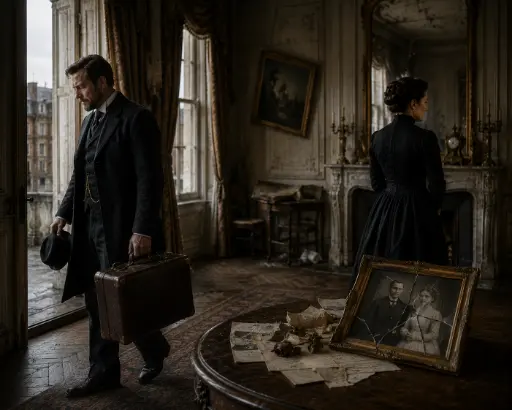
Eventually, her parents divorced.
Today, that may not seem unusual.
But in nineteenth-century Europe, divorce was considered a serious scandal—one that could destroy a family’s reputation.
The family was completely torn apart.
Even so, Margaretha still had her mother.
She still had someone who would hold her close with kindness.
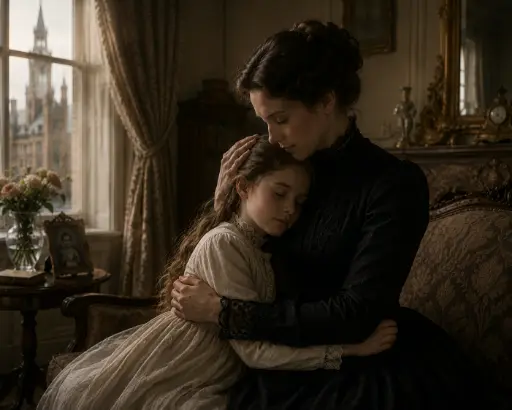
“It’s going to be all right.”
For a child, those words alone can bring comfort.
But then, even her mother fell gravely ill.
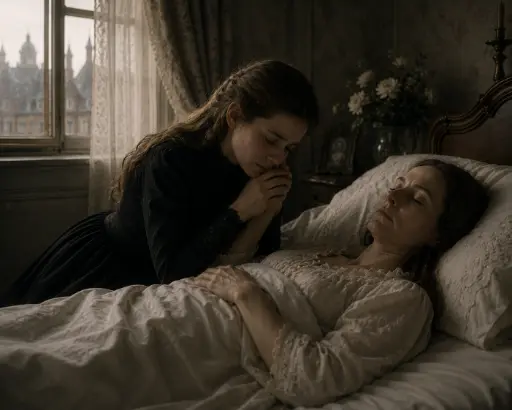
In 1891, when Margaretha was fifteen years old, her mother quietly passed away.
The young girl had lost her father,
her home,
and now, her mother as well.
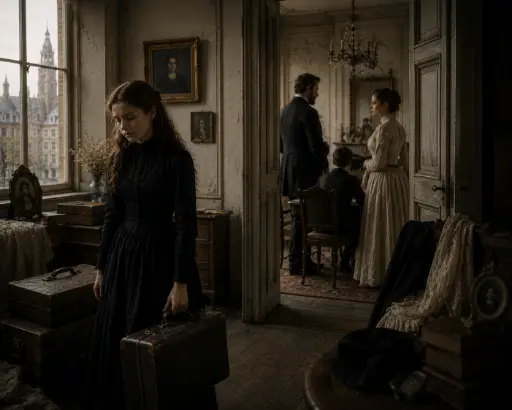
By then, her father had already remarried.
He had a new family.
Margaretha no longer had a home to return to.
She was sent from one relative’s house to another.
The room that had once been hers was no longer a place where she belonged.
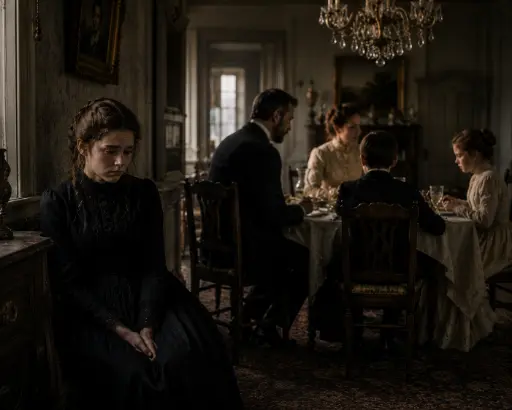
“I don’t belong here.”
Some people may know what that feels like.
Even when you’re surrounded by family,
you feel like an outsider—a guest in someone else’s home.
You hesitate at the dinner table.
You even think twice before smiling.
For a teenage girl, it was a reality far too cruel to bear.
Yet this experience left her with one powerful resolve.
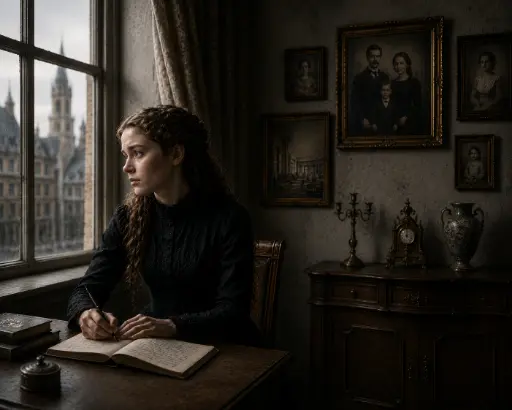
“I never want to live like that again.”
It wasn’t a hunger for wealth.
What she had truly lost wasn’t a grand house—
It was her family and the simple comfort of having a place where she could sleep in peace.
And so, she made a promise to herself.

“I want to find that happiness again.”
With that hope in her heart, she enrolled in a teacher training college, determined to become a teacher.
She loved children.
More than anything, she wanted a profession that would allow her to build a life on her own.
But fate was not yet ready to smile upon her.
Her dream of becoming a teacher would also be shattered—
in a way she could never have imagined.
Chapter 2: A Marriage Decided in 100 Days

“I want to become a teacher.”
That was Margaretha’s new dream.
She enrolled in a teacher training college, determined to build a life with her own hands.
She no longer wanted to depend on anyone else.
She wanted to stand on her own.
But that dream came to an abrupt end.
One day, a rumor began to spread throughout the school.
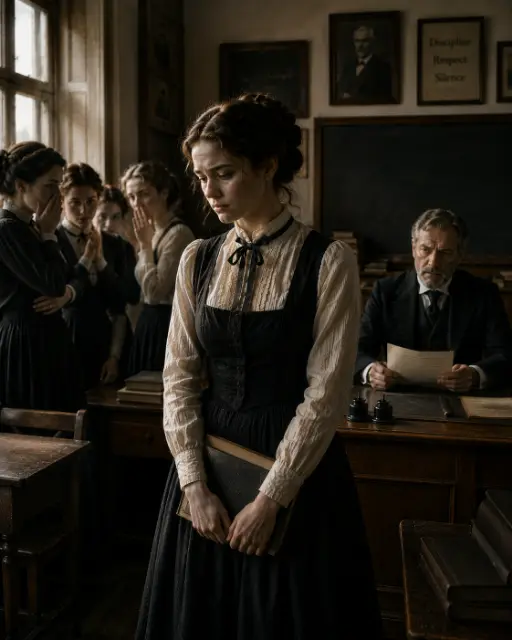
“I’ve heard the headmaster has been giving her special treatment.”
The rumor spread through the school in no time.
Before long, it had turned into whispers that she was involved in an inappropriate relationship with the headmaster.
What really happened?
Even today, no one knows for certain.
Some believe there truly was a relationship.
Others argue that the headmaster sacrificed the young student to protect his own position.
Only one thing is certain.
She was expelled.
Her dream of becoming a teacher vanished after only a few short years.
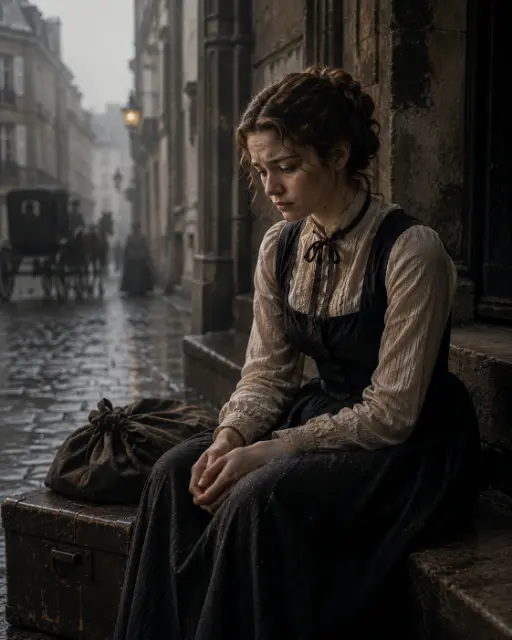
“How am I supposed to live now…?”
For a young woman in nineteenth-century Europe, surviving alone was no easy task.
She had no qualifications.
No job.
No home to return to.
All that lay before her was a road shrouded in darkness.
Then, one day, as she casually flipped through a newspaper, one advertisement caught her eye.
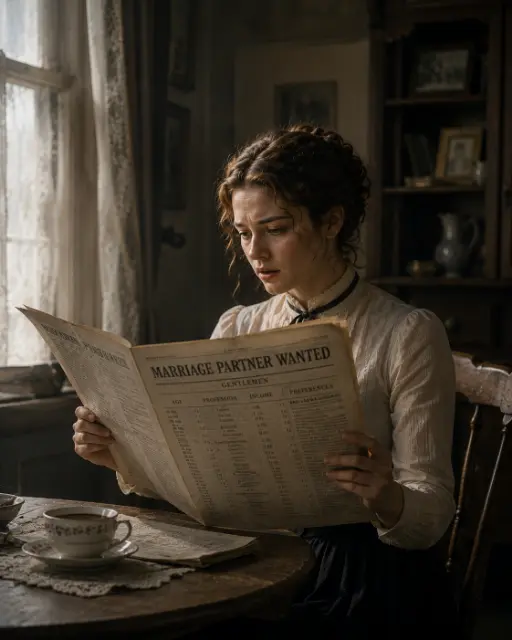
“Seeking a Wife.”
The newspaper listed the applicants’ ages, their occupations, their incomes, and what they were looking for in a wife.
One advertisement, in particular, caught Margaretha’s attention.
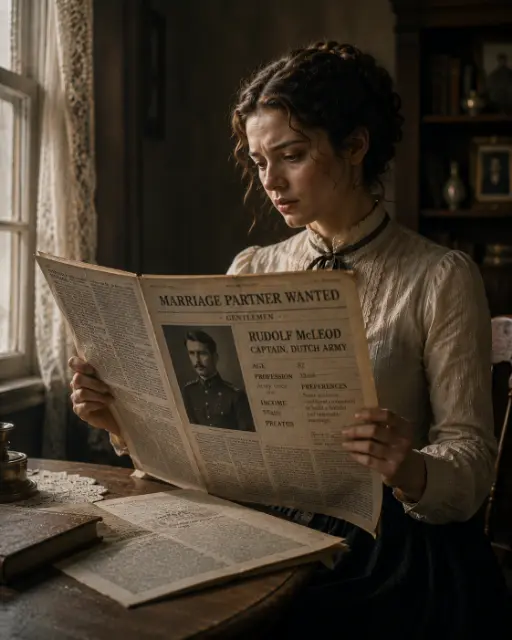
“Captain Rudolf MacLeod of the Royal Netherlands East Indies Army.”
A steady income.
A respected position in society.
A career military officer.
Margaretha stared at the advertisement for a long time.
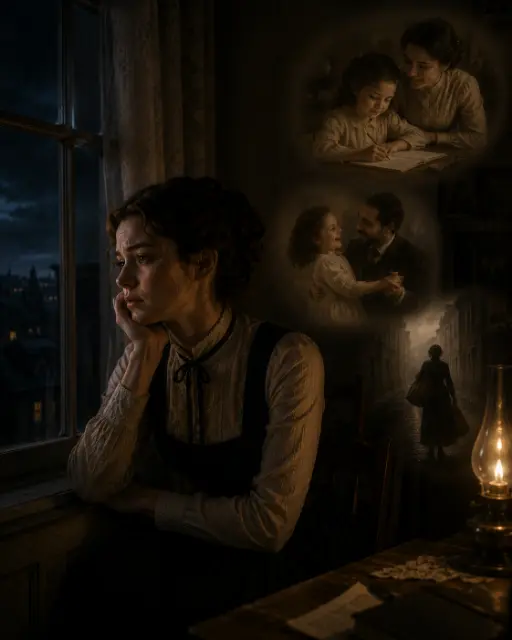
That night, she sat alone, gazing out the window.
Her thoughts drifted back to her childhood.
A warm home.
A loving mother.
A father who used to smile.
But that happiness had vanished in an instant.
Poverty takes so much away from people.
It steals their families, their dreams, and sometimes, even their future.
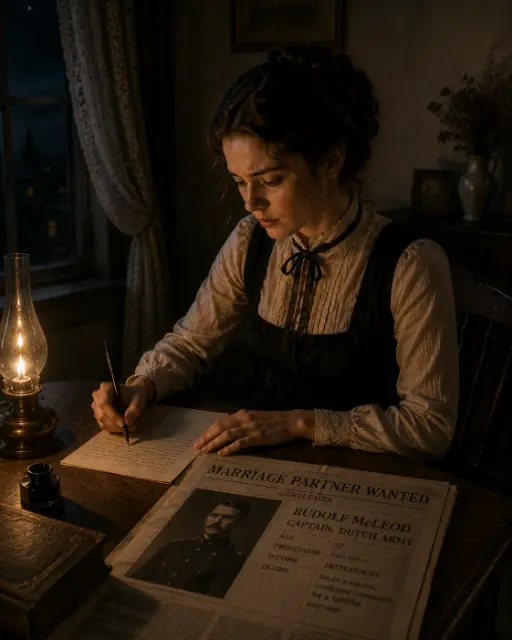
“I never want to go through that again.”
“I’ll find my happiness once more.”
Quietly, she picked up a pen.
Then she wrote a reply to the marriage advertisement.
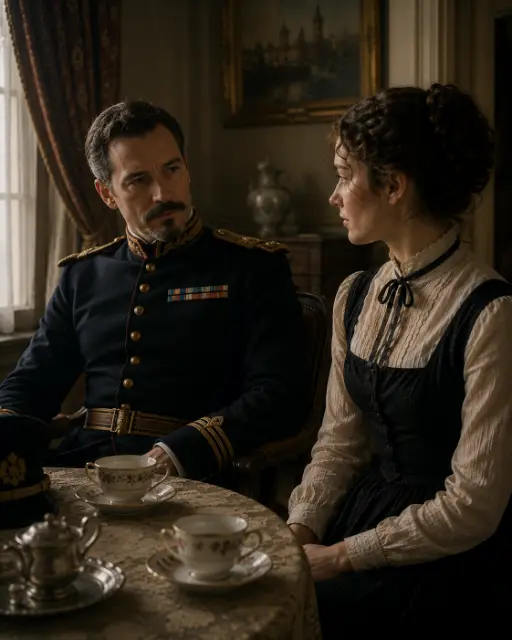
Shortly after exchanging letters, the two finally met in person.
Rudolf MacLeod.
An officer in the Royal Netherlands East Indies Army.
He was forty years old—
Twenty-one years older than Margaretha.
Dressed in his military uniform, he carried himself with dignity and spoke in a calm, measured voice.
Margaretha, by contrast, was only nineteen.
Beautiful, intelligent, and determined to rebuild her life more than anything else.
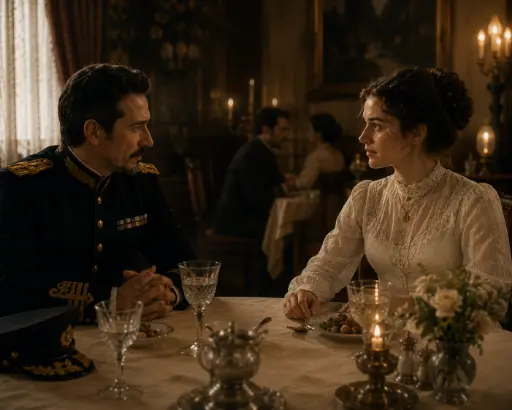
They met several more times.
They shared meals, talked for hours, and spoke about the future.
And then—
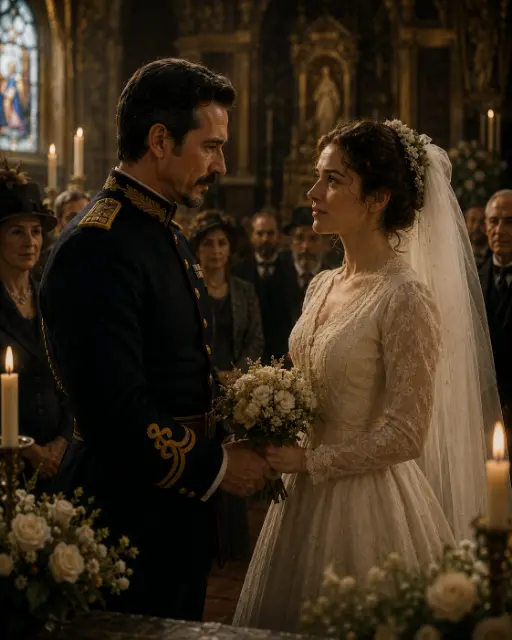
About a hundred days after they first met, they were married.
Today, many people would probably say,
“That’s far too soon.”
But each of them had their own reasons.
Rudolf wanted a family.
Margaretha longed for a stable life.
They needed each other.
At least, that was what they believed at the time.
On their wedding day, Margaretha, dressed in a pure white gown, smiled with happiness.
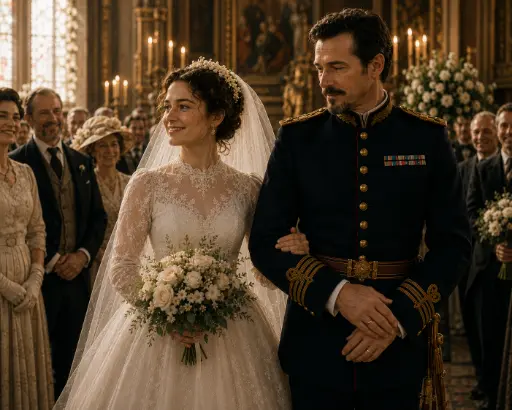
“I can finally have my life back.”
That’s what she believed.
A comfortable life.
A loving husband.
A new family.
She thought she would never again have to live in fear of poverty.
But sometimes, life tests us by offering exactly what we desire most.
This marriage was not the beginning of her happiness.
It was the doorway to an even greater tragedy.

Her husband’s new assignment was on a tropical island far from the Netherlands—
The Dutch East Indies, present-day Indonesia.
There, she would encounter both the most breathtaking beauty and the cruelest reality of her life.
And in that distant land, a single dance she witnessed would one day give birth to the woman who captivated the world—
Mata Hari.
Chapter 3: The Birth of “Mata Hari” in a Tropical Paradise

As the ship drew closer to the harbor, the scenery gradually began to change.
An endless expanse of blue sea.
Palm trees swaying gently in the breeze.
Markets overflowing with exotic fruits and fragrant spices she had never seen before.
The air was filled with the sweet scent of tropical flowers.
“So… this is the East Indies.”
Margaretha took a slow, deep breath.
It was a world completely unlike the Netherlands.
She had no idea that the sights awaiting her on this island would change the course of her life forever.
The Ideal Married Life
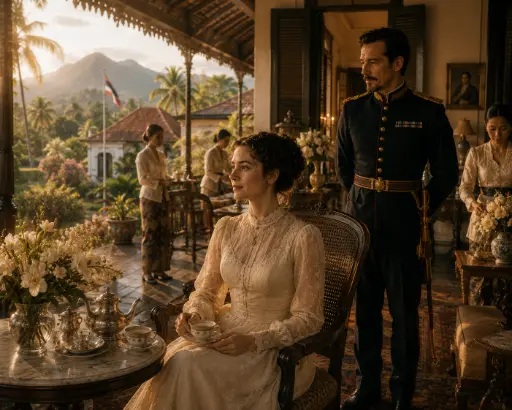
Her husband, Rudolf, was an officer in the Royal Netherlands East Indies Army.
With his rank and steady income, they lived a comfortable life.
A spacious house.
Servants.
Invitations to elegant social gatherings.
The comfortable life she had lost as a child had finally returned. 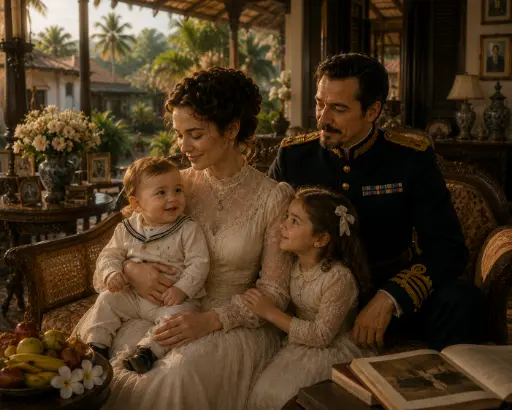
Before long, the couple welcomed two children into the world— their son, Norman, and their daughter, Jeanne.
Holding her baby boy in her arms, Margaretha thought to herself,
“At last… I’ve found happiness.”
“I’ll never lose my family again.”
“I’ll never have to cry again.”
She truly believed it.
But happiness can be a fragile thing.
Sometimes, the very moment you think you’ve finally grasped it, it begins to slip quietly through your fingers.
The Man Who Never Took Off His Uniform
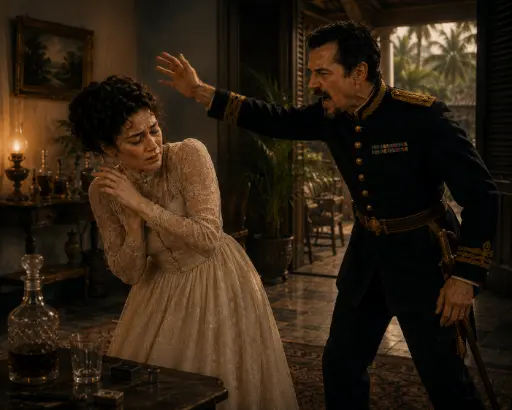
After they had been married for some time, Margaretha began to see another side of Rudolf.
He drank more and more.
At home, he would fly into a rage over the smallest things, and at times, he became violent toward his wife.
He made no effort to hide his affairs with other women.
Then, one night, Rudolf returned home, reeking of alcohol. 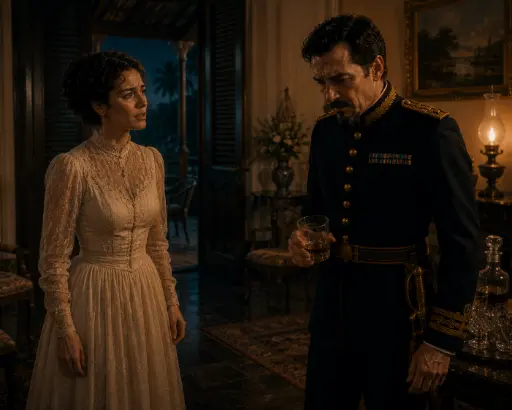
“Where have you been until this hour?”
Margaretha asked quietly.
Rudolf said nothing.
He tossed his hat onto the table and let out a heavy sigh. 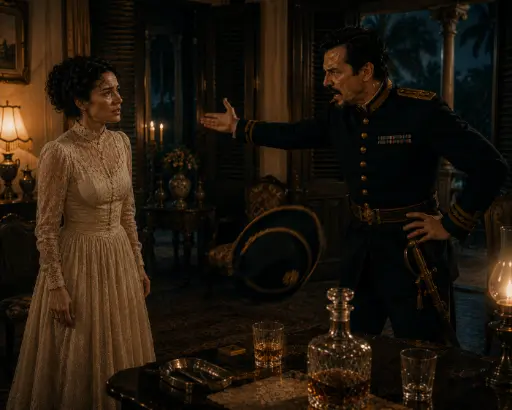
“I have obligations as an officer!”
“That’s all there is to it!”
“Who do you think provides this comfortable life?”
“Don’t you dare tell me what to do!”
The room fell silent.
From that day on, their arguments became more frequent.
They had married after knowing each other for only about a hundred days.
There had never been enough time to truly understand one another.
Love often begins by falling for someone’s strengths.
But marriage means learning to live with their weaknesses as well.
The Day Fate Took Everything
In 1899, tragedy struck without warning.
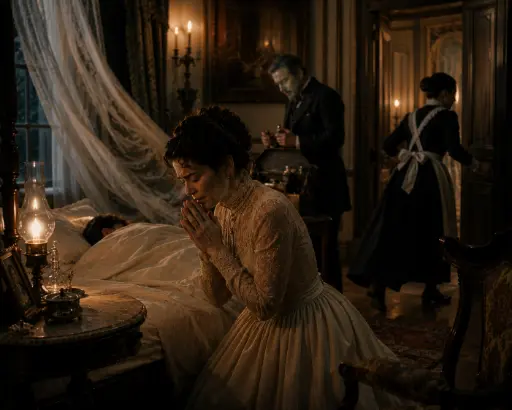
Their two-year-old son, Norman, collapsed with a high fever. “Norman…”
A doctor was summoned.
The servants rushed through the house.
Panic filled every room. 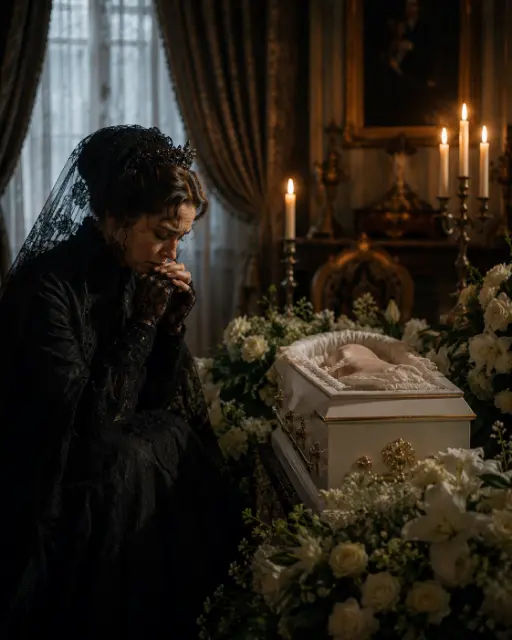
But the little boy could not be saved.
Norman passed away quietly. 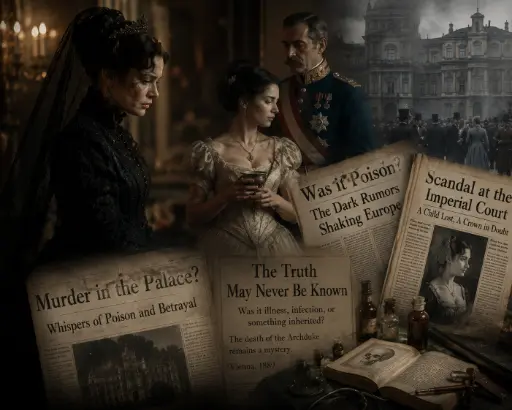
At the time, rumors spread across Europe.
“A servant poisoned the child.”
“One of Rudolf’s lovers took revenge.”
Stories like these quickly captured the public’s imagination.
Today, however, historians and medical experts have proposed several possible explanations.
Some believe Norman died from a congenital illness.
Others point to an infectious disease or complications from congenital syphilis passed on by one of his parents.
The truth has never been established.
No one can say for certain what caused his death.
Only one fact remains beyond doubt.
Margaretha lost the son she loved more than anything.
It is said that she stood before his tiny coffin for hours, unable to move. 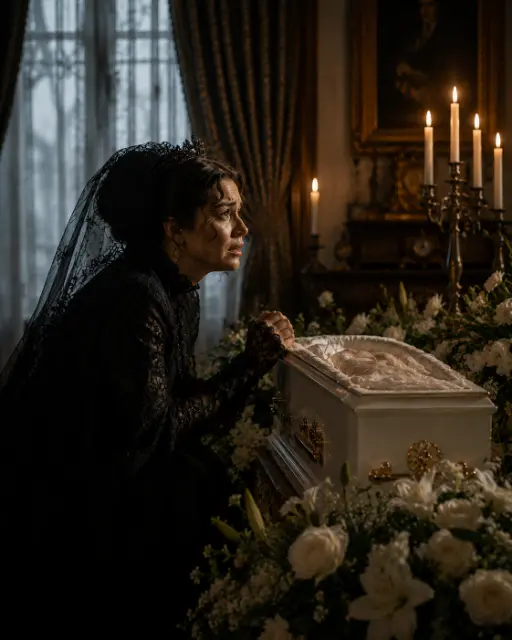
“Why…?”
No matter how many times she asked, there was no answer.
Neither God nor fate offered her any reply.
A Family Falling Apart
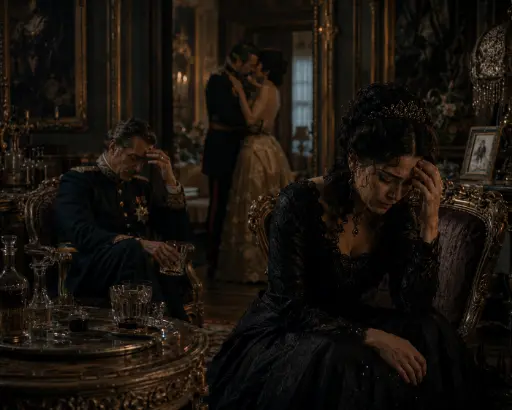
Norman’s death shattered their marriage as well.
Rudolf sought refuge in alcohol.
Margaretha sank into grief.
Neither of them was able to comfort the other.
When a couple loses someone they love, they may grow closer, or they may begin to blame one another.
For Rudolf and Margaretha, it was the latter.
Their arguments became more vicious.
The violence grew worse.
And Rudolf’s affairs continued. 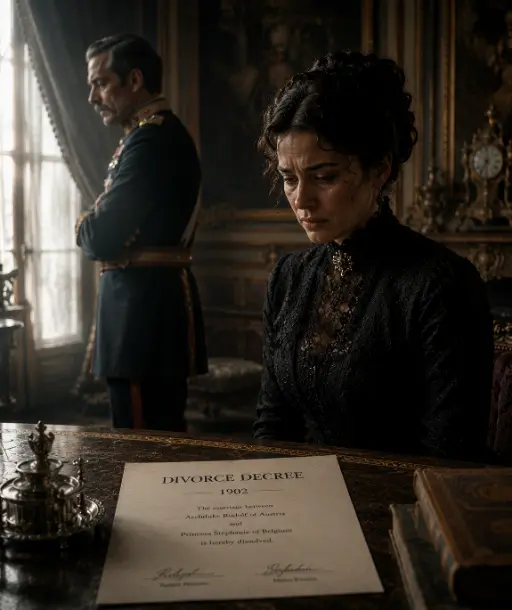
“I can’t go on living like this…”
In 1902, their marriage came to an end.
They divorced.
Nothing Was Left
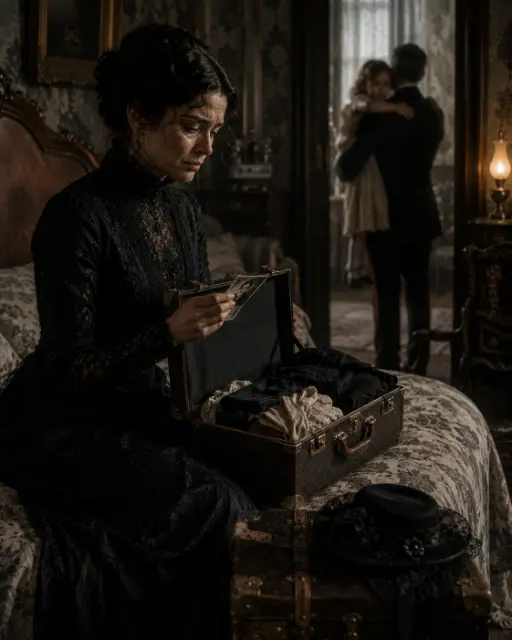
Margaretha wanted to keep custody of her daughter, Jeanne.
But in those days, society offered few rights to women.
Without a stable income, she was denied custody.
Her son was gone.
Now she was separated from her daughter as well.
The family she had believed marriage would give her had vanished completely.
All she had left was a single suitcase and a few changes of clothes. 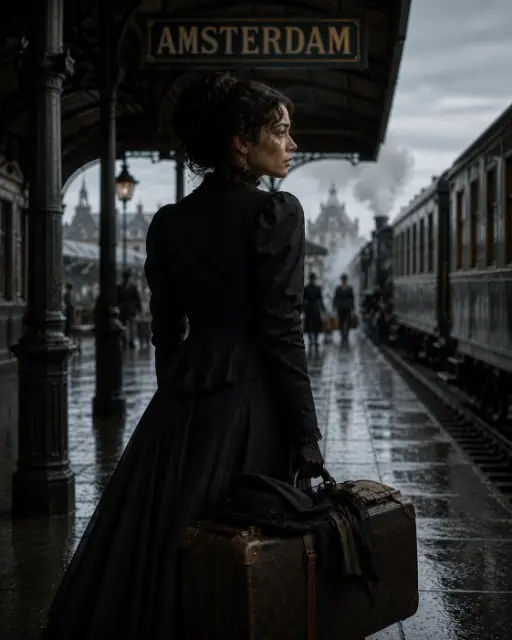
And all she had left was one simple wish.
“I want to start my life over again.”
With that hope, she returned to the Netherlands.
But reality would prove far harsher than she had imagined. 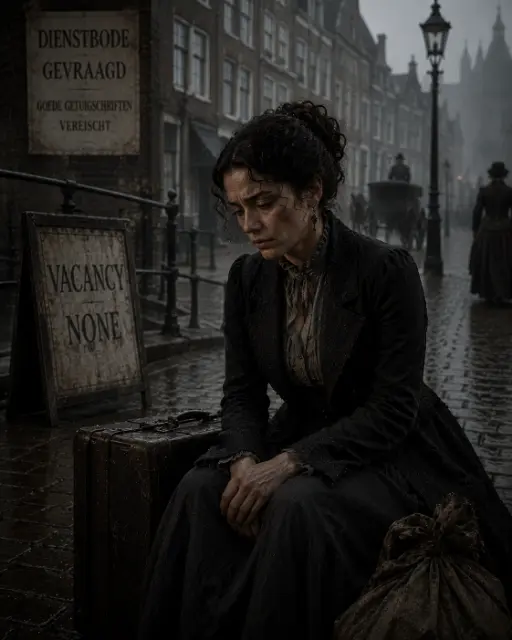
A divorced woman.
No work experience.
No qualifications.
She couldn’t find a job.
With each passing day, life became more difficult.
Then, one day, she stood before a mirror and looked quietly at her own reflection. 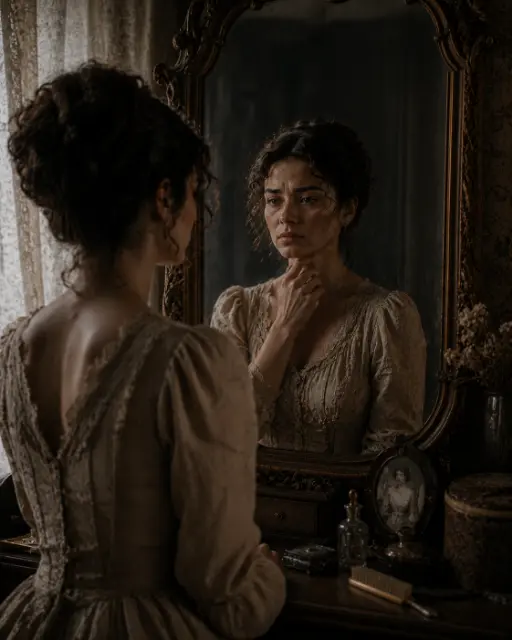
“What do I have left?”
“My beauty.”
But beauty lasts only while you’re young.
“What else?”
She closed her eyes.
Then, a single memory came back to her. 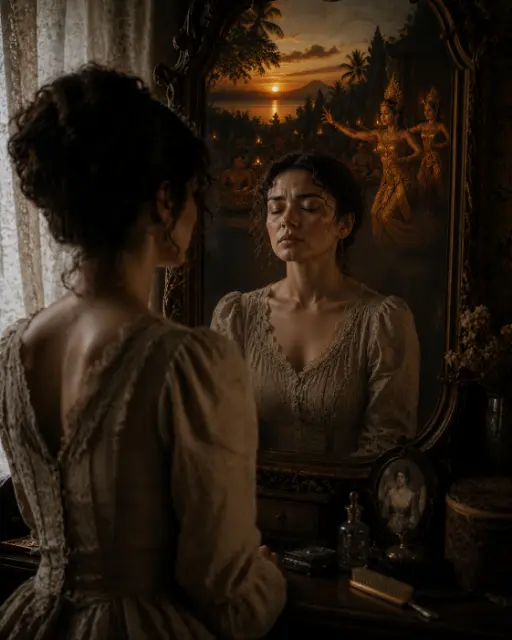
The sunsets of Indonesia.
The haunting melodies of the gamelan.
Dancers moving with quiet grace, their bodies adorned in shimmering gold.
She had never forgotten the feeling she experienced the first time she saw them perform.
“That’s it…”
“There is a world that only I know.”
“Europe knows almost nothing about the East.”
“And the unknown… has value.”
In that moment, she made her decision. 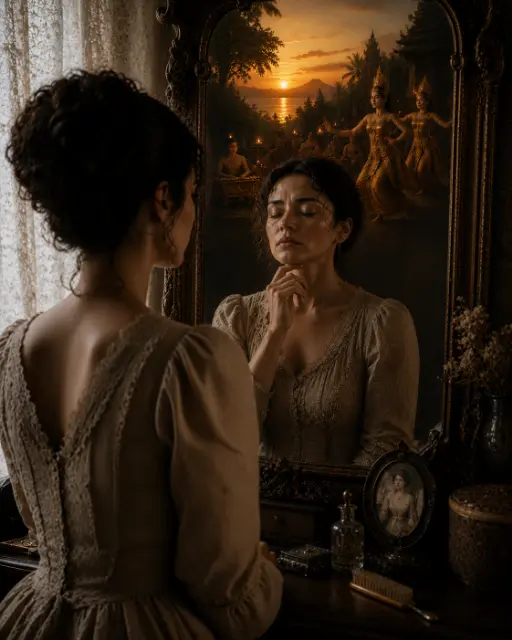
“I’ll take the stage.”
“But not as an ordinary dancer.”
“I’ll become the very embodiment of the mysterious East—someone the world has never seen before.”
“To do that… I must leave my old self behind forever.”
On that day, Margaretha Zelle disappeared from the world. 
And then, a few years later, a dancer stepped onto a Parisian stage and introduced herself with these words:
“My name is Mata Hari.”
In Malay, the name means “the sun.”
Before long, that name would become a legend that captivated all of Europe.
Chapter 4: The Dancer Who Captivated the World
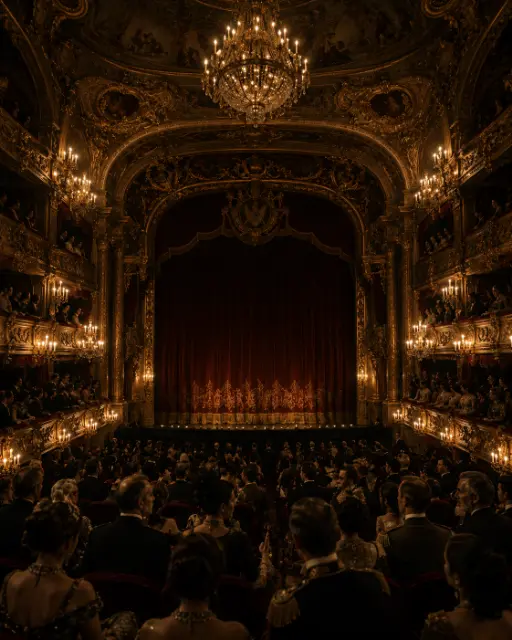
In 1905, Paris.
The lights in the theater slowly began to dim.
In the audience sat aristocrats, military officers, diplomats, and wealthy businessmen.
The elite of Europe had gathered for one reason.
They were waiting for a single dancer.
Backstage, Margaretha quietly closed her eyes.
Staring at her reflection in the mirror, she whispered softly. 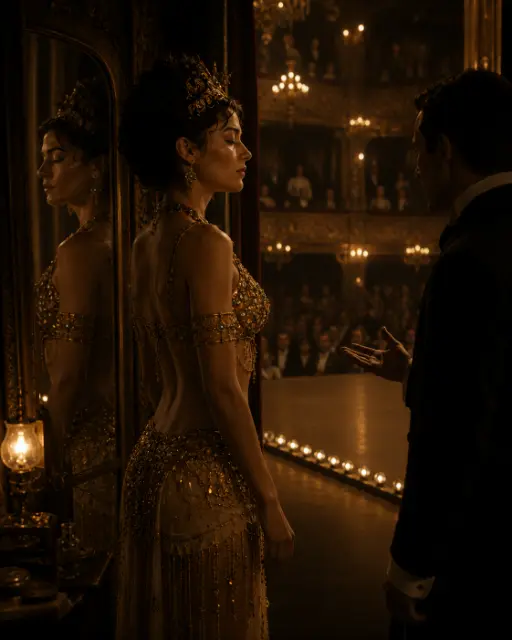
“From this day forward… I am no longer Margaretha.”
A stagehand approached her.
“You’re on.”
She gave a slow nod.
Then, she stepped onto the stage.
The Woman Called the Sun

The woman who appeared on the stage that night was no longer the Margaretha Zelle anyone had once known.
She wore shimmering golden ornaments.
An exotic costume.
A jeweled headdress upon her brow.
Layers of necklaces draped around her neck.
As she slowly raised her arms, the entire theater fell silent.
Then, in a calm voice, she introduced herself. 
“Mata Hari.”
A name that means “the sun” in Malay.
Then, she smiled at the audience. 
“I learned these sacred dances in the temples of Java.”
It wasn’t true.
She had been born in the Netherlands.
She was not a princess.
Nor had she ever been raised in a temple.
But the truth wasn’t what mattered.
What mattered was whether the audience believed it.
People Love Stories More Than the Truth
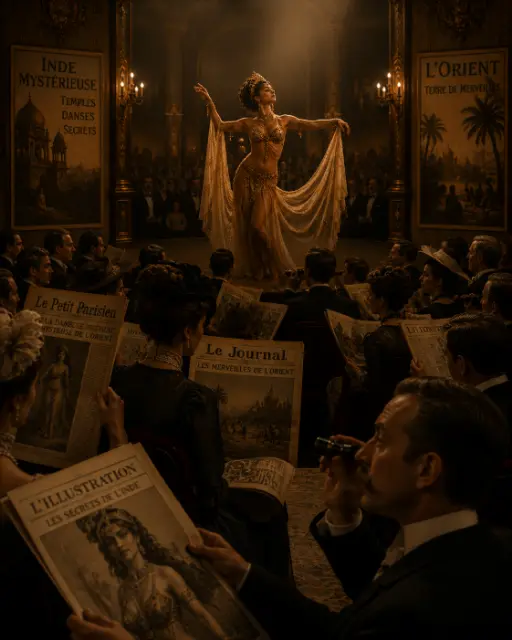
In the early twentieth century,
the East was still a “mysterious world” to most Europeans.
Places they knew only from newspapers.
Islands they had seen only on maps.
That was precisely why people were fascinated by the East.
Mysticism.
Religion.
Secret rituals.
Exotic dances.
Mata Hari embodied that fantasy perfectly. 
She moved with slow, deliberate grace, pressed her hands together as if in prayer, and, in time with the music, removed each layer of her costume, one piece at a time.
For the early twentieth century, it was an extraordinarily daring performance.
Yet somehow, it never seemed vulgar.
It was mysterious.
Sensual.
And carried an almost sacred aura.
The audience watched, holding their breath. 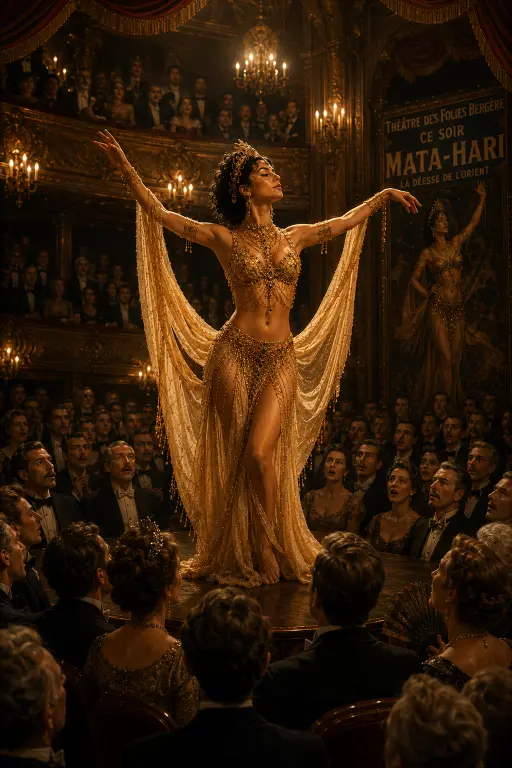
“I’ve never seen a dance like this before.”
“Could she really be that princess from the East?” 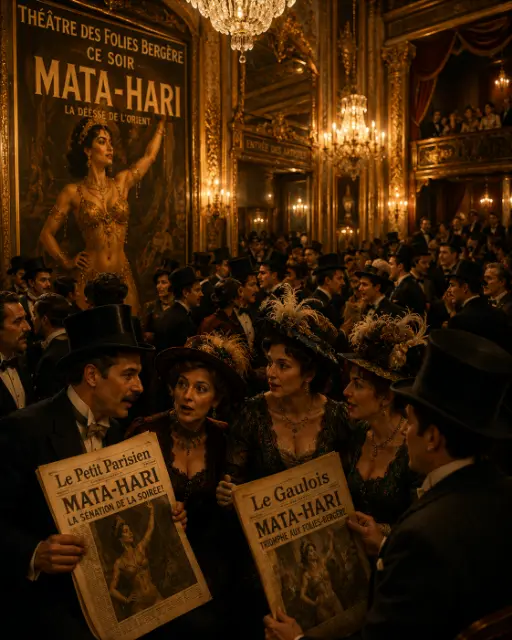
By the time the evening came to an end,
the entire theater
was talking about her.
Paris Fell in Love
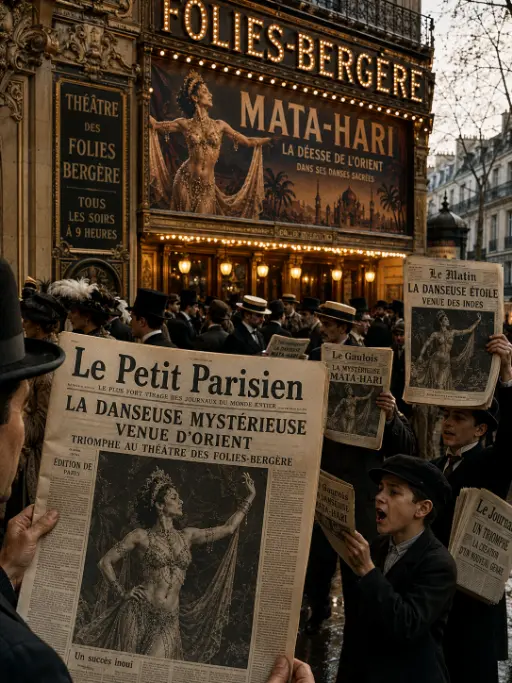
The following morning, newspapers across Paris carried a striking headline.
“The Mysterious Dancer from the East.” 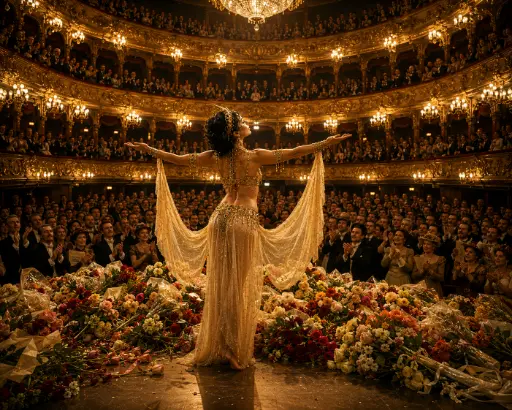
Reservations flooded the theater.
Seats that had once sat empty were now completely sold out.
With every performance,
the applause grew louder,
and bouquets piled up at her feet.
And it wasn’t just Paris. 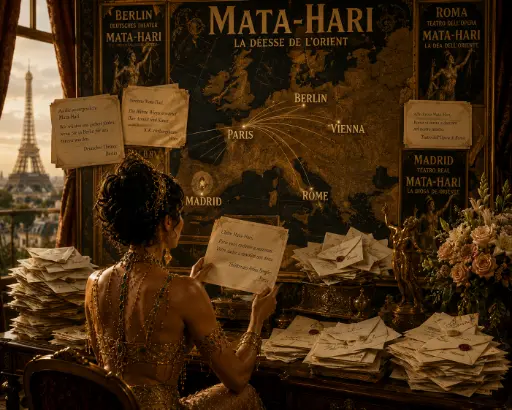
Berlin.
Vienna.
Rome.
Madrid.
Invitations poured in from across Europe.
“Please come perform in our country.”
Her name began to spread far beyond the borders of France.
A Star Even After the Curtain Fell
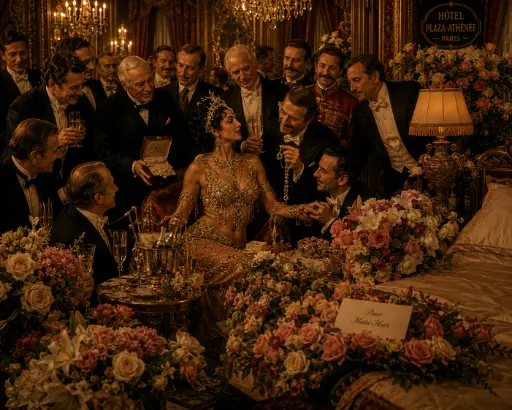
As her fame grew,
so did the number of influential men surrounding her.
Bankers.
Industrialists.
Politicians.
Generals.
Diplomats.
When the curtain fell,
she was invited to lavish dinner parties.
She received expensive jewels as gifts.
And wherever she stayed,
luxurious hotels were always filled with flowers sent in her honor.
At one such dinner party, an aristocrat raised his glass. 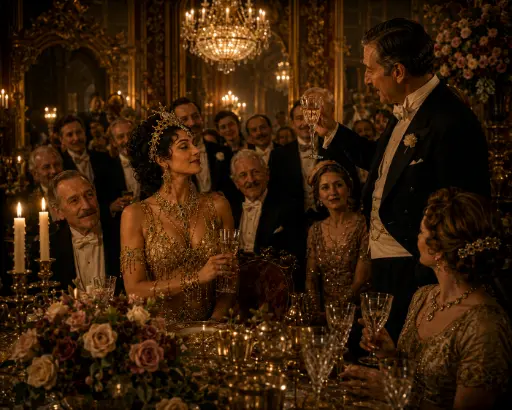
“Mata Hari.”
“I have never met a woman as captivating as you.”
She smiled.
“Thank you.” “I’ve found happiness again.”
She savored the success she had earned with her own hands.
But behind that smile, she carried thoughts she never revealed to anyone. 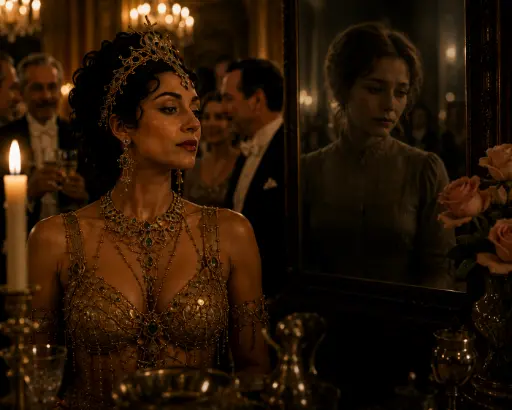
“Margaretha is gone.”
“The one they applaud… the one they admire… the one they desire… isn’t me.”
“It’s Mata Hari.”
Little by little, she found herself unable to stop playing the role she had created.
Every Fame Has Its Sunset
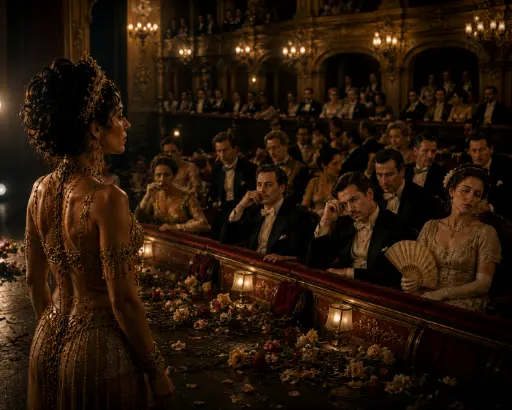
But trends never last forever.
One year passed.
Then two.
Then three.
Little by little, people grew accustomed to her.
“Oh, it’s that Queen of the East again.”
“We’ve seen that dance before.”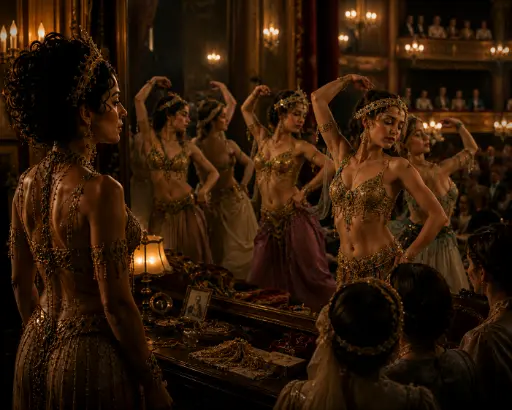 And before long, a new generation of younger dancers began to take the spotlight.
They copied her costumes.
They imitated her dances.
And, like her, they began performing their own versions of the “mysterious East.”
Every star eventually inspires imitators.
That has never changed.
There was one more difference.
They were young.
Mata Hari was now in her thirties.
It wasn’t that she had lost her beauty.
But the world of the stage can be unforgiving. 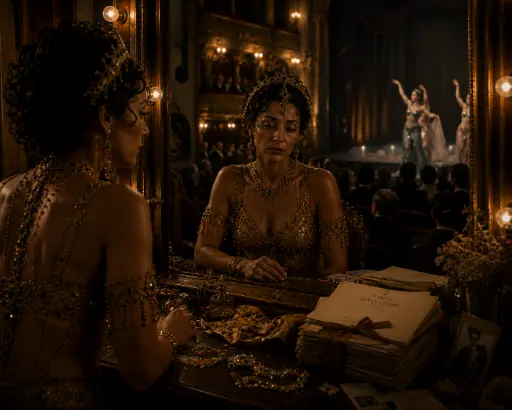 As new stars emerged, yesterday’s stars were gradually forgotten.
The applause grew shorter.
Her performance fees declined.
And the invitations slowly stopped coming.
What She Had Left
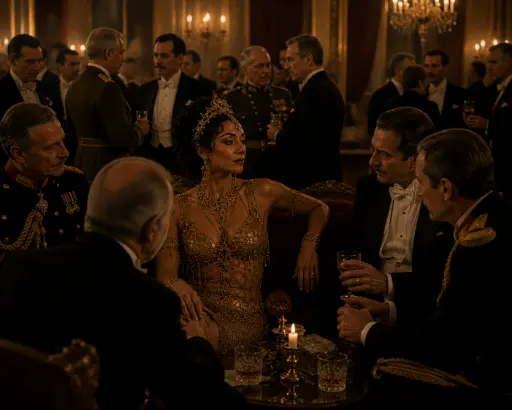 Even so, there was one thing she never lost.
Her connections.
Military officers from across Europe.
Diplomats.
Politicians.
Industrialists.
They all still knew who she was. 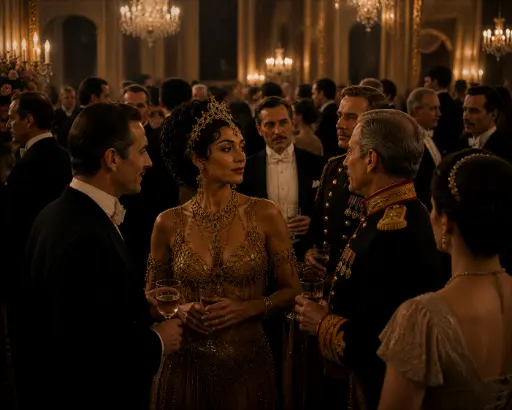 “It’s been a long time, Mata Hari.”
“It’s wonderful to see you again.”
She continued to appear at society’s finest gatherings.
“I still have my connections.”
But neither she nor anyone else could have imagined that these very connections would, just a few years later, change the course of her life forever. 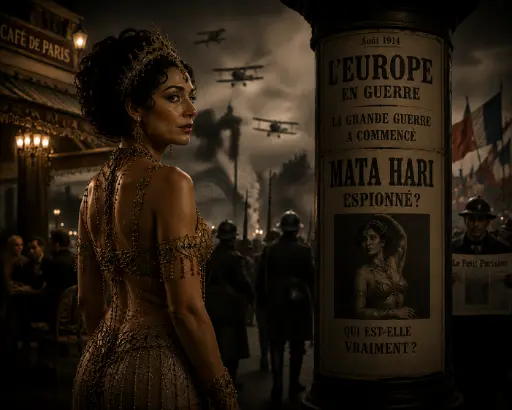 1914.
1914.
The drums of war began to echo across Europe.
The dancer who had once captivated the world would soon be remembered by history as the world’s most famous female spy.
Chapter 5: H-21 — The Birth of a Female Spy
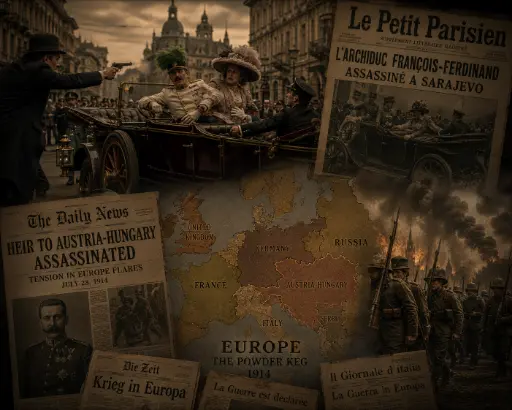 1914.
1914.
Europe had become known as a powder keg.
Then, a single gunshot ignited it.
The assassination of Archduke Franz Ferdinand of Austria.
That one event set off a chain reaction, plunging Europe into war. 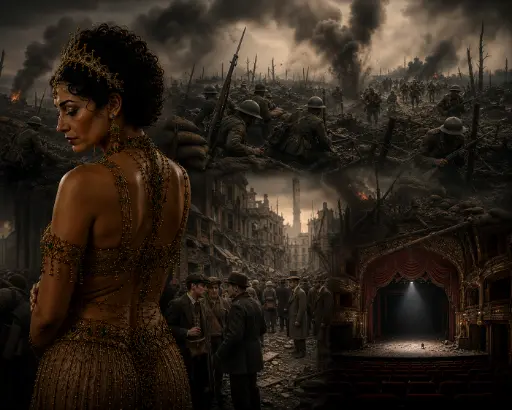 World War I.
The war that everyone believed would be over in a matter of months only grew more brutal with each passing year.
Borders were sealed.
People began to distrust one another.
Those who had been friends yesterday could become enemies today.
And this war would also take something from a single dancer.
It took away her stage.
The Day the Applause Fell Silent
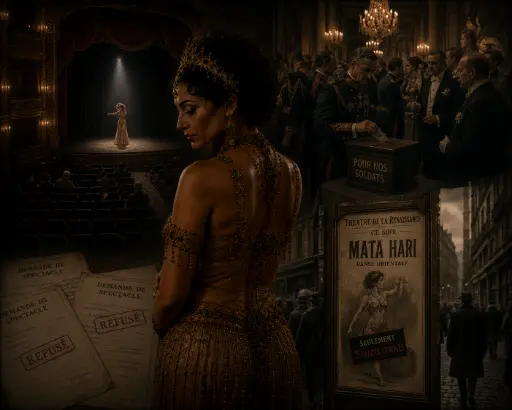 The theaters were no longer as full as they once had been.
People had lost the luxury of enjoying dance.
Lavish dinner parties became rare, and the aristocracy gave their money to support the war instead.
Invitations to perform all but disappeared. 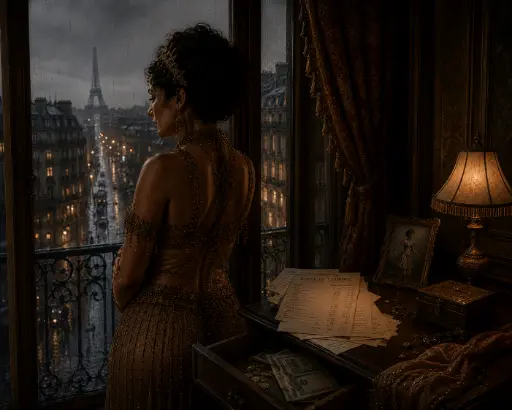 Mata Hari stood by the window of her hotel, watching the rain fall over Paris.
On the desk lay a stack of unpaid bills.
In the drawer, the cash she had left was running low.
“I have to find work again…”
Even the dancer who had once captivated all of Europe could not escape the realities of war.
“There’s No One Better Suited Than You.”
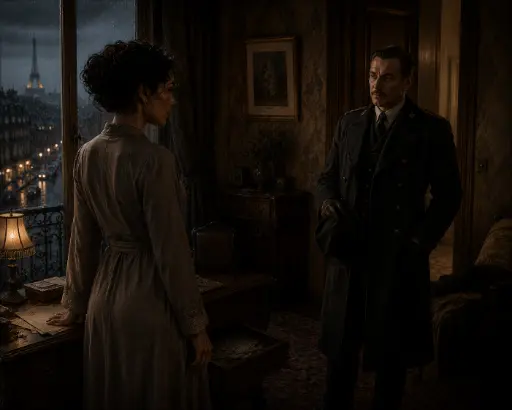 One day, a man came to see her.
He was well dressed, yet there was something unmistakably military about him.
Taking a seat, he quietly placed an envelope on the table. 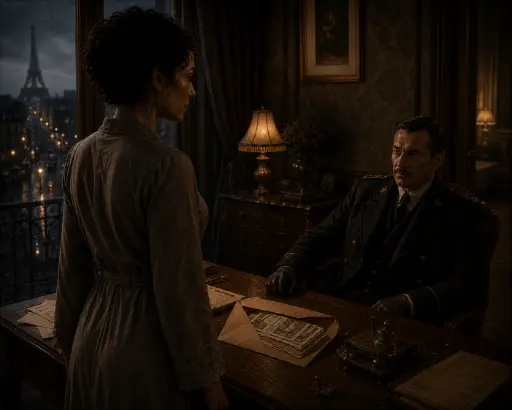 “I have a proposal for you.”
Inside the envelope was a large sum of money.
Mata Hari looked at the man.
“What is this?”
The man answered calmly.
“An advance payment.”
“We want you to gather intelligence on the enemy.”
Silence filled the room.
Mata Hari slowly closed the envelope. 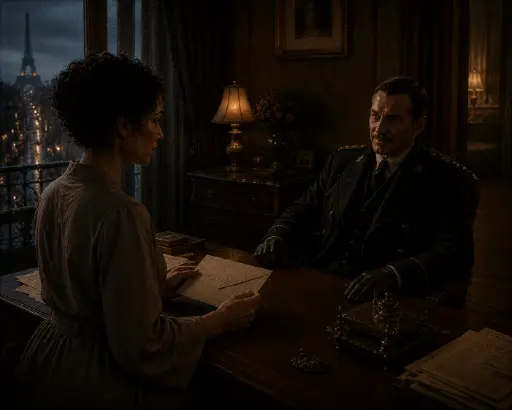
“…So you’re asking me to become a spy?”
The man smiled.
“You could certainly put it that way.”
Then he continued.
“There is no woman more perfectly suited to this role than you.”
What Makes the Perfect Spy
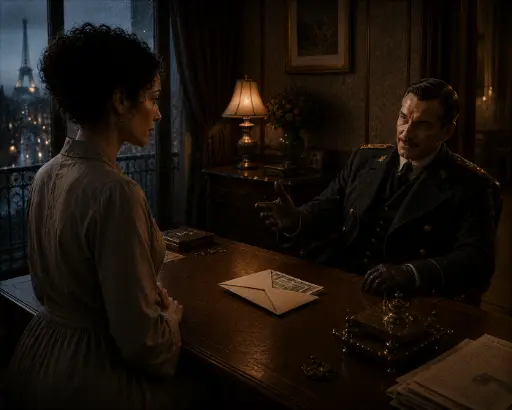
The man wasn’t wrong.
“Mata Hari, you possess advantages that ordinary people simply don’t.”
“First, you’re Dutch.”
“The Netherlands has remained neutral in this war.”
“That means you can cross borders where others cannot.”
“You also speak several languages—Dutch, French, German, English, and Malay.”
“And most importantly…”
“You already know military officers, diplomats, and influential men all across Europe.”
“They trust you.”
“And when people trust someone…”
“Over dinner…” “Over a glass of wine…”
“They often reveal secrets without even realizing it.”
“We want you to collect those secrets.”
“It’s a job that only you can do.”
From the perspective of an intelligence service, Mata Hari was as valuable as a precious jewel.
H-21
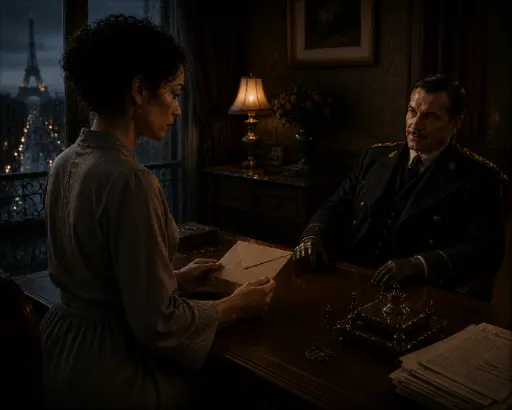
Mata Hari fell silent, lost in thought.
“It’s dangerous…”
“If I’m caught, I could be executed…”
“But I have no other work…”
“My savings are running out…”
“Fame alone can’t keep me alive…” 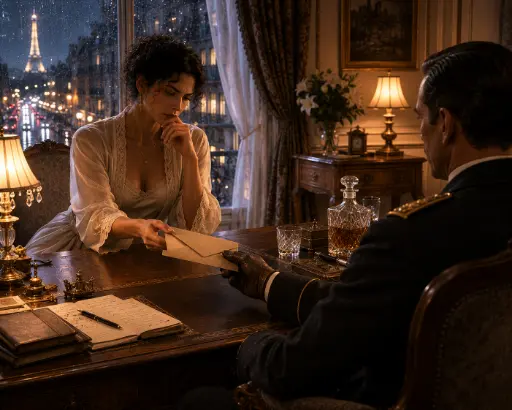
“…Very well.”
She accepted the envelope.
And with that, she agreed to work for German intelligence.
The codename she was given was:
H-21.
A name that would later appear in newspapers around the world.
But at that moment, she never imagined that those two characters would one day become her epitaph.
Love
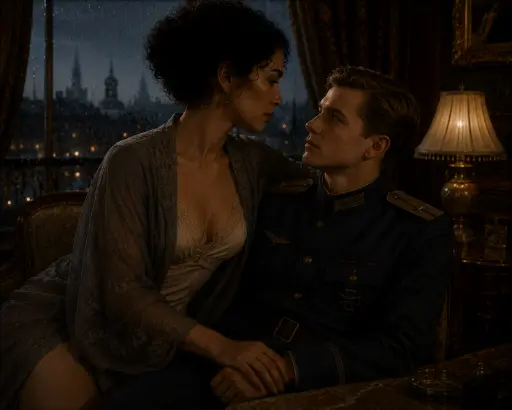
Even she, who had learned to hide behind the mask of Mata Hari, fell deeply in love.
The man was Vadim Maslov, a young Russian military aviator.
He was more than twenty years younger than she was.
One day, the two of them sat across from each other at a café in Paris. 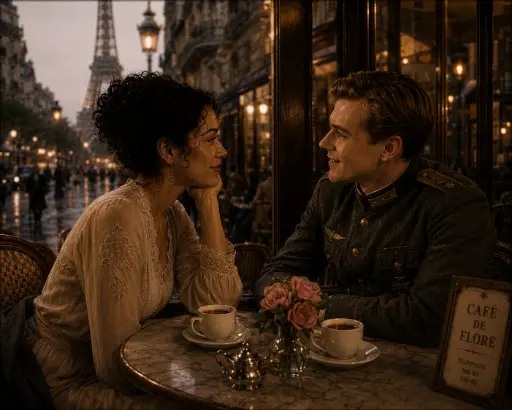 “Where would you like to go when the war is over?”
Mata Hari asked.
Maslov smiled.
“Anywhere.”
“As long as I’m with you.”
She smiled back.
For the first time in a long while, she laughed not as Mata Hari, but as Margaretha.
But that happiness would not last for long. 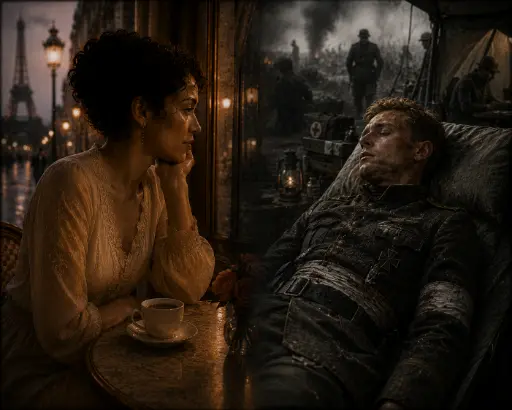 As the war intensified, Maslov was sent to the front lines.
There, he was seriously wounded in combat.
The man she loved was now far away.
And once again, war tore the two of them apart.
Another Offer
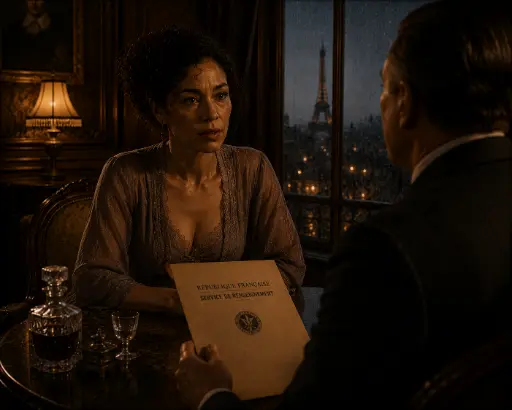 Then, the French intelligence service approached her.
“You’re working as a spy for Germany, aren’t you?”
“What…?”
“Relax.”
“We’re not here to arrest you.”
“We want you to pretend you’re working for the Germans…”
“…and gather information for us instead.”
The offer came from the enemy.
The French had reached the very same conclusion as the Germans.
Mata Hari was the perfect spy.
She stared at the man, unable to hide her surprise. 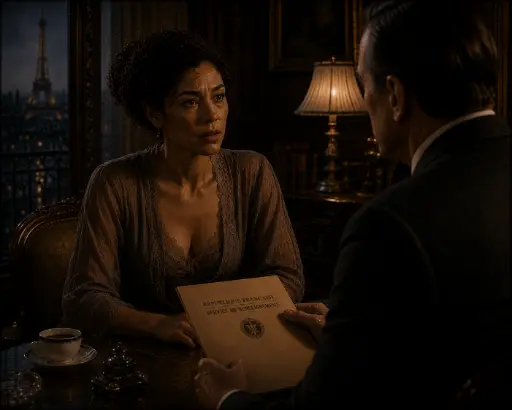 “You trust me… even though I’m your enemy?”
The officer replied,
“Precisely because you are.”
“The Germans already trust you.”
“That means you can get close to the people who matter.”
Then he added,
“We know what you want.”
“You want to see Maslov again, don’t you?”
“Help us succeed…”
“…and we’ll make sure you see him again.”
At those words, she slowly closed her eyes. 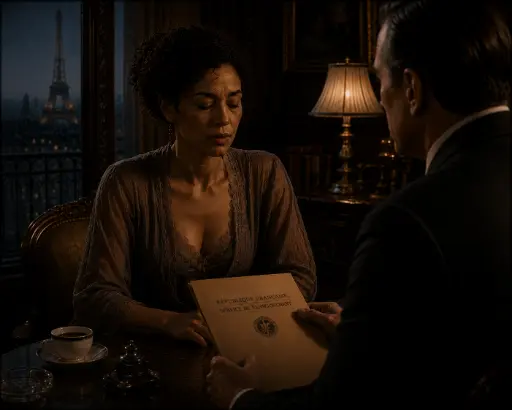 “I want to save him.” “And I want to see him again.”
Those feelings were genuine.
She slowly nodded.
“…All right.” “I’ll do it.”
And so, Mata Hari became involved with both Germany and France.
She had become a double agent.
The Price of Living a Lie
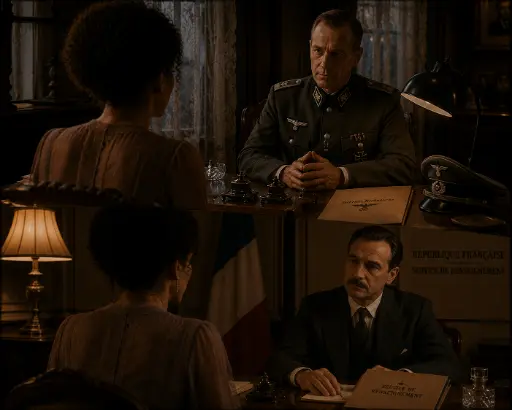 But Mata Hari had misunderstood the situation.
She believed she was the one using both sides.
“Now I’ll be paid by Germany…”
“…and by France.”
“And I’ll be able to save Maslov.”
“It couldn’t work out any better.”
That was what she believed.
But who, in the end, was really using whom?
To German intelligence, she was a useful tool.
To French intelligence, she was no different.
The information she gathered was rarely of real strategic value.
Even so, there was value simply in the fact that the famous Mata Hari was on their side. 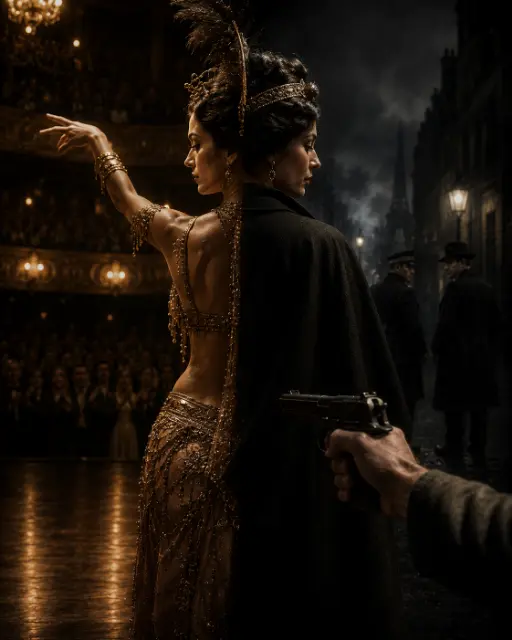 On the stage, she had played the role of an Eastern princess to captivate her audience.
When war came, she found herself playing a different role— that of a master spy for the intelligence services.
But there was one crucial difference.
In the theater, the curtain falls to the sound of applause.
In the world of espionage, when the curtain falls… what awaits is not applause.
It’s the barrel of a gun. 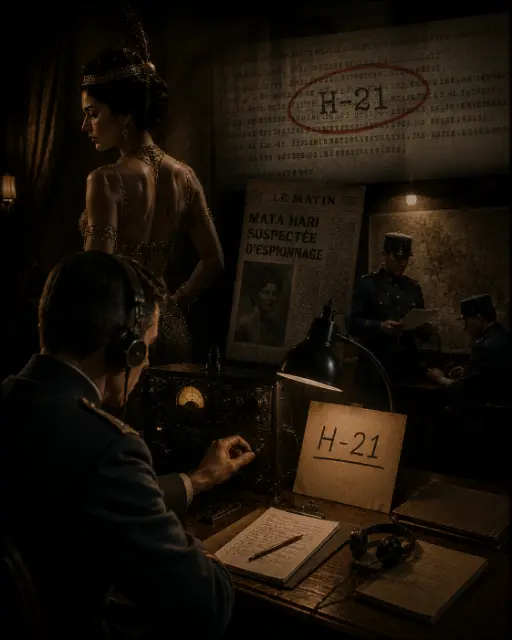 Then, in 1917…
A radio message bearing the codename “H-21” was intercepted by the French Army.
From that moment on, the world’s most famous dancer began to transform into the world’s most infamous suspect.
Chapter 6: The Woman on Trial
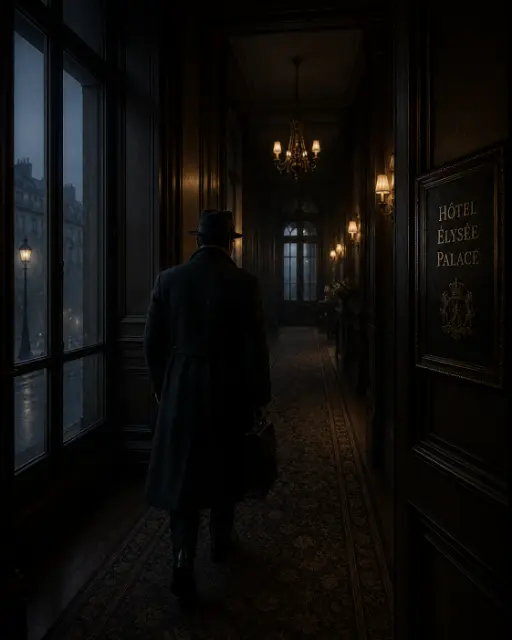
February 13, 1917.
Paris.
The winter morning was still wrapped in darkness, and a cold mist hung over the city.
Down the corridor of the Hôtel Élysée Palace, a man walked quietly.
A knock echoed at the door. 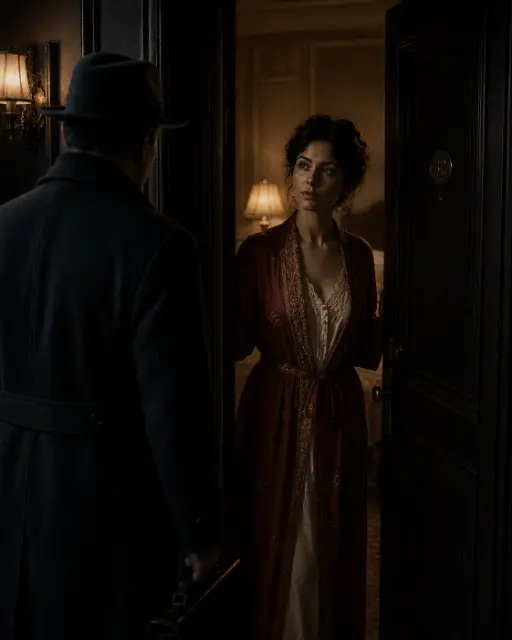
“Madame, we’d like to ask you a few questions.”
The door slowly opened.
Standing there was Mata Hari.
Wearing a robe over her nightgown, she looked at the visitors with quiet curiosity.
The man reached into his coat and presented his police identification. 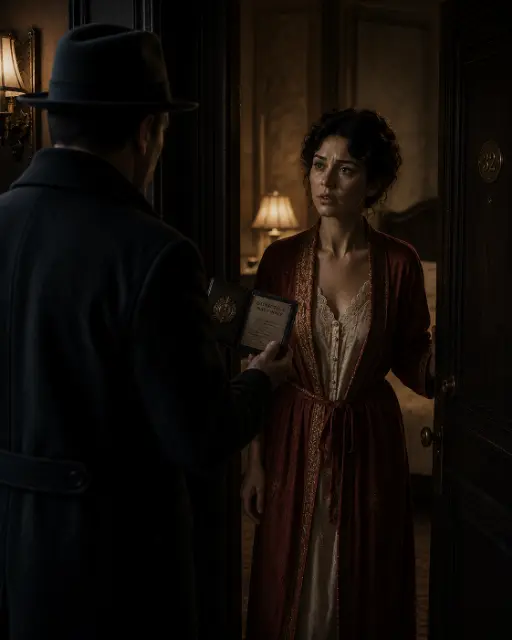
“Mata Hari.” “You are under arrest.”
The smile vanished from her face.
“What…?”
“There must be some mistake.”
The man slowly shook his head.
“You are charged…”
“…with espionage.” 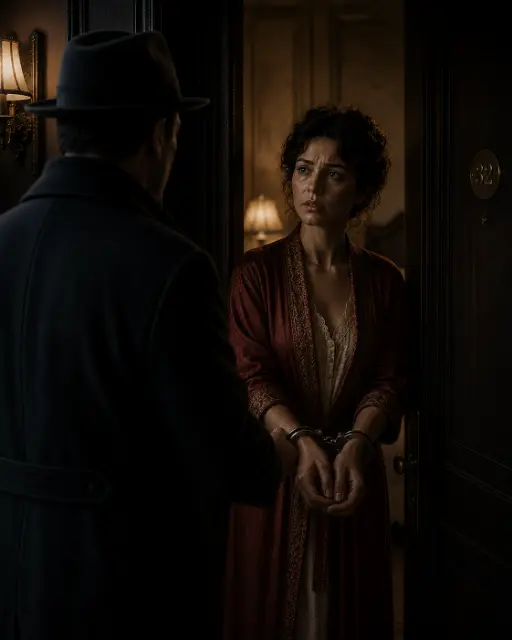 And so, the dancer who had captivated the world was led away in handcuffs.
The same hands that had once been showered with applause were no longer free.
H-21
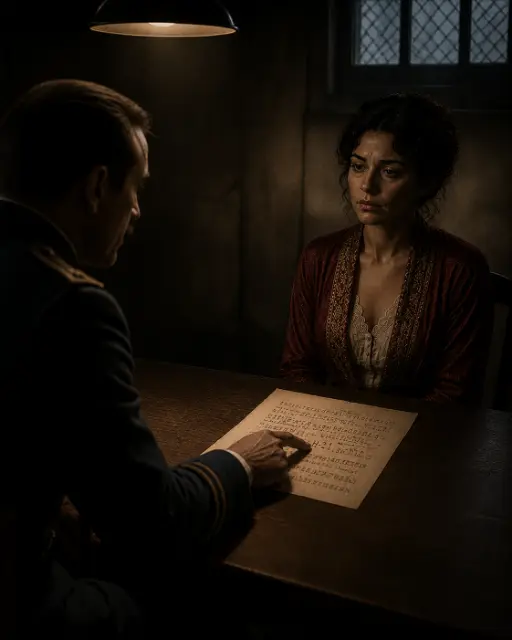 The interrogation room.
The two sat across the table from one another.
A French military prosecutor placed a sheet of paper on the table.
It contained the text of a radio message sent by the German intelligence service.
Then, he pointed to a single entry.
“H-21.”
“This codename…”
“…belongs to you, doesn’t it?”
Mata Hari said nothing.
The prosecutor continued. 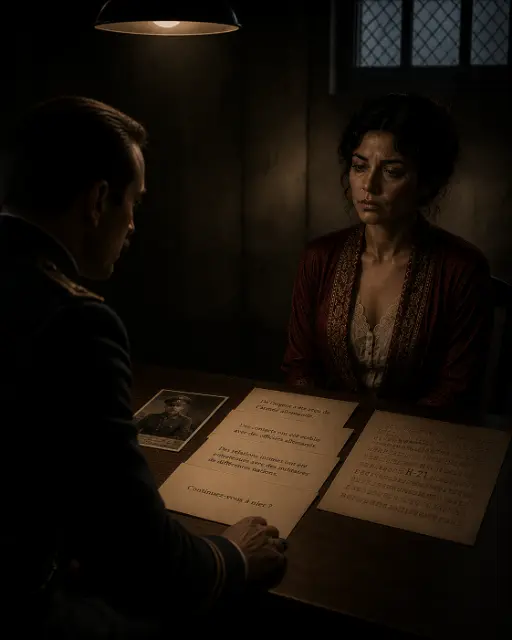 “You accepted money from Germany.”
“You met with German military officers.”
“You maintained intimate relationships with military men from several countries.”
“Do you still deny it?”
Silence filled the room.
At last, she spoke.
“Yes…”
“I accepted the money.”
The prosecutor smiled.
“So you admit it.”
But she slowly shook her head. 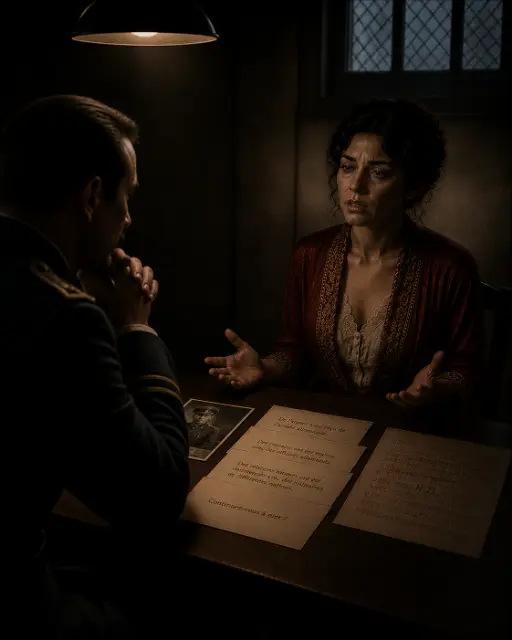 “But that wasn’t payment for espionage.”
“I was told it was compensation…”
“…for the property I had lost because of the war.”
Then she continued,
“I was working for France.”
“I wasn’t a spy for Germany alone.”
What she said was true.
She had, in fact, also worked for French intelligence.
But no one in that room believed her explanation.
The Trial
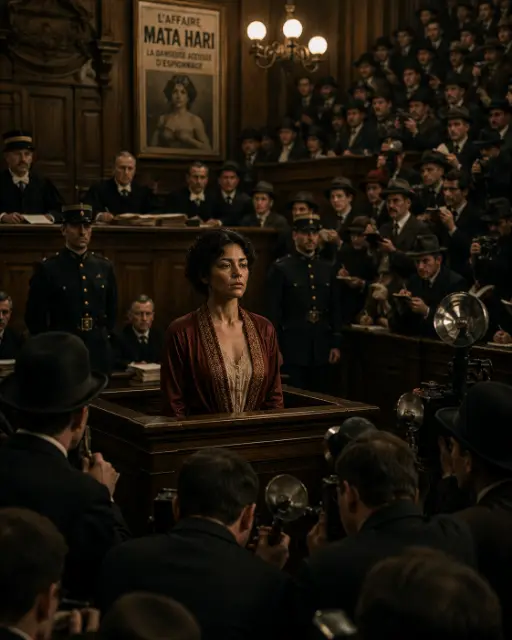 When the trial began, the courtroom was packed with reporters.
She was a famous dancer known by everyone.
And she was beautiful.
A performer.
A courtesan.
And now, an alleged spy.
It was exactly the kind of story newspapers couldn’t resist.
The next morning, bold headlines filled the front pages. 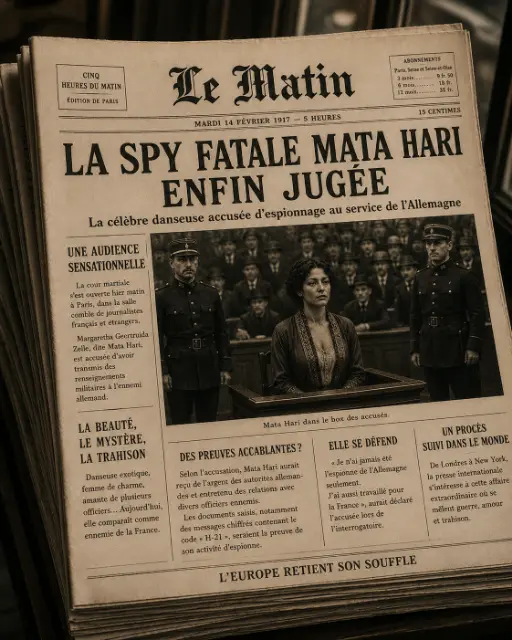 “The Femme Fatale Spy Faces Justice at Last.”
But if you look closely at what was actually said in the courtroom, something seems strangely out of place. 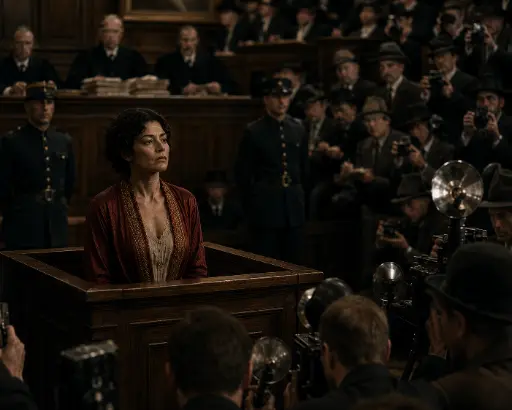 “She stole vital military secrets.”
Yet, when you examine the evidence presented in court, something stands out.
The decisive proof was almost nowhere to be found.
The prosecution pointed to three things:
She had accepted money from Germany.
She had been close to military officers from several countries.
And she had been given the codename H-21.
Those facts certainly made her a suspect.
But were they enough to prove that she had caused the deaths of thousands of soldiers?
The atmosphere inside the courtroom had already answered that question.
She was not being tried to determine whether she was innocent.
She was being tried to ensure that she would be found guilty.
A Villain the War Needed
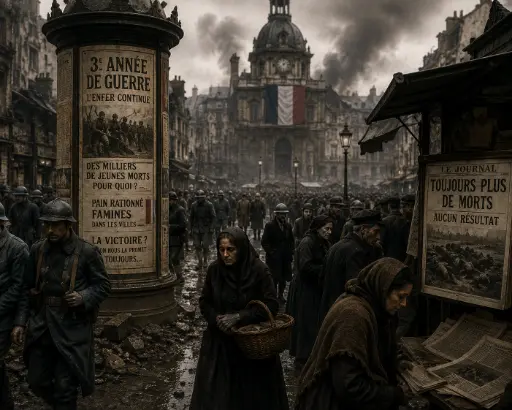 By 1917, France had entered its third year of war.
The conflict, which so many had believed would end in a matter of months, showed no sign of ending.
Young men continued to die on the battlefield.
Food was becoming scarce.
The people were exhausted.
Yet despite all the sacrifice, there were few victories to show for it.
And in the streets, people began to ask: 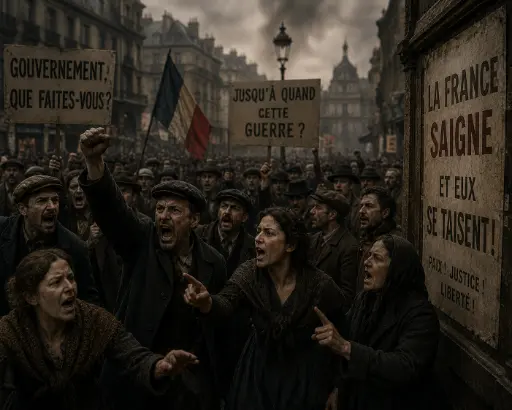 “What is the government doing?” “When is this war ever going to end?”
Day by day, public anger toward the government continued to grow.
If you were the government, what would you do? 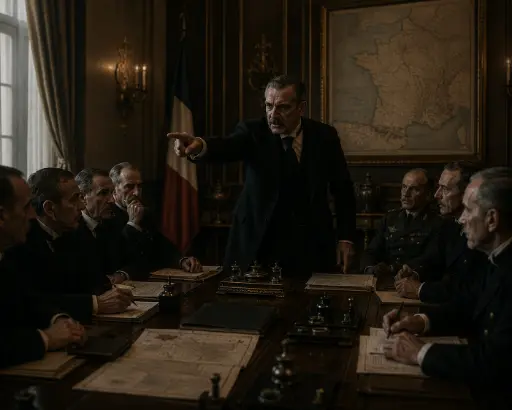 “It was our own military failures.”
Would a government simply admit that?
Probably not.
When people fail, they often look for someone else to blame.
Nations, too, are no exception.
And at that moment, the French government had before it a woman who was almost too convenient.
She was beautiful.
Famous.
She traveled freely across borders.
She was close to military officers.
She lived a glamorous life.
And she had accepted money from Germany. 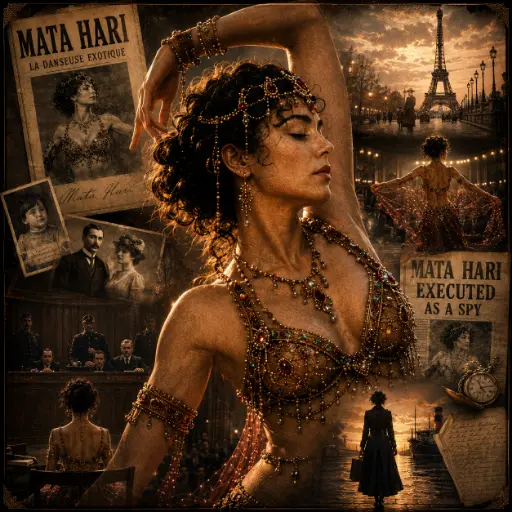 Mata Hari
There could hardly have been a more perfect person to cast as the villain.
In the eyes of the public, she already looked exactly like the enemy. 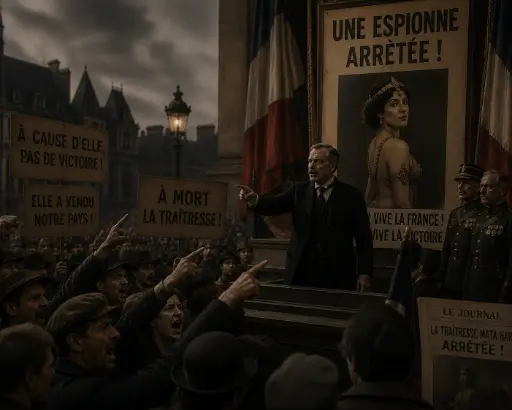 “Our offensives failed…”
“…because this woman was passing information to the enemy.”
If people believed that, their anger would no longer be directed at the government.
It would be directed at her.
And above all, the government could announce:
“We have captured an enemy spy.”
That alone could help restore the public’s confidence.
In other words, to the French government,
whether she was truly guilty or innocent
hardly mattered.
What it needed was someone to bear the blame. 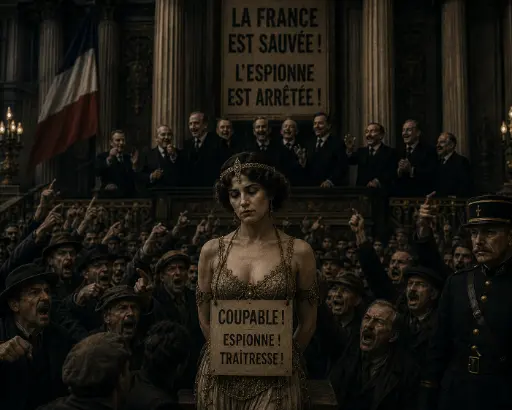
Exactly.
A scapegoat.
Judgement
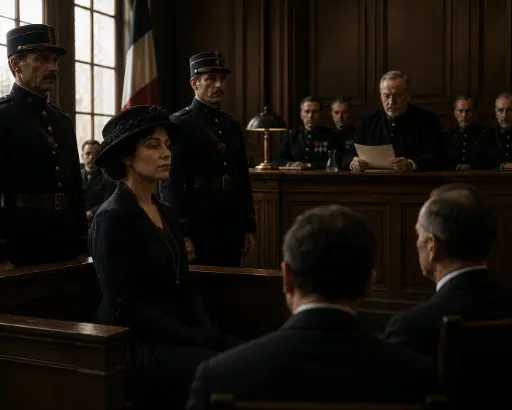
July 25, 1917.
The judge rose to deliver the verdict.
“The defendant…”
“Mata Hari.”
“You are sentenced…”
“…to death.”
Silence filled the courtroom.
She slowly closed her eyes.
She did not cry.
She did not protest.
She did not lose her composure.
She simply let out a quiet breath.
A few days later, a prison guard asked her… 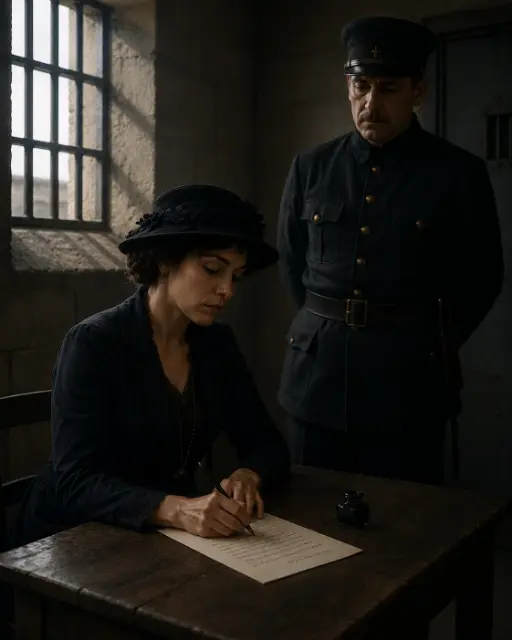
“Is there anyone…”
“…you’d like to write a final letter to?”
The guard asked gently.
It is said that her thoughts turned to her lover,
Vadim Maslov.
She knew there was only one thing she could no longer hope for.
She would never see him again.
The Truth Behind the “Female Spy”
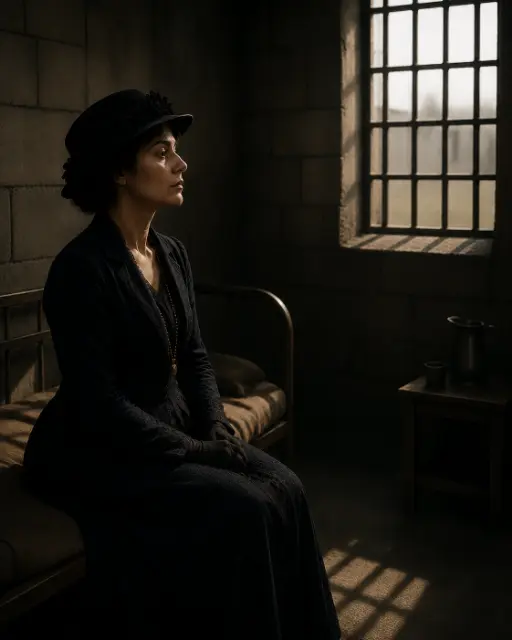
Ironically, Mata Hari may have believed until the very end that she was a real spy.
Today, however, many historians believe that most of the information she gathered amounted to little more than newspaper reports and rumors, with almost no real military value.
In other words, she was not the legendary spy who brought nations to their knees.
She was far more likely a woman used by intelligence agencies and swept away by the enormous tide of war.
But the verdict never changed. October 15, 1917.
Just before dawn.
Quiet footsteps echoed across the execution ground at Vincennes.
There stood the woman from the prologue.
A soldier stepped forward.
“Would you like a blindfold?”
She smiled.
“No, thank you.”
The most famous execution by firing squad in history was about to begin.
Final Chapter: Who Created the “Femme Fatale”?
“Ready!” “Fire!”
Twelve rifles erupted at once.
The world’s most famous dancer quietly collapsed to the ground.
She was 41 years old. The next day, newspapers across France carried the headline:
“Female Spy Mata Hari Executed.”
People cheered.
“The traitor has been punished.”
“Now France will be saved.”
Everyone believed it.
At least… until that day.
Then the war ended…
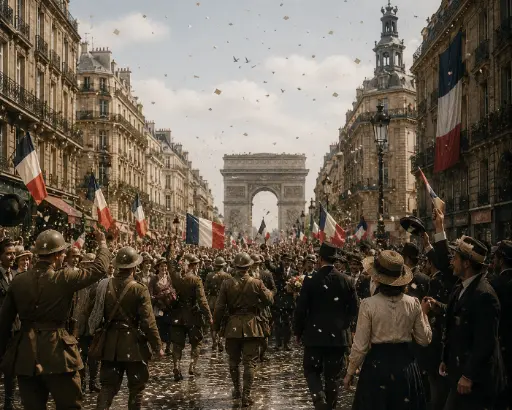 The following year, 1918.
The First World War came to an end.
Little by little, peace returned to the world.
And then… something unexpected began to happen. 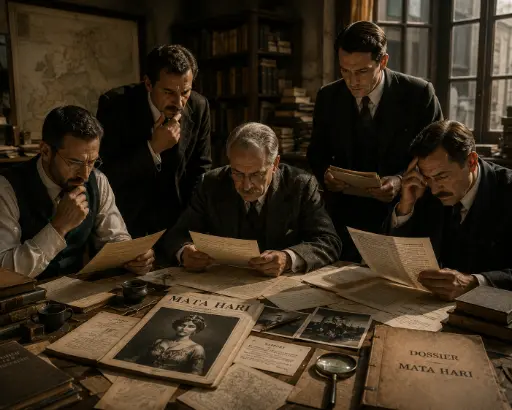 “Wait…”
“Was Mata Hari really…”
“…a master spy?”
Historians began to revisit the trial records.
They examined military archives.
They analyzed German intelligence files as well.
But no matter how deeply they searched, they could find no evidence to support the prosecution’s claim that she had been the spy who changed the course of the war. 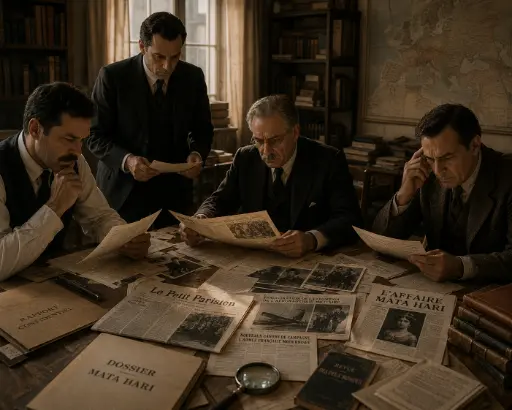 Of course, it is true that she had contact with German intelligence.
It is also true that she worked with French intelligence.
But most of the information she passed along was little more than what anyone could have learned by reading the newspapers,
or rumors picked up in high society— information with almost no military value.
In other words, Mata Hari may indeed have been a spy.
But she was not the legendary spy who changed the course of the war.
Who Was Really Responsible for Mata Hari’s Death?
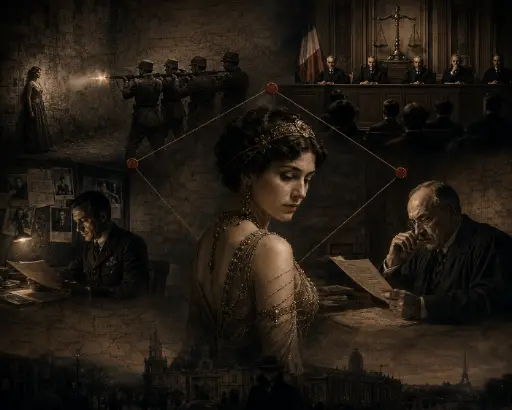 So, who really killed Mata Hari?
Was it the soldiers who fired the rifles?
The judge who sentenced her to death?
Or the intelligence agency that had her arrested?
Of course, they all played a part.
But there was an even greater force behind them. 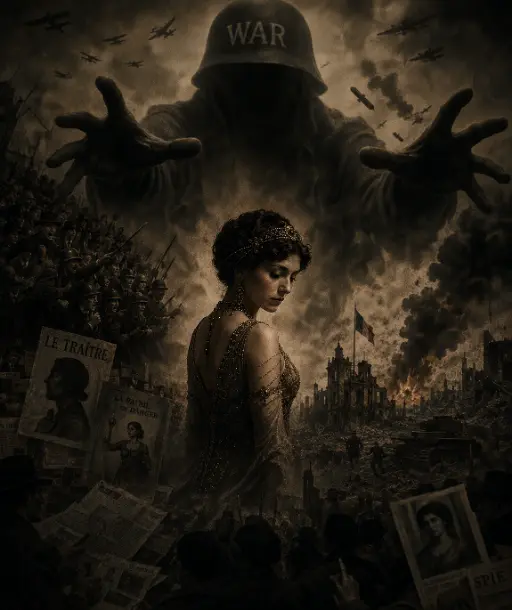 War.
War.
War makes people suspicious.
It turns neighbors into enemies.
And it tries to place the blame for complex problems on a single person. 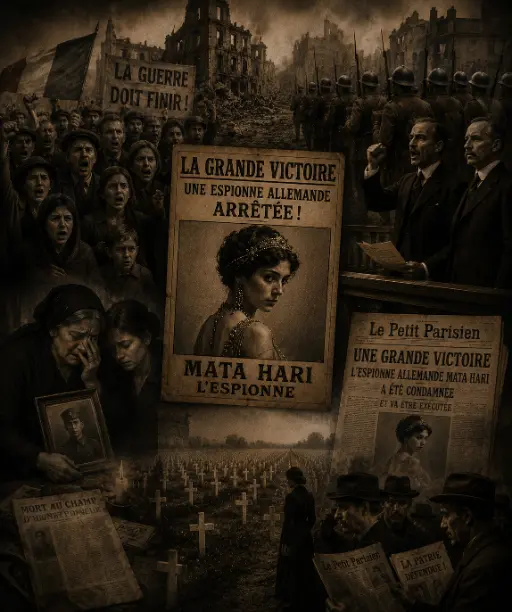 France was suffering.
The war showed no sign of ending.
Young men were not coming home.
The people were beginning to turn their anger toward the government.
At that moment, the government needed one victory. 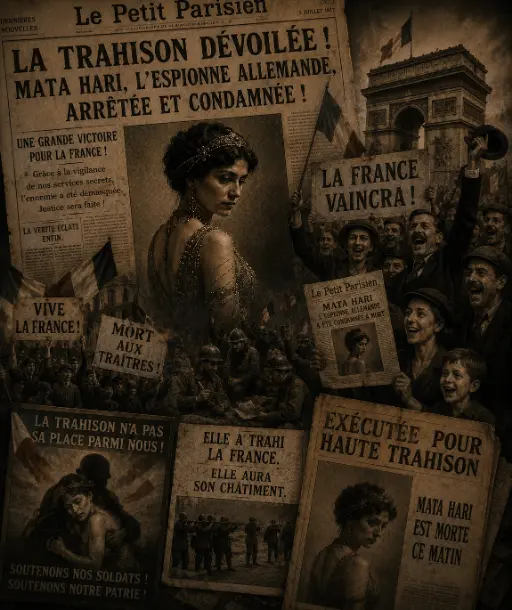 “We have captured an enemy spy.”
That headline gave people hope.
It redirected their anger.
And the person chosen for that role was Mata Hari.
She Lied.
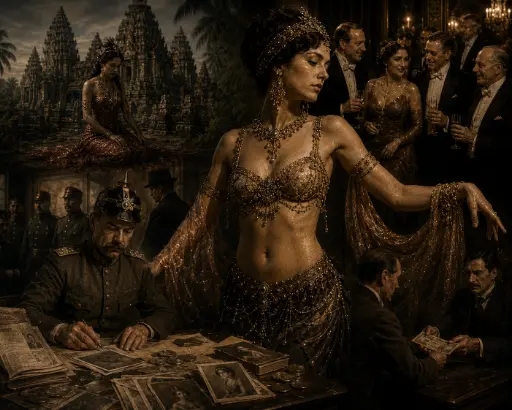 There is one thing we must not misunderstand.
Mata Hari was not a saint.
She claimed to be a princess from Java.
She said she had been raised as a temple priestess.
She accepted financial support from many men, and she also accepted money from Germany. 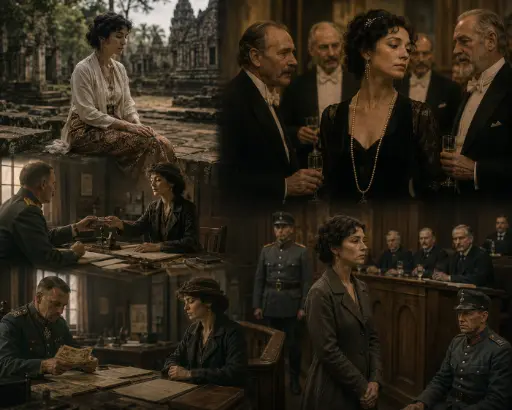 That does not mean she was an innocent victim who had done nothing wrong.
But that is very different from being the worst female spy in history, the woman who supposedly caused the deaths of tens of thousands of soldiers.
Those are not the same thing.
What Was Margaretha Really Looking For?
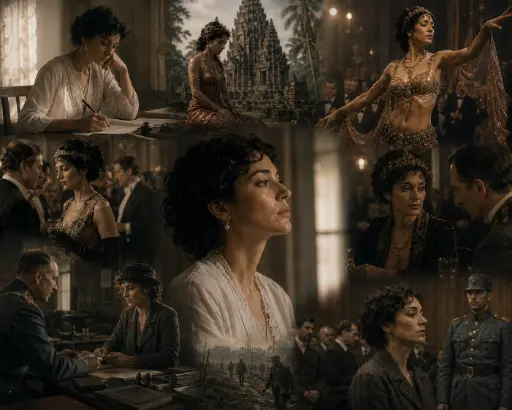 Having followed her life to this point, I realized one thing.
What Margaretha had been searching for was not money.
It was not fame.
And it certainly was not becoming a spy. 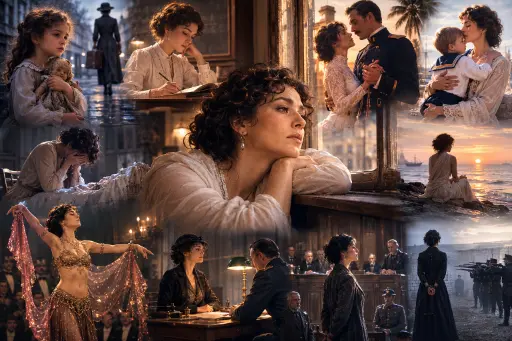 Having followed her life to this point, I have come to realize one thing.
What Margaretha truly longed for may have been the sense of security she lost as a child.
She lost her home when her family went bankrupt.
She lost her mother.
She lost her dream of becoming a teacher.
She lost her son.
She lost her daughter.
She lost her husband.
And each time, she tried to begin again.  That is why she became a dancer.
That is why she kept playing the role of Mata Hari.
That is why she reached for dangerous work.
Her life was not the story of ambition.
It was the story of a woman who never stopped trying to reclaim what she had lost.
Why Are Villains Made?
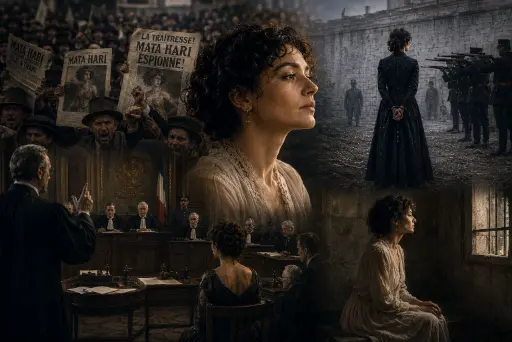 History is filled with villains.
But history is also filled with people who were made into villains.
When society falls into chaos, people begin to search for an enemy.
Because if there is one person to blame, they no longer have to face a far more complicated reality.
That pattern did not exist only a hundred years ago.  Even today, on social media, a single person can be turned into the villain, and public opinion can suddenly turn against them.
But are we really judging that person after knowing the whole story?
Or are we simply choosing to believe it because we need a villain? 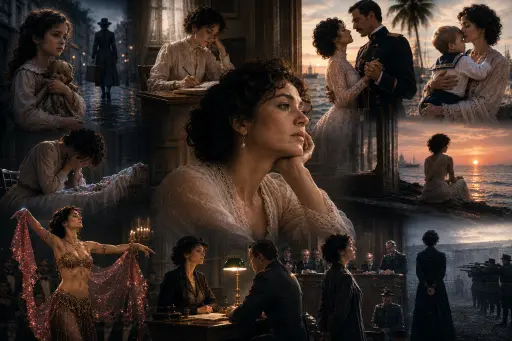 Mata Hari became known to history as the world’s most famous female spy.
But I believe she was something else.
She was a young girl who spent her life searching for happiness, who got back on her feet no matter how many times she fell, and who was ultimately swept away by the overwhelming forces of her time.
Perhaps that is who Mata Hari really was— not a legend, but a woman shaped, and ultimately consumed, by history. 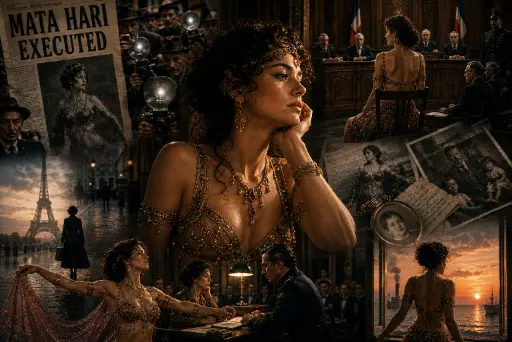 Mata Hari became known to history as the world’s most famous female spy.
But I believe she was someone else entirely.
A young girl who spent her life searching for happiness.
Who got back on her feet every time she fell.
And who was ultimately swept away by the overwhelming force of her era.
Perhaps she was simply a woman caught in the tide of history.
Perhaps that was the real Mata Hari.
History is often said to be written by the victors.
But sometimes, history is also a story completed by turning someone into the villain.
And whether that villain truly deserved the role…
may be a question that, even more than a hundred years later, we must continue to ask ourselves.
Author: Fuji

Human history is truly complex, isn’t it?
There are countless websites introducing historical figures and events, but many of them are just plain explanations—not exactly exciting to read.
On the other hand, reading books takes a lot of time and effort.
That’s where I come in.
Through “stories that are more engaging than explanations and shorter than books,” I aim to bring the world’s history and humanity’s records to you in a more accessible and interesting way.
If my stories inspire you to love history a little more, I’d be absolutely thrilled!

Become Part of the Chronicle
If this article inspired you, consider supporting the project.
Become a character in the Chronicle.
Receive your own custom card and stand alongside queens, warriors, inventors, rebels, and legends from history.
Your support helps keep these stories alive and allows me to create more articles, illustrations, and historical cards.
Join the Chronicle and leave your mark on history.

Comment