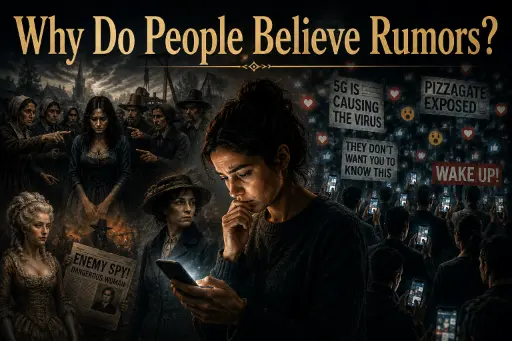
Why Do People Believe Rumors?
Do you think you’re the kind of person who falls for rumors?
Most people would probably answer, “No.”
We like to think of ourselves as rational.
We check the evidence.
We verify the facts.
We don’t believe everything we hear.
At least, that’s what we tell ourselves.
But is that really true?
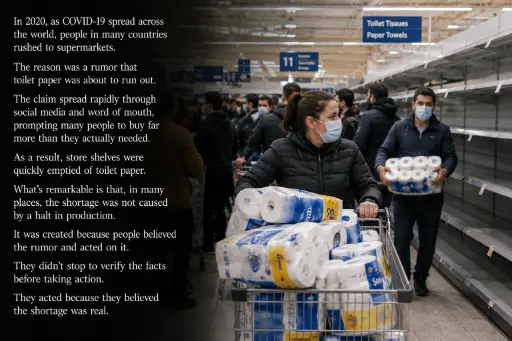
In 2020, as COVID-19 spread across the world, people in many countries rushed to supermarkets.
The reason was a rumor that toilet paper was about to run out.
The claim spread rapidly through social media and word of mouth, prompting many people to buy far more than they actually needed.
As a result, store shelves were quickly emptied of toilet paper.
What’s remarkable is that, in many places, the shortage was not caused by a halt in production.
It was created because people believed the rumor and acted on it.
They didn’t stop to verify the facts before taking action.
They acted because they believed the shortage was real.
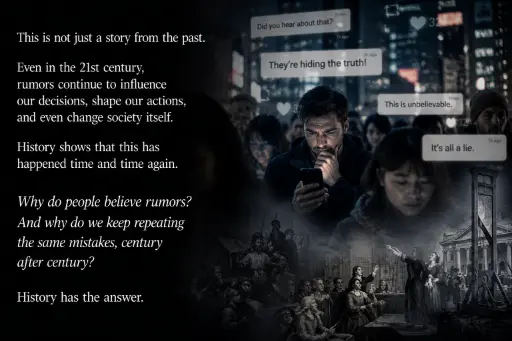
This is not just a story from the past.
Even in the 21st century, rumors continue to influence our decisions, shape our actions, and even change society itself.
History shows that this has happened time and time again.
Why do people believe rumors?
And why do we keep repeating the same mistakes, century after century?
History has the answer.
The Queen Who Never Said It
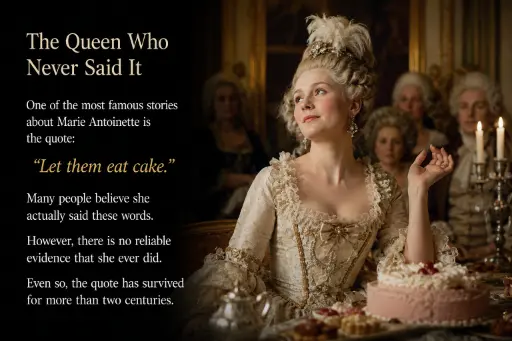
One of the most famous stories about Marie Antoinette is the quote:
“Let them eat cake.”
Many people believe she actually said these words.
However, there is no reliable evidence that she ever did.
Even so, the quote has survived for more than two centuries.
Why?
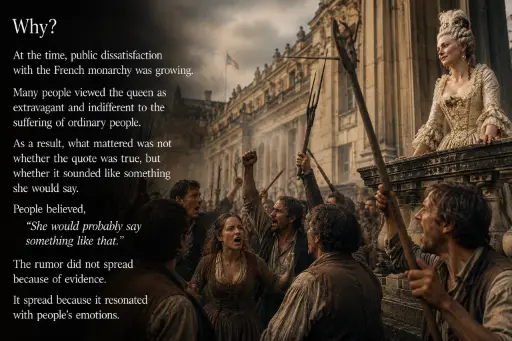
At the time, public dissatisfaction with the French monarchy was growing.
Many people viewed the queen as extravagant and indifferent to the suffering of ordinary people.
As a result, what mattered was not whether the quote was true, but whether it sounded like something she would say.
People believed,
“She would probably say something like that.”
The rumor did not spread because of evidence.
It spread because it resonated with people’s emotions.
If you want to explore Marie Antoinette’s life in greater depth through a story-driven article, read here:
👉 「Marie Antoinette: The Greedy Queen」
https://thechroniclesofhumanity.com/marie-antoinette-the-greedy-queen/
The Woman Turned into a Villain
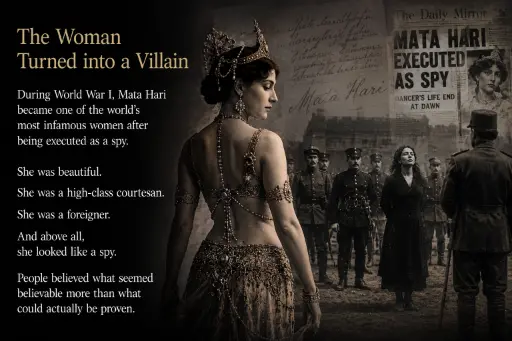
During World War I, Mata Hari became one of the world’s most infamous women after being executed as a spy.
She was beautiful.
She was a high-class courtesan.
She was a foreigner.
And above all, she looked like a spy.
People believed what seemed believable more than what could actually be proven.

As the war dragged on and countless lives were lost, people desperately searched for an explanation for defeat and chaos.
They wanted someone to blame.
Mata Hari became that person.
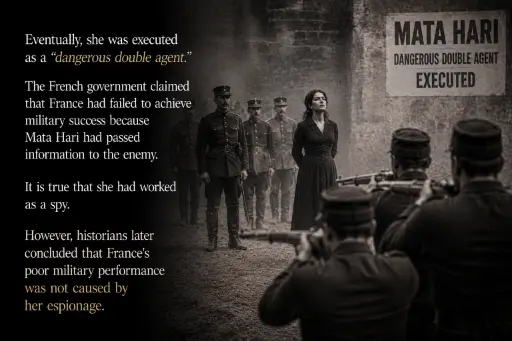
Eventually, she was executed as a “dangerous double agent.”
The French government claimed that France had failed to achieve military success because Mata Hari had passed information to the enemy.
It is true that she had worked as a spy.
However, historians later concluded that France’s poor military performance was not caused by her espionage.
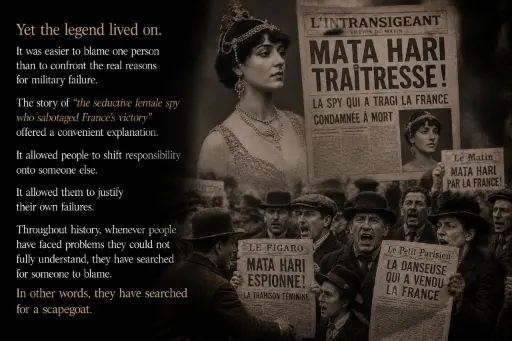
Yet the legend lived on.
It was easier to blame one person than to confront the real reasons for military failure.
The story of “the seductive female spy who sabotaged France’s victory” offered a convenient explanation.
It allowed people to shift responsibility onto someone else.
It allowed them to justify their own failures.
Throughout history, whenever people have faced problems they could not fully understand, they have searched for someone to blame.
In other words, they have searched for a scapegoat.
If you want to explore Mata Hari’s life in greater depth through a story-driven article, read here:
👉 「Mata Hari — The Scapegoat Created by the State」
https://thechroniclesofhumanity.com/mata-hari-scapegoat/
The Witches Born from Fear
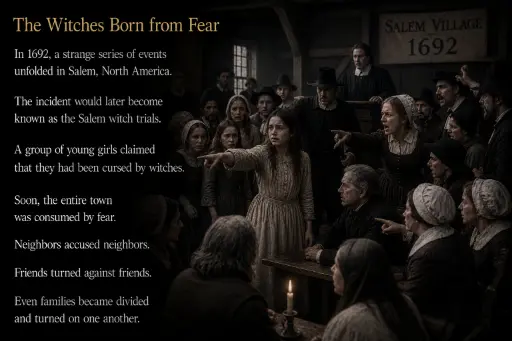
In 1692, a strange series of events unfolded in Salem, North America.
The incident would later become known as the Salem witch trials.
A group of young girls claimed that they had been cursed by witches.
Soon, the entire town was consumed by fear.
Neighbors accused neighbors.
Friends turned against friends.
Even families became divided and turned on one another.
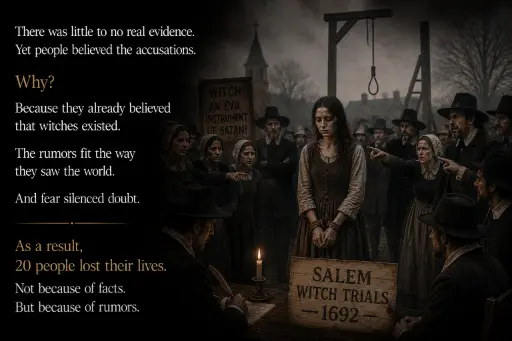
There was little to no real evidence.
Yet people believed the accusations.
Why?
Because they already believed that witches existed.
The rumors fit the way they saw the world.
And fear silenced doubt.
As a result, 20 people lost their lives.
Not because of facts.
But because of rumors.
If you want to explore witch hunts in greater depth through a story-driven article, read here:
👉 「Isabeau Cheyné: The Truth Burned by the Lies of Witch Hunts」
https://thechroniclesofhumanity.com/isabeau-cheyne-witch-hunt/
More than 300 years later, this pattern remains unchanged.
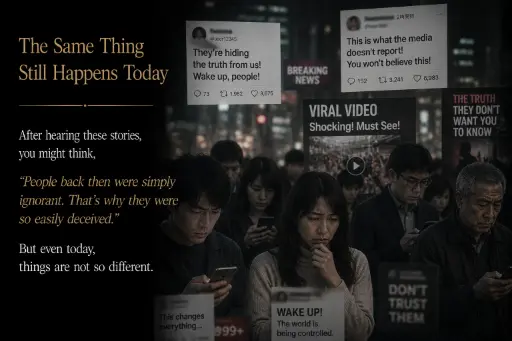
The Same Thing Still Happens Today
After hearing these stories, you might think,
“People back then were simply ignorant. That’s why they were so easily deceived.”
But even today, things are not so different.
The conspiracy theory that 5G spreads COVID-19 (2020)
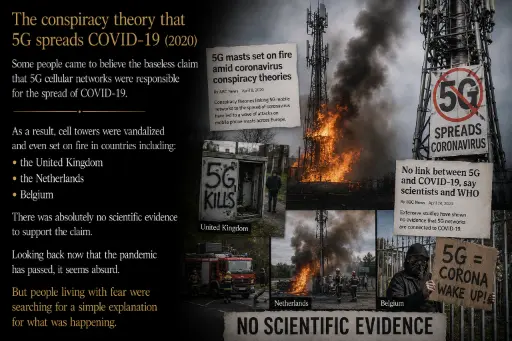
Some people came to believe the baseless claim that 5G cellular networks were responsible for the spread of COVID-19.
As a result, cell towers were vandalized and even set on fire in countries including:
- the United Kingdom
- the Netherlands
- Belgium
There was absolutely no scientific evidence to support the claim.
Looking back now that the pandemic has passed, it seems absurd.
But people living with fear were searching for a simple explanation for what was happening.
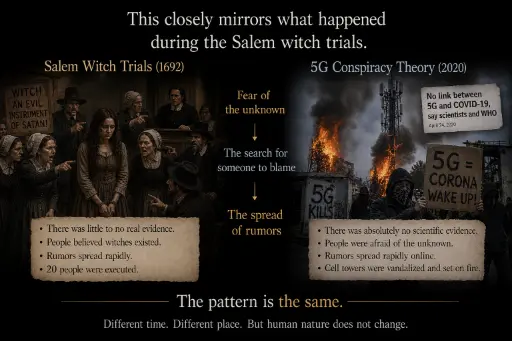
This closely mirrors what happened during the Salem witch trials.
Fear of the unknown
↓
The search for someone to blame
↓
The spread of rumors
The pattern is the same.
Pizzagate (2016)
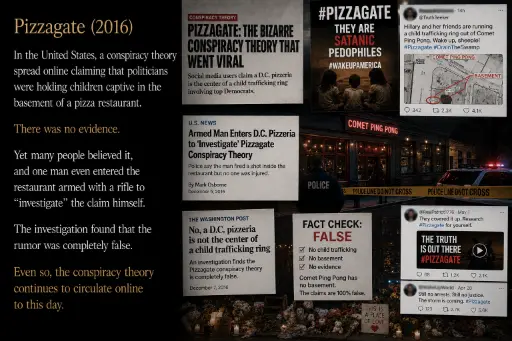
In the United States, a conspiracy theory spread online claiming that politicians were holding children captive in the basement of a pizza restaurant.
There was no evidence.
Yet many people believed it, and one man even entered the restaurant armed with a rifle to “investigate” the claim himself.
The investigation found that the rumor was completely false.
Even so, the conspiracy theory continues to circulate online to this day.
Why Do We Believe Rumors?
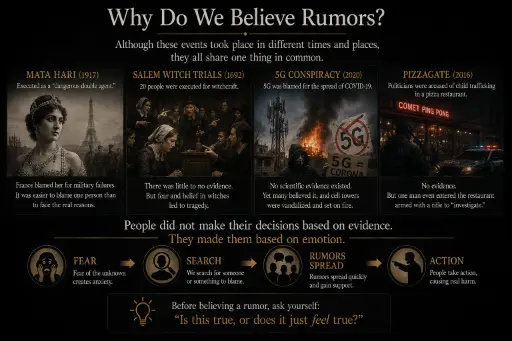
Although these events took place in different times and places, they all share one thing in common.
People did not make their decisions based on evidence.
They made them based on emotion.
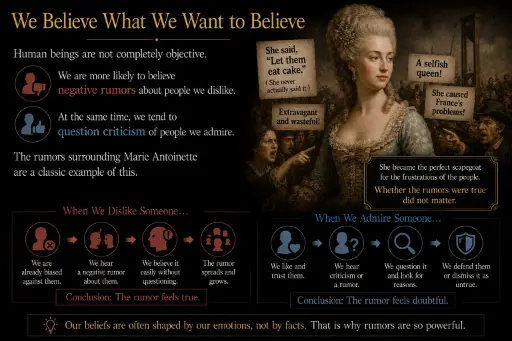
We Believe What We Want to Believe
Human beings are not completely objective.
We are more likely to believe negative rumors about people we dislike.
At the same time, we tend to question criticism of people we admire.
The rumors surrounding Marie Antoinette are a classic example of this.
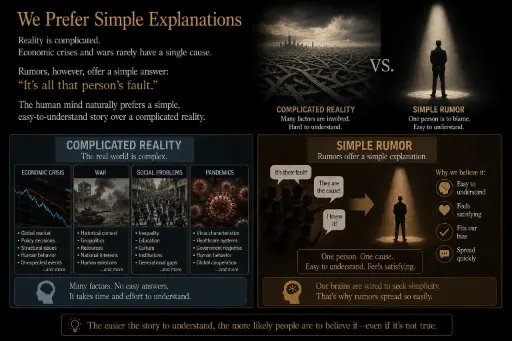
We Prefer Simple Explanations
Reality is complicated.
Economic crises and wars rarely have a single cause.
Rumors, however, offer a simple answer:
“It’s all that person’s fault.”
The human mind naturally prefers a simple, easy-to-understand story over a complicated reality.
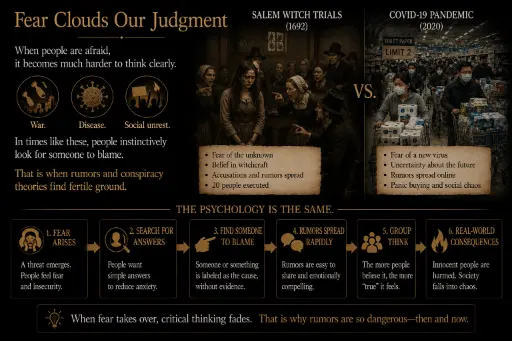
Fear Clouds Our Judgment
When people are afraid, it becomes much harder to think clearly.
War.
Disease.
Social unrest.
In times like these, people instinctively look for someone to blame.
That is when rumors and conspiracy theories find fertile ground.
The psychology behind the Salem witch trials and the panic buying during the COVID-19 pandemic is remarkably similar.
Have We Really Become Wiser?
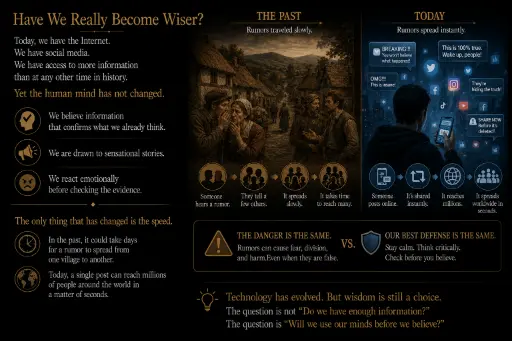
Today, we have the Internet.
We have social media.
We have access to more information than at any other time in history.
Yet the human mind has not changed.
We believe information that confirms what we already think.
We are drawn to sensational stories.
We react emotionally before checking the evidence.
The only thing that has changed is the speed.
In the past, it could take days for a rumor to spread from one village to another.
Today, a single post can reach millions of people around the world in a matter of seconds.
Five Lessons History Teaches Us
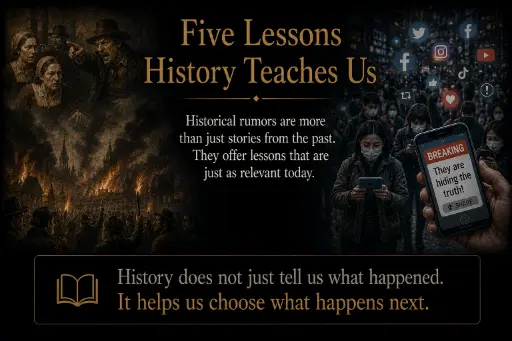
Historical rumors are more than just stories from the past.
They offer lessons that are just as relevant today.
1. People Prioritize Emotions Over Facts
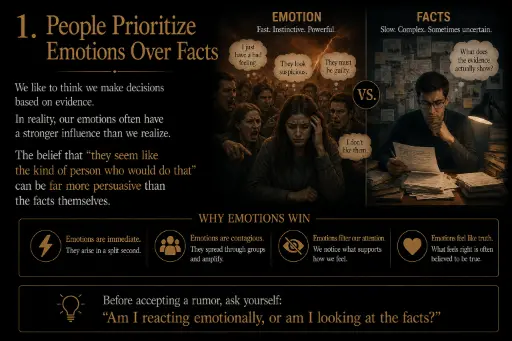
We like to think we make decisions based on evidence.
In reality, our emotions often have a stronger influence than we realize.
The belief that “they seem like the kind of person who would do that” can be far more persuasive than the facts themselves.
2. Fear Is the Perfect Fuel for Rumors
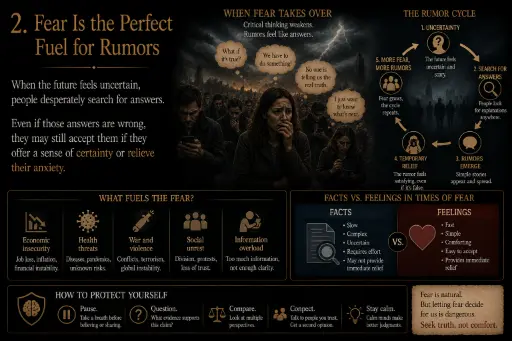
When the future feels uncertain, people desperately search for answers.
Even if those answers are wrong, they may still accept them if they offer a sense of certainty or relieve their anxiety.
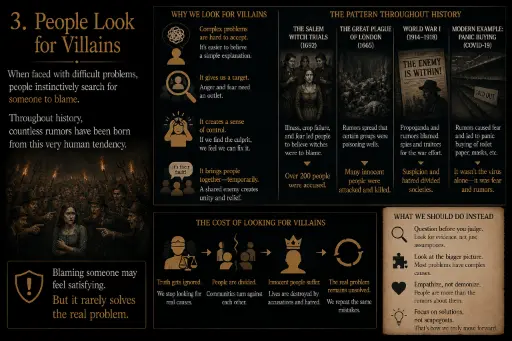
3. People Look for Villains
When faced with difficult problems, people instinctively search for someone to blame.
Throughout history, countless rumors have been born from this very human tendency.
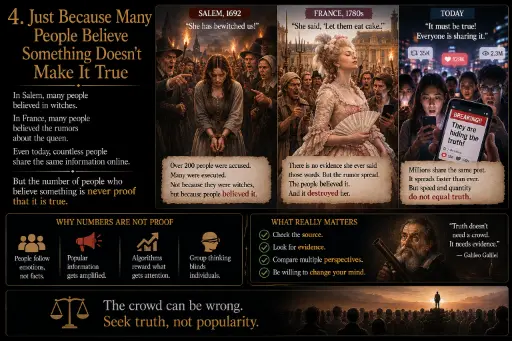
4. Just Because Many People Believe Something Doesn’t Make It True
In Salem, many people believed in witches.
In France, many people believed the rumors about the queen.
Even today, countless people share the same information online.
But the number of people who believe something is never proof that it is true.
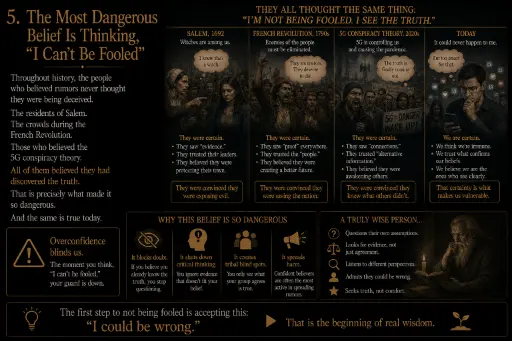
5. The Most Dangerous Belief Is Thinking, “I Can’t Be Fooled”
Throughout history, the people who believed rumors never thought they were being deceived.
The residents of Salem.
The crowds during the French Revolution.
Those who believed the 5G conspiracy theory.
All of them believed they had discovered the truth.
That is precisely what made it so dangerous.
And the same is true today.
A truly wise person is not someone who constantly doubts others.
It is someone who is willing to question their own judgment.
Conclusion
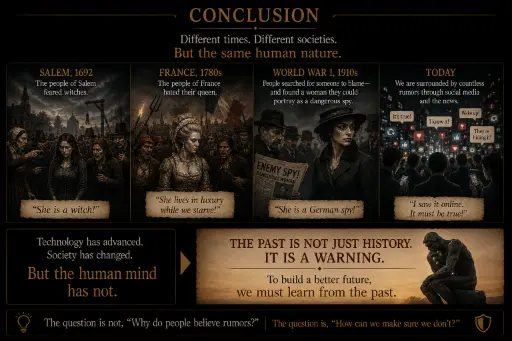
The people of Salem feared witches.
The people of France hated their queen.
During World War I, people searched for someone to blame—and found a woman they could portray as a dangerous spy.
Today, we are surrounded by countless rumors through social media and the news.
Technology has advanced.
Society has changed.
Yet the human mind has remained remarkably unchanged.
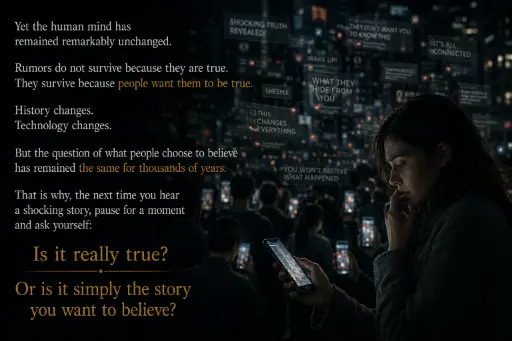
Rumors do not survive because they are true.
They survive because people want them to be true.
History changes.
Technology changes.
But the question of what people choose to believe has remained the same for thousands of years.
That is why, the next time you hear a shocking story, pause for a moment and ask yourself:
Is it really true?
Or is it simply the story you want to believe?
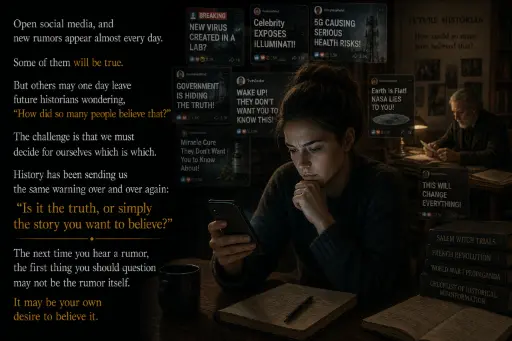
Open social media, and new rumors appear almost every day.
Some of them will be true.
But others may one day leave future historians wondering,
“How did so many people believe that?”
The challenge is that we must decide for ourselves which is which.
History has been sending us the same warning over and over again:
“Is it the truth, or simply the story you want to believe?”
The next time you hear a rumor, the first thing you should question may not be the rumor itself.
It may be your own desire to believe it.
If you want to explore Marie Antoinette’s life in greater depth through a story-driven article, read here:
👉 「Marie Antoinette: The Greedy Queen」
https://thechroniclesofhumanity.com/marie-antoinette-the-greedy-queen/
If you want to explore Mata Hari’s life in greater depth through a story-driven article, read here:
👉 「Mata Hari — The Scapegoat Created by the State」
https://thechroniclesofhumanity.com/mata-hari-scapegoat/
If you want to explore witch hunts in greater depth through a story-driven article, read here:
👉 「Isabeau Cheyné: The Truth Burned by the Lies of Witch Hunts」
https://thechroniclesofhumanity.com/isabeau-cheyne-witch-hunt/
Author Fuji

Why Do People Believe Rumors?
History has proven this again and again.
The problems we struggle with today are not unique.
They are patterns humanity has repeated throughout history.
And many of those problems have already been experienced, understood, and solved by those who came before us.
“When you understand history, you understand the present.”

Become Part of the Chronicle
If this article inspired you, consider supporting the project.
Become a character in the Chronicle.
Receive your own custom card and stand alongside queens, warriors, inventors, rebels, and legends from history.
Your support helps keep these stories alive and allows me to create more articles, illustrations, and historical cards.
Join the Chronicle and leave your mark on history.

Comment