
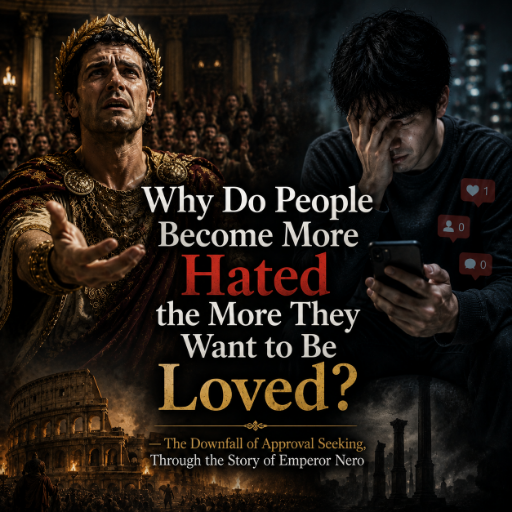
Why Do People Become More Hated the More They Want to Be Loved?
— The Downfall of Approval Seeking, Through the Story of Emperor Nero

Have you ever experienced things like this?
- Constantly wanting replies
- Repeatedly asking, “You don’t hate me, right?”
- Exhausting yourself trying to read the room
- Forcing yourself to be liked
- Obsessing over reactions on social media
- Repeatedly asking, “Do you love me?”
- Hiding your true feelings just to be accepted
But sometimes, that feeling slowly begins to spiral out of control.

And before you realize it, “I want to be loved” turns into “I don’t want to be hated.” And from that moment on, people slowly begin to break apart.
When the desire to be loved becomes too strong, it can start to feel like a burden to others.

At first, people are kind. They want to be recognized. They want to feel needed. They want to feel important to someone. So they devote themselves to others. But when those feelings become too strong, the other person gradually begins to feel suffocated. Because they start to feel a kind of obligation: “I have to keep fulfilling this person’s need for validation.”

For example:
- Constantly wanting replies
- Repeatedly asking, “You don’t hate me, right?”
- Exhausting yourself trying to read the room
- Forcing yourself to be liked
- Obsessing over reactions on social media
- Repeatedly asking, “Do you love me?”
- Hiding your true feelings just to be accepted
In other words, it is your egoism.
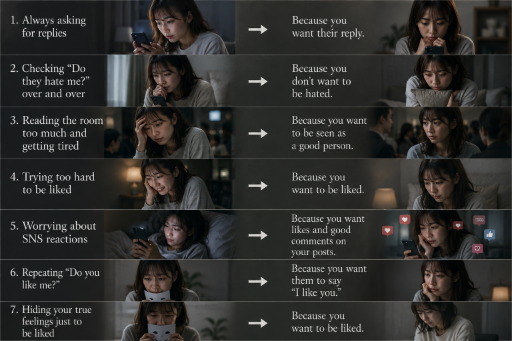
- Constantly wanting replies. → Because you want a reply.
- Repeatedly asking, “You don’t hate me, right?” → Because you don’t want to be hated.
- Exhausting yourself trying to read the room. → Because you want people to see you as a good person.
- Forcing yourself to be liked. → Because you want to be loved.
- Obsessing over reactions on social media. → Because you want likes and positive comments on your posts.
- Repeatedly asking, “Do you love me?” → Because you want to hear someone say “I love you.”
- Hiding your true feelings just to be accepted. → Because you want to be liked.
Have you noticed something?
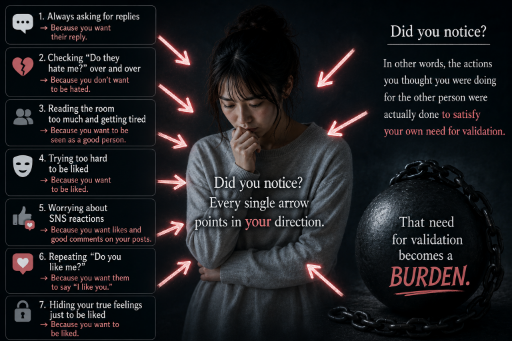
Every arrow is pointing back at you. None of it is truly for the other person. In other words, the actions you believed were “for someone else” were actually actions meant to satisfy your own need for validation. And eventually, that need for validation becomes a burden to others.
Emperor Nero was no different.
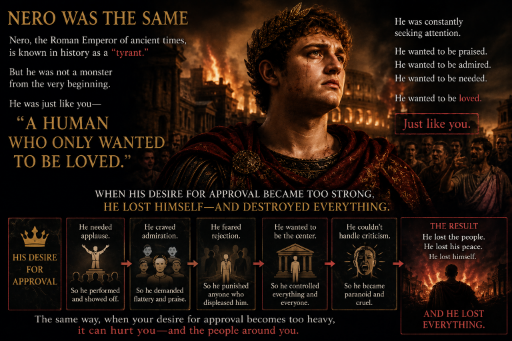
Nero, the Emperor of Ancient Rome. Throughout history, he has been remembered as a “tyrant.” But he was not a simple monster from the very beginning. Like you, He was simply a human being who wanted to be loved.
For Those Who Want to Learn More About the Life of Nero

Nero: The Emperor Consumed by False Love
I wrote more about Nero’s life — and how he was consumed by “false love” — in this article.
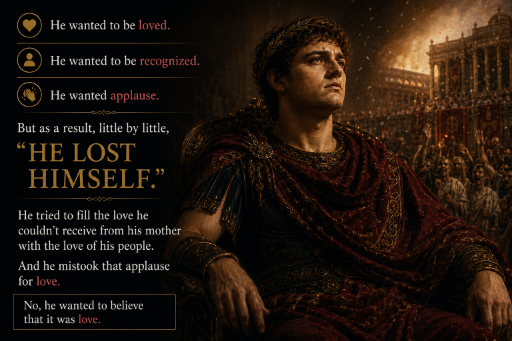
He longed to be loved. He longed to be recognized. He craved applause. But in the process, he slowly began to lose “his true self.” Unable to receive the love he needed from his mother, he tried to fill that emptiness with the love of the Roman people. And he came to believe that their applause was “love.” Or rather— He wanted to believe it was.
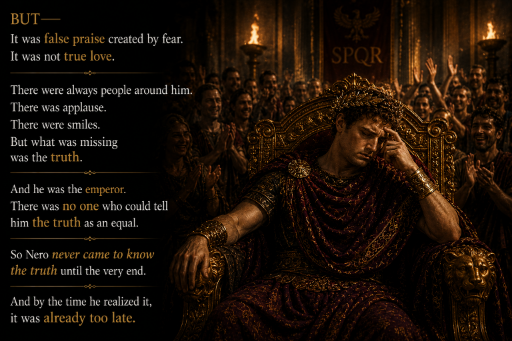
But— It was false praise, born out of fear. It was never real love. There were always people around him. There was applause. There were smiles. And yet, there was no honesty. And Nero was an emperor. There was no one who could stand before him as an equal and tell him the truth. So Nero never learned the truth until the very end. And by the time he finally realized it, it was already too late.
Applause Is Not Love.
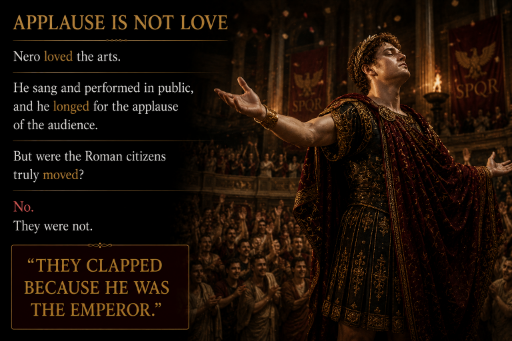
Nero loved the arts. He wanted to sing and perform before crowds, and to be applauded by the audience. But were the people of Rome truly moved by him? No. They applauded him because he was the emperor.
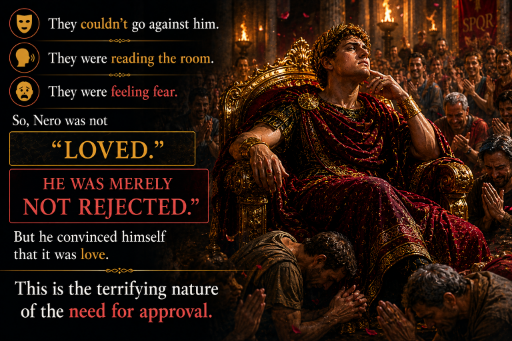
They could not oppose him. They were reading the room. They were afraid. In other words, Nero was not truly loved. He was simply not being rejected. But Nero himself mistook that for love. And that is the terrifying nature of approval seeking.
Approval Seeking Accelerates.
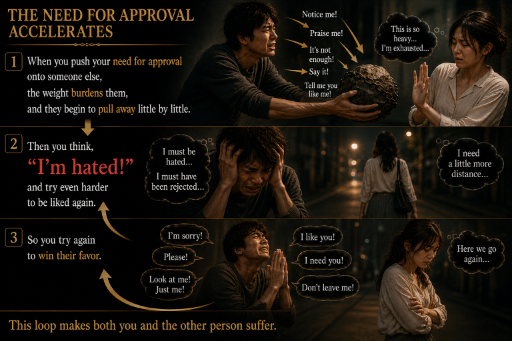
When you force your need for validation onto someone else, the weight of it begins to exhaust them, and little by little, they start pulling away. And then you think: “They hate me!” So you try even harder to be loved again.
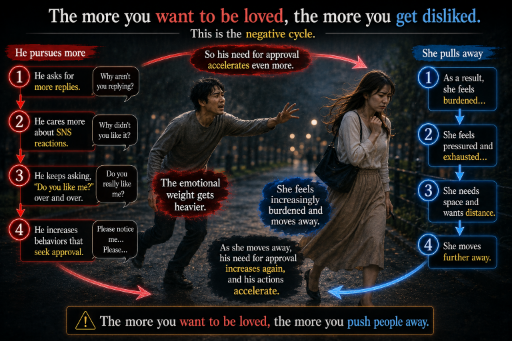
So your need for validation grows even stronger.
- You demand even more replies.
- You become even more obsessed with reactions on social media.
- You repeatedly ask, “Do you love me?”
- And your approval-seeking behavior keeps increasing.
Are You Becoming Nero Through Social Media?
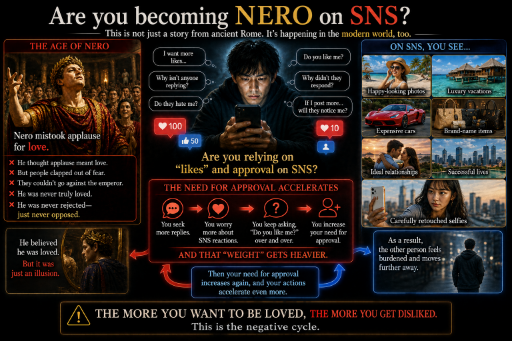
This is not just a story about Ancient Rome. The same thing is happening today. On social media, we constantly see:
- Happy-looking photos
- Luxurious vacations
- Expensive cars
- Designer brands
- “Perfect” relationships
- Successful lifestyles
- Selfies retaken over and over again
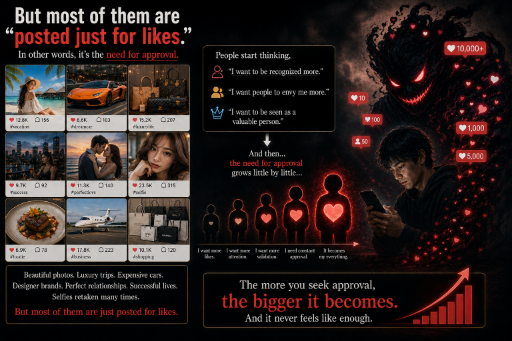
But most of those posts are made for one reason: to get “likes.” In other words, they are driven by the need for validation. And little by little, people begin to think: “I want to be recognized more.” “I want people to envy me more.” “I want to be seen as someone valuable.” And as those feelings grow, their need for validation slowly becomes larger and larger.
However, that feeling of satisfaction never lasts for long.
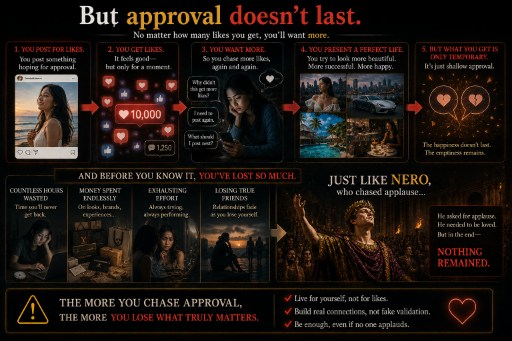
Even when the number of “likes” increases, people begin to crave even more. So they post again—trying to look prettier, more successful, happier. But in the end, what they gain is only temporary, superficial validation. And before they realize it, they have sacrificed enormous amounts of time, money, energy—and even their true companions. Just like Nero, who spent his life chasing applause, only to be left with nothing in the end.
What Truly Attracts People?
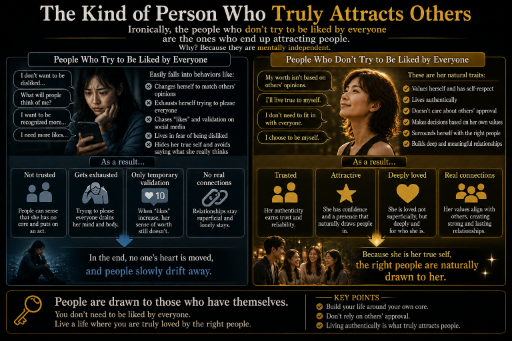
Ironically, the people who do not try to be liked by everyone are often the ones who attract others the most. Because they are mentally independent.
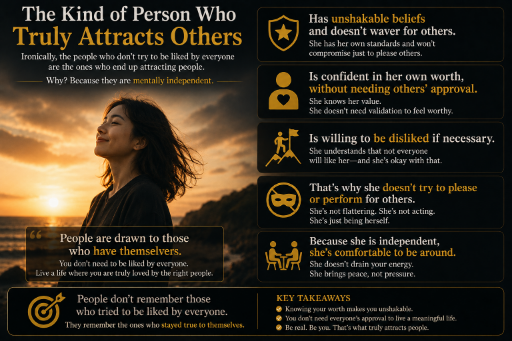
They are not shaken by the opinions of others. They have principles they refuse to betray. Even without relying on validation from others, they believe they have value as a person. And they are willing to be disliked if necessary. That is why they do not flatter others. They do not pretend to be someone they are not. Because they are emotionally independent, being around them does not feel exhausting.
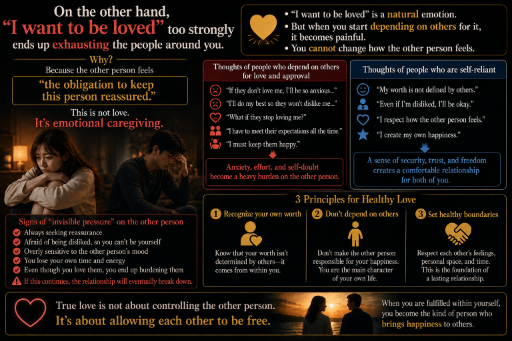
On the other hand, people whose desire to be loved becomes too strong often end up exhausting others. Because the other person begins to feel “an obligation to constantly reassure this person.” That is not love. It is caretaking of emotions.
How History Teaches Us to Deal with the Need for Validation.
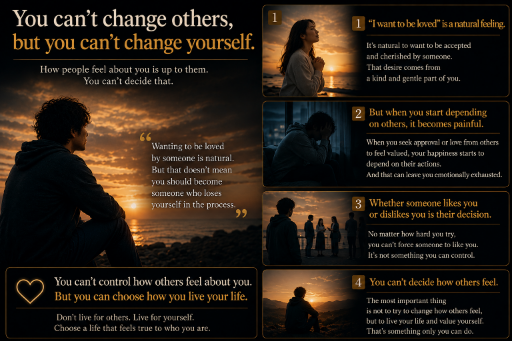
You Cannot Change How Someone Feels About You
Wanting to be loved is a natural emotion. But once you begin depending on others for it, it becomes painful. Whether someone likes you or dislikes you is their decision to make. It is not something you can decide for them.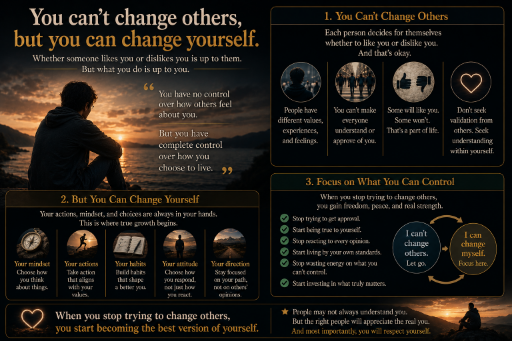
You Cannot Change Others, But You Can Change Yourself
Whether someone likes you or dislikes you is their decision to make. But your own actions are something you can change yourself.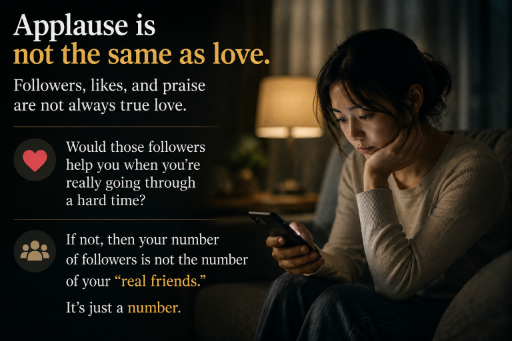
Applause Is Not Love
Followers, likes, and praise are not necessarily real love. Will those followers help you when you are truly suffering? If not, then your follower count is not the number of true companions you have— It is just a number.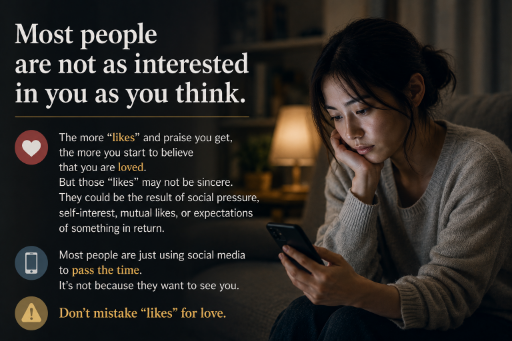
People Are Not as Interested in You as You Think They Are
The more likes and praise people receive, the more they begin to believe that they are loved. But those “likes” may not come from genuine feelings at all. They may be driven by social pressure, self-interest, mutual likes, or the expectation of something in return— nothing more than false reactions. Most people scroll through social media simply to kill time. Not because they truly want to see you. Do not mistake “likes” for love.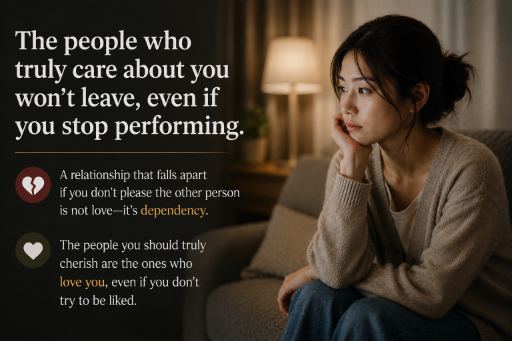
The People Who Truly Care About You Will Not Leave Just Because You Stop Performing
A relationship that only survives because you constantly manage the other person’s emotions is not love—it is dependency. The people you should truly value are the ones who still love you even when you stop trying so hard to be liked.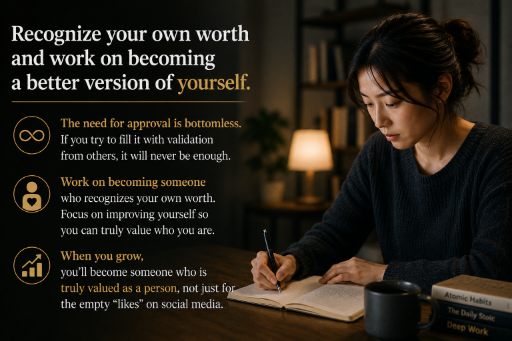
Refine Yourself Until You Can Recognize Your Own Worth
The need for validation is bottomless. If you rely on others to fill it, it will never truly satisfy you. Refine yourself until you can recognize your own worth without needing constant approval from others. When you do, you will no longer chase the hollow “likes” of social media— You will become someone who is genuinely respected and valued as a person.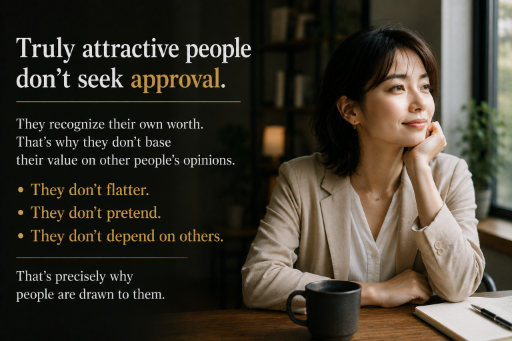
Truly Attractive People Do Not Seek Validation from Others
They already recognize their own worth. That is why they do not base their value on the opinions of others.- They do not flatter others.
- They do not pretend to be someone they are not.
- They do not depend on others for their self-worth.
In the End.

Nero longed to be loved. But what he continued to chase was not love itself— but applause. And before he realized it, no one around him was speaking honestly anymore. In the end, all that remained was false praise and loneliness.
It was not only Nero.
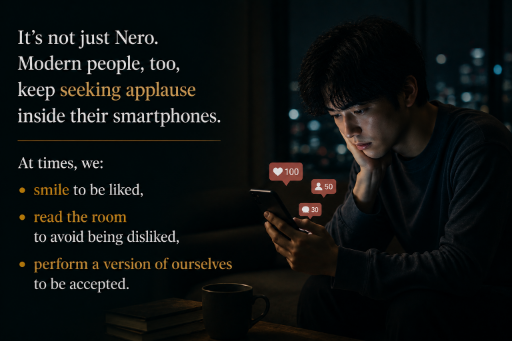
Modern people are no different. We, too, continue chasing applause through our smartphones. Sometimes we:
- smile in order to be liked,
- read the room in order to avoid being disliked,
- and perform a version of ourselves in order to be accepted.
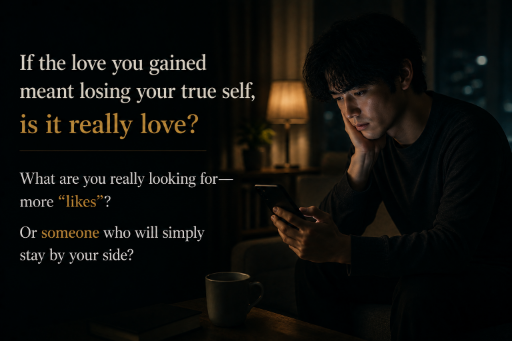
But— If you must lose your “true self” to be loved, Can that really be called love? What is it that you are truly seeking? “Likes”? Or simply someone who will stay by your side?
Author Fuji

Why Do People Become More Hated the More They Want to Be Loved?
History has proven this again and again. The problems we struggle with today are not unique. They are patterns humanity has repeated throughout history. And many of those problems have already been experienced, understood, and solved by those who came before us. “When you understand history, you understand the present.”

Become Part of the Chronicle
If this article inspired you, consider supporting the project.
Become a character in the Chronicle.
Receive your own custom card and stand alongside queens, warriors, inventors, rebels, and legends from history.
Your support helps keep these stories alive and allows me to create more articles, illustrations, and historical cards.
Join the Chronicle and leave your mark on history.

Comment