
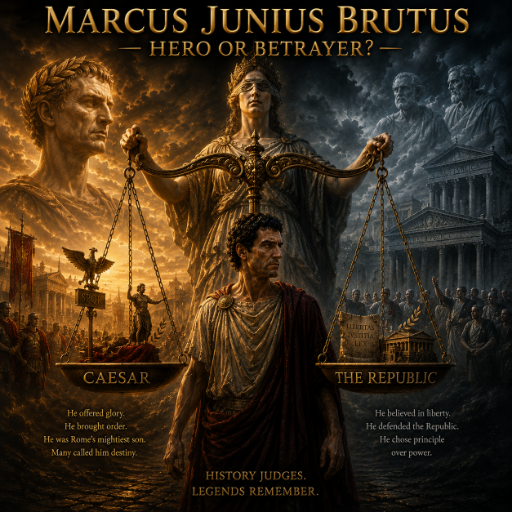
Marcus Junius Brutus ― Hero or Traitor?
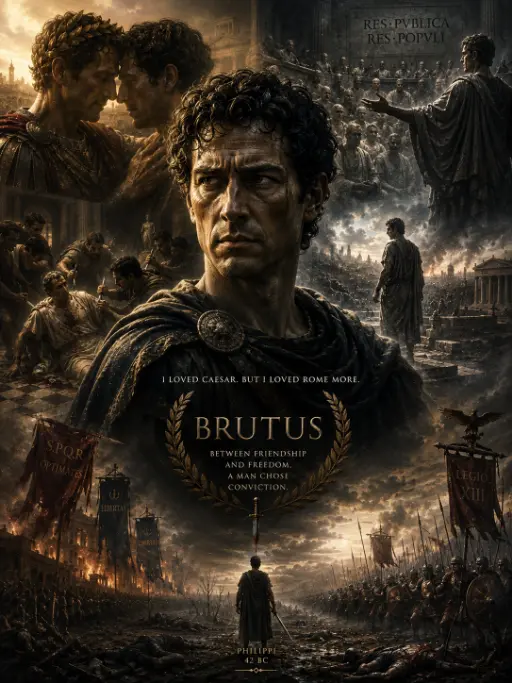
Plologe
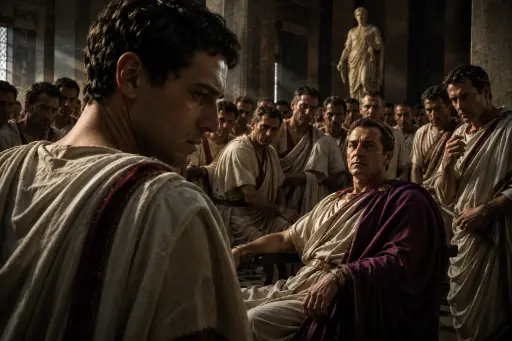
“Et tu, Brute?”
There are few people who have never heard these words.
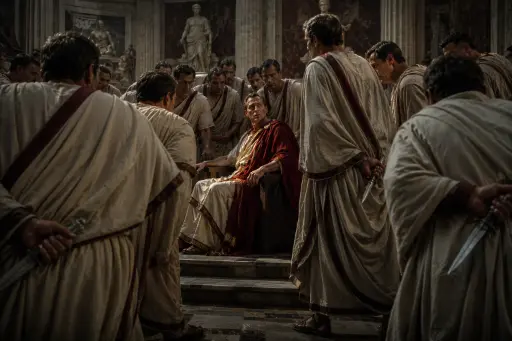
Brutus is known throughout the world as a symbol of “betrayal.”
But was he really a villain who betrayed the man who had shown him mercy?
Or was he a hero who sacrificed even his own friendship in an attempt to protect his homeland, Rome?
When we trace the course of his life, we discover an idealist whose story cannot be reduced to a simple question of good and evil.
Chapter 1: Born into the Prestigious Junia Family
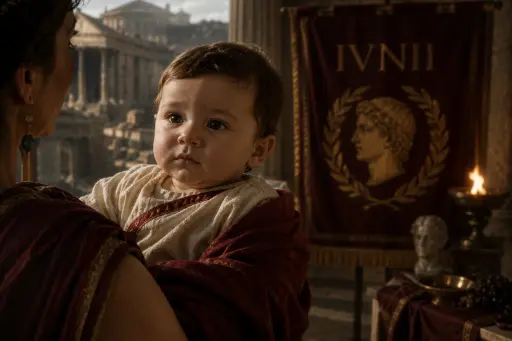
Around 85 BC, a boy was born in ancient Rome.
His name was Marcus Junius Brutus.
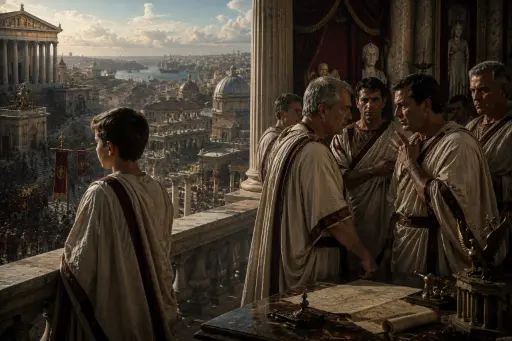
At the time, Rome was growing into the most powerful force in the Mediterranean world.
Yet behind its dazzling prosperity, power struggles among the aristocracy were becoming increasingly fierce, and the Republic was gradually beginning to grow unstable.
Brutus was born into this turbulent age as a member of the prestigious Junia family.
For generations, the Junii had produced prominent politicians and consuls.
And the family was associated with a legend that virtually every Roman would have known.
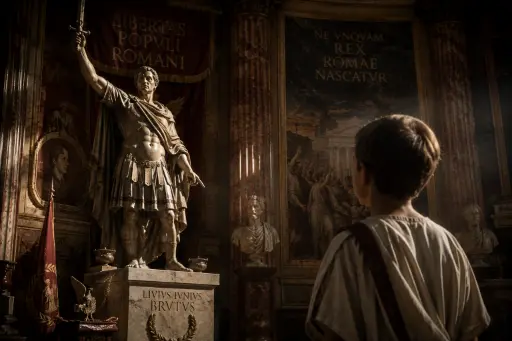
It was the proud belief that they were descendants of Lucius Junius Brutus, the legendary hero who overthrew the Roman monarchy and helped establish the Republic.
It was a family that had driven out the kings and upheld the ideal that Rome should never again have a king.
That tradition would later have a profound influence on the life of the boy born into this family.
But Brutus’s childhood was far from fortunate.
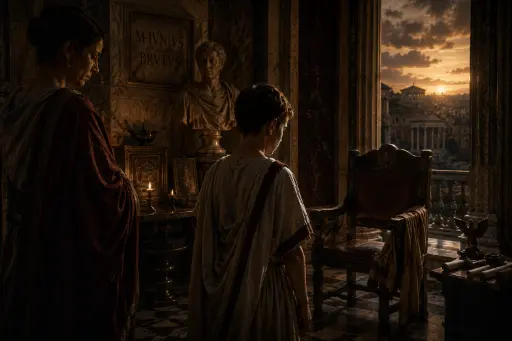
While Brutus was still a young child, his father, Marcus Junius Brutus the Elder, became caught up in a political conflict and was executed for taking part in a rebellion.
Having grown up with almost no memory of his father’s warmth, Brutus knew him not as someone from his own memories, but as a man who lived only in the stories told by others.
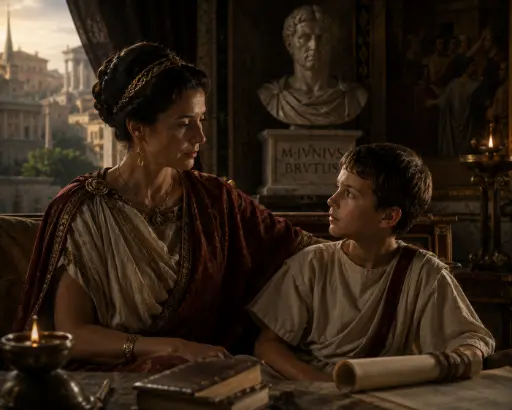
The person who raised him was his mother, Servilia.
Servilia was a woman of noble birth, renowned for both her beauty and intelligence.
She had deep connections within Roman political circles and was highly respected by many for her intelligence and insight.
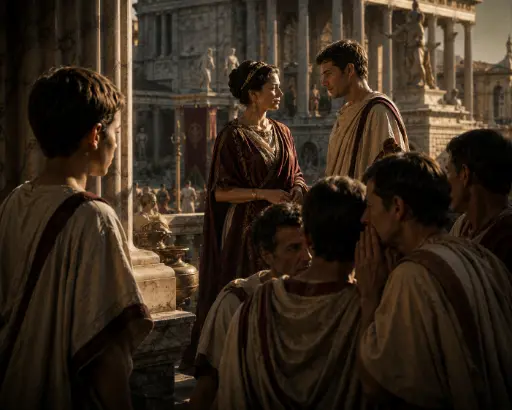
Later, she became closely involved with one of the most famous figures in Roman history, Julius Caesar.
As a result, a rumor began to circulate in ancient Rome:
“Could Brutus actually have been Caesar’s biological son?”
However, there is no reliable evidence to support this theory.
When Brutus was born, Caesar was still only in his mid-teens, and today the idea is generally regarded as one of the many speculations and legends that arose in later generations.
Even so, the fact that this rumor endured for so long may itself reveal just how strongly people perceived the extraordinary relationship that Brutus and Caesar would later come to share.
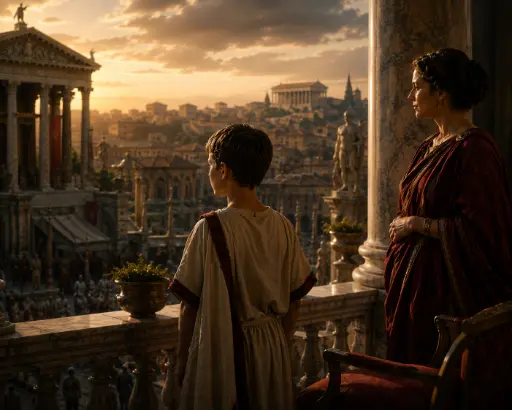
The young Brutus knew nothing yet of battlefields or political struggles.
He was simply a quiet boy born into a distinguished family, growing up under his mother’s love after losing his father.
No one could have known then that this boy would one day shake the fate of the Roman Republic and become a figure remembered for more than two thousand years as both a “hero” and a “traitor.”
Chapter 2: Cato the Younger — The Man Who Shaped Brutus
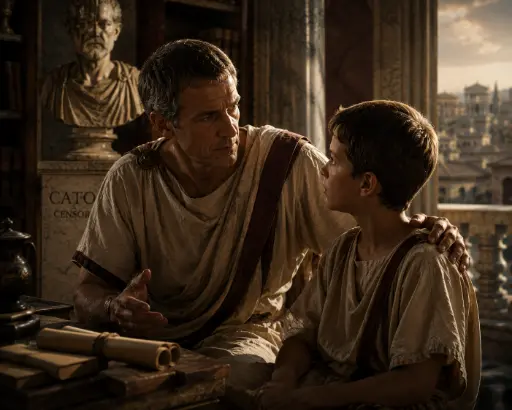
For Brutus, who had lost his father at an early age, there was one man who became a guiding figure in his life.
That man was Cato the Younger (Marcus Porcius Cato), the half-brother of his mother, Servilia, and a statesman often regarded as one of the last great defenders of the Roman Republic.
Later historians would remember him as “a man more honest than anyone, and more unwilling than anyone to compromise.”
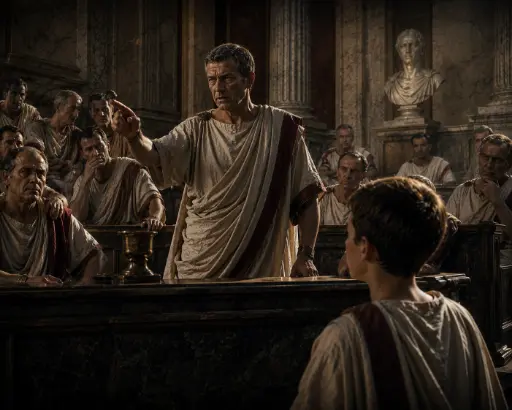
In Rome at the time, it was not uncommon for politicians to use their positions for bribes and personal gain.
Breaking promises to gain power and using money to influence others were hardly unusual.
But Cato the Younger was different.
He upheld the law, placed the interests of the state above his own desires, and continued to choose the path he believed was right, even when doing so worked against his own interests.
His uncompromising integrity sometimes earned him criticism for being inflexible, yet even his enemies respected his honesty.
Growing up under the influence of such an uncle, Brutus was introduced from an early age to a particular philosophy.
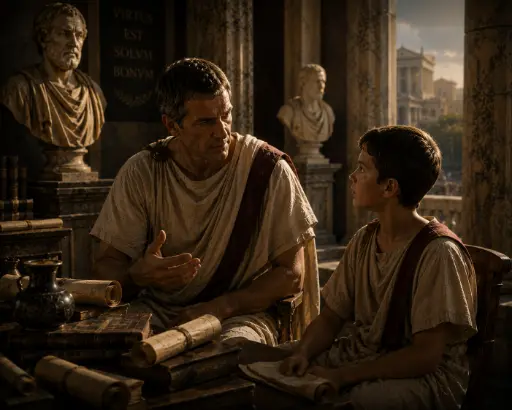
That philosophy was Stoicism.
Stoicism originated in ancient Greece and later gained many followers among intellectuals in Rome.
At the heart of its teachings was the belief that “happiness does not come from satisfying one’s desires, but from fulfilling one’s duties and living according to reason.”
Wealth and fame do not last forever.
Power and status, too, will one day be lost.
But no matter the circumstances, no one can take away a person’s ability to act rightly and remain true to their convictions.
Stoicism taught that this was among the most important values a human being could possess.
These teachings became deeply engraved in Brutus’s heart.
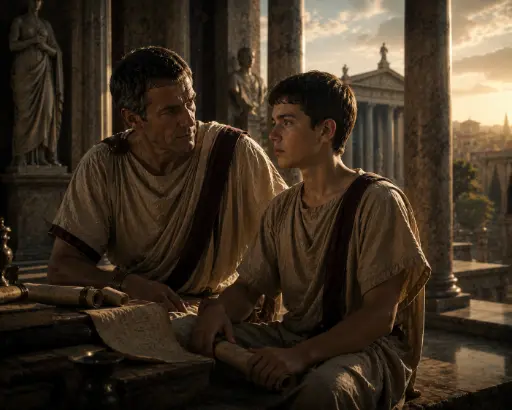
He learned that true strength did not mean forcing others to submit, but overcoming his own desires and fears.
A politician was not someone who wielded power, but someone who served the state.
Honor was not something bestowed by others, but something earned through one’s own actions.
And a person should make judgments based not on emotion, but on reason.
These ideas gradually shaped Brutus’s character as he grew into a young man.
There was one other thing that Cato the Younger valued above all else.
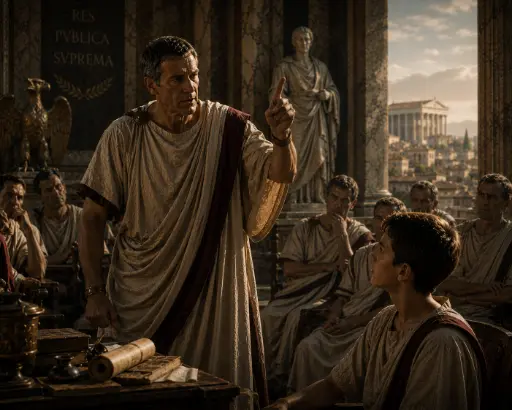
It was his unwavering loyalty to the Republic.
Nearly five hundred years earlier, Rome had overthrown its monarchy and established a republic based on the principle that the state should be governed by citizens under the rule of law, rather than by a single king.
Cato the Younger believed that this Republic was the pride of Rome and something that must never be lost.
That was why he feared the concentration of power in the hands of a single individual above all else.
No matter how exceptional a person might be, if one individual were given absolute power, the nation would eventually lose its freedom.
Whether that person was a hero or beloved by the people, this principle must never be compromised.
That was Cato the Younger’s conviction.
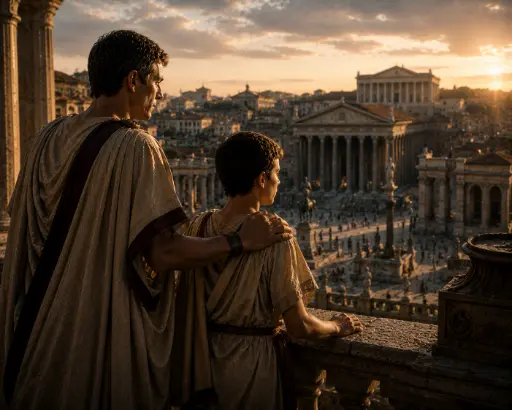
The young Brutus grew up hearing these teachings day after day.
He knew nothing yet of the world of politics.
He knew nothing of the battlefield.
Nor could he have imagined that one day he would stand at the very center of history.
To uphold justice.
To fulfill one’s duty.
To preserve one’s honor.
And above all, to believe that no matter how great a person might be, one must never submit to power that threatens freedom.
These values, engraved in his heart during his childhood, would one day become his strongest guide when the time came to make the most difficult decision of his life.
Chapter 3: The Young Scholar Who Came of Age
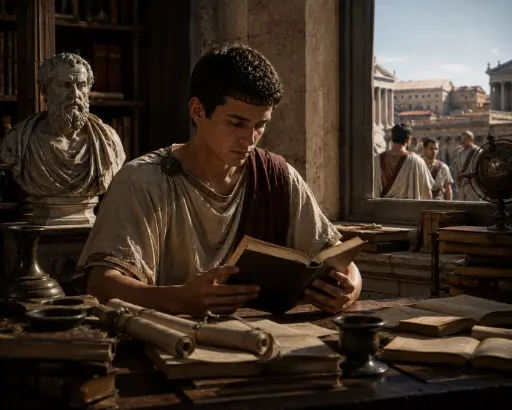
As Brutus grew into a young man, he began to follow a path somewhat different from that of many other aristocrats of his generation.
In Rome at the time, young men from distinguished families commonly sought fame by winning glory in war.
Proving their courage on the battlefield and returning in triumph to the cheers of the Roman people represented the kind of success many young men dreamed of.
But Brutus was drawn not to the sword, but to books.
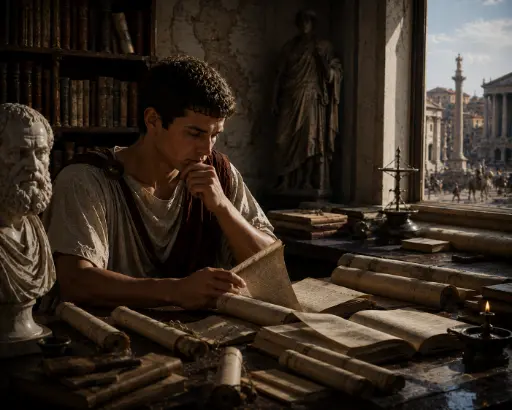
He continued to deepen his study of Stoic philosophy, which he had been exposed to since childhood, and immersed himself in the writings of Greek philosophers.
“What do people live for?”
“What is the purpose of the state?”
“Who decides what justice is?”
For Brutus, spending time contemplating such questions was more valuable than anything else.
To accumulate knowledge, sharpen his reason, and judge matters through logic rather than emotion.
Brutus grew into a young man who believed that it was not military force, but intellect that truly sustained the state.
Before long, his abilities would also begin to reveal themselves in the practical world of public affairs.
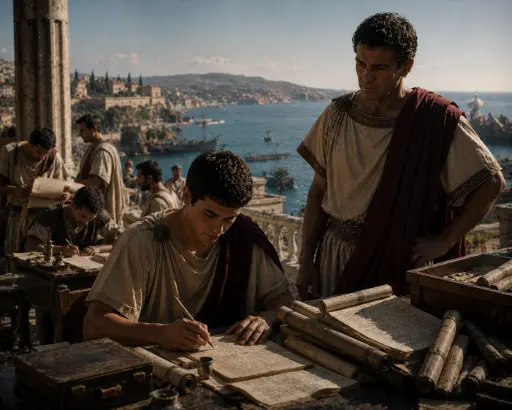
Around 58 BC, Brutus’s uncle, Cato the Younger, was sent from Rome to the island of Cyprus.
Cyprus was a wealthy island, but Cato had been entrusted with the difficult task of reorganizing its administration and properly managing its assets.
Brutus accompanied him on this mission, gaining firsthand experience in the practical work of government administration.
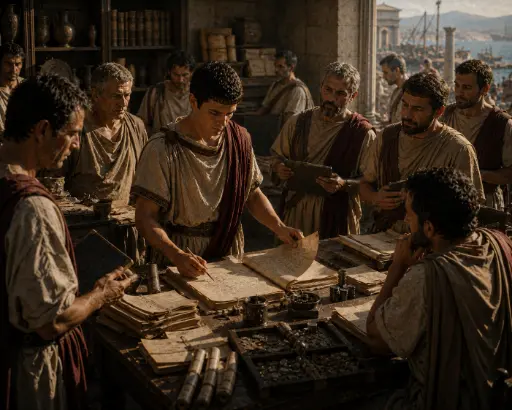
Investigating property, managing assets, organizing records, and reporting back to Rome.
None of these tasks were glamorous, but the precision and care with which Brutus carried out each one left a strong impression on those around him.
He was not a bold and charismatic general.
Nor was he an orator who could stir crowds into a frenzy.
But his commitment to carrying out every responsibility entrusted to him with honesty and diligence gradually earned him a reputation as “a man who could be trusted.”
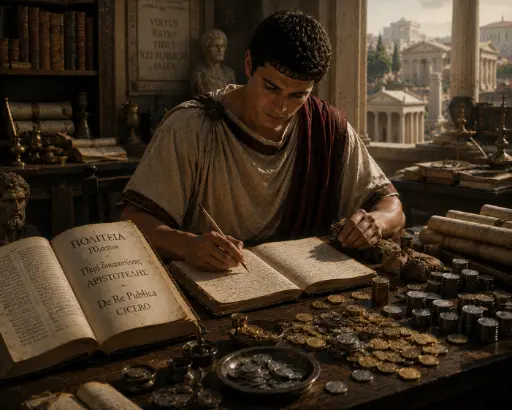
At the same time, Brutus was also involved in finance.
It may seem surprising today, but in ancient Rome, it was not uncommon for aristocrats to lend money and earn interest from it.
Brutus, too, lent money to many people.
Historical records even show that some of his loans were made at extremely high interest rates.
This reveals a more pragmatic side of Brutus—one that cannot be explained simply by portraying him as a “pure and incorruptible idealist.”
He was not a dreamer who lived by ideals alone.
He was also a practical man who understood the realities of politics and economics and tried to do what he believed was best within them.
Even so, it was not his wealth that earned Brutus the respect of so many people.
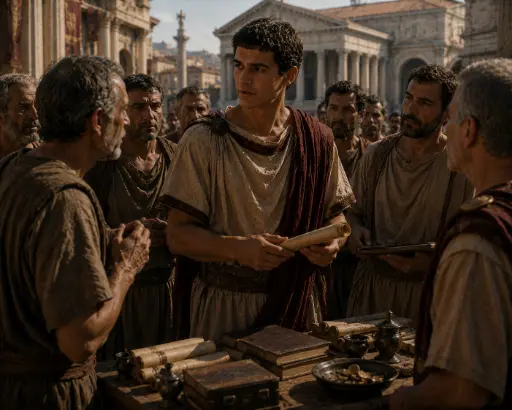
He kept his promises.
He never neglected his duties.
Nor did he allow emotion alone to guide his judgment.
His willingness to place responsibility above personal interest and the public good above his own desires earned him the trust of many of his contemporaries.
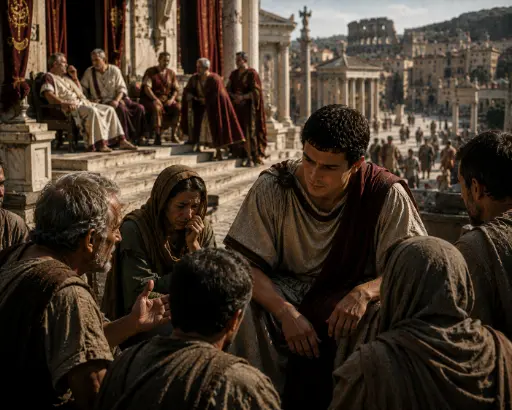
In this way, Brutus became known in Rome not as “a courageous warrior,” but as “an honorable intellectual.”
At this point in his life, he had no ambition to change the course of history.
What he sought was not power, but the opportunity to serve the state through reason and intellect.
But these peaceful days would not last for long.
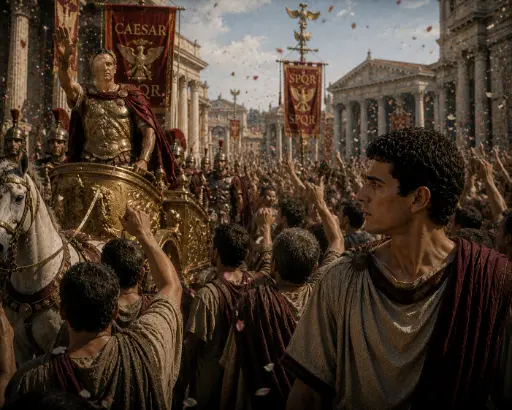
A hero had emerged in Rome.
And that hero was rapidly gaining power.
A general who had won victory after victory in the Gallic Wars and had come to be regarded as “the most powerful man in Rome”—Julius Caesar.
Before long, his rise would plunge Rome into a great civil war that shook the Republic itself, and Brutus, too, would be swept into its turbulent current.
Chapter 4: The Roman Civil War
49 BC.
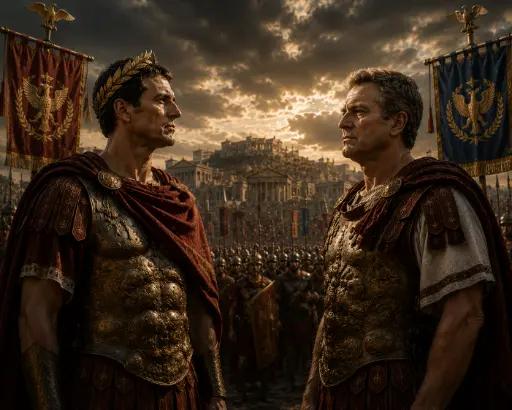
The Roman Republic was facing one of the greatest crises in its long history.
At the center of the conflict stood two great heroes.
One was Julius Caesar, who had won victory after victory in the Gallic Wars and was hailed as “Rome’s greatest general.”
The other was Gnaeus Pompeius Magnus—Pompey the Great—who had achieved brilliant victories in his eastern campaigns and earned the title “Pompey the Great.”
The two men had once formed a political alliance and stood together as pillars of Rome.
But that balance of power did not last.
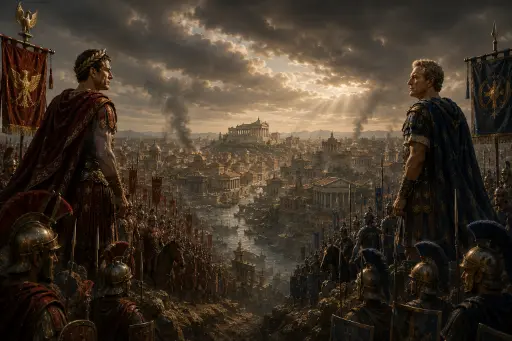
Caesar had gained enormous military power and widespread popular support through his campaigns in Gaul.
The Senate, meanwhile, began to fear that his growing power might threaten the Republic itself.
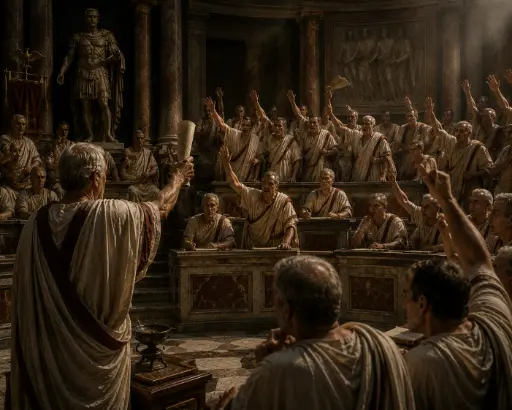
“Rome must never again be ruled by a single man.”
“If one man gains absolute power, the Republic will eventually lose its freedom.”
Many members of the Senate sided with Pompey and ordered Caesar to disband his army.
But Caesar refused to obey.
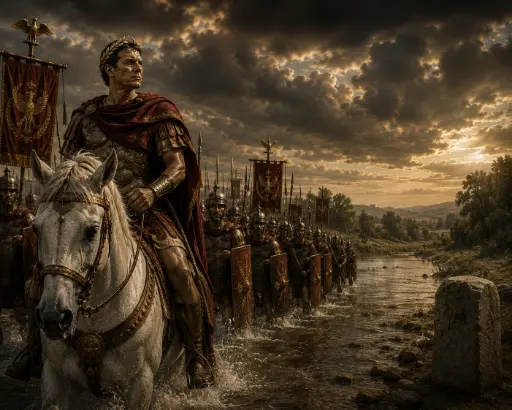
In 49 BC, Caesar led his army across the Rubicon River.
“The die is cast.”
With those famous words, the Roman Republic plunged into civil war.
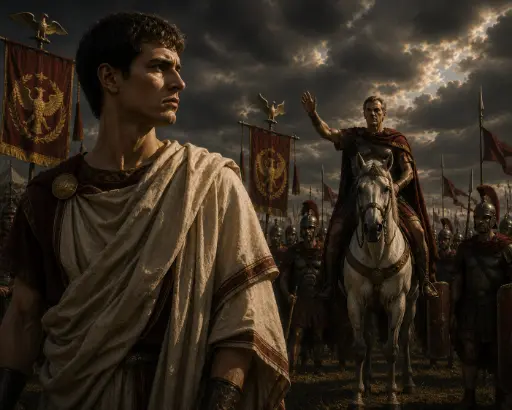
In this conflict, Brutus chose to side with Pompey—the enemy of Caesar.
Later generations would often wonder:
“Why did Brutus, who would later become close to Caesar, initially choose to fight against him?”
The reason had little to do with personal affection or hostility.
For Brutus, what mattered most was protecting the Republic—the ideal his uncle, Cato the Younger, had taught him to cherish since childhood.
At the time, many Republican senators believed that Pompey represented the last line of defense for the Republic.
Brutus chose to follow that same conviction.
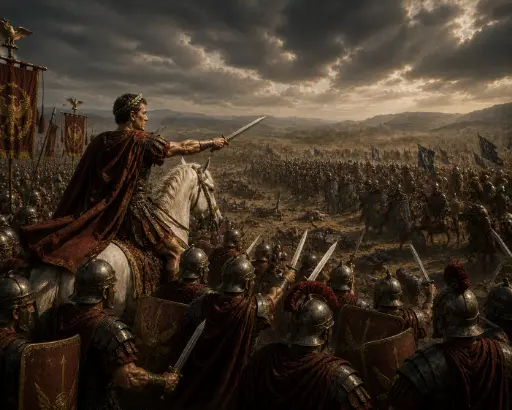
Then, in 48 BC, on the plains of Pharsalus in central Greece, the battle that would decide the fate of the civil war began.
Pompey’s forces held the advantage in numbers.
The experienced generals of the senatorial faction had little doubt that victory would be theirs.
But Caesar skillfully commanded his smaller army and achieved a stunning victory against all expectations.
It was a decisive battle that would change the course of Roman history.
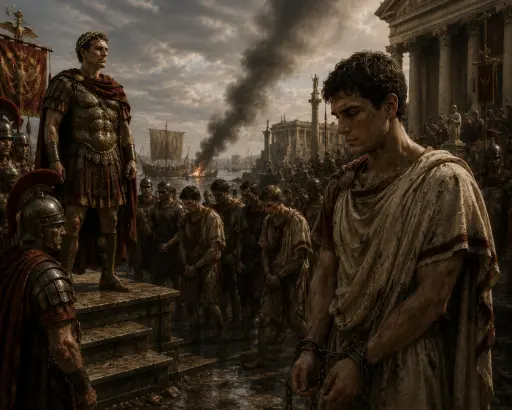
Pompey fled after his defeat and was later killed in Egypt.
The Republican forces collapsed, and many of their soldiers and officers were captured.
Brutus, too, was among those who had fought on the losing side.
Under ordinary circumstances, his fate would have been sealed.
In Rome, it was not uncommon for those who had fought on the opposing side in a civil war to be executed.
And Brutus was, after all, a young aristocrat who had remained with the enemy forces until the end.
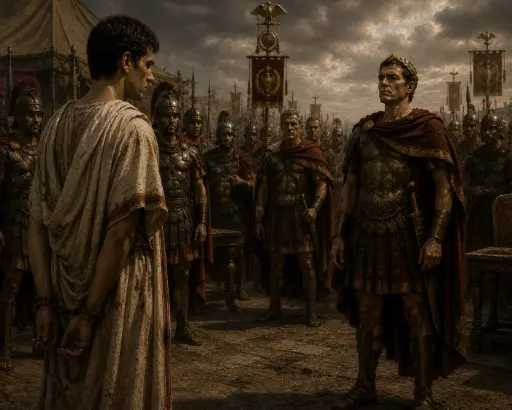
After the defeat, Brutus quietly stood before Caesar.
He was prepared to die.
The soldiers around them watched in silence, waiting to see what would happen.
But Caesar made a decision that no one had expected.
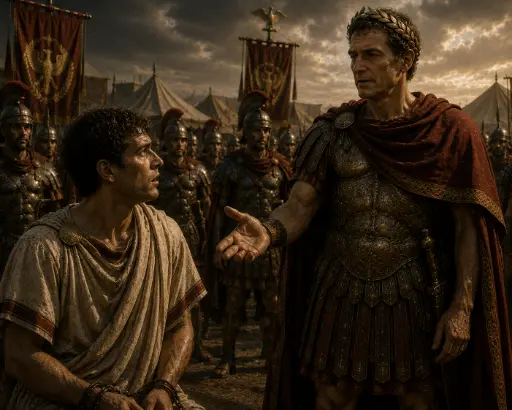
“Brutus, let us build a stronger Rome together.”
Brutus looked up in surprise.
Caesar spoke to him with a calm expression.
“Brutus.”
“I know that you fought against me for the sake of your country.”
“You have no need to regret having fought as my enemy.”
“You risked your life not for yourself, but for your country.”
“And so did I.”
“I, too, fought for the future of Rome.”
“We stood on different sides, but the future we believed in was the same.”
With those words, Caesar gently placed a hand on Brutus’s shoulder.
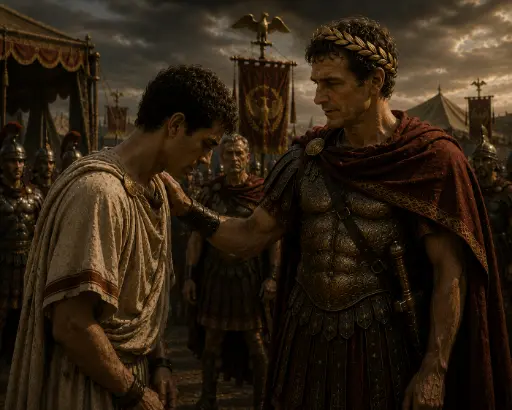
“From this day forward, let us build the future of Rome together.”
At those words, Brutus bowed his head deeply.
He would never forget that day for the rest of his life.
Far from ordering Brutus’s execution, Caesar had personally chosen to summon him to his side.
Why did Caesar spare a young man who had fought against him as an enemy?
Historians have suggested several possible reasons.
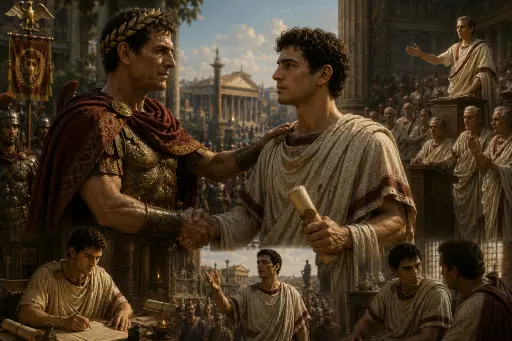
One reason was that Brutus’s mother, Servilia, had maintained a close relationship with Caesar for many years.
Another was that Caesar himself held Brutus’s integrity and abilities in high regard.
He understood that Brutus had sided with Pompey not out of personal ambition, but because he had followed his own convictions.
Perhaps that was why Caesar believed that such loyalty deserved respect—even when it had been directed toward his enemy.
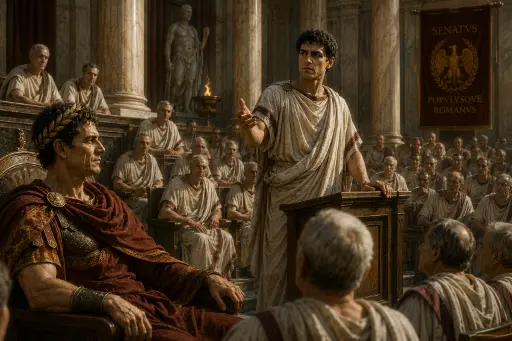
Brutus, now on the losing side, received more than just a pardon.
Caesar later brought him back into political life and entrusted him with a succession of important positions.
The young man who had once been his enemy began once again to walk the path of a statesman entrusted with Rome’s future.
This event profoundly changed the course of Brutus’s life.
At the same time, it would also come to hold enormous significance for Caesar’s own fate.
At that moment, neither man could have known what lay ahead.
Only a few years later, their destinies would cross once more—and the outcome would change the history of the Roman Republic forever.
Chapter 5: Caesar — The Man Who Became Brutus’s Benefactor
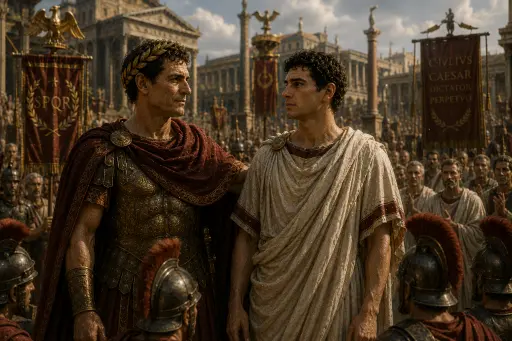
After the Battle of Pharsalus, effective control of the Roman Republic passed firmly into the hands of Julius Caesar.
Many people expected that an era of revenge by the victor was about to begin.
But Caesar chose a different path.
Rather than destroying his enemies completely, he chose to forgive them and welcome them into his ranks.
Among those who received his particular trust was Brutus.
The young man who had fought against Caesar in the civil war was not only spared after his defeat, but was also given the opportunity to return to political life.
And Caesar’s generosity did not end there.
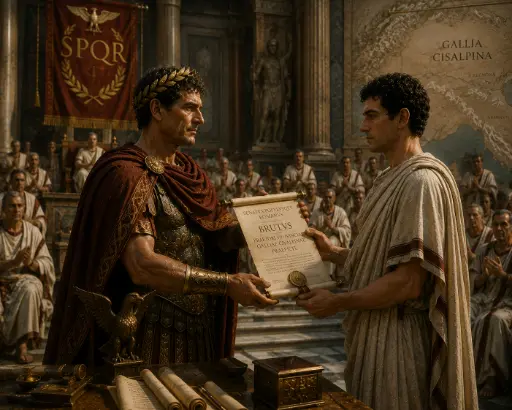
In 46 BC, Caesar appointed Brutus governor of the province of Cisalpine Gaul—the region of Gaul south of the Alps.
A provincial governorship was far more than an honorary position.
It involved collecting taxes, administering justice, maintaining public order, overseeing military forces, and taking responsibility for the governance of an entire region.
It was a position that required both ability and trust.
Caesar must have believed that Brutus was capable of carrying such a responsibility.
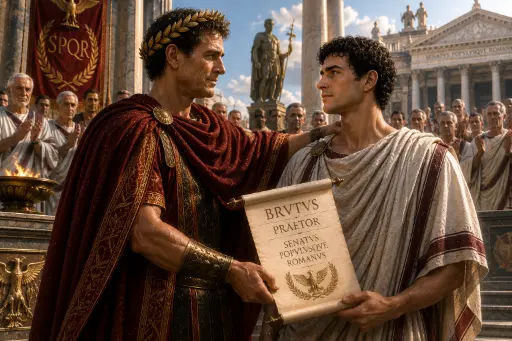
The following year, in 44 BC, Brutus was appointed praetor.
The praetorship was one of the highest offices in Rome, second only to the consulship. Praetors presided over courts and played an important role in upholding the laws of the state.
In the Roman Republic, becoming a praetor was also a major step toward reaching the highest levels of political power.
To entrust such important positions, one after another, to a young man who had once fought against him in a civil war was extraordinary.
Caesar clearly placed deep trust not only in Brutus’s abilities, but also in his integrity and character.
And Brutus, in turn, lived up to those expectations.
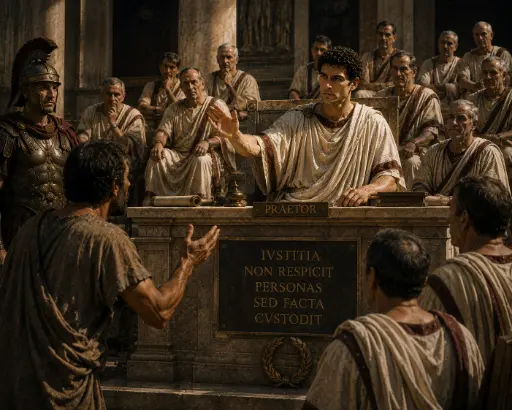
As governor, Brutus administered his province steadily and responsibly, and as praetor, he carried out his duties with the same seriousness.
He did not abuse his authority for personal gain, nor did he accept bribes.
His conduct earned him considerable respect among both Roman citizens and members of the Senate.
One day, after a meeting of the Senate had come to an end, Caesar called Brutus aside.
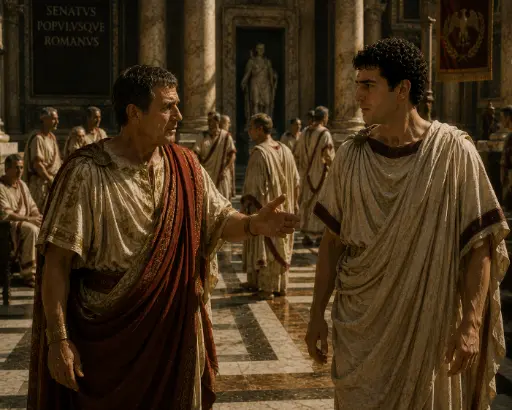
“Let’s walk.”
The two men walked side by side through the Roman Forum.
“How are things in the province?”
“There have been no problems.”
At Brutus’s reply, Caesar smiled quietly.
“I can entrust such responsibilities to you without worry.”
“I need men like you.”
“I am glad that I met you on that battlefield that day.”
Those words were more than an acknowledgment of Brutus as a politician.
“I trust you as a man.“
That was what Brutus felt Caesar was telling him.
Brutus felt warmth rise in his chest.
“Thank you.”
It was all he could manage to say.
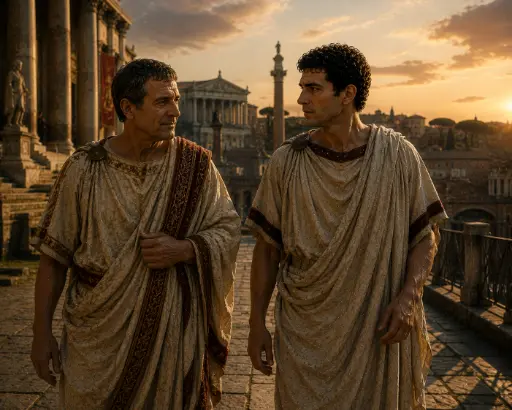
At sunset that day, the two continued walking as they spoke about the future of the Republic.
To anyone watching them, they appeared to be two men who deeply trusted one another.
Before long, they began to appear together more and more often.
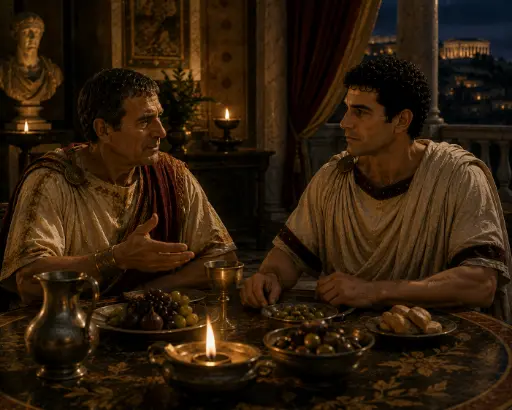
In the Senate, they discussed the future of the state and exchanged views on politics, and it is said that they sometimes even shared meals together.
Though nearly twenty years separated them in age, Caesar treated Brutus as a promising young statesman and listened to his opinions.
Brutus, in turn, recognized Caesar’s extraordinary abilities.
His military genius, proven through countless victories in the Gallic Wars.
His political skill in restoring order to a state torn by turmoil.
And his remarkable capacity to show mercy even to those who had fought against him.
Brutus understood that Caesar was one of the most extraordinary men Rome had ever produced.
And for that reason, he was grateful to him.
Caesar had forgiven Brutus despite his having fought on the opposing side in the civil war and had given him another opportunity to serve the state.
Had Caesar taken his life at Pharsalus that day, Brutus’s story would have ended there.
There was no doubt that Brutus owed the life he now lived to Caesar.
But the human heart is never governed by a single emotion.
The greater his gratitude toward Caesar became, the more another feeling quietly began to grow within Brutus’s heart.
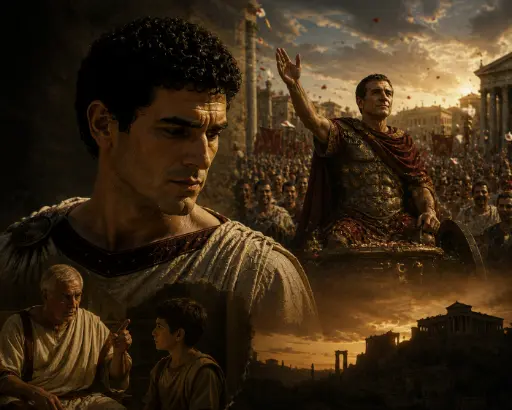
It was the conviction that had been instilled in him since childhood by his uncle, Cato the Younger:
the duty to protect the Republic.
Caesar was a great man.
He was sincere, generous, and loved by many.
And yet, what if the power held by this one man became too great?
What if, one day, that power began to threaten the freedom of Rome?
No one had yet spoken that question aloud.
But fate was slowly—and inexorably—leading the two men toward a future neither of them would be able to escape.
Chapter 6: Rome Begins to Fear a King
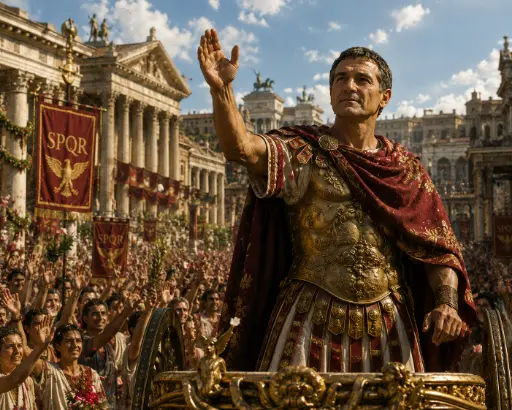
44 BC.
The civil war was over, and peace had finally returned to Rome after years of conflict.
Life returned to the streets, the markets bustled once again, and the people slowly began to rediscover an everyday existence free from war.
At the center of this new era stood the man everyone recognized as a hero—Julius Caesar.
Determined to rebuild a state that had been torn apart by years of turmoil, Caesar began introducing a series of reforms.
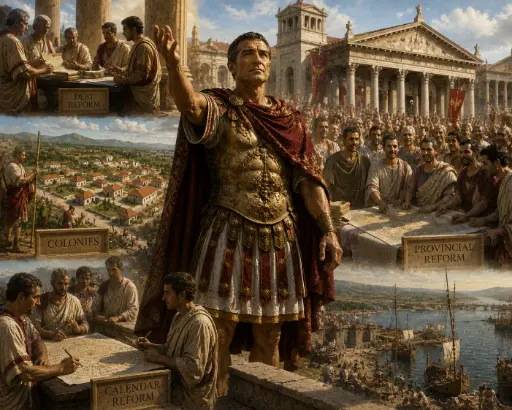
He addressed Rome’s debt problems.
He established and reorganized colonies.
He reformed the administration of the provinces.
He introduced a new calendar.
His policies, which looked beyond the citizens of Rome itself and extended attention to people throughout the provinces, won him widespread support.
For many citizens, Caesar—the man who had brought years of turmoil to an end—was “the man who saved Rome.”
Yet behind these remarkable achievements, a quiet sense of unease was beginning to spread through the Senate.
Caesar’s power had simply become too great.
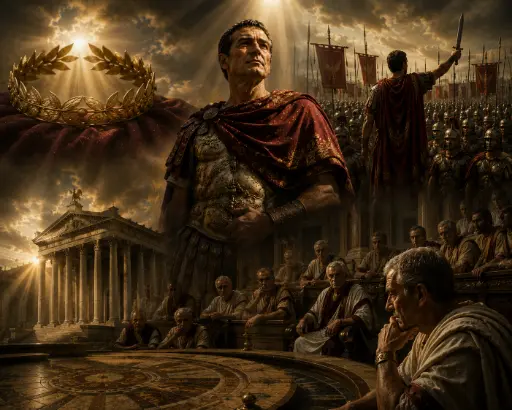
Consul.
Pontifex Maximus.
Tribunician powers for life.
Supreme command of the military.
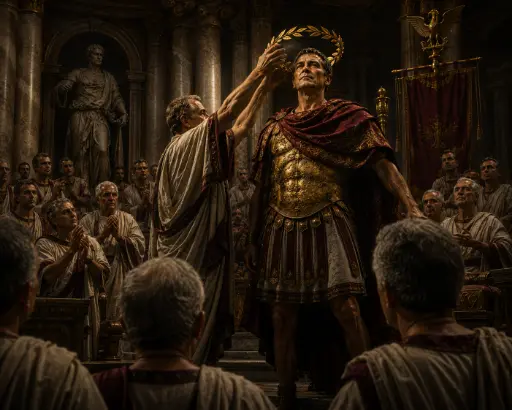
And in 44 BC, he was finally appointed “Dictator for Life” (Dictator Perpetuo).
Originally, the dictatorship was an extraordinary office intended to be used only in times of national emergency.
Its term was traditionally limited to six months.
Once the crisis had passed, the dictator was expected to surrender his extraordinary powers.
It was one of Rome’s safeguards against allowing power to remain concentrated in the hands of a single individual.
But “Dictator for Life” was something entirely different.
There was no fixed term.
It meant that Caesar could retain supreme authority for the rest of his life.
When many senators heard the news, an old memory—one Rome had tried for centuries to leave behind—stirred once again in their minds.
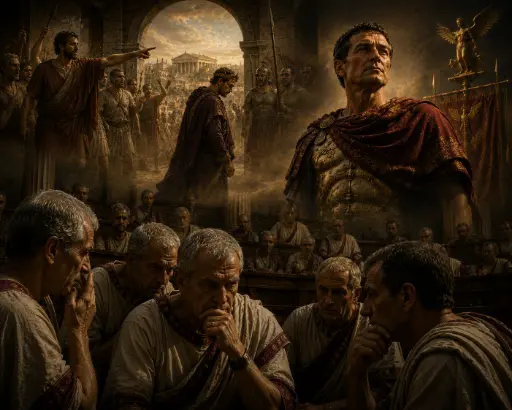
“King.”
For the Romans, this word carried a special meaning.
Nearly five hundred years earlier, the people of Rome had expelled their last king and built a Republic upon a solemn vow:
“Rome shall never have a king again.”
It was more than just a political system.
To the Romans, the Republic represented freedom itself.
And so, people began to wonder:
“Does Caesar truly intend to preserve the Republic?”
“Or is he trying to make himself king?”
Those suspicions only continued to grow.
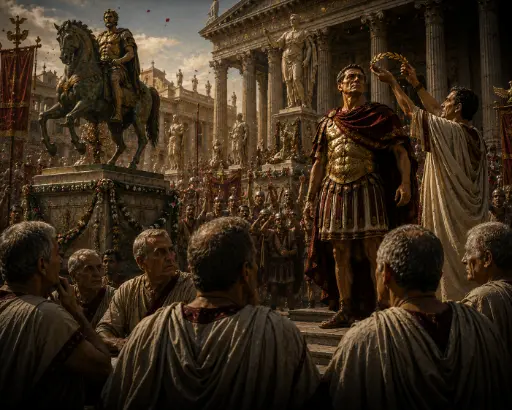
Caesar’s statues were adorned with decorations reminiscent of royalty, and images of him appeared in temples.
During a public festival, there was even an occasion when a crown was offered to him.
Caesar refused to accept it.
Yet for those who witnessed the scene, the suspicion that had already taken root in their minds did not simply disappear.
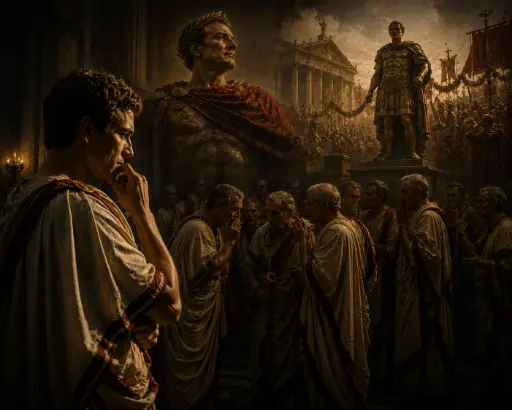
“What if he truly intends to become king…?”
Whispers like these grew more frequent in the Senate with each passing day.
And eventually, those fears reached Brutus as well.
He knew Caesar better than most.
Caesar was generous, an exceptional statesman, and a benefactor who had saved and forgiven many people.
None of that was untrue.
And precisely because Brutus knew this, he could not bring himself to doubt Caesar so easily.
Yet at the same time, the teachings that had been engraved upon his heart since childhood returned to him again and again.
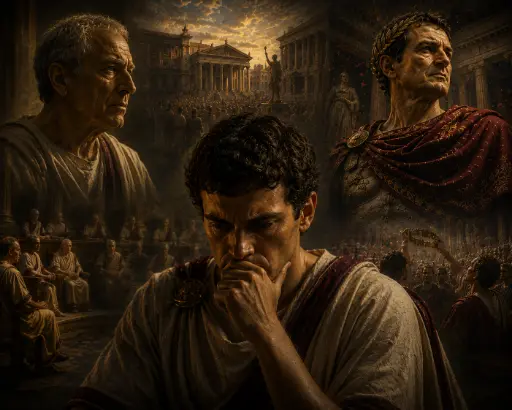
“No matter how exceptional a man may be, power must never be concentrated in the hands of one person.”
“The Republic is a land of freedom protected by law.”
The words of his uncle, Cato the Younger, returned to Brutus as vividly as if he had heard them only yesterday.
Brutus asked himself:
“What is it that I should protect?”
“The debt I owe him?”
“Our friendship?”
“Or the Republic?”
He still could not find an answer.
He continued to respect Caesar.
And he remained deeply grateful to him.
That was precisely why the conflict raging within his heart was deeper—and more painful—than anyone else could have understood.
Then, as though he somehow knew of Brutus’s inner struggle, a man quietly approached him.
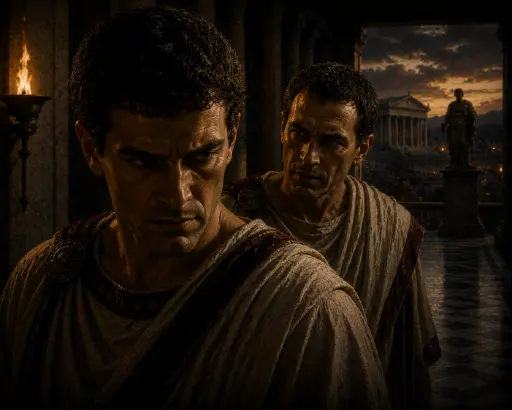
Gaius Cassius Longinus.
He was an accomplished military commander who had fought on Pompey’s side during the civil war.
But there was something Cassius feared even more than defeat on the battlefield.
It was the end of the Roman Republic.
A conspiracy that would change the fate of Rome was quietly—and steadily—beginning to take shape.
Chapter 7: The Assassination Plot
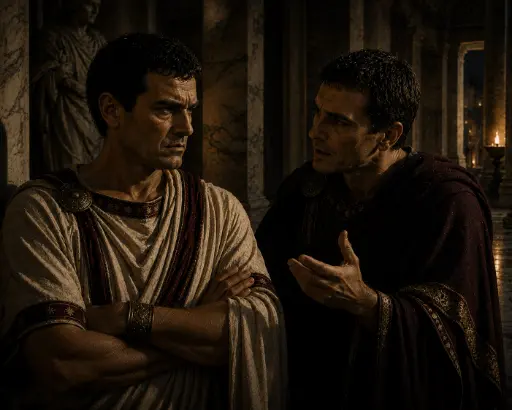
Cassius spoke quietly to Brutus.
“Caesar is indeed a great man.”
“But it is precisely because he is great that he is dangerous.”
“If he continues to hold power for the rest of his life, the Republic will never return to what it once was.”
Brutus shook his head.
“He is my benefactor.”
“He spared my life even though I fought against him.”
“He even gave me the chance to rise again as a statesman.”
Brutus had never forgotten what Caesar had done for him.
But Cassius continued.
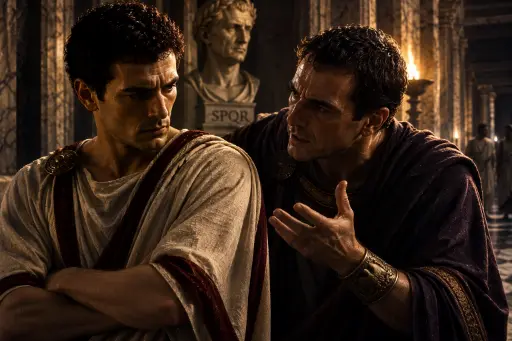
“That is precisely why it has to be you.”
“If I act, people will say that I did it out of personal resentment.”
“But if you stand against him, it will be different.”
“If Brutus takes a stand, everyone will believe that he acted not for personal gain, but to protect the Republic.”
Those words struck deep into Brutus’s heart.
From that day forward, he began asking himself the same questions again and again.
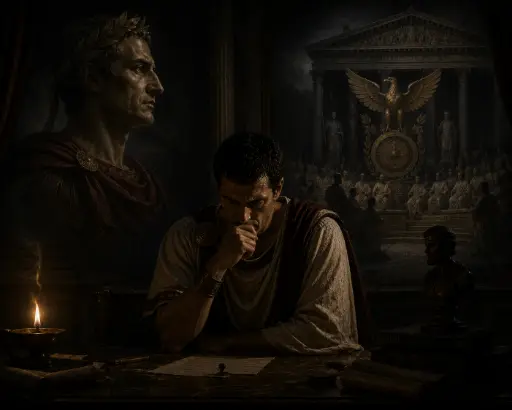
“To whom should I give my loyalty?”
“To the benefactor who saved my life and gave me the position I hold today?”
“Or to the Republic that my ancestors had defended for generations?”
Even as night fell, he could find no answer.
Sitting alone at his desk in the silence of his home, Brutus remembered the words his uncle, Cato the Younger, had taught him when he was a boy.
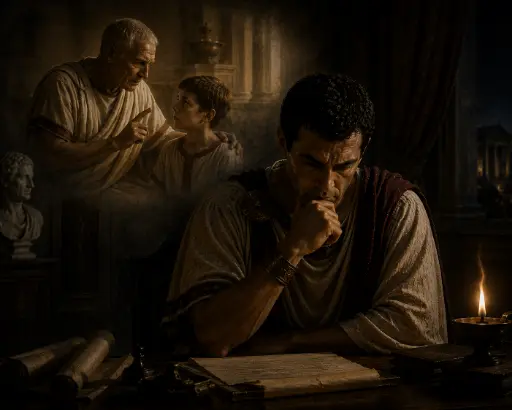
“The law stands above any individual.”
“A nation is sustained not by a single hero, but by the freedom of its citizens.”
Those teachings had shaped his convictions since his youth.
And yet, the image of Caesar would not leave his mind.
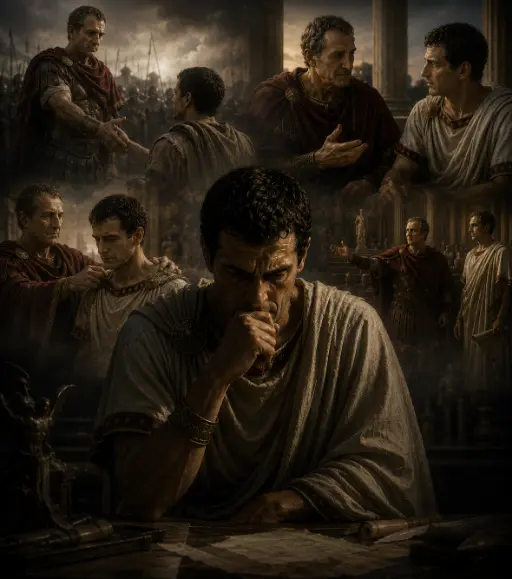
Caesar had forgiven him even though Brutus had fought against him.
He had believed in Brutus’s abilities and entrusted him with important positions.
They had spent countless hours discussing politics together.
All of it had been real.
Caesar was no cruel tyrant.
Nor was he a man who sought power solely for his own selfish desires.
And that was precisely why Brutus suffered.
Had Caesar been a ruthless dictator, there would have been no reason to hesitate.
But the man before him was someone he respected—and someone to whom he was deeply grateful.
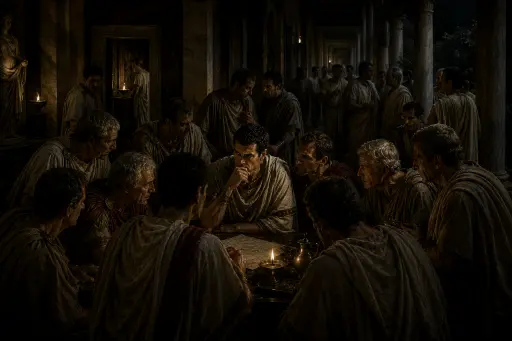
Before long, the Republican senators began meeting in secret.
Their gatherings were held away from prying eyes.
Little by little, their numbers grew, until it is said that more than sixty men had joined the conspiracy.
And they all said the same thing:
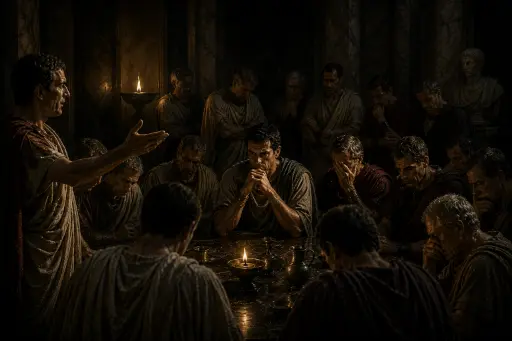
“We must protect the Republic.”
But whenever they spoke of how it was to be done, a heavy silence fell over the room.
There was only one conclusion.
“Caesar must die.”
The moment those words were spoken, many of the men lowered their eyes.
They all understood the enormity of the decision they were making.
Brutus hesitated until the very end.
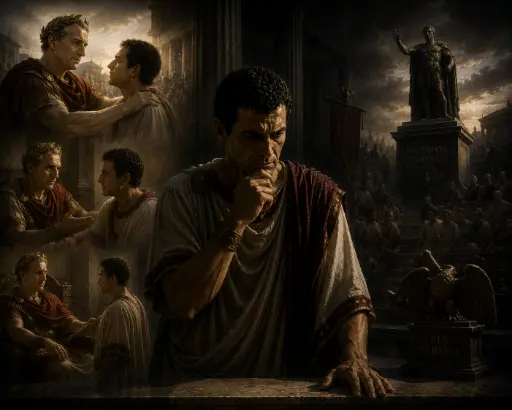
“Is there truly no other way?”
“Could he not be persuaded?”
“Is there no way to convince him to relinquish his power?”
Brutus considered these questions again and again.
But each time, the reality of Caesar’s title—“Dictator for Life”—stood before him.
If power remained concentrated in the hands of one man, the Republic would come to an end.
That conviction grew heavier within him with each passing day.
And at last, Brutus quietly spoke.
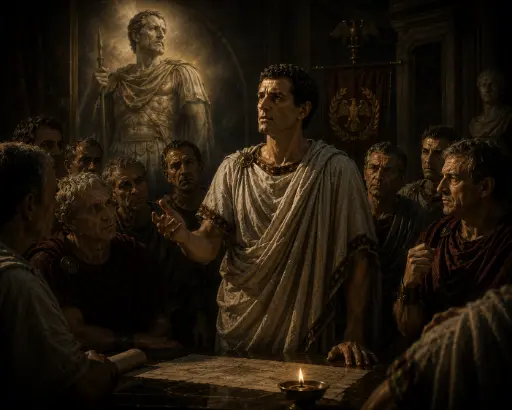
“If this action is not for my own sake, but for the future of the Republic…”
Hearing those words, the conspirators felt a sense of relief.
Their plot now had a man who embodied the ideals of the Republic.
Brutus—the descendant of Lucius Junius Brutus, the legendary hero who had overthrown the Roman monarchy and helped establish the Republic—had joined their cause.
But there was no joy on Brutus’s face.
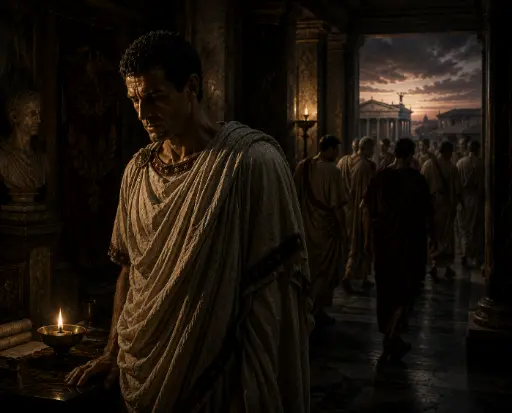
He was neither certain of victory nor driven by a desire for revenge.
He simply understood that, as the price of this one decision, peace would disappear from his life forever.
Friendship or country.
He had finally answered that question.
But whether his answer was truly the right one—
no one yet knew.
The Ides of March.
The fateful day was drawing near.
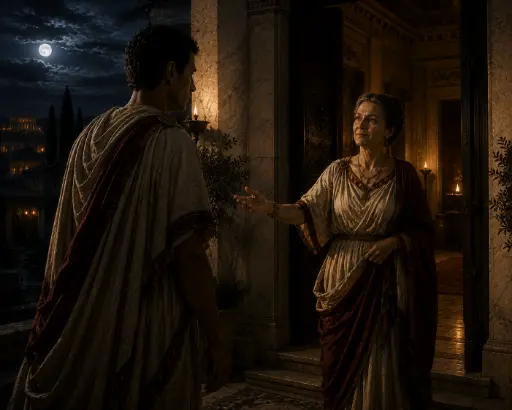
That night, Brutus visited his mother Servilia’s home for the first time in quite some time.
His mother smiled gently, but the moment she saw her son’s expression, she said,
“Something is troubling you, isn’t it?”
Brutus lowered his gaze slightly.
“…Mother. Is Caesar truly a bad man?”
Servilia did not answer immediately.
For she, perhaps more than anyone, knew Caesar for the man he truly was.
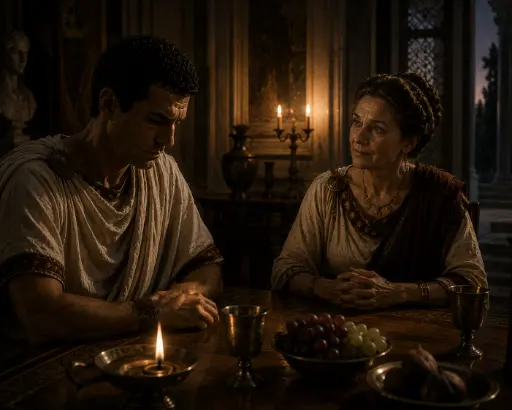
“He is not a bad man.”
“In fact, I have never known anyone as generous as he is.”
A quiet silence passed between them.
“Even if Caesar is a good man, we must never allow one person to hold absolute power as a matter of political principle.”
“Because there is no guarantee that the next ruler will be a good man as well.”
Brutus said nothing.
His gratitude toward the man who had saved him.
His loyalty to the Republic.
For the first time, those two forces began to collide within his heart.
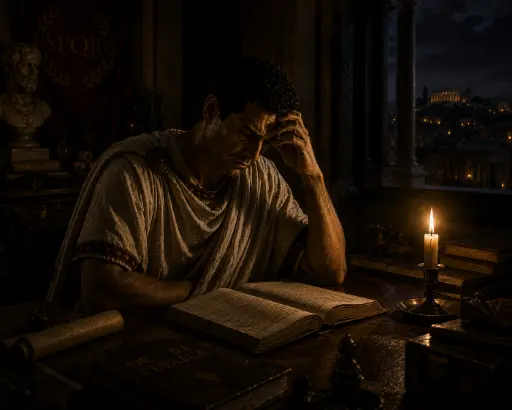
That night,
Brutus could not sleep.
An unfinished book of philosophy lay open on his desk.
But he could not absorb a single word.
Only the candle flame flickered quietly in the darkness.
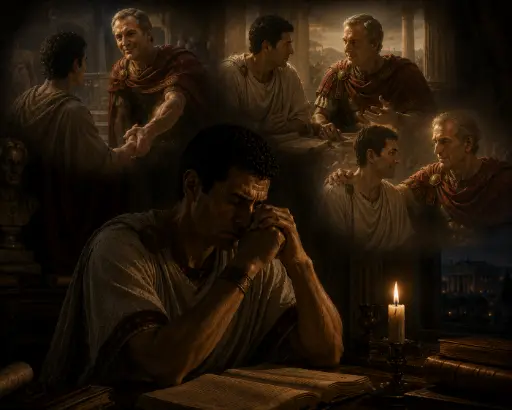
“What is the Republic?”
“To whom should I give my loyalty?”
Whenever he closed his eyes, Caesar’s smile appeared in his mind.
The day Caesar had spared his life.
The days they had spent discussing politics.
The moments when Caesar had encouraged him.
All of it had been real.
And that was precisely what made it so painful.
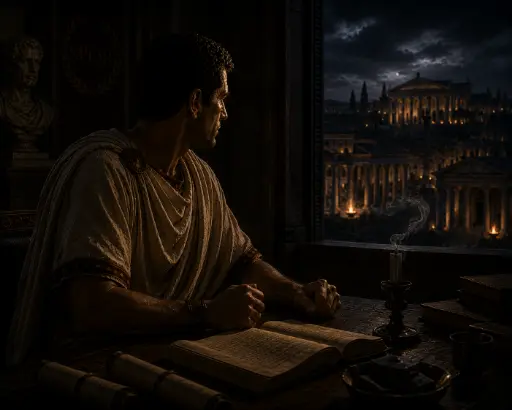
“If it is to protect the Republic…”
Brutus himself had been the most surprised by the words he had spoken that day.
Even when morning came, he still had no answer.
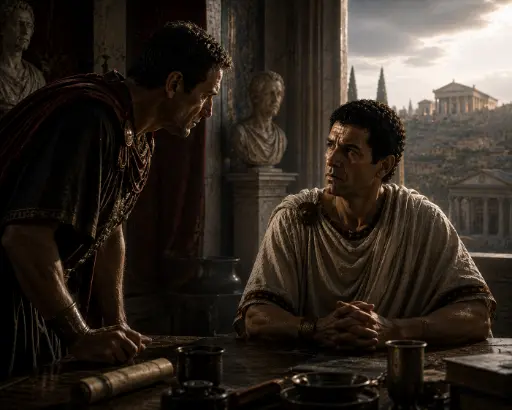
“Are you still hesitating?”
Cassius spoke in a low voice.
“Of course I am.”
Brutus answered quietly.
“He is my benefactor.”
“He saved my life.”
“How could I possibly make the decision to kill such a man so easily?”
Cassius stepped closer.
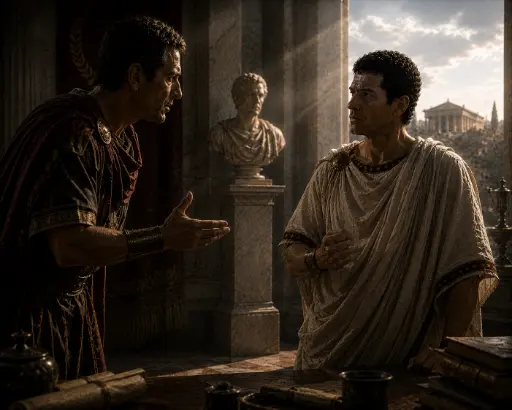
“No one should be allowed to hold too much power.”
“This is for the peace of the Republic.”
Brutus clenched his fist.
“That is our ideal.”
“…But what if our ideal is wrong?”
“Does believing in our ideal give us the right to sacrifice someone for it?”
“Can a peace that can only be achieved by killing someone truly be called peace?”
The room fell silent.
No one answered.
Even Cassius could offer no response to those questions.
After a long silence, Brutus slowly raised his head.
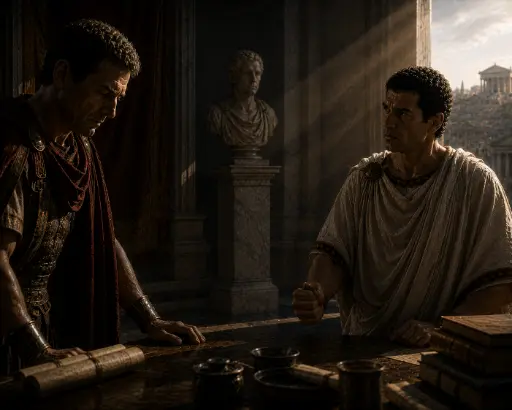
“Even so, I am a man who serves this country.”
“My loyalty is not to any one man, but to the Republic.”
“Whatever the cost, the Republic must be preserved.”
“I will fight to defend the Republic.”
With those words, the atmosphere in the room changed.
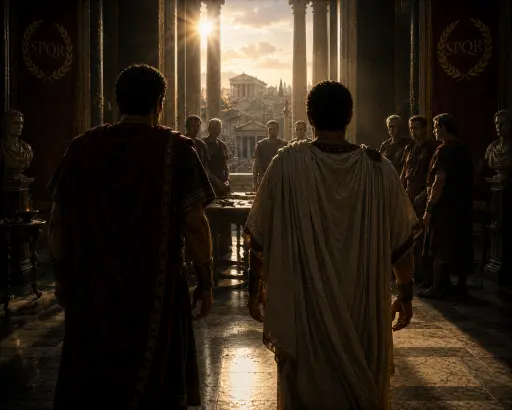
At that moment, the conspiracy was set in motion.
Chapter 8: The Fateful Ides of March
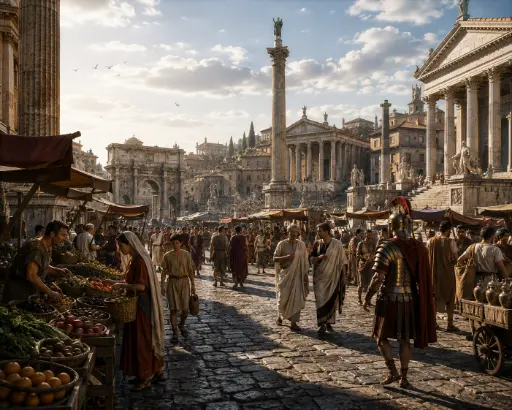
March 15, 44 BC.
The day that would forever be remembered in history as the Ides of March had arrived.
That morning, Rome seemed no different than on any other day.
Merchants filled the marketplaces with their voices, citizens went about their daily lives, and no one imagined that this ordinary day would forever change the course of history.
Yet beneath that calm surface, a single plan had already begun to unfold.
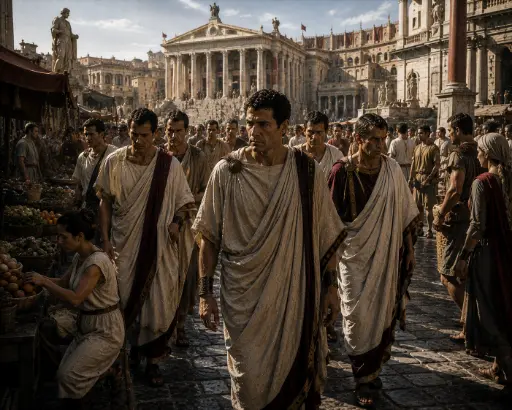
The senators who had joined the conspiracy made their way to the Senate chamber, which had been convened at the Theatre of Pompey.
Each carried within him a mixture of determination and fear.
Among them was Brutus.
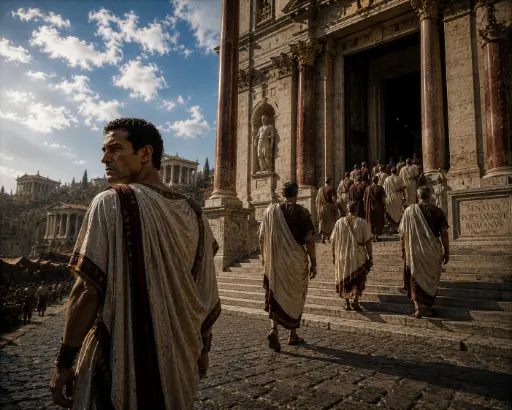
No emotion could be read from Brutus’s face.
He had hesitated time and again.
He had wrestled with his conscience over and over before finally making his decision.
Only he knew the true weight of the choice he had made.
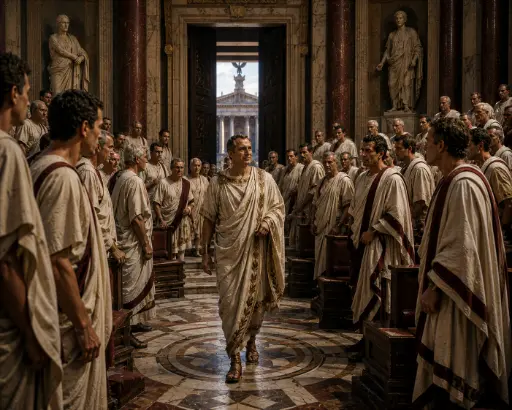
Before long, Julius Caesar entered the Senate chamber.
Many of the senators rose to greet him.
It appeared that this would be just another ordinary day of politics—
or so it seemed, for only a fleeting moment.
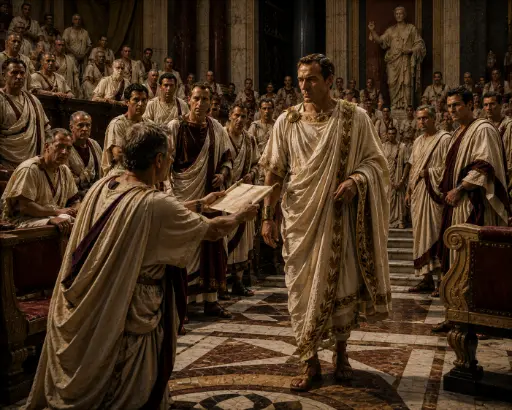
One of the senators stepped forward and presented Caesar with a petition, pleading for a pardon.
The moment Caesar turned his attention to it—
the signal was given.
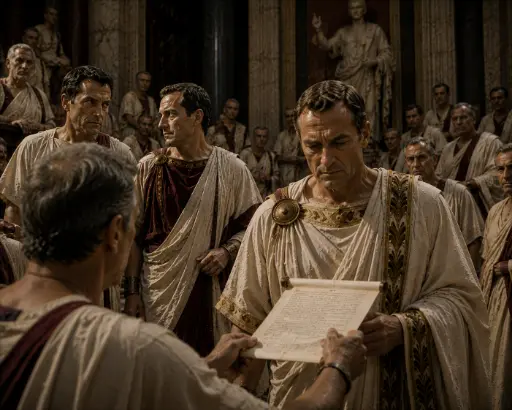
The first conspirator made his move.
And in that instant, as if a silent command had been given, the other conspirators surrounding Caesar sprang into action.
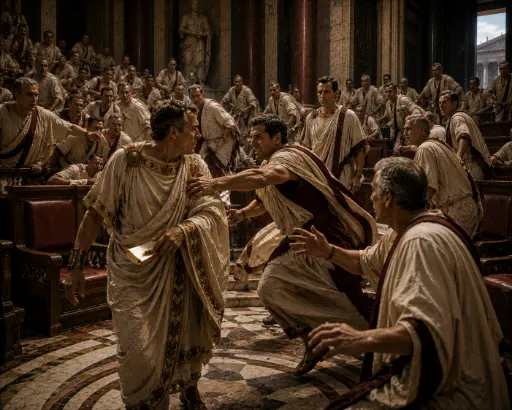
The Senate chamber was thrown into chaos.
A wave of shock swept through the room.
No one could fully comprehend what was happening before their eyes.
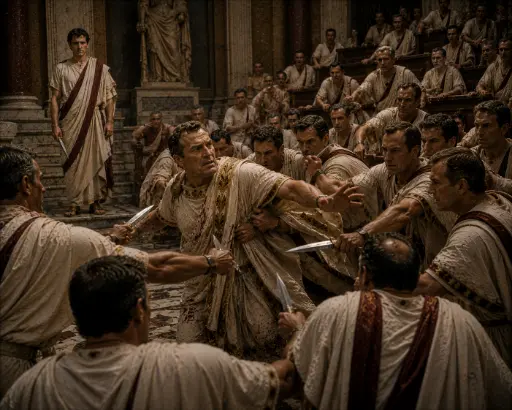
Caesar tried to resist.
But he was hopelessly outnumbered.
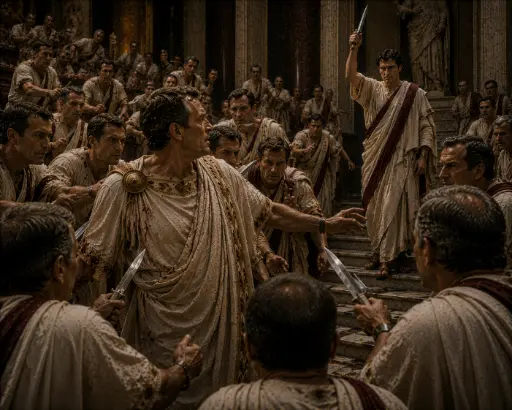
Among those surrounding him stood Brutus.
The man before him was not an enemy.
He was the benefactor who had spared his life, believed in him, and entrusted him with a future.
Nothing could erase that truth.
And yet, Brutus could not turn away from the decision he had come to believe was necessary to protect the Republic.
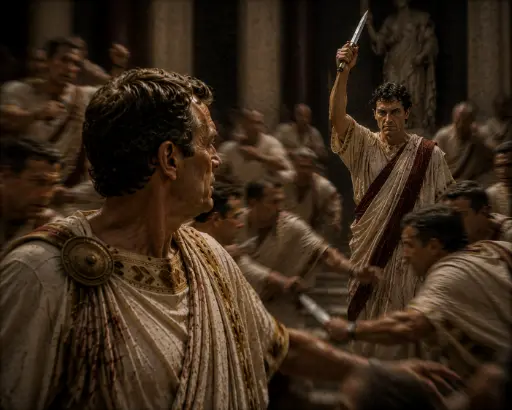
Brutus, too, played his part as one of the conspirators.
What was passing through his mind at that moment?
Was it fear?
Was it sorrow?
Or was it the resolve to remain true to his convictions?
No historical source tells us the answer.
But one thing is certain.
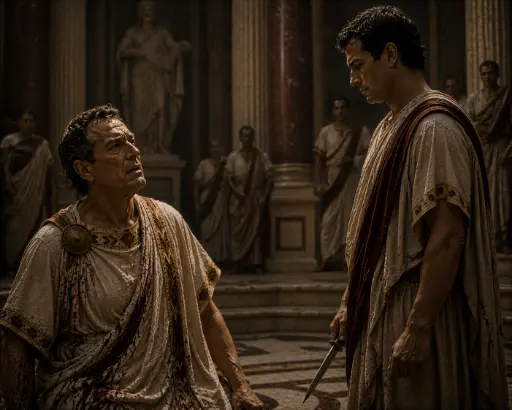
That day, Brutus chose, with his own hands, to sever the bond with the man who had once been his benefactor.
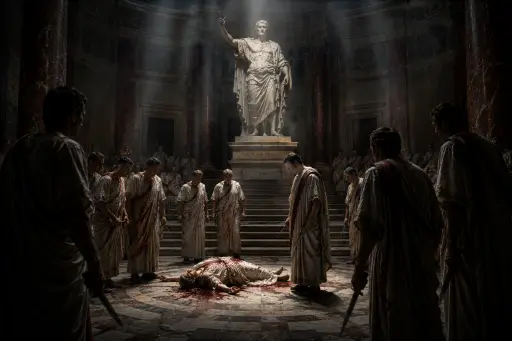
At last, Caesar collapsed onto the floor of the Senate chamber.
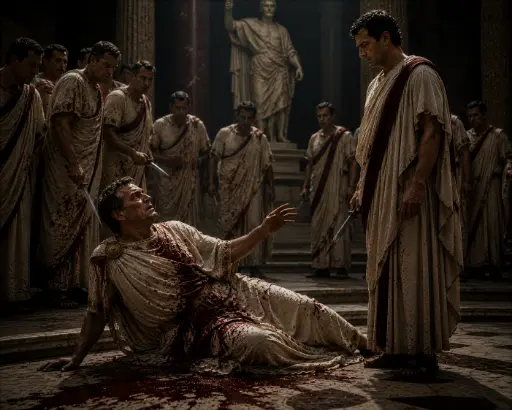
The man who had transformed the Roman Republic forever quietly drew his last breath there in the Senate chamber.
Whenever this moment is recounted, one phrase is remembered above all others throughout the world.
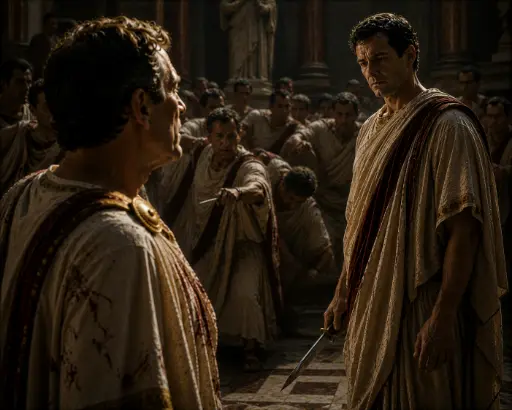
“Et tu, Brute?”
“You too, Brutus?”
This line is widely known as one of the most famous moments in William Shakespeare’s play Julius Caesar.
Because it has become so iconic, many people believe it was actually Caesar’s final utterance.
However, from a historical perspective, there is no conclusive evidence that Caesar truly spoke these words.
Ancient historians themselves left differing accounts of his final moments and his last words.
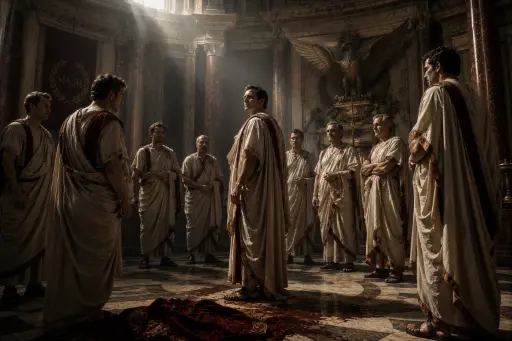
For example, the Greek historian Plutarch wrote that Caesar said little, if anything, in his final moments.
Meanwhile, Suetonius records a tradition that Caesar spoke the Greek words “Καὶ σύ, τέκνον?”—“You too, my child?” However, even this account is not regarded as a firmly established historical fact.
In other words, “Et tu, Brute?” is better understood as a literary symbol than as a verified historical quotation.
Even so, there is a reason why these words have continued to resonate with people around the world for more than four centuries.
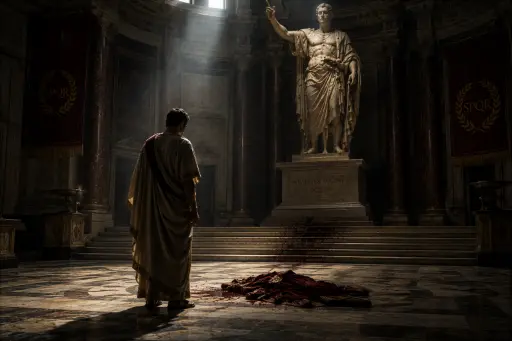
Perhaps it is because these words capture one of humanity’s deepest tragedies—the pain of being betrayed by someone you trusted.
And yet, there is another way to view this story.
Did Brutus truly betray the man who had once been his benefactor?
Or did he choose his duty to his country over his personal loyalty?
The answer has never been settled.
If anything, it was from that very day that this question began a debate that has endured for more than two thousand years.
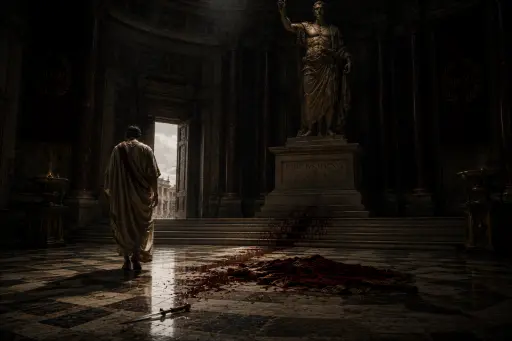
Believing that their actions had saved the Republic, Brutus and the other conspirators left the Senate chamber.
But the welcome awaiting them was not one of cheers or celebration.
The people of Rome would respond in a way utterly different from the future they had imagined.
Chapter 9: An Ideal the People Could Not Embrace
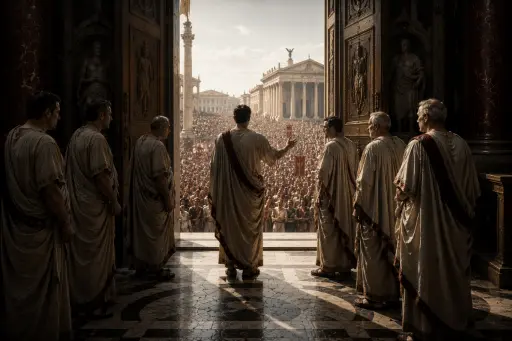
Brutus and his fellow conspirators believed they had saved the Roman Republic.
They were not driven by a desire for power.
Nor were they seeking revenge.
They had only one goal.
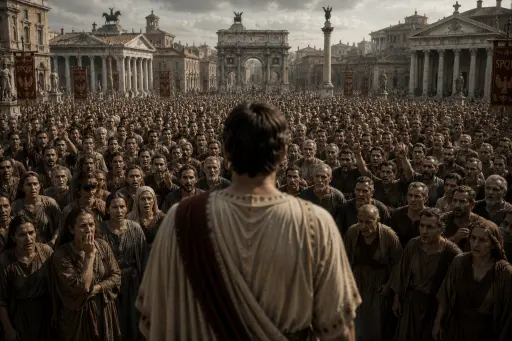
“To protect the Republic.”
That was all.
After a long and painful inner struggle, Brutus had turned his blade against the man who had once been his benefactor.
Whether that decision was right remains impossible to say, even today.
But Brutus himself believed it was a necessary sacrifice for the future of his country.
That is why he felt no fear.
Instead, he believed the people of Rome would understand.
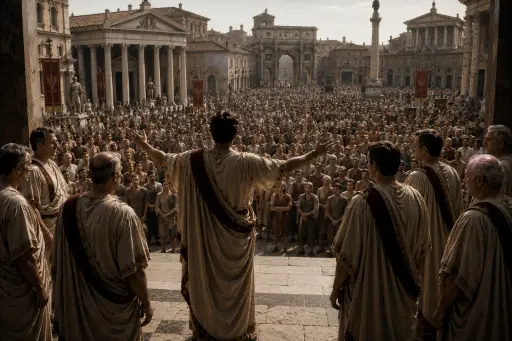
“Rome has regained its freedom.”
“The Republic has been saved.”
Brutus believed that if they proclaimed these words, the people would erupt in celebration.
He truly believed it.
But reality was nothing like he had imagined.
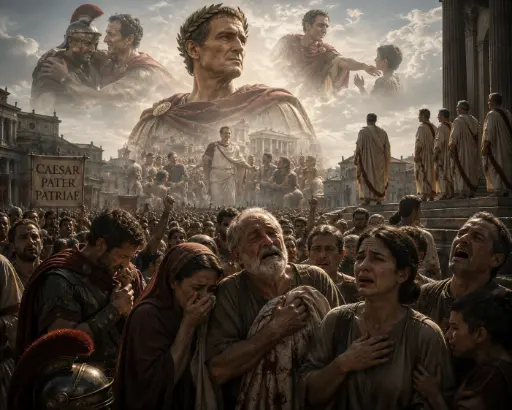
“Rome has regained its freedom.”
“The Republic has been saved.”
Brutus believed that if they made this declaration, the people would greet them with cheers.
He truly believed it.
But reality was nothing like he had imagined.
The people of Rome did not love the Republic as an abstract ideal.
They loved Julius Caesar as a man.
He was the hero who had brought years of civil war to an end.
The general who had shared both hardship and triumph with his soldiers.
The statesman who had sought to improve the lives of ordinary people through reforms to debt, government, and society.
To many Roman citizens, Caesar was not a dictator who had stolen their freedom.
He was the man who had saved Rome.
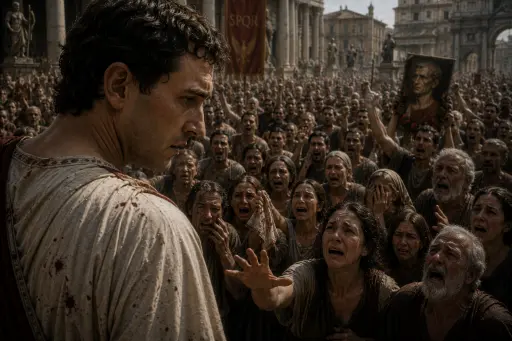
Brutus had misunderstood one crucial truth.
He loved the Republic.
But the people loved Caesar.
Those two things were not the same.
Brutus had yet to realize just how profound that difference was.
A few days later, Caesar’s funeral would be held.
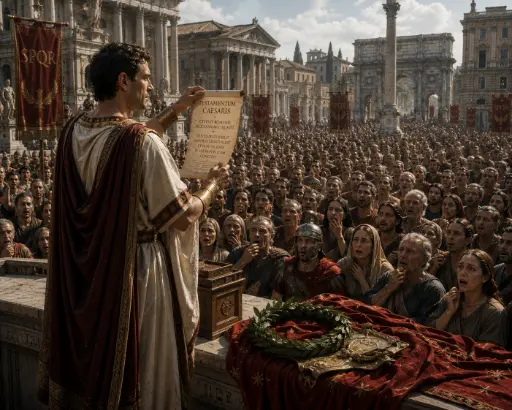
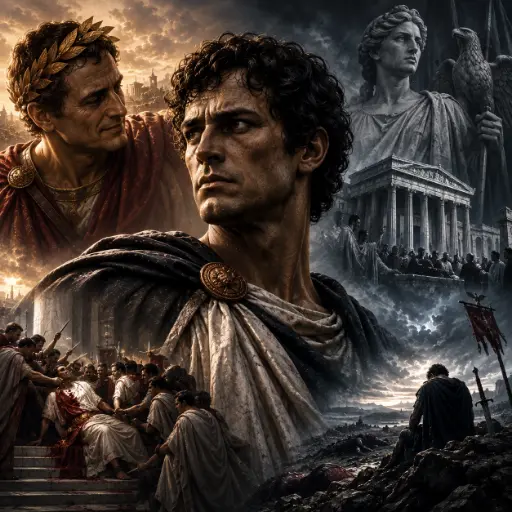
At Caesar’s funeral, the man who stepped forward to address the people was Mark Antony—Caesar’s most trusted ally and one of Rome’s greatest orators.
He did not begin by fiercely condemning the conspirators.
Instead, he spoke with remarkable calm.
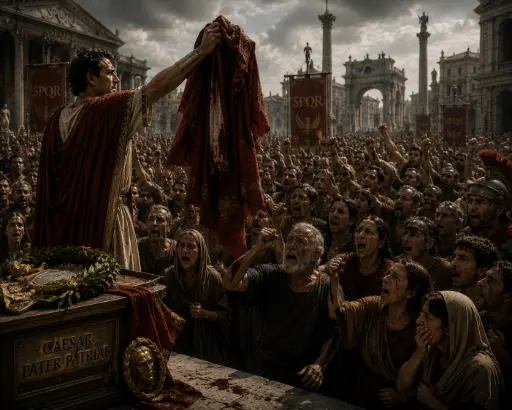
He spoke of how much Caesar had done for Rome.
Of the many victories he had won for his country.
Of how deeply he had cared for the Roman people.
One by one, he recounted Caesar’s achievements, carefully building each upon the last.
Then, just as the emotions of the crowd began to swell, he read aloud Caesar’s will.
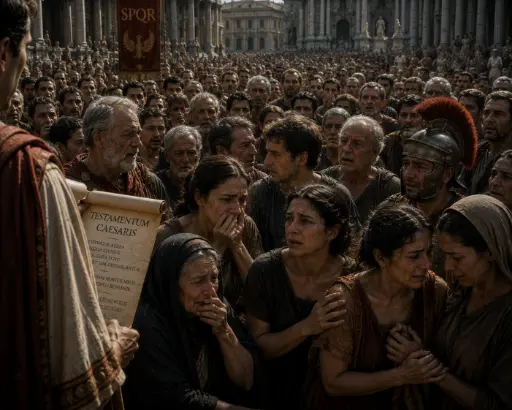
There, it declared that every citizen of Rome was to receive a monetary gift, and that Caesar’s private gardens were to be opened for public use.
The crowd fell silent in astonishment.
Then Antony showed the people Caesar’s lifeless body.
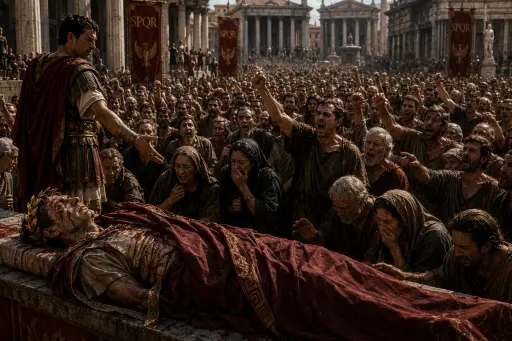
At the sight of him, the people’s grief slowly turned into fury.
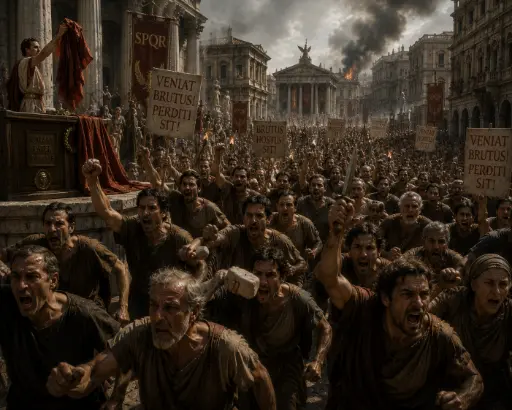
“What you have done is not an act of saving the Republic.”
“You have murdered the hero of our nation.”
Someone cried out.
In an instant, the shout spread throughout the crowd.
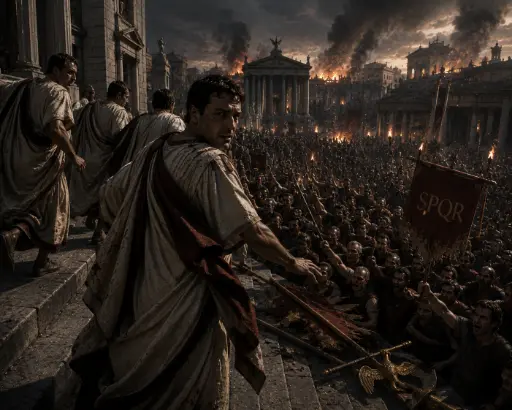
The fury of the crowd could no longer be contained, and it was soon directed at the assassins.
The future Brutus and his fellow conspirators had envisioned came crashing down before their eyes.
Believing they would be hailed as heroes, they instead found themselves fugitives overnight.
Before long, Brutus made the decision to leave Rome.
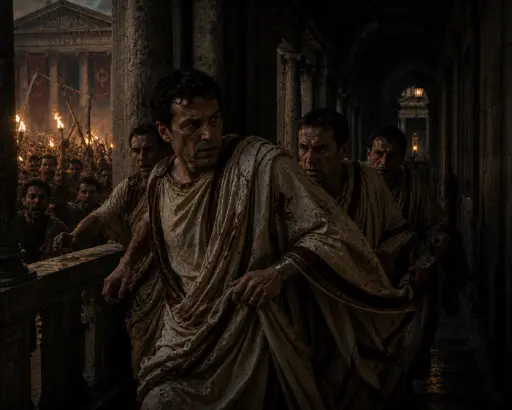
Wherever they walked through the city, they were met with cold stares.
No one welcomed them.
Though they believed they had saved the Republic, they no longer had a place in their own country.
Only then did Brutus begin to realize the truth.
He had failed to understand the hearts of the people.
He believed in the rule of law.
He believed in reason.
He believed in the ideal of the Republic.
But human beings are not guided by reason alone.
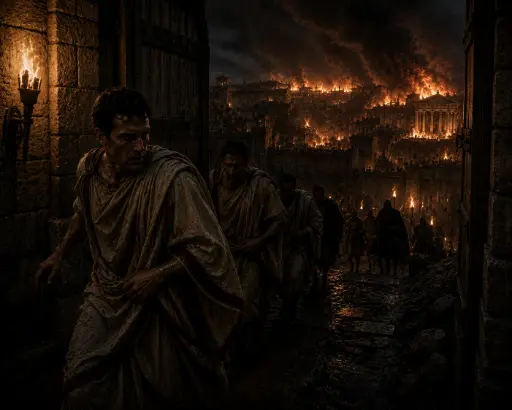
People are moved by the grief of losing someone they love.
They are moved by gratitude and a sense of indebtedness.
And sometimes, they choose emotion over ideals.
Brutus was not defeated on the battlefield.
He was defeated in the hearts of the people.
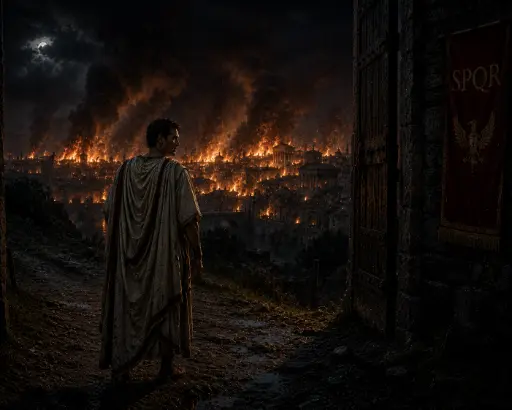
He had succeeded in bringing down Caesar.
But he had failed to win the support of the people.
At that moment, his dream of restoring the Republic quietly came to an end.
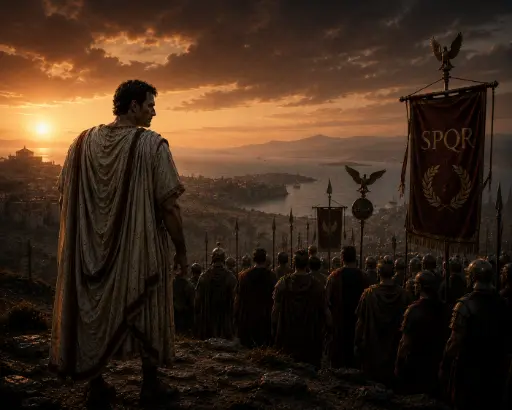
Having left Rome behind, Brutus made his way to the eastern provinces.
There was no longer any place for him in the capital.
The man who had believed he was acting to save the Republic had become an exile from his own country.
Even so, Brutus had not yet abandoned hope.
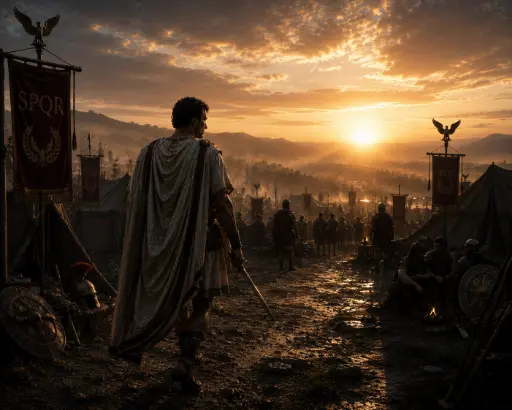
“The Republic is not finished.”
“It can still be restored.”
Holding fast to that conviction—and that conviction alone—Brutus set out toward the final battle of his life.
Chapter 10: The Final Battle
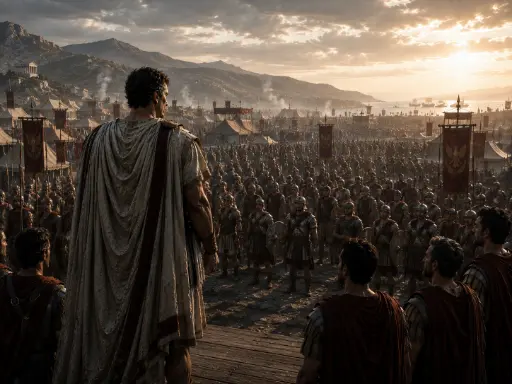
The leading figures of the Republican cause gathered in the eastern provinces, including Greece and Asia Minor.
There assembled the senators who had once upheld the Roman Republic, the remaining supporters of Pompey, and the soldiers who were still determined to defend the ideals of republican government.
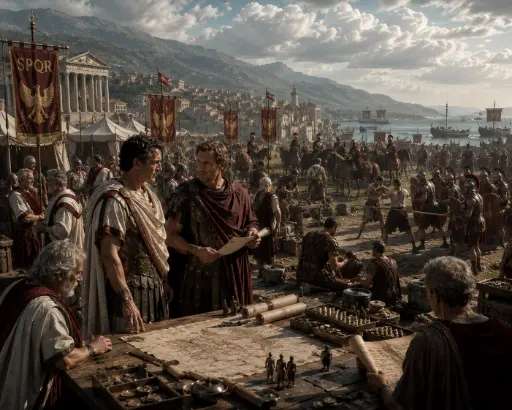
Brutus and Cassius each raised an army, gathered funds, and began preparing for war.
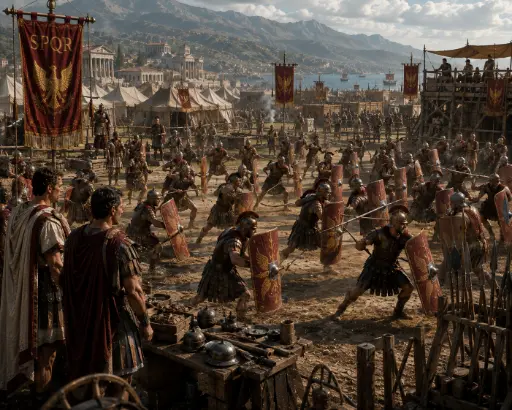
They collected taxes from the provinces, secured the support of their allies, strengthened their armies, and trained their soldiers.
Their goal was to return to Rome.
But it would be anything but an easy path.
In Rome itself, new men had already begun to seize the reins of power.
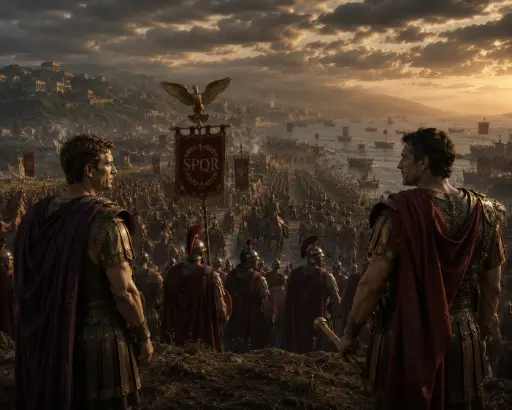
The young Octavian, who had stepped forward as Caesar’s heir.
And Mark Antony, Caesar’s loyal lieutenant.
Setting aside their rivalry, the two joined forces and marched east at the head of a great army to crush the Republican cause.
Thus began the final struggle that would decide the future of the Roman Republic.
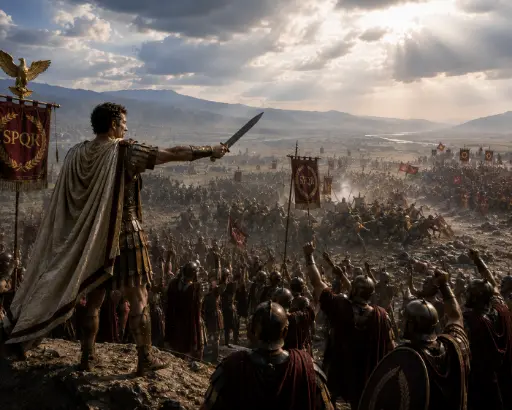
42 BC.
The two armies met on the plains of Philippi in Macedonia.
Everyone understood what was at stake.
The victors would rule Rome.
The defeated would vanish from the stage of history.
In the first battle, Brutus’s forces drove back Octavian’s army and gained a temporary advantage.
At the same time, however, on another part of the battlefield, Cassius’s army was defeated by Antony’s forces.
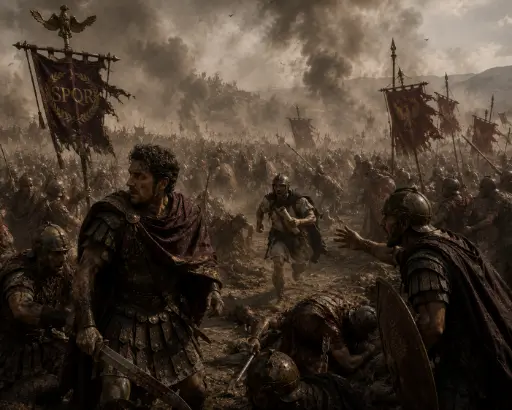
The battlefield descended into chaos.
Clouds of dust obscured the soldiers’ vision, and messengers could no longer move freely across the field.
Conflicting reports spread in every direction, leaving no one certain who was winning.
Amid the confusion, Cassius received a false report.
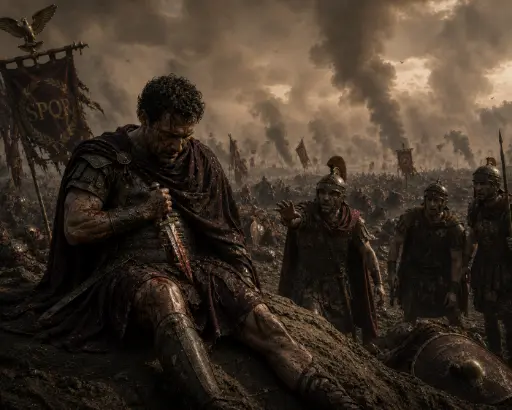
“Brutus’s army has been defeated as well.”
“It is all over.”
Believing those reports to be true, Cassius accepted that the cause was lost.
Unwilling to become a burden to his comrades or be captured by the enemy, he chose to take his own life.
But it was a tragic mistake.
In reality, Brutus’s army was still fighting on.
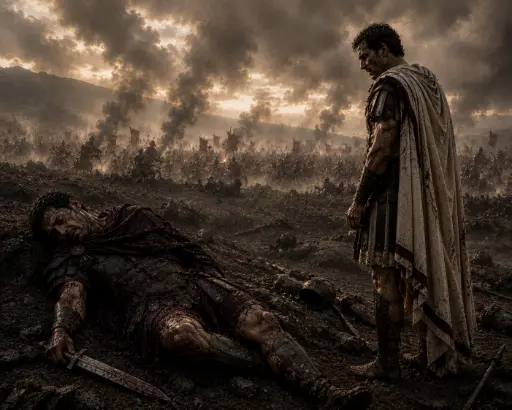
For many years, Cassius had fought alongside Brutus in the cause of defending the Republic.
Never knowing that victory was still within reach, he departed this world.
Cassius’s death was a devastating blow to Brutus.
They had not grown up together.
Nor had they always shared the same views.
Yet in the end, they had fought side by side for the same ideal.
With the loss of his closest ally, Brutus realized for the first time just how alone he truly was.
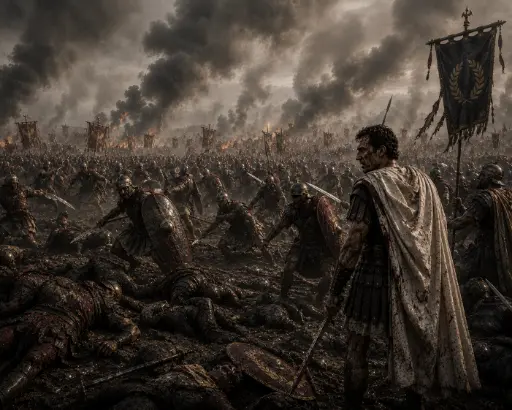
A few weeks later, the two armies clashed once again at Philippi.
This time, the Republicans had no real chance of victory.
The balance had shifted. In both numbers and morale, Octavian’s and Antony’s forces steadily closed in on Brutus’s army.
One by one, Brutus’s soldiers fell.
Those who survived could no longer hold their battle lines.
Before long, the outcome of the battle was beyond doubt.
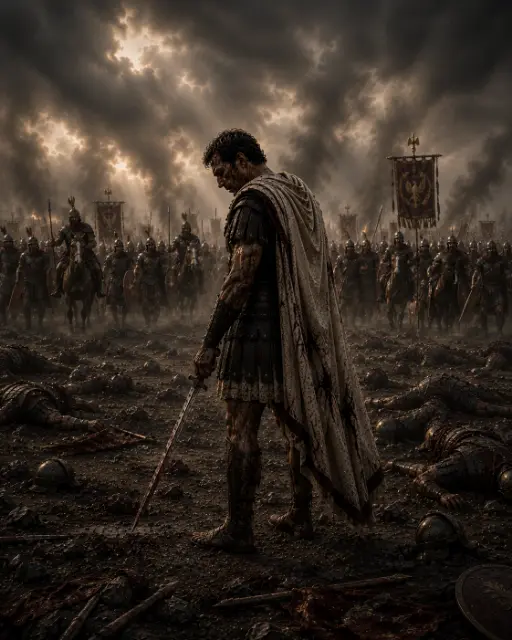
The Republican cause had been defeated.
It was not merely the fall of a single army.
It was the moment when the ideal of the Roman Republic—an ideal that had endured for nearly five centuries—yielded to the realities of power.
Brutus quietly looked across the battlefield.

Their comrades had fallen.
The ally they had trusted most was already gone.
The Republic they had fought to preserve was slipping away before Brutus’s eyes.
Even so, he refused to flee until the very end.
Though he accepted defeat, he never abandoned the convictions that had guided his life.
And then, that night…
Brutus made the final decision of his life.
Chapter 11: The Death of Brutus
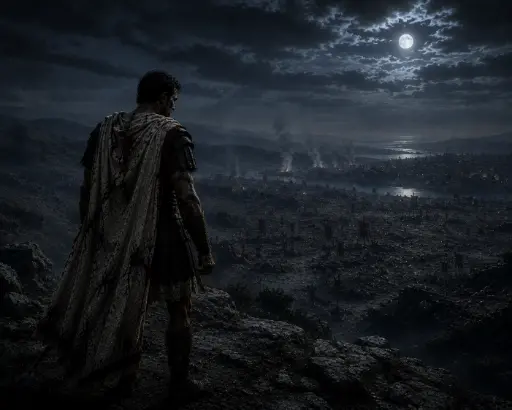
42 BC.
The Battle of Philippi was over.
The Republican army had collapsed, and its soldiers scattered in every direction.
The Republic that Brutus had struggled for so long to defend was finally on the verge of its end.
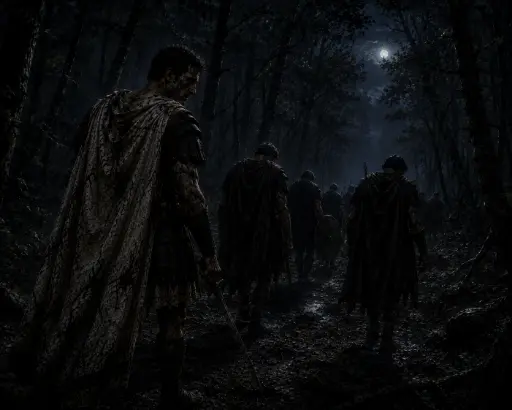
Brutus, too, withdrew from the battlefield with only a handful of loyal companions.
They made their way through the forest, taking shelter as night fell.
The exhausted soldiers sat in silence, surrounded by the stillness of the dark.
Deep down, every one of them understood.
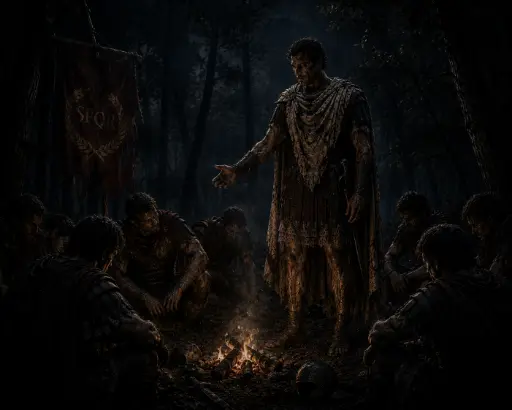
“There is no longer any way to turn this battle around.”
The defeat of the Republican cause was now beyond doubt.
Only two paths remained.
To flee.
Or to surrender to the victors.
But Brutus chose neither.
Instead, he quietly looked around at the companions who remained by his side.
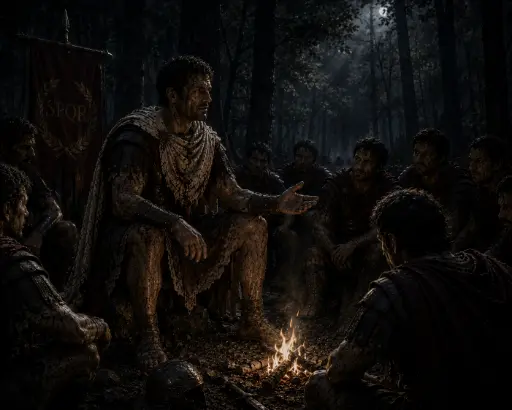
These were the men who had fought beside him to the very end.
Comrades who had believed in the same ideal and risked their lives for it.
According to the ancient historians, Brutus thanked each of them for their loyalty.
Then, in a calm and steady voice, he said:
“I do not resent fate.”
Life brings both victory and defeat.
No one can always obtain the outcome they desire.
But no one can take away the fact that I walked the path I believed was right.
Such was the way Brutus lived—a man shaped by the teachings of Stoic philosophy.
Until the very end, he never abandoned his convictions.
He did not cast aside his principles in order to win.
Nor did he surrender his honor simply to survive.
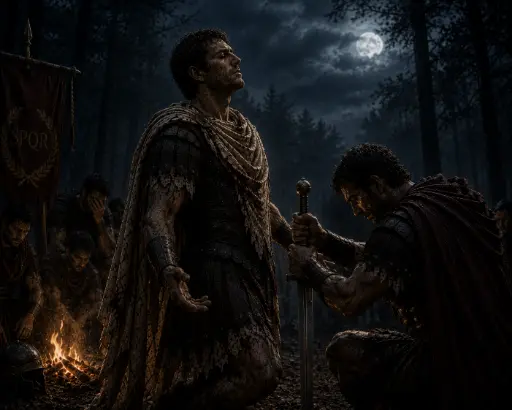
At last, he quietly turned to one of his closest friends and made a final request.
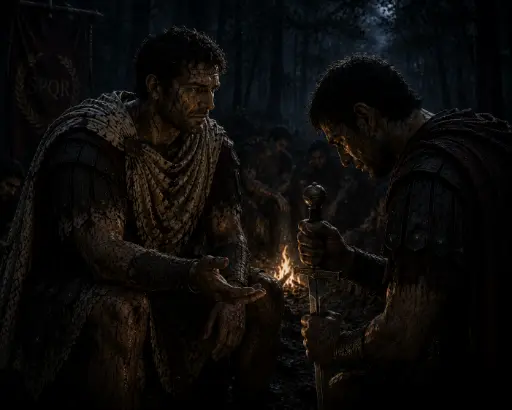
“Hold my sword for me.”
His friend hesitated.
More than anyone else, he understood what those words meant.
Yet Brutus’s resolve never wavered.
Fighting back tears, his friend granted his final request.
Brutus quietly closed his eyes.
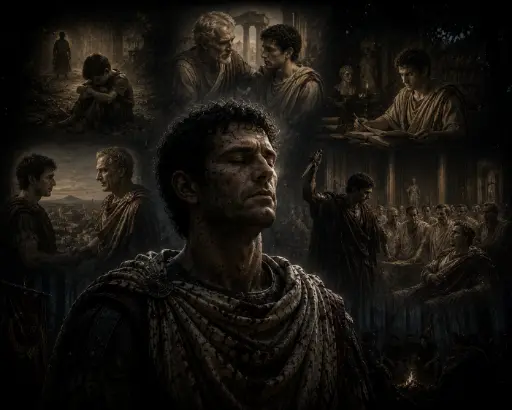
Perhaps, in those final moments, he was looking back on the life he had lived.
The childhood he spent after losing his father.
The ideals of the Republic that his uncle, Cato the Younger, had taught him.
His youth, devoted to the study of philosophy.
His meeting with Caesar—the man who would become both his benefactor and his greatest dilemma.
And the Ides of March, the most painful decision of his life.
Each of those moments had led him to where he now stood.
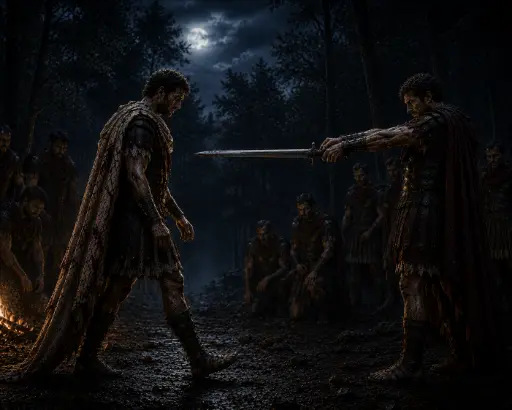
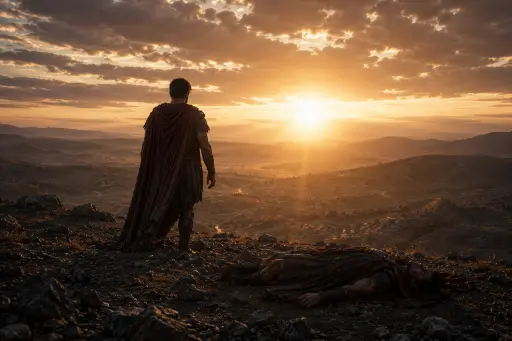
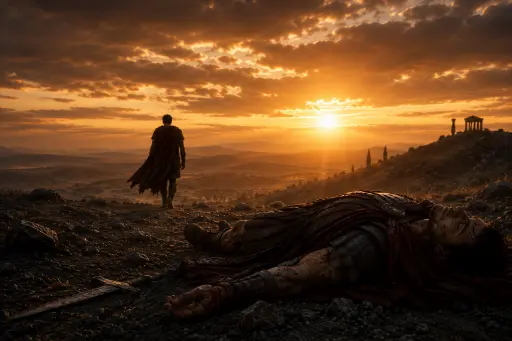
He stepped forward in silence…
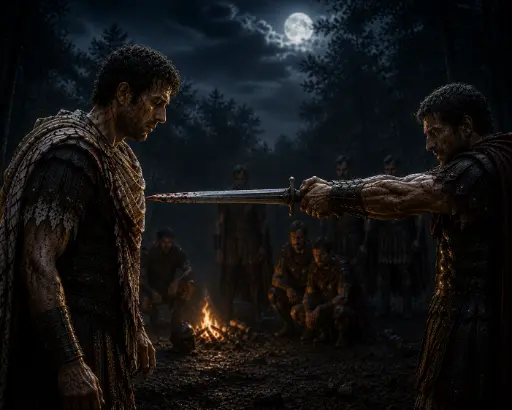
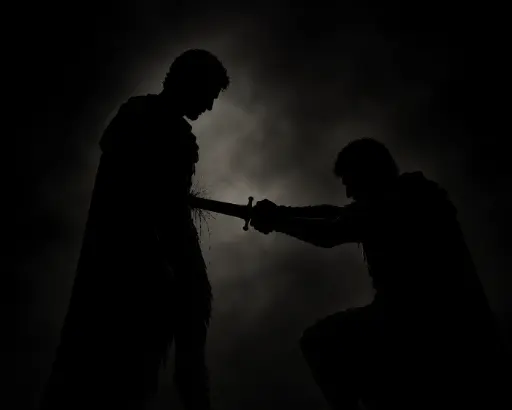
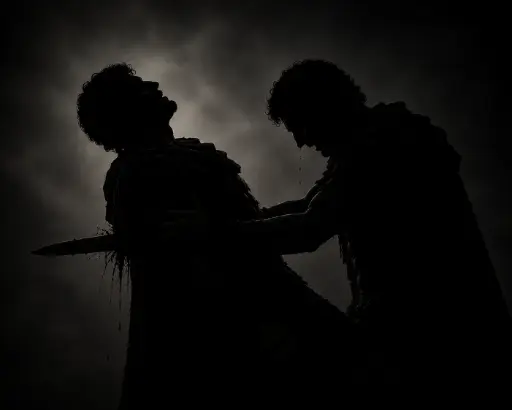
And with that, he brought his own life to an end.
He was about forty-three years old.
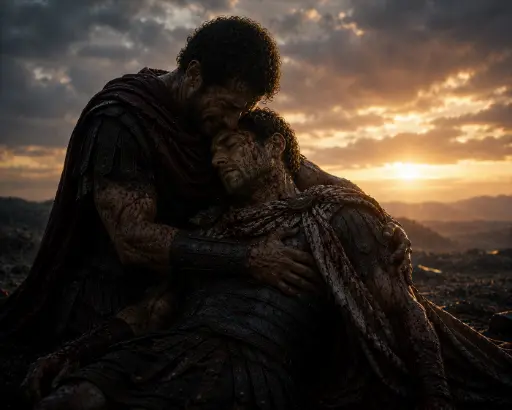
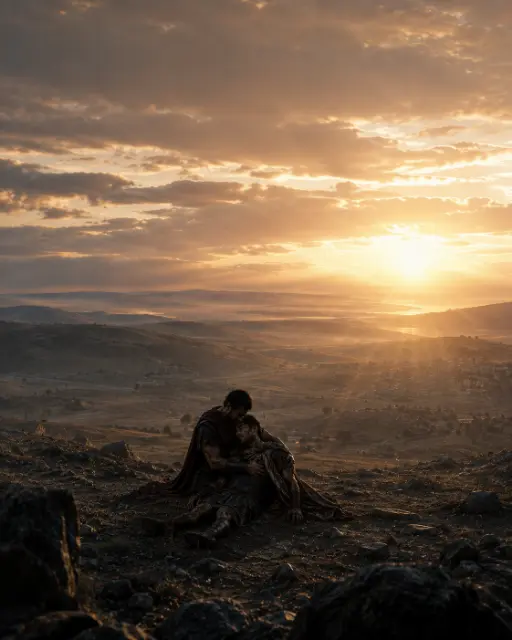


Thus, an idealist departed from the stage of history.
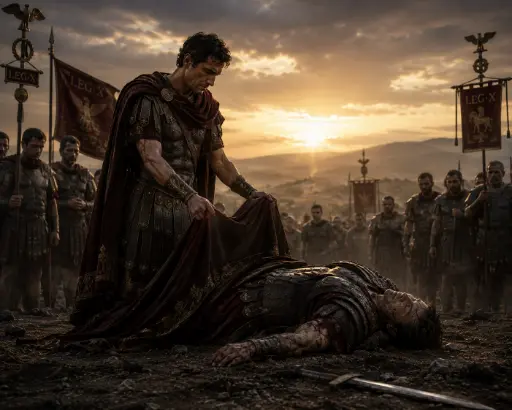
When Mark Antony received the news, he is said to have shown profound respect for Brutus, despite having been his enemy.
He ordered that Brutus’s body be treated with honor and paid tribute to his courage and integrity.
Furthermore, the ancient historian Plutarch records that Antony regarded Brutus as “the noblest Roman of them all.”
Though they had stood on opposite sides of the battlefield, no one could deny the strength of Brutus’s character.
Brutus was unable to save the Republic.
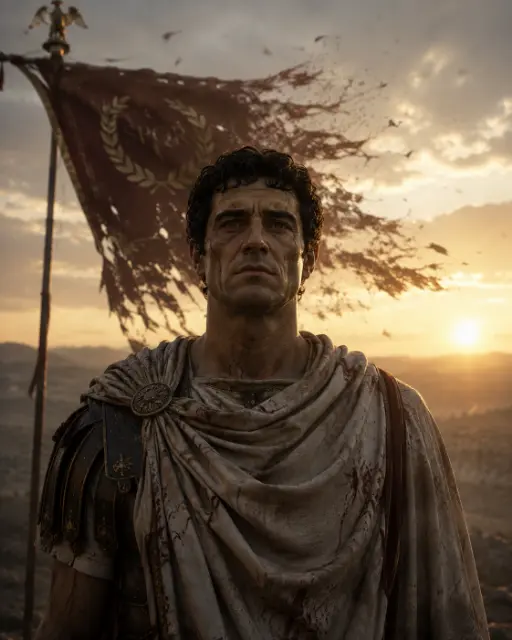
He could not save the man who had once shown him mercy.
Nor could he save his own life.
Yet there was one thing he preserved until the very end.
It was the conviction he had carried in his heart since childhood.
A person’s life cannot be judged by its outcome alone.
What truly matters is the values they believed in, and the way they chose to live.
Perhaps the true measure of Brutus is found not in whether he succeeded or failed, but in that very question.
Chapter 12: Hero or Traitor?
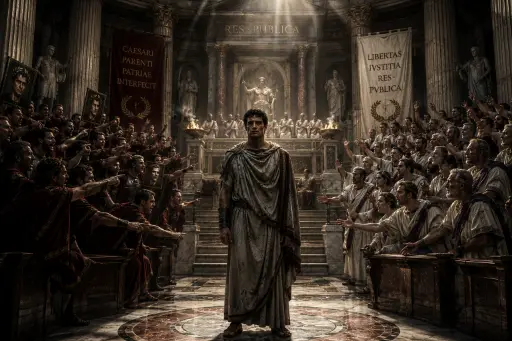
More than two thousand years have passed, yet few figures in history remain as deeply divisive as Brutus.
He was the man who killed his benefactor.
At the same time, he was the man who sought to preserve the Roman Republic.
For that reason, historians have continued to judge him from many different perspectives to this day.
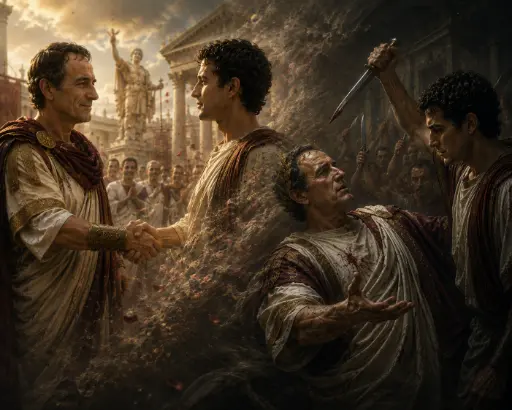
Some see Brutus as the man who betrayed his greatest benefactor.
Caesar had forgiven him after they fought on opposing sides in the Civil War.
He spared Brutus’s life, entrusted him with important offices, and placed great hopes in his future.
Yet instead of repaying that trust, Brutus turned his own blade against the man who had shown him mercy.
From the perspective of personal loyalty and gratitude, such an act can never be justified.
That is why, even today, many continue to remember Brutus as a traitor.
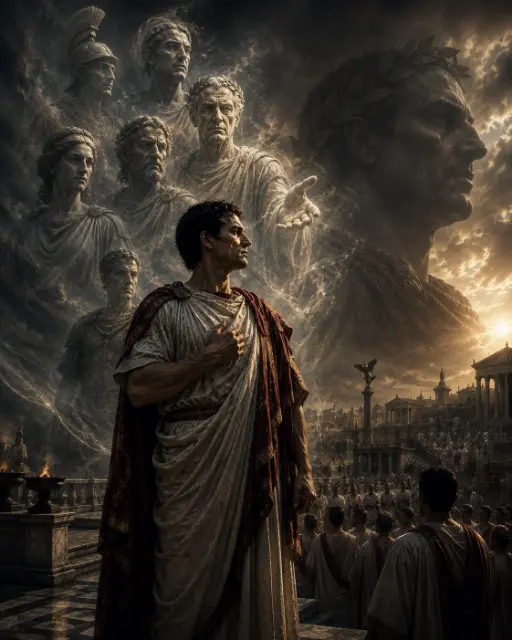
Others, however, regard him as the last defender of the Roman Republic.
Brutus was not fighting for his own ambition or personal gain.
The object of his loyalty was not a single man, but the Republic itself.
Had he chosen not to act, Rome might indeed have returned to monarchy.
From that perspective, many historians see Brutus as a man who rose in defense of liberty.
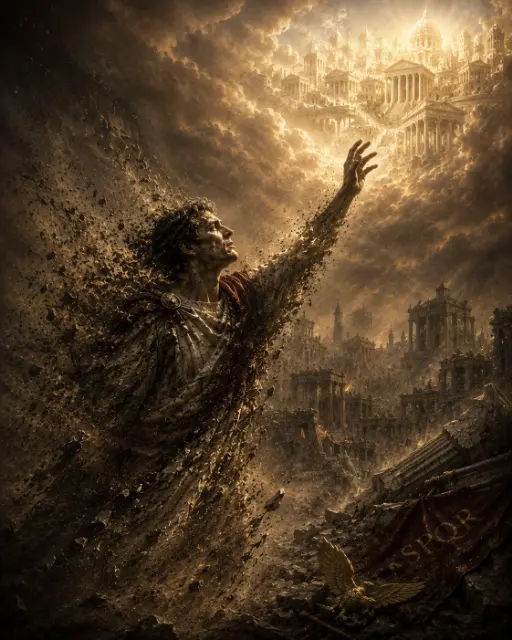
Others view him as a tragic idealist who sacrificed everything for his principles.
Brutus never sought power for himself.
After Caesar’s assassination, he made no attempt to crown himself or seize control of Rome.
Until the very end, he acted according to what he believed was right.
Yet the ideals he fought for failed to win the support of the people, and he was unable to save the Republic.
In the end, he lost the very cause he had devoted his life to, and his own life came to an end alongside that ideal.
For many, Brutus remains the image of a tragic idealist—a man whose unwavering principles ultimately led to his downfall.
Yet there is still another way to see him.

Another interpretation sees Brutus as an idealist who failed to grasp political reality.
He believed in the rule of law.
He believed in philosophy.
He believed in the ideals of the Roman Republic.
But politics is driven by more than ideals alone.
It is shaped by the emotions of the people.
By changes within society.
And by the unstoppable current of history itself.
According to this view, Brutus never fully understood those forces.
His greatest mistake was believing that the assassination of one man would be enough to restore the Republic.
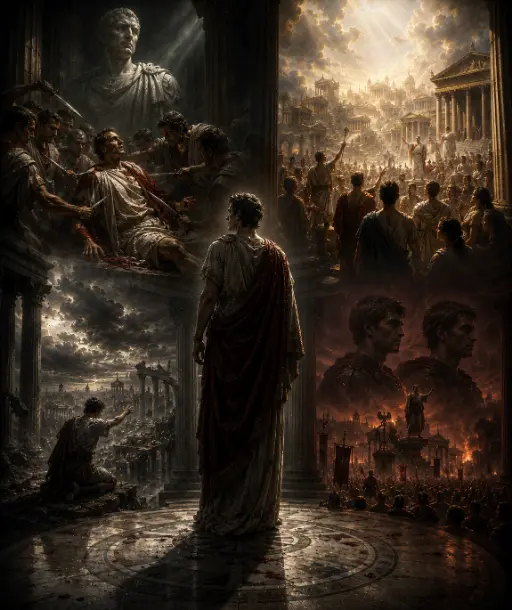
Each of these interpretations carries some truth.
If personal loyalty is your highest value, then Brutus was a traitor.
If the defense of liberty comes first, then he may be remembered as a hero.
He can be seen as a man who sacrificed everything for his ideals.
Or as a statesman whose ideals blinded him to political reality.
That is precisely why Brutus has remained one of history’s most debated figures for more than two thousand years.
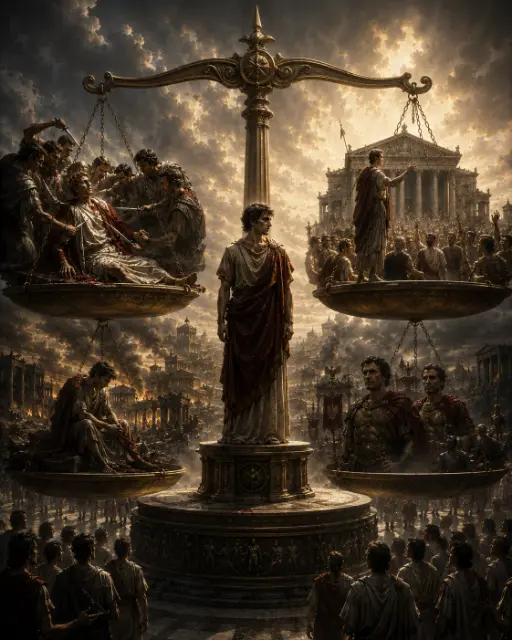
History cannot be reduced to a simple struggle between good and evil.
Even those who strive to do what is right do not always achieve the results they hope for.
Likewise, those who leave a lasting mark on history have not always chosen the right path to achieve it.
The life of Brutus invites us to reflect on that truth.
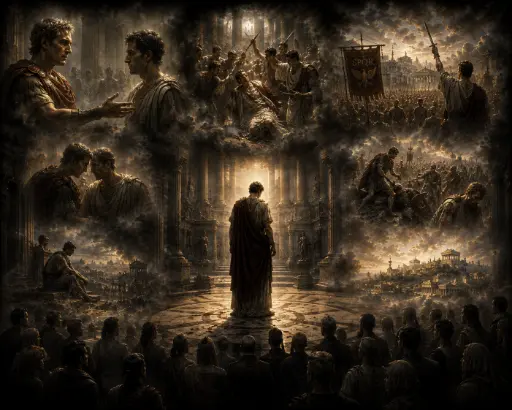
What is justice?
To whom should our loyalty ultimately belong?
And should a person remain true to their convictions, even if it means betraying someone who once showed them kindness?
There is no single answer to these questions.
That is why Brutus is remembered as more than simply the man who assassinated Caesar.
He endures in history as a man caught between idealism and reality, friendship and duty, conviction and consequence.
Perhaps the reason Brutus’s story has continued to be read for more than two thousand years is not because of what he did, but because the questions his life raises remain unanswered.
And those same questions still confront us today.
Final Chapter: The Question Brutus Left Behind
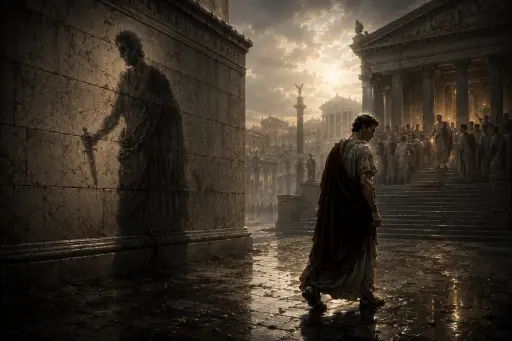
History often remembers the victors and the vanquished.
But human lives are rarely so simple.
Brutus was the man who killed his benefactor.
That is a historical fact that can never be changed.
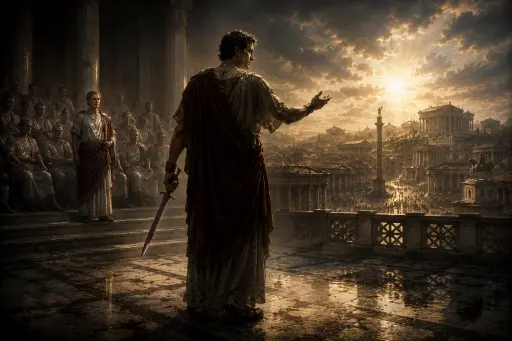
However, at the same time, he was not a man who took up the sword out of personal ambition or self-interest.
What he sought to defend was the ideal of the Republic—a principle he had believed in since childhood.
He did not raise his dagger because he hated Caesar.
He raised it because he chose the path he believed was right.
Was that choice the right one?
Or was it a terrible mistake?
History has never given us a single, definitive answer.
That is why, even after more than two thousand years, the story of Brutus continues to challenge and move us.
If you had stood in Brutus’s place—
what would you have chosen?
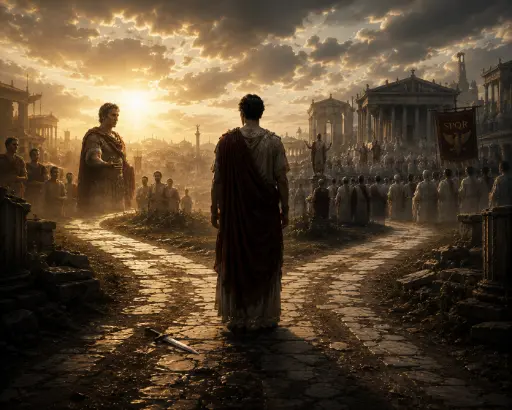
Is it friendship?
Or is it conviction?
When you believe that someone you love is walking down the wrong path, is trying to stop them an act of betrayal?
Or is it precisely because your friendship is genuine that you must stand against them, no matter how painful it may be?
And when the course you believe to be right is rejected by the very people you hoped to protect, would you still have the strength to remain true to your convictions?
These are questions without easy answers.
Perhaps that is Brutus’s greatest legacy.
He left us not with certainty, but with questions that every generation must answer for itself.
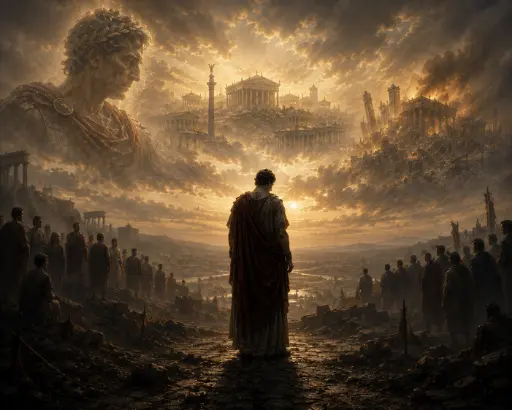
Brutus was unable to save the Republic.
He was unable to save Caesar’s life.
Nor was he able to bring the ideals he fought for to fruition.
Yet until the very end, he never abandoned the values he believed in.
Should such a man be remembered as a hero?
Or should he be remembered as a traitor?
Perhaps there is no single answer.
Perhaps each of us is free to reach our own conclusion.

History is not meant to be remembered merely as a collection of past events.
It comes alive when we learn about the choices people once faced and ask ourselves,
“What would I have done in their place?”
Only then does history become our own story.
The true legacy Brutus left behind was not a single dagger.

“What is justice?”
“To whom should our loyalty ultimately belong?”
“What is worth holding onto, even at the greatest personal cost?”
For more than two thousand years, humanity has never found a single answer to these questions.
Perhaps they are Brutus’s greatest legacy.
Even now, they continue to speak quietly to each one of us.
Thank you for reading.
If this story has left you with questions rather than answers, then perhaps Brutus has accomplished exactly what history has allowed him to do.
Not to tell us what is right…
but to ask us what we believe is right.
Read the Story
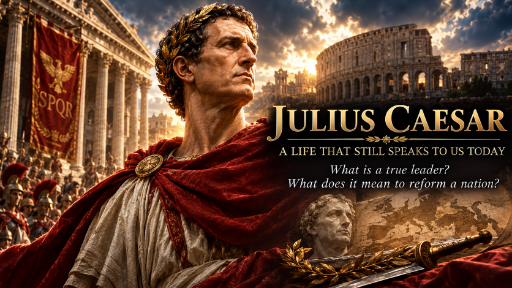
Experience Julius Caesar’s life through a cinematic historical narrative.
👉 Julius Caesar — The Hero Who Changed the World
Want to Learn More?
Enjoyed the story?
Explore the real Julius Caesar—his campaigns, reforms, political genius, and lasting legacy.
👉Julius Caesar ― The Man Who Changed History
Author:Fuji

Human history is truly complex, isn’t it?
There are countless websites introducing historical figures and events, but many of them are just plain explanations—not exactly exciting to read.
On the other hand, reading books takes a lot of time and effort.
That’s where I come in.
Through “stories that are more engaging than explanations and shorter than books,” I aim to bring the world’s history and humanity’s records to you in a more accessible and interesting way.
If my stories inspire you to love history a little more, I’d be absolutely thrilled!

Become Part of the Chronicle
If this article inspired you, consider supporting the project.
Become a character in the Chronicle.
Receive your own custom card and stand alongside queens, warriors, inventors, rebels, and legends from history.
Your support helps keep these stories alive and allows me to create more articles, illustrations, and historical cards.
Join the Chronicle and leave your mark on history.
Comment